
Adding a hot tub or spa might feel like a luxury decision—but when it comes to installation, it’s anything but casual. One wrong connection, an overlooked safety measure, or a missed regulation can result in real hazards. At Wave Electrical Solutions, we’ve worked on numerous spa and hot tub projects across the UK, and the one thing we always stress is this: get the electrics right from the very start.
A spa setup is no different from any other high-powered appliance. In fact, it often needs even more care. You’re combining electricity and water—two things that never mix without proper planning. From choosing the right amperage and cable routing to ensuring RCD protection and zone safety, the behind-the-scenes work matters far more than most homeowners realise.
Whether you’re planning a plug-and-play model or a permanent hardwired installation, electrical compliance isn’t optional—it’s essential. This guide covers everything you need to know to get your hot tub running safely, efficiently, and legally.
Why Electrical Planning is Crucial for Hot Tubs
Many homeowners assume that adding a spa to their garden is as simple as filling it with water and plugging it in. It’s not. While some plug-and-play models do run on standard 13-amp sockets, the majority of modern spas need dedicated circuits and proper protection—especially when installed outdoors.
One of the most common issues we encounter is inadequate preparation. Clients are often surprised when we inform them that their consumer unit can’t handle the extra load, or that their existing sockets aren’t up to standard for use near water. Electrical planning ensures these surprises are dealt with early—not once the spa’s been delivered and positioned.
Beyond practical concerns, the risks are real. An improperly installed hot tub poses not only the risk of electric shock, but also invalidates warranties, home insurance, and in some cases, can even lead to prosecution under UK building regulations. With our team’s experience, we ensure your installation is safe, future-proof, and hassle-free.
Understanding Power Requirements
Not all hot tubs are built the same. Some models, typically known as “plug-and-play,” are designed to run on a standard 13A plug and can be connected to an outdoor weatherproof socket. These are simpler to set up but are usually limited in terms of jet power, heating speed, or overall performance.
More commonly, hot tubs require a 32A or higher supply, which must be hardwired directly from your consumer unit via a dedicated circuit. These models often include multi-pump systems, advanced lighting, and faster heaters—all of which draw significantly more power. This level of demand can’t and shouldn’t be routed through existing household sockets.
When planning your installation, we assess your current electrical setup and determine whether your system can support a spa. If not, we’ll recommend practical solutions—like a consumer unit upgrade or installation of a new sub-board—to provide the capacity and protection required.
Complying with UK Electrical Regulations
Any electrical work associated with a hot tub falls under the scope of UK building regulations, especially Part P of the Building Regulations, which covers electrical safety in dwellings. This means installations must be carried out by a qualified electrician and notified to the relevant local authority if not self-certified by a registered professional.
We always work in line with Approved Document P and the BS 7671 Wiring Regulations (18th Edition). For hot tub circuits, this includes:
- RCD protection (Residual Current Device): Mandatory for any outdoor electrical work. It ensures that power is cut immediately in the event of a fault.
- IP-rated isolator switch: An outdoor emergency switch (usually IP65 or better) that allows you to disconnect power safely in case of a fault.
- Armoured cabling: To prevent damage and meet outdoor installation standards.
- Safe zoning: Ensuring electrics are kept clear of splash zones or areas of direct contact with water.
These regulations aren’t optional—they’re legal requirements. And as registered installers, we make sure all work is certified and documented, giving you peace of mind and long-term protection.
Choosing the Right Location for Safety and Access
Where you place your hot tub matters—not just for aesthetics, but for safety, service access, and long-term reliability. At Wave Electrical Solutions, we help clients assess the best location from both an electrical and maintenance standpoint.
One of the key considerations is proximity to your consumer unit or distribution board. The further away your hot tub is placed, the longer the cable run—impacting both voltage drop and cost. Cables must be buried safely or routed using suitable trunking, and access for future maintenance must always be factored in.
UK wiring regulations also state that isolator switches should be located within visible range but no closer than 2 metres from the water’s edge. This ensures easy access in emergencies while keeping users protected from electrical hazards. Additionally, the hot tub should be placed well clear of overhead power lines, buried gas pipes, and any areas where standing water collects.
Access for servicing is another detail that’s often overlooked. Pumps, heaters, and control systems all need space for maintenance or replacement. If your tub is installed flush with decking or too close to a wall, future servicing can become a costly and complex task. Planning ahead avoids these headaches later on.
Safe Outdoor Installation Essentials
Installing a hot tub outdoors introduces specific requirements that differ from indoor electrical work. Weather exposure, moisture levels, and the risk of splashing all increase the demands placed on the installation.
First, cabling must be armoured and rated for external use. We typically use SWA (Steel Wire Armoured) cable, which provides mechanical protection from digging or impact and is fully compliant with outdoor regulations. All cable entry points must be sealed, and waterproof glands should be fitted to prevent moisture ingress.
The outdoor isolator switch should be weatherproof and ideally lockable, offering full cut-off in case of emergencies or maintenance. We install switches rated to at least IP65, ensuring they can withstand exposure to rain, humidity, and temperature fluctuations.
Outdoor sockets or connections near the spa must also meet the appropriate IP ratings and be installed outside of the splash zone. Regulations require careful consideration of “zones” around water features—areas where the risk of electrical contact with water is higher. Equipment placed within these zones must meet specific safety standards to reduce shock risk.
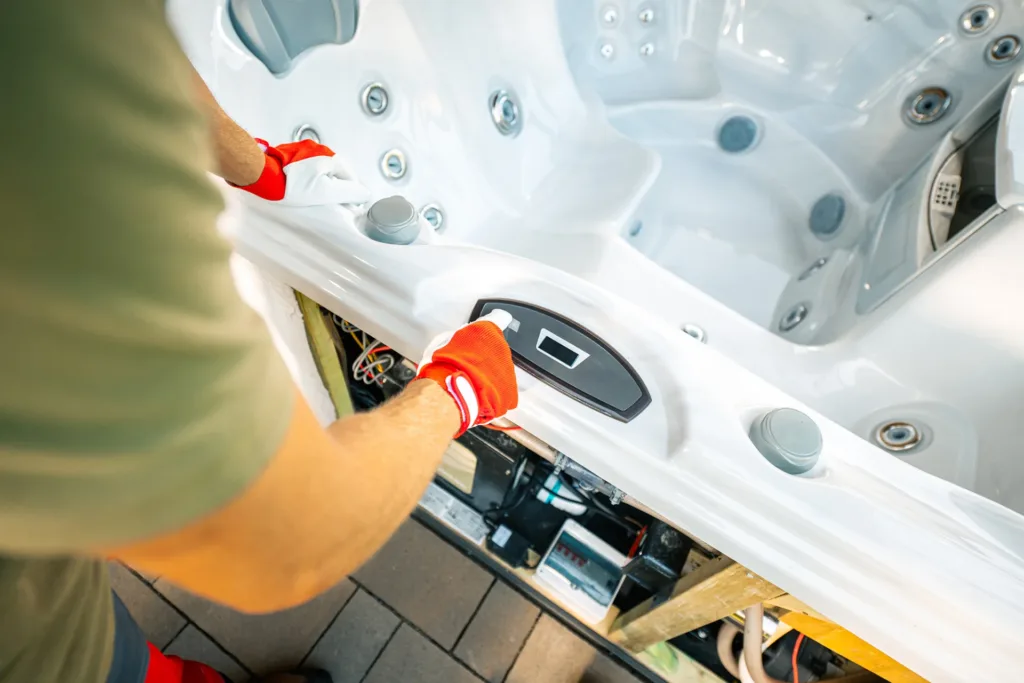
Integrating Your Hot Tub into Existing Electrical Systems
Before we install any electrical components for your hot tub, we conduct a thorough assessment of your existing consumer unit and supply. Many older homes aren’t equipped to handle the additional load of a spa, especially those with already stretched circuits or outdated fuse boards.
A common upgrade we carry out is the addition of a new dedicated RCBO-protected circuit from the consumer unit. In some cases, we may need to install a secondary board (also known as a sub-board) closer to the hot tub’s location to ensure safe load balancing and easier servicing.
Load calculations are essential. If your home already has high-power appliances such as electric vehicle chargers, electric showers, or heat pumps, we’ll factor this into our design to prevent overload. With proper planning, even high-demand systems can be safely supported without causing nuisance tripping or long-term strain on your wiring.
At Wave Electrical Solutions, we don’t just “make it work”—we design installations that will stand the test of time and meet evolving energy needs.
Smart Controls and Energy Efficiency
Hot tubs don’t need to be energy hogs. In fact, many modern spas now support smart controls that allow users to manage power usage, schedule heating cycles, and remotely monitor energy consumption via mobile apps or integrated home automation systems.
We can integrate Wi-Fi enabled timers, programmable switches, or even voice-activated smart plugs (for 13A models) to give you full control over when your spa heats up or powers down. This level of automation not only improves convenience but can also help reduce running costs.
In some projects, we’ve also advised clients on integrating solar-assisted systems, especially where spas are paired with outdoor leisure areas. While full off-grid spa setups are still uncommon, using renewable sources to supplement heating or lighting can reduce electricity bills and environmental impact.
By combining efficient supply design with smart usage, you can enjoy your spa without worrying about spikes in your energy bill.
Why You Need a Qualified Electrician
It might be tempting to handle parts of the installation yourself—especially if you’re confident with DIY electrics—but when it comes to hot tubs, cutting corners isn’t worth the risk. This type of work falls under notifiable electrical work in the UK, which means it must be signed off by a Part P registered electrician, or reported to your local building control body if done by someone who isn’t registered (which usually costs more and takes longer).
At Wave Electrical Solutions, we’re fully qualified to carry out and self-certify these installations. That means:
- All work is completed to BS 7671 standards
- We install and test to current 18th Edition regulations
- You receive full certification for your records and insurance
Our previous work, including this hot tub installation in Bodmin, shows our attention to detail and commitment to safe, compliant setups that last.
Whether you’re adding a hot tub to your home, letting property, or managing a commercial spa space, having it installed by a registered professional ensures your investment is protected and safe for long-term use.
You can also view other examples of our hot tub projects here.
FAQs
Can I plug in a hot tub myself?
If it’s a plug-and-play model rated at 13A and your outdoor socket is RCD-protected, weatherproof, and professionally installed, then yes. However, we still recommend a qualified electrician assess your setup.
How far should the isolator switch be from the hot tub?
The isolator switch should be at least 2 metres away from the edge of the water, in a location that is clearly visible and easily accessible in an emergency. It must be IP-rated for outdoor use.
Do I need planning permission for an outdoor spa?
In most residential cases, no planning permission is needed. However, you should always check if your property is listed or in a conservation area. Electrical work still requires compliance with Part P regulations.
Conclusion
When it comes to hot tub installations, the electrics are just as important as the water. With the right planning, protection, and expertise, your spa can be a safe and relaxing addition to your home—but get it wrong, and it becomes a serious risk.
At Wave Electrical Solutions, we take care of the details—from assessing your current system to installing safe, compliant, and future-ready electrics for your spa or hot tub. You can relax, knowing everything is done properly from the start.
If you’re planning an installation or need expert advice, speak to our team today. We’ll make sure your spa setup works safely, efficiently, and to all required standards.