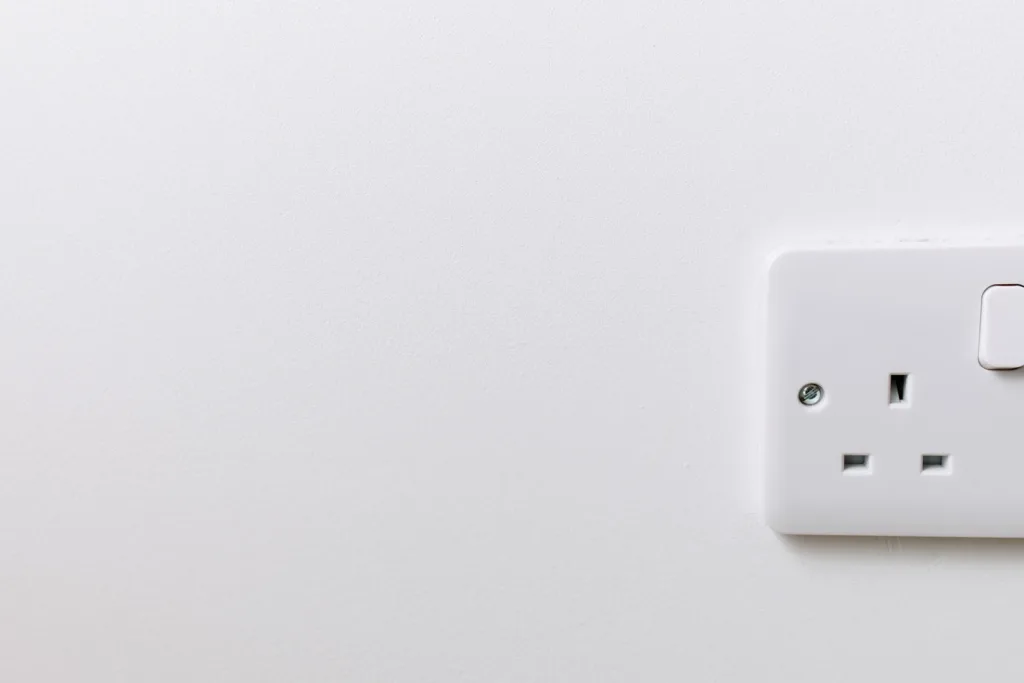
UK wiring regulations make it very clear where sockets can and can’t be located in bathrooms. For homeowners planning a refurbishment — or anyone wondering what the rules really say — knowing how far sockets must be from a bath or shower is crucial. It’s not only about compliance with Building Regulations, but also about preventing real risks associated with water and electricity in close proximity.
At Wave Electrical, we’re often asked whether a socket can be installed “just outside” a shower cubicle or whether shaver outlets can be mounted above a sink. The answer depends on zoning, the type of socket, and how the circuit is protected. In this article, we’ll walk through the current UK standards, how bathroom zones work, and what distance you need to respect if you want to keep your electrics safe and legal.
If you’re starting from scratch, our guide to bathroom electrics in the UK gives a broader overview of bathroom fittings and regulations.
What Do UK Regulations Say About Sockets in Bathrooms?
Overview of BS 7671 and Part P
The primary standard governing electrical installations in UK bathrooms is BS 7671 — also known as the IET Wiring Regulations. These are updated periodically to reflect safety research and evolving best practice. Alongside this, Part P of the Building Regulations requires that any domestic electrical work — including bathroom wiring — is carried out by a competent person and meets minimum safety standards.
Electrical installations in bathrooms must also be certified, particularly where new circuits or alterations are involved. If you’re not a qualified electrician, any socket or fitting work in these areas should be completed by someone who is Part P registered.
Why Distance Matters
Bathrooms are split into zones to define levels of electrical risk based on how close something is to water. These zones determine what you can and can’t install. Standard sockets are considered high-risk fittings — and unless they’re fitted well outside the splash zones, they’re simply not allowed.
The minimum legal distance for a regular socket outlet (such as a 13A plug socket) is 3 metres horizontally from the edge of a bath or shower. For many bathrooms in UK homes, that makes installation impractical unless the socket is placed outside the room entirely.
Defining the Bathroom Zones
Zone 0
This is the area inside a bath or shower basin. No electrical fittings at all are allowed here unless they’re specifically rated for full immersion, which is typically only the case for specialist lighting or spa equipment.
Zone 1
This area stretches vertically above the bath or shower up to 2.25 metres from the floor. It’s considered high-risk due to potential spray and steam. Only very low-voltage fittings (like SELV lighting) with appropriate IP ratings are permitted.
Zone 2
Zone 2 covers the area 600mm horizontally from the edge of a bath or shower, and up to 2.25 metres high. Certain protected electrical items are allowed here, including shaver sockets with isolating transformers — provided they meet IPX4 protection or better.
Outside the Zones
Beyond Zone 2, fittings such as light switches, pull cords, and even standard sockets may be installed — but only if they are more than 3 metres from the bath or shower and RCD protection is in place. This is the only location where regular 13A plug sockets may legally be fitted.
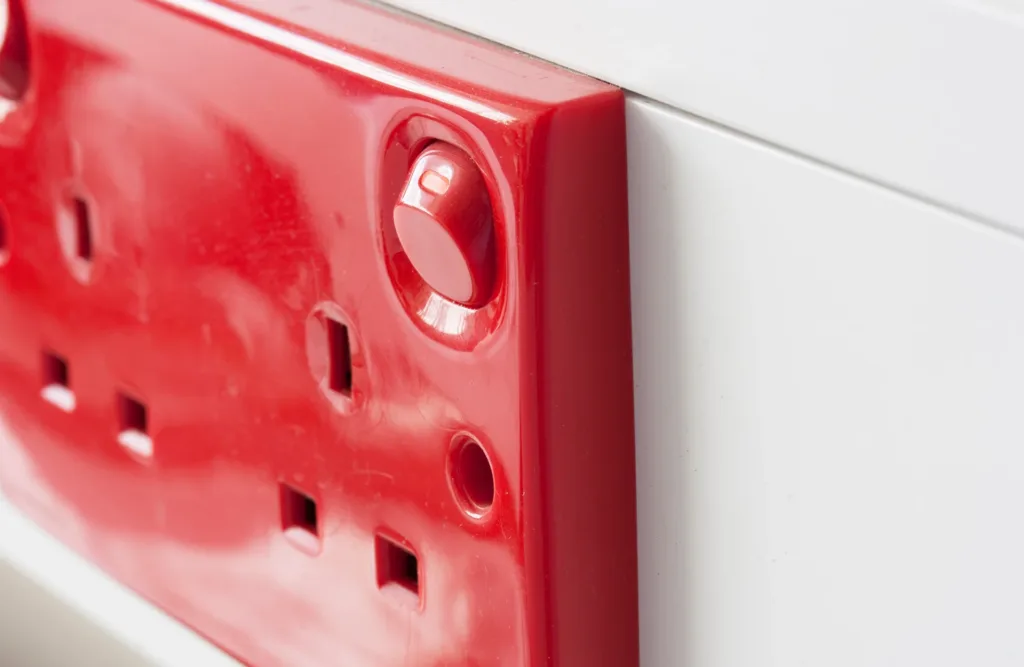
What Kind of Socket Is Permitted in a Bathroom?
Shaver Sockets in Zone 2
The only exception to the no-sockets rule inside Zone 2 is a shaver socket that includes an isolating transformer. These are specifically designed to limit electrical current and isolate the supply from the mains, reducing the risk of electric shock. UK shaver sockets typically offer both 115V and 230V output with a power rating around 20VA — a fraction of the 3,000W rating of a standard socket.
These can legally be installed in Zone 2 and are ideal for electric razors or compatible toothbrush chargers, but they’re not designed for high-draw devices such as hairdryers, straighteners or phone chargers. The Electrical Safety First organisation confirms these rules and provides a helpful breakdown of permitted socket types.
Prohibited Socket Types
Standard 13A sockets are not allowed in Zones 0, 1, or 2 — under any circumstances. This applies even if they’re covered or fitted with splash-proof enclosures. These sockets must remain at least 3 metres away from the bath or shower to prevent the risk of electrocution or short-circuiting due to moisture.
Supplementary Equipotential Bonding
In bathrooms with older electrical systems, supplementary bonding may still be required. This connects all exposed metalwork (e.g. pipework, towel rails) to prevent potential differences in voltage. In modern homes, this is often replaced by the use of RCDs on the circuit. Nonetheless, any socket fitted in a bathroom must be part of a protected and safely bonded system.
Safe Distances Explained
Minimum Distance from Showers for Standard Sockets
For a standard socket to comply with UK regulations, it must be at least 3 metres away from the edge of the bath or shower tray. This means that unless your bathroom is unusually large, standard sockets will usually need to be located outside the room or in an adjacent dressing space.
Fitting Shaver Sockets Near Basins
It’s common to see shaver sockets fitted near bathroom sinks, usually in a mirrored cabinet. This is acceptable as long as the unit complies with IP ratings for moisture protection (IPX4 or better) and includes an isolating transformer. These are permitted in Zone 2, but they should not be placed directly above a basin where splashing is likely.
Installing Outlets for Heated Mirrors or Toothbrushes
Some bathroom products come with built-in heating or trickle-charging functions. These should be hardwired via a fused spur outside the zones, or plugged into a protected outlet outside the bathroom entirely. Plugging them into a shaver socket is not recommended unless the socket is specifically rated for continuous use.
Installation Tips and Common Mistakes
Incorrect Socket Height
Sockets installed at the right horizontal distance but too low or high vertically may still breach safety regulations. For example, sockets located above 2.25 metres still fall under bathroom zoning rules if within horizontal reach of a water source.
Using Extensions or Adapters
It is never safe — or legal — to use an extension lead or trailing adapter to bring power into a bathroom from another room. These create an unprotected link between wet and dry zones and are a serious fire and shock risk.
Overloading Shaver Sockets
Some electric toothbrushes and trimmers are compatible with shaver outlets, but that doesn’t mean they can remain plugged in indefinitely. Most shaver sockets aren’t rated for continuous charging and can overheat over time unless the manufacturer permits permanent load use.
FAQs
Can I have a plug socket next to my shower?
Only shaver sockets with isolating transformers are allowed in Zone 2. Standard plug sockets must be at least 3 metres away from the shower or bath.
What is the minimum distance for a socket from a bath or shower?
Standard sockets must be no closer than 3 metres from the bath or shower’s edge. This usually places them outside the bathroom.
Can I plug my hairdryer into a bathroom socket?
No. Hairdryers are high-draw devices and must only be used with a standard socket located outside the bathroom.
Conclusion
UK bathroom regulations are deliberately strict when it comes to socket placement — and for good reason. Water increases the risk of electric shock, which is why all socket installations must respect defined safety zones. While shaver sockets with isolating transformers can legally be fitted in Zone 2, no other socket type is permitted within 3 metres of a shower or bath. If you’re planning a refurbishment or unsure about current layouts, it’s always worth consulting a qualified electrician.
Our team at Wave Electrical provides compliant, insured installation across all types of domestic properties. From shaver sockets to complete rewires, our domestic services cover it all — and if you need help getting started, you can always contact us for advice.