
Smart homes are no longer the future; they are already part of everyday living for many households across the UK. The real shift now is not simply about owning smart gadgets but about creating homes that respond intuitively to individual lifestyles. That’s where Loxone stands out. Instead of piecing together separate devices with different apps, it offers a central brain that manages everything seamlessly. More importantly, it allows homeowners to personalise their environment in ways that make life easier, safer, and more efficient.
This isn’t about following a trend or collecting gadgets. A tailored Loxone system has the ability to manage heating based on your daily routine, adjust lighting to suit your mood, and even monitor energy use in real time. The attraction lies in the way it adapts to different households, whether it’s a busy family home, a modern apartment, or a property designed with future-proof automation in mind.
In this article, we’ll look at what makes Loxone distinctive, explore the customisation options, and explain how it integrates with other home technologies. We’ll also cover how it can be safely installed in line with UK regulations, so you can enjoy all the benefits of a truly intelligent home.
What Makes Loxone Different?
At the core of every Loxone setup is the Miniserver, often described as the brain of the home. Unlike off-the-shelf smart gadgets that each need their own app or hub, the Miniserver unifies control of lighting, heating, security, and more into one system. That means your home doesn’t just react when you press a button — it learns patterns, responds to changes, and ensures comfort without constant input.
One of Loxone’s greatest advantages is scalability. Some homeowners start small, with a focus on heating or lighting, and then expand into full home automation later. The system doesn’t need replacing when new features are added; it simply grows with the household. This makes it an investment that adapts as lifestyles evolve.
Another strength lies in simplicity of use. Despite the advanced technology behind the scenes, everything can be controlled through a single app or via switches placed around the home. That keeps it accessible for everyone, from young children to those less familiar with technology. It’s a balance of sophistication and ease that many piecemeal solutions can’t offer.
Customisation Possibilities with Loxone
Personalised Lighting and Atmosphere
Lighting is one of the most noticeable areas where Loxone shines. Instead of relying on simple switches or basic smart bulbs, the system allows for scene-based lighting that changes according to your lifestyle. Imagine a soft, warm glow that gradually brightens in the morning to ease you into the day, or a “movie night” mode that dims the main lights while highlighting subtle accents around the room. These aren’t one-size-fits-all presets either — they can be fully programmed to match personal tastes.
The use of presence detection takes this even further. Lights can automatically switch on when you enter a room and off again once you leave, removing the need for constant manual control. This not only saves energy but also ensures the right ambience is always ready without you needing to think about it. For homeowners who enjoy entertaining, customised lighting scenes can transform spaces instantly, shifting from practical brightness to atmospheric tones at the touch of a button.
Heating and Energy Efficiency
Energy efficiency is one of the strongest motivations for investing in smart home automation, and Loxone offers exceptional control over heating. Instead of treating the home as a single space, it allows for zonal heating management, which means different rooms can be kept at different temperatures. For example, the living room can be warm and inviting in the evening, while bedrooms remain cooler until just before bedtime.
The system also links with blinds and shading. By lowering blinds when strong sunlight is detected, the system prevents rooms from overheating, which reduces the need for cooling systems. Similarly, blinds can be raised during winter to make use of natural warmth. These seemingly small automations build into noticeable savings over time while maintaining comfort.
Audio and Entertainment
Another area of customisation is sound. Loxone offers multiroom audio systems that let you enjoy music or radio across the whole house or just in specific areas. Whether it’s having background music in the kitchen while cooking, synchronising tracks across the entire house for a party, or even sending voice announcements to different rooms, the system is highly flexible.
Because everything is managed from the same app or control panel, you don’t need multiple devices or remotes. For households with varied tastes, playlists can be personalised, and the system can even integrate with popular streaming services. This ensures entertainment fits seamlessly into daily routines.
Security and Access Control
Home security is another area where Loxone can be tailored. From smart locks and alarm systems to motion detection and surveillance integration, everything can be connected into one ecosystem. For example, you could programme the house to lock itself and arm the alarm automatically when everyone has left. If movement is detected unexpectedly, the system can send alerts straight to your phone.
Remote monitoring adds further reassurance, giving homeowners visibility and control even when away. This makes it ideal for second homes, frequent travellers, or simply those who want an extra layer of peace of mind. Customisation also extends to access control — you could grant different entry permissions for family members, cleaners, or tradespeople, all while keeping track of usage.
Integrating Loxone with Other Technologies
Smart Plugs and Appliances
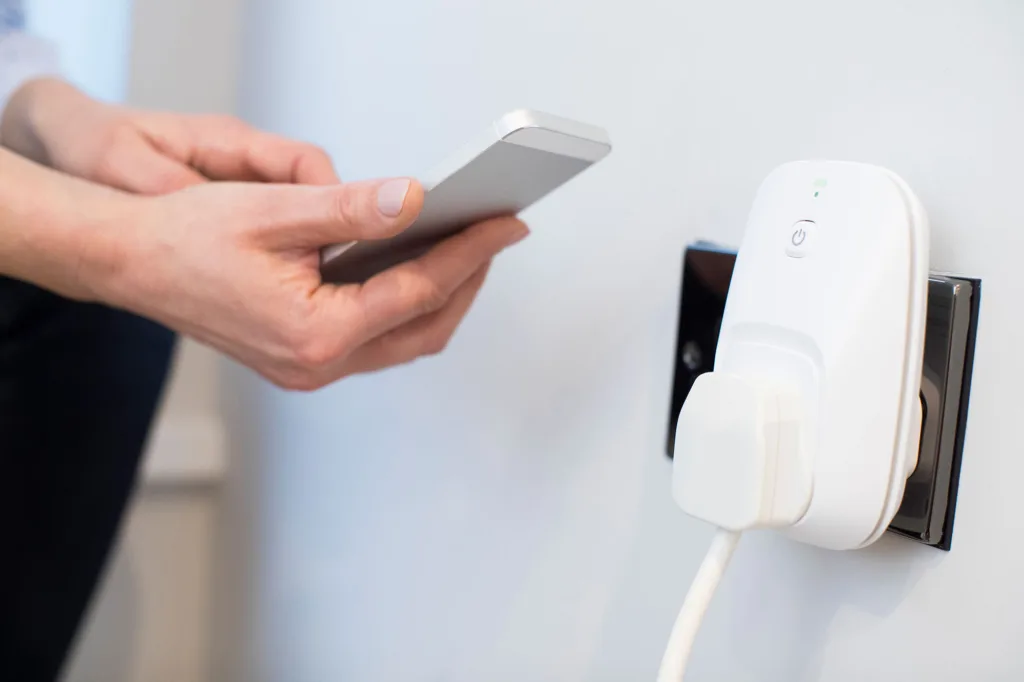
While Loxone provides the backbone of automation, it can also connect with everyday devices through smart plugs. This allows homeowners to control appliances such as lamps, kettles, or even heaters without replacing them with new “smart” versions. Using a combination of sensors and timers, appliances can be programmed to switch on or off automatically, improving both convenience and efficiency. For homeowners looking to start small, smart plugs are an accessible way to expand their automation setup. You can find more about their benefits in our Cornwall smart plugs guide.
Energy Management Systems
Energy management is increasingly important, and Loxone integrates smoothly with renewable energy sources and monitoring systems. For example, solar panels can be linked to the system so that excess energy powers household devices or charges an electric vehicle. This ensures sustainable energy use and reduces dependency on the grid. For households aiming to cut running costs while reducing their environmental impact, this feature alone makes a strong case for installing Loxone.
Third-Party Integrations
A major strength of Loxone is its openness to third-party technology. The system supports KNX, Modbus, and other industry standards, meaning it doesn’t lock homeowners into a closed ecosystem. This ensures compatibility with a wide range of existing smart devices and professional systems. Whether it’s expanding into specialist heating solutions or integrating with external audio equipment, Loxone provides the flexibility to create a tailored automation network that suits individual requirements.
Programming and Fine-Tuning Your System
For those who enjoy taking control of their setup, Loxone offers powerful programming tools through Loxone Config software. This allows homeowners or installers to customise automation scenarios to a very fine degree. A common example is a holiday mode, where lights and blinds mimic normal household activity while the property is unoccupied, creating the impression that someone is home.
Other customisations include safety alerts, such as notifications if windows are left open or if water sensors detect a leak. Pet owners can even tailor automations so that motion sensors ignore smaller animals while still providing security coverage. The level of control is impressive, but for most households, professional installers will handle the technical setup, ensuring everything works reliably without requiring deep technical knowledge from the homeowner.
Regulations and Safety in UK Smart Homes
Smart home installations involve more than convenience; they must meet strict safety standards. In the UK, all electrical work in dwellings must comply with Approved Document P regulations, which cover electrical safety in homes. This means installations should be carried out by qualified professionals to ensure compliance.
Another important standard is the BS 7671 Wiring Regulations, issued by the Institution of Engineering and Technology (IET). These regulations outline the technical requirements for safe electrical installations in the UK. By ensuring your smart home setup aligns with these standards, you not only guarantee safety but also protect the long-term value of your property.
This is why professional installation is strongly recommended. While DIY solutions may seem appealing, electrical safety is not an area to cut corners on. A certified installer ensures everything is correctly designed, tested, and documented, giving homeowners peace of mind.
Why Choose Professional Installation?
A well-designed Loxone system is about more than just technology — it’s about tailoring automation to how you live. Professional installers bring the expertise needed to understand both your household’s requirements and the technical standards required. They can help design the system so it’s future-proof, ensuring it can expand as new technologies emerge.
At the same time, professionals ensure all work is compliant with building regulations and wiring standards. This guarantees safety while also providing the flexibility of full customisation. For homeowners who want their automation to work seamlessly from day one, working with an experienced installer is the most effective route. To see what’s possible, take a look at our full home automation service.
FAQs
- Can Loxone work with my existing smart devices?
Yes. Thanks to support for protocols like KNX and Modbus, Loxone can integrate with a wide range of third-party devices. This means you can keep your favourite gadgets while still benefiting from centralised control. - How secure is a Loxone smart home?
Loxone places strong emphasis on security. All communications are encrypted, and you can manage permissions for different users. Remote access is protected, giving you control while keeping your data safe. - Do I need professional installation, or can I DIY?
While Loxone Config software allows advanced users to programme their own setup, it’s recommended that installation is carried out by a certified professional. This ensures compliance with UK safety regulations and guarantees the system works reliably from the start.
Conclusion
Loxone offers a level of smart home automation that goes beyond simple convenience. By tailoring the system to individual lifestyles, it creates homes that are more efficient, comfortable, and secure. The ability to integrate with renewable energy, manage appliances, and scale up over time makes it a strong long-term investment.
For homeowners, the real benefit lies in having a system that adapts with them — whether that’s supporting energy-saving goals, creating a safer living environment, or offering effortless comfort day to day. With professional installation, you can be confident everything is set up safely and in line with UK regulations, leaving you free to enjoy the full potential of your smart home.
If you’re considering upgrading your property with intelligent automation, speak to the experts at Wave Electrical Solutions to discover how a tailored Loxone setup could transform your home.