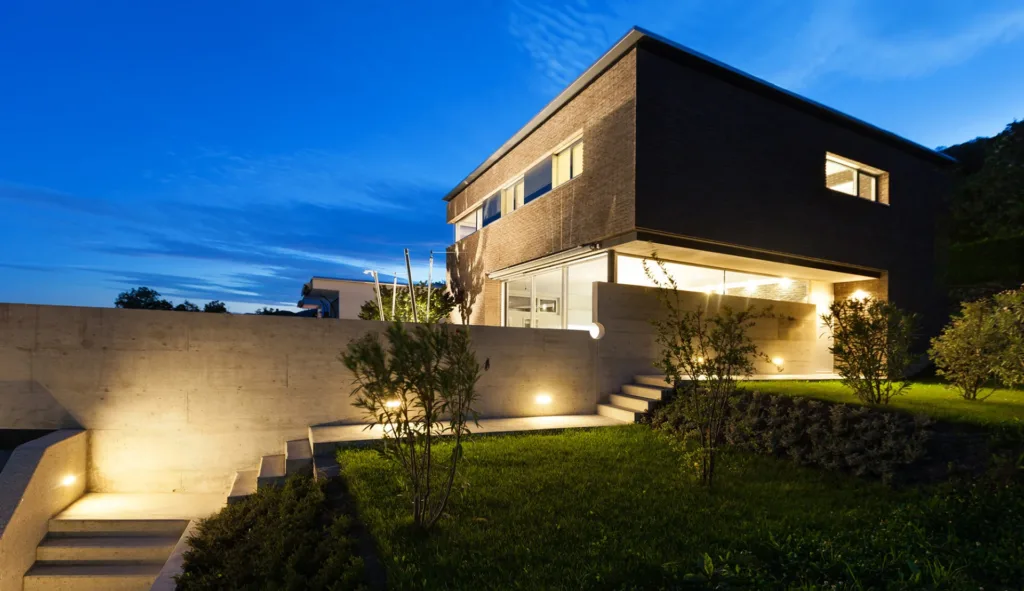
Outdoor spaces have become more than a place for a barbecue or a couple of chairs. They now support daily routines — morning coffee, evening work calls, family dinners, weekend socials — all year round. But when lighting is poor or power access is awkward, the space doesn’t work. At Wave Electrical, we’ve helped many homeowners turn disused patios or dim gardens into comfortable, safe extensions of their home. The difference often comes down to two things: how the lighting feels, and where the sockets are.
Whether you’re planning a new seating area, a garden studio or simply want to stop trailing extension leads through the kitchen window, smart electrical design will support your plans without taking over. This guide outlines how to build a durable, safe, and practical outdoor setup — and make it look good while doing so.
We covered the broader benefits of external electrics in our piece on extending your living space outdoors, and now we’re focusing in on the lighting and power elements that bring that space to life.
Planning Outdoor Electrics Safely
Outdoor installations involve more than weatherproof fittings and pretty lanterns. They must be safe, compliant, and resilient over time.
Understand zoning and IP ratings
The UK wiring regulations (BS 7671) define outdoor areas as ‘special locations’. That means extra care must be taken around water, exposure, and surface contact. For example, sockets near ground level or water features need a high IP (Ingress Protection) rating — typically IP66 or above. Lighting in sheltered decking may get away with IP44, but anything near sprinklers, drains or exposed walls should be rated for heavy water jets or even submersion.
Consider future flexibility and smart upgrades
We often recommend installing slightly more capacity than initially needed. That might mean a spare socket under a pergola or a lighting spur towards the far end of the lawn. These additions cost little during first fix but save disruption later. If you’re considering smart controls, integrated garden WiFi or EV charging, it’s worth running suitable cabling while trenches are open.
Compliance with UK regulations and Building Standards
Outdoor electrics must follow Part P of the Building Regulations and should only be installed by a qualified electrician. Any external wiring should be run through suitable conduit or armoured cable, terminated with certified outdoor enclosures. This isn’t optional — it’s a legal requirement for safety.
Outdoor Sockets and Power Access
A well-placed socket can change how a space functions. You’re no longer stuck near the kitchen door or reliant on battery life.
Fixed versus freestanding units
Outdoor sockets can be mounted on exterior walls, sunk into paving, or installed as standalone posts. Freestanding units are ideal for open gardens where wall access is limited — for example, beside a hot tub, at the end of a long path, or near raised planters used for work or hobbies.
Wall-mounted options remain popular near patios and outdoor kitchens. Wherever they go, make sure they include weatherproof lids that seal when cables are connected.
Common use cases: appliances, charging, tools
Outdoor sockets aren’t just about aesthetics. They’re useful year-round for:
- Charging lawnmowers or hedge trimmers
- Powering a pressure washer or garden hoover
- Running heaters or lights in temporary structures
- Plugging in speakers or a projector for outdoor film nights
We install this type of setup regularly as part of our outdoor lighting and socket service, ensuring it’s both practical and properly protected.
Protecting against weather and misuse
Look for units with integrated RCD protection and tamper-proof covers. Avoid placing sockets in flood-prone areas or too close to loose soil, where splashes and dirt can interfere with the enclosure. We also recommend checking them annually — a simple inspection before winter sets in can prevent faults down the line.
Lighting Styles That Transform Spaces
Lighting is both functional and atmospheric. Done well, it disappears into the background during the day — and brings the space to life at night.
Pathway and step lighting for safety
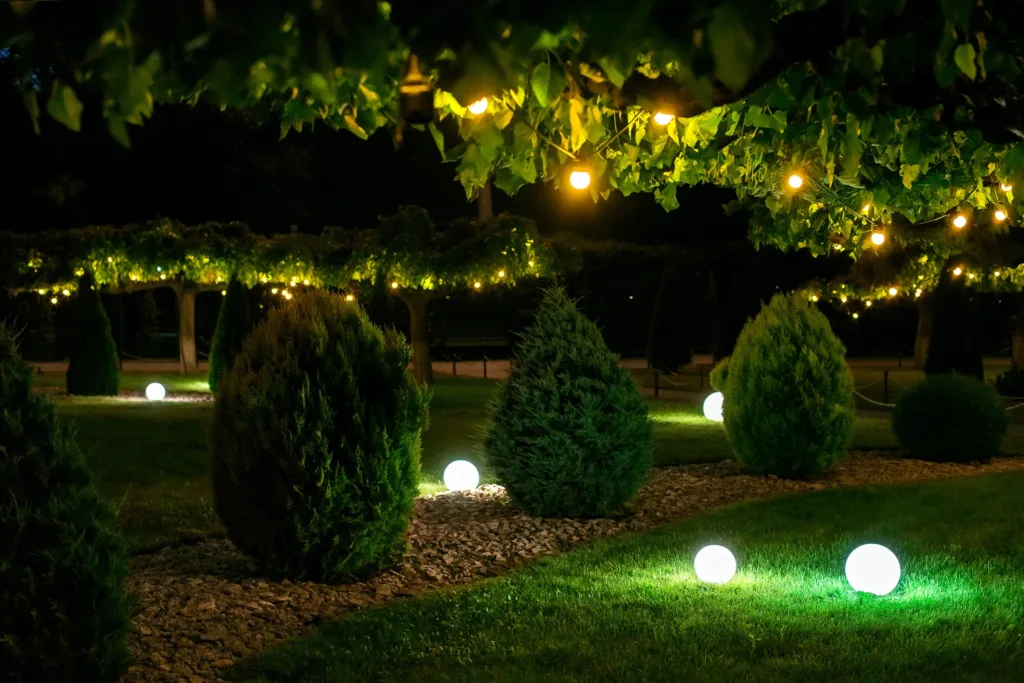
Walkway lighting makes garden paths safer, especially in damp or uneven conditions. It also softens the route through your space, drawing the eye and guiding guests at night. Low-glare bollards, in-ground LEDs and recessed riser lights are all subtle options that avoid harsh glare.
Accent lighting to highlight planting or architecture
Accent lights are often overlooked in favour of bulk fittings, but they’re essential for atmosphere. Uplights set into gravel or mulch can highlight a feature tree or sculptural shrub. Downlights mounted to fence posts create grazing light that accentuates textures. Soft edge lighting on raised planters or dry-stone walls can make modest gardens feel more structured and layered.
Creating mood with uplights and wall wash effects
If your garden includes a feature wall, a pergola or raised structure, consider indirect wash lighting. These effects avoid harsh shadows and provide enough ambient light for seating and dining. Warm white (2700–3000K) is generally more comfortable than cool tones for domestic use.
Motion sensors, timers, and smart controls
Motion detection is useful near bins, gates and driveways. For gardens used daily, programmable timers or dusk sensors ensure lights come on at the right time. More advanced users may want app-based control, which allows dimming, zoning and scheduling via phone or voice assistant. These can be integrated into existing home systems or set up independently.
Power Considerations for Garden Features
Larger features bring their own electrical demands. We see this regularly with garden offices, sheds and entertainment zones.
Ponds, fountains, and water features
All water-related equipment must be IPX8 rated, safely isolated, and run from a dedicated circuit. Pumps, filters, and aerators often run continuously, so reliability matters. All control units should be housed indoors or in an IP-rated cabinet.
Sheds, studios, and garden offices
If you’re using a structure as a workspace or gym, treat it like an indoor room. That means lighting, sockets, and heating supply — all run through suitable SWA cable with proper earthing. We’ve rewired plenty of garden studios where shortcuts were taken early on, and the result is usually unsafe.
Avoiding overloads and DIY pitfalls
It’s tempting to add more sockets using indoor extension leads or budget enclosures, but this risks overload and fire. Outdoor circuits should be assessed for total load and protected accordingly. If in doubt, speak to an electrician before adding new devices.
Working with a Qualified Installer
We’ve seen what happens when outdoor electrics are improvised — and it’s never cheap to put right.
Why outdoor electrics should never be improvised
Damp conditions, mechanical wear, UV exposure and pests all put pressure on outdoor wiring. Indoor-rated equipment or poor routing can lead to shock risks, frequent tripping, or cable failure. Your installation must withstand real-world conditions for years.
What to expect during installation
We typically begin with a site survey, then map the required sockets, lighting types and switching methods. Cabling routes are agreed before any digging starts. Most jobs take 1–3 days depending on complexity and may involve liaising with landscapers or builders.
Questions to ask your electrician
- Are all fittings IP rated for their location?
- How is RCD protection being handled?
- What load calculations have been made?
- Will this be certified under Part P?
Any reputable installer should welcome those questions.
FAQs
Can outdoor sockets be left uncovered?
Outdoor sockets must be fitted with weatherproof covers that allow use while a plug is inserted. These should be closed and sealed when not in use to maintain IP protection.
Do I need a separate circuit for garden electrics?
In most cases, yes. Garden installations — particularly those including lighting and permanent features — should run from their own protected circuit. Shared circuits may become overloaded or cause nuisance tripping.
Are smart lighting systems weatherproof?
Many are, but check the IP rating. Components like transformers or smart relays should be housed in sealed enclosures or indoors. The external fitting itself must be rated for outdoor conditions.
Conclusion
Thoughtfully designed lighting and reliable socket access can completely reshape an outdoor space. They support everyday living, not just the summer months — making it easier to work outside, entertain comfortably, or simply enjoy a cup of tea on a well-lit patio. With the right installation, your garden becomes more than functional. It becomes part of the home.
To talk through your outdoor plans or book a site visit, feel free to get in touch with our team. We’re happy to advise on everything from lighting layouts to long-term weatherproofing.