Why Ventilation Matters Indoors
Across the UK, homes are becoming more airtight. Improved insulation and energy efficiency upgrades have helped reduce heat loss, but they’ve also limited the natural movement of air. The result is often a build-up of indoor humidity, stale air, and in many cases, the appearance of condensation and black mould.
Our team sees this daily — bedrooms with water droplets on the windows, bathrooms that stay damp for hours, and tenants struggling with persistent mildew around windows and skirting boards. The good news is that this isn’t a permanent state of affairs. The cause in many cases is poor ventilation, and Positive Input Ventilation (PIV) is one of the most effective systems we’ve seen for fixing it.
If you’re comparing options or have been advised to consider a PIV system, it’s worth understanding both how these fans work and what sort of results you can realistically expect. For a balanced view, we’ve also discussed some disadvantages of PIV elsewhere on our site.
How Positive Input Ventilation Works
The principle of positive pressure
PIV systems work by gently pushing filtered air into your home from a clean source — usually the loft. As the fresh air enters, it displaces moist and stale indoor air, creating a consistent air movement throughout the property. This process is known as positive pressure ventilation.
It’s not a forced or aggressive airflow. Instead, it’s a continual, low-level supply that reduces humidity and helps control indoor pollutants like dust mites, pollen, and VOCs (volatile organic compounds).
Where the air comes from
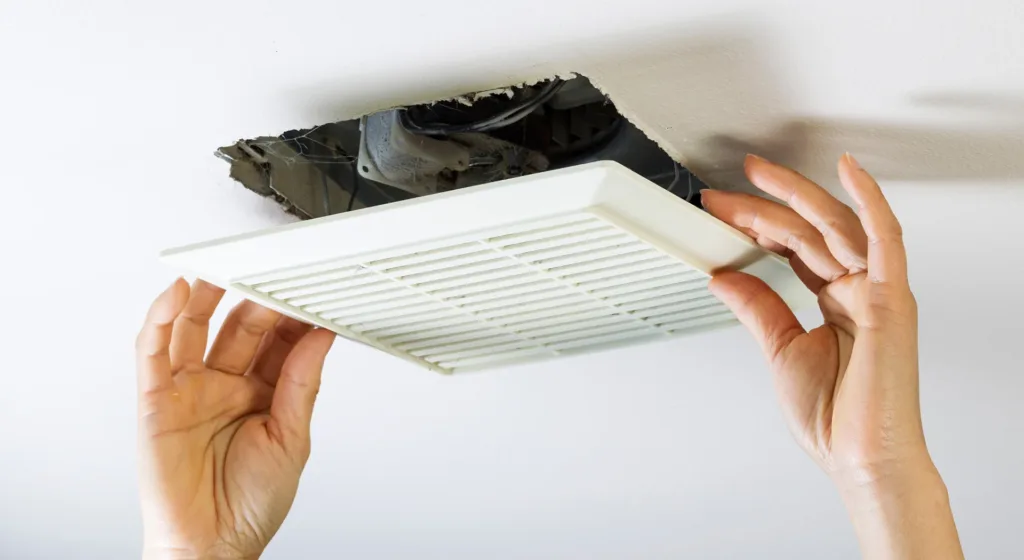
For homes with loft space, a PIV unit is typically installed in the roof void. It draws in air from the loft space, which is often cleaner and drier than the air inside the living space. The air is then filtered, sometimes preheated, and delivered via a ceiling diffuser — usually positioned centrally in a hallway or landing.
For properties without loft access, wall-mounted PIV units can be installed. These draw air directly from outside through the wall and operate on the same principle.
Loft-mounted vs wall-mounted units
- Loft-mounted units are generally quieter and more discreet, ideal for houses and bungalows.
- Wall-mounted units are more suitable for flats or apartments, though installation can be more involved due to external venting.
Key Benefits of PIV Systems
Reduces condensation and black mould
The most immediate impact of a PIV system is reduced condensation. By lowering indoor humidity, moisture is less likely to collect on cold surfaces like windows or external walls. Over time, this also starves black mould of the damp conditions it needs to grow. Many homeowners notice a visible difference within weeks of installation.
Helps with allergies and pollutants
Because the air entering the home is filtered, PIV systems also reduce airborne allergens like pollen and pet dander. This can be helpful for those with asthma or hay fever. Some filters also trap fine dust particles and VOCs, contributing to cleaner indoor air.
Energy-efficient air movement
PIV fans are designed to run continuously at a low speed. Most use between 10W and 20W — less than a typical lightbulb. Preheated models warm the incoming air slightly to prevent cold draughts, especially useful in colder months.
According to the UK’s Building Research Establishment (BRE), controlled mechanical ventilation systems like PIV can offer energy savings when used alongside insulation improvements in retrofitted homes.
Quiet and low maintenance
Once fitted, PIV units require very little user interaction. The filters usually need to be replaced every 3–5 years, depending on the environment. Most systems are whisper‑quiet when running — especially loft‑mounted types — and are easily adjusted via remote control or onboard settings. According to official guidance from Gov.uk, ventilation helps exchange fresh air from outside with stale indoor air and moisture, which in turn supports better indoor air quality and reduces the likelihood of harmful pollutants and moisture becoming trapped inside a property.
Installation Considerations
Suitable property types
PIV systems are best suited to properties with persistent condensation issues and relatively high humidity. They are commonly installed in older homes with solid walls, but can also work well in newer builds where trickle vents and extraction aren’t doing enough.
Loft access and insulation
For loft-mounted units, sufficient space and basic insulation are essential. The loft doesn’t need to be boarded, but it should be dry and accessible. The incoming air should be taken from an area of the loft that is not overly dusty or affected by external pollutants.
Electricity supply and control options
PIV systems require a mains power supply, typically wired into a nearby lighting circuit. Most models include a built-in humidistat, allowing the fan speed to automatically adjust based on the moisture level in the air. Others offer manual settings or wireless controls, depending on the brand.
We cover all aspects of domestic fan installations across Cornwall, from suitability checks to final testing. Learn more about our domestic electrical services.
Common Myths About PIV
“They cool the house too much”
This is a common concern, especially in winter. Most modern PIV systems include an optional preheater that warms the incoming air slightly. The goal isn’t to heat the home, but to prevent the airflow from feeling cold. In many homes, the impact on temperature is negligible — and in fact, reducing humidity often makes the home feel warmer.
“You don’t need ventilation in newer homes”
While newer builds are better insulated and have trickle vents, they can still suffer from poor air exchange. PIV can complement existing ventilation by ensuring a consistent flow, especially in homes where extractor fans are underused.
“They cause draughts”
A properly installed PIV system produces a gentle airflow that diffuses into the living space. If you can feel a strong breeze, the settings likely need adjustment. The aim is to create a slow, even pressure that encourages stale air out — not to blow air around like a fan heater.
FAQs
How long does a PIV system take to install?
Most loft-mounted systems can be fitted in under a day, depending on roof space and access.
Do PIV units work in flats or apartments?
Some wall-mounted models are designed for properties without loft space. A survey will confirm if it’s suitable.
Will it stop condensation on my windows?
In most homes, yes. PIV helps balance humidity, which directly reduces window condensation.
Conclusion
Positive Input Ventilation is one of the simplest, quietest and most low-maintenance ways to tackle indoor air quality issues. For properties with ongoing condensation or stale air, a correctly installed PIV unit can make a noticeable difference — often within weeks.
It isn’t a substitute for heating or extraction fans, and it’s not always the right fit for every home. But for many households, it offers a cost-effective way to reduce mould, improve comfort, and support long-term building health.
If you’re ready to explore whether a PIV system is right for your home, our team can assess your setup and recommend the best approach. You can get in touch with us here