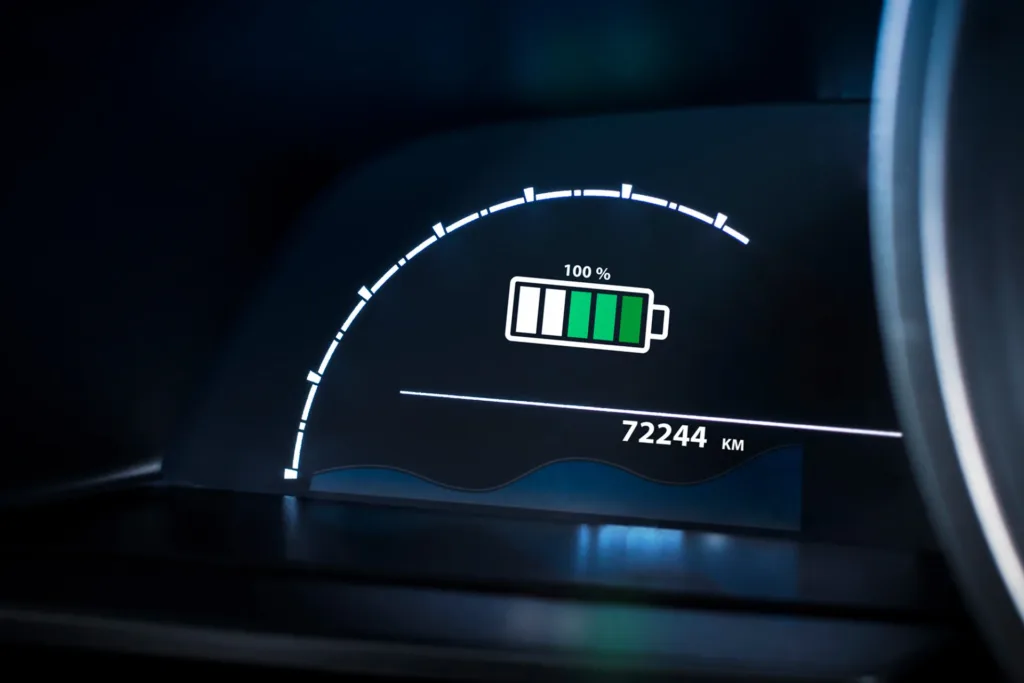
Electric vehicles have changed how we think about refuelling. Instead of standing at a forecourt, many of us now plug in on the driveway and wake up to a full battery. It feels simple. Set it to 100%, leave it overnight, and start the day with maximum range.
In practice, battery charging is slightly more nuanced. The way you charge at home can influence long-term battery health, running costs and overall efficiency. At Wave Electrical, we install and configure home charging systems across Cornwall, and one of the most common questions we hear is whether charging to 100% is a good idea. The short answer is that it depends on how and when you do it.
If you are considering a professionally installed unit, our team provides compliant and future-ready solutions through our home EV charger installation service, designed around your driving habits and property setup.
Early Summary
Charging your EV to 100% at home is not harmful in isolation. Modern lithium-ion batteries and vehicle management systems are built with safeguards. The issue lies in how long the battery remains at full charge and how often you repeat the process.
For everyday driving, most manufacturers recommend keeping the battery between roughly 20% and 80%. Charging to 100% is usually best reserved for longer journeys or when you genuinely need the additional range. Smart charging features make it easy to manage this balance without sacrificing convenience.
How EV Batteries Actually Work
Lithium-ion basics in simple terms
Most modern electric vehicles use lithium-ion battery packs. These batteries store energy by moving lithium ions between electrodes during charging and discharging. The chemistry is reliable and energy-dense, which makes it ideal for vehicles.
However, lithium-ion cells experience gradual wear over time. This is known as degradation. Every charge and discharge cycle contributes to this process, but temperature, charging speed and state of charge also play a role.
Why high and low extremes cause stress
Batteries tend to experience more stress at the extremes. Very low charge levels and very high charge levels both place additional strain on the chemistry inside the cells.
At 100%, the battery voltage is at its upper operating limit. Keeping it there for extended periods can accelerate long-term degradation. Equally, allowing the battery to sit near 0% for long stretches is not advisable.
The key point is not that 100% is inherently damaging, but that prolonged time spent at maximum charge increases stress compared with moderate levels.
Battery management systems and built-in protection
Every EV includes a battery management system. This software constantly monitors temperature, voltage and charging rates. When your dashboard shows 100%, the battery is not literally at its absolute chemical limit. Manufacturers build in a buffer to protect the cells.
The UK’s vehicle safety and regulatory framework supports high manufacturing standards, and guidance from organisations such as the Office for Zero Emission Vehicles reinforces best practice around EV adoption and infrastructure. Vehicle makers design their systems to operate safely within these standards.
That said, built-in protection does not remove the long-term effects of regularly holding a battery at full charge.
Is Charging to 100% Bad for Your Battery?
The difference between reaching 100% and staying at 100%
There is an important distinction between charging to 100% and leaving the car sitting at 100% for hours or days.
If your charge finishes shortly before you drive away, the battery will not remain at maximum voltage for long. In this scenario, the impact on long-term health is minimal.
If the car reaches 100% at midnight and then remains plugged in until 8am or later, the battery is held at that upper limit for a prolonged period. Repeating this daily may increase degradation over several years.
Daily charging versus occasional full charges
For most drivers, daily mileage does not require a full battery. Charging to 70% or 80% typically covers commuting, school runs and local travel comfortably.
Using 100% occasionally for a longer journey is entirely reasonable. Modern EVs are designed with this in mind. Problems tend to arise when full charging becomes the default routine, regardless of actual range requirements.
Manufacturer recommendations and charge limits
Many vehicles allow you to set a charge limit within the infotainment system or mobile app. Common default guidance suggests limiting daily charging to around 80%.
This advice comes directly from manufacturers, and it reflects the balance between convenience and battery longevity. It does not mean 100% is unsafe. It means moderation supports longer-term performance.

What We Recommend for Everyday Home Charging
The 70–80% daily charging approach
From our experience installing domestic charge points, the most practical approach is setting a routine limit of 70% to 80% for daily use.
This keeps the battery within a comfortable operating window and still provides ample range for typical UK driving patterns. It also reduces the time spent at higher voltage levels.
For households with predictable routines, this setting can remain in place permanently and only be adjusted when needed.
When 90% makes sense
Some drivers prefer 90% as a compromise. It provides extra flexibility without constantly pushing to the upper boundary.
If your daily mileage varies or you prefer a larger buffer, 90% is still a moderate choice compared with always charging to 100%.
Preparing for longer journeys
When planning a motorway trip or holiday travel, charging to 100% is sensible. The additional range reduces charging stops and provides reassurance.
We often advise customers to schedule charging so that the battery reaches 100% shortly before departure. This limits how long the car remains at maximum charge.
Smart Charging, Timers and Off-Peak Tariffs
Scheduling your charge to finish before departure
Most modern home chargers and vehicles support scheduled charging. Instead of starting immediately when plugged in, you can set a finish time.
For example, if you leave at 7am, you can programme the system so that charging completes at 6:45am. This approach reduces the time spent at full charge and aligns with battery best practice.
Reducing time spent at full charge
Smart chargers allow you to control charge limits, monitor usage and adjust settings remotely. This makes it easier to maintain an 80% routine and switch to 100% only when necessary.
If you are unsure which unit offers the right functionality, we have covered key features and comparisons in our guide to the best EV charger for home use.
Energy efficiency and cost optimisation
Charging at home also gives you access to off-peak electricity tariffs. Overnight rates can be significantly lower, reducing running costs.
By combining scheduled charging with a sensible charge limit, you balance battery care with cost control. The result is efficient, predictable and low-maintenance operation.
Does Home Charger Type Make a Difference?
Tethered vs untethered units
From a battery perspective, tethered and untethered chargers perform the same function. The difference is primarily convenience and cable storage.
What matters more is that the charger is correctly rated, installed safely and configured properly.
Smart chargers and app control
We strongly recommend smart-enabled chargers. They allow you to:
- Set charge limits
- Schedule sessions
- Monitor energy usage
- Integrate with certain tariff structures
These features make it much easier to avoid unnecessary 100% charging.
Installation considerations and safety
Correct installation is essential. The charger must be connected to a suitable circuit, properly protected and compliant with current wiring regulations.
We assess load capacity, earthing arrangements and cable routing before installation. A well-installed system protects your property and ensures stable charging performance over time.
FAQs
Is it OK to charge my EV to 100% once a week?
Yes. Occasional full charges are unlikely to cause meaningful degradation. The concern is frequent and prolonged time spent at 100%, not periodic use.
Will charging to 100% void my warranty?
No. Manufacturers design vehicles to handle full charges. Following recommended charge limits for daily use supports long-term health, but reaching 100% does not invalidate warranties.
Should I leave my EV plugged in overnight?
Yes, provided the charger is properly installed and configured. Using timers and charge limits helps prevent unnecessary time at maximum charge.
Final Thoughts
Charging to 100% at home is not inherently harmful. The real consideration is how often you do it and how long the battery remains at full charge. For everyday driving, keeping your EV within a moderate range supports long-term battery health while still delivering practical range.
Smart charging technology has made this easier than ever. By setting sensible limits, scheduling sessions and matching your charging pattern to your actual mileage, you can protect your battery without compromising convenience.
If you are planning to install a home charger or want advice on optimising your current setup, our team at Wave Electrical is here to help. You can get in touch with us directly through our contact page and we will be happy to discuss the right solution for your property and vehicle.