Following an electrical inspection at a commercial building in Falmouth, we upgraded a 32A 3-phase socket outlet by replacing the existing non-protected unit with a modern outlet featuring integrated RCD protection. The work addressed safety concerns and brought the installation in line with current electrical regulations.
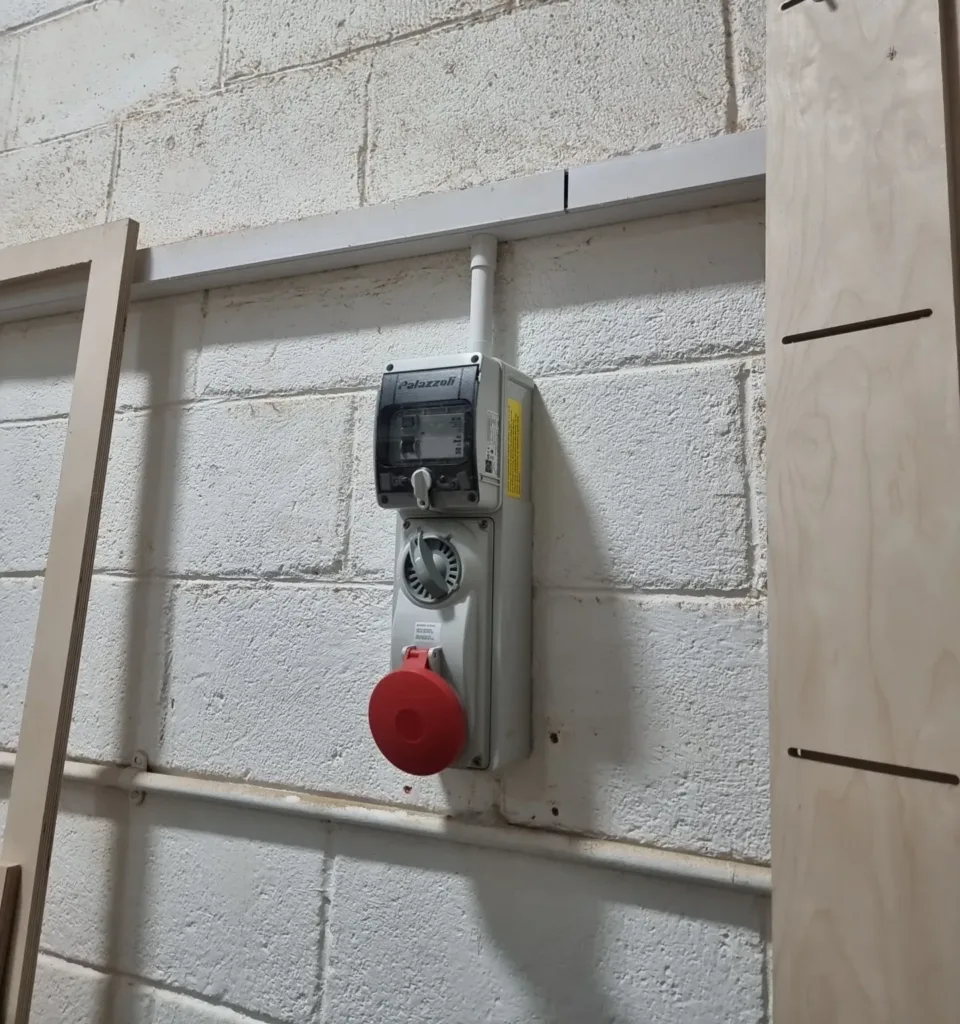
When electrical safety issues are identified during an inspection, acting on them quickly matters. A commercial building in Falmouth had an EICR that flagged up a 32A 3-phase socket outlet without RCD protection, which meant the circuit lacked proper defence against electric shock and earth leakage faults. The existing outlet had served its purpose for years, but modern safety standards demand better protection for anyone using high-power equipment in a commercial environment.
The job itself was straightforward in principle but needed careful attention to detail. Three-phase supplies deliver significantly more power than standard domestic circuits, which makes getting the protection right absolutely necessary. RCD protection monitors the current flowing through the live and neutral conductors, tripping the circuit instantly if it detects an imbalance that could indicate current leaking to earth – potentially through a person.
Before we started any work, we isolated the supply properly and confirmed it was dead. Working with three-phase power demands respect, and there are no shortcuts when it comes to safe isolation procedures. The existing socket outlet came away from its mounting point once we’d disconnected the supply cables. We could see it was a decent enough unit in its day, but it simply didn’t have the level of protection we’d expect to see on a modern installation.
The replacement unit we fitted combines the socket outlet with an integral RCD in a single enclosure. This type of unit has become increasingly common in commercial and industrial settings where three-phase power gets used regularly. Rather than relying on upstream protection that might not be sensitive enough or quick enough to prevent harm, having the RCD built into the outlet itself provides protection right at the point of use.
Getting the connections right mattered considerably here. Three-phase wiring means you’re dealing with multiple live conductors, and mixing them up would cause problems. We connected each phase conductor to its correct terminal, made sure the neutral was secure, and paid particular attention to the earth connection. The earth path needs to be solid and reliable for the RCD to function properly – if there’s any weakness in the earthing arrangement, the protection won’t work as intended.
Once we’d made all the connections and secured the unit back to the wall, testing came next. You can’t just assume an RCD will work because it’s new out of the box. We used a proper RCD tester to check both the trip time and the current threshold. The regulations specify maximum disconnection times depending on the type of circuit and the fault current, and our tests confirmed the unit met these requirements comfortably. We also checked that it would trip at the correct current levels and that the test button on the unit itself functioned properly.
The testing phase also included verifying that the supply voltage was correct across all three phases and that there weren’t any unexpected voltage drops or imbalances. Three-phase systems should maintain roughly equal voltages across all three phases, and significant differences can indicate problems elsewhere in the installation. Everything checked out fine in this case, which meant the circuit was ready to go back into service.
While we were there, we took the opportunity to inspect the cable feeding the outlet. The cable itself was in good condition and properly sized for the load, which wasn’t always a given in older installations. Sometimes you find circuits that have been modified or extended over the years without proper consideration for cable capacity. In this instance, though, the original installation had been done properly, and our work was simply about adding the protection that modern standards require.
One thing worth noting about this type of upgrade work is how it fits into the broader picture of electrical safety. The EICR that identified this issue would have looked at the entire installation, checking for anything that could pose a risk or fail to meet current standards. Addressing each observation systematically means the whole installation becomes safer and more reliable over time. Some property owners wonder whether it’s worth fixing things that have worked fine for years, but electrical safety standards evolve for good reasons. What was acceptable twenty years ago might not provide adequate protection by today’s understanding of electrical hazards.
The RCD protection we’ve added here will react within milliseconds if something goes wrong. If a tool with a damaged cable gets plugged in, or if moisture somehow compromises the circuit, or if anyone accidentally touches a live part, the RCD will detect the fault current flowing to earth and cut the power before serious injury can occur. That’s the difference between a minor shock and something far worse.
After completing the installation and testing, we updated the circuit labelling to show that this outlet now has RCD protection. Proper labelling might seem like a small detail, but it matters when someone needs to work on the installation in future. They need to know exactly what protection is in place and how the circuit is configured. We also documented everything properly, which forms part of the certification for the remedial work.
The property owner can now use this three-phase outlet knowing it has the protection required by current regulations. Whether it’s powering machinery, charging equipment, or running any other three-phase load in the commercial space, the RCD will be monitoring constantly for any sign of a fault. That’s what modern electrical safety is about – not just hoping nothing goes wrong, but having systems in place that will respond instantly if something does.
For anyone managing a commercial building in Falmouth or elsewhere in Cornwall, it’s worth considering when your last electrical inspection took place. EICRs pick up issues like this non-protected outlet that might not cause any immediate problems but represent real safety risks. Addressing them doesn’t just tick a compliance box – it genuinely makes the installation safer for everyone who uses it. The work we carried out here took a few hours but provides protection that could prevent a serious accident somewhere down the line.
Three-phase power is incredibly useful for running equipment that needs more grunt than a standard 13A socket can provide, but it demands proper respect and proper protection. The upgrade we completed brings this circuit up to current standards and gives everyone using it the protection they deserve. Sometimes the most important electrical work isn’t the most visible – a properly protected outlet looks much the same as an unprotected one from the outside, but the difference in safety terms is substantial.