Installation of a quiet-running bathroom extractor fan with external venting and timer control for a property in Saltash, including core drilling through the exterior wall and dedicated isolator switch.
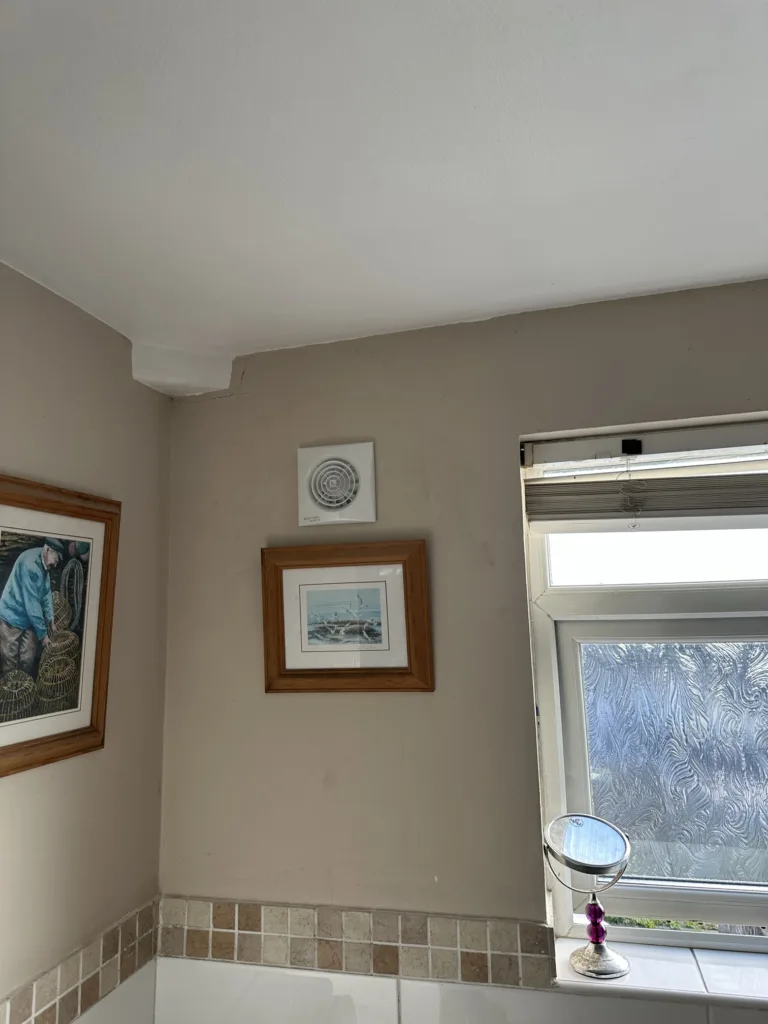
Proper ventilation in bathrooms isn’t just about comfort – it’s about protecting your home from the long-term effects of moisture and condensation. When we were contacted about fitting a bathroom extractor fan at a property in Saltash, the homeowner had noticed persistent condensation issues that were starting to affect the room’s condition. They wanted a solution that would work efficiently without being intrusive or noisy, something that would blend into daily life whilst doing its job properly.
The installation called for a wall-mounted extractor fan that would vent directly through the exterior wall of the bathroom. This approach offers several advantages over ducted systems that run through roof spaces or other circuitous routes. Direct venting means shorter duct runs, which translates to better airflow and more efficient extraction. There’s less resistance for the fan to work against, and fewer bends or connections where problems might develop down the line.
We selected a silent running 100mm fan for this installation. The ‘silent’ designation matters more than many people realise when choosing bathroom extraction. Noisy fans get switched off or avoided, which defeats the entire purpose of having proper ventilation. A quiet fan encourages consistent use, running each time the bathroom is occupied without becoming a source of irritation. The 100mm size strikes a good balance – large enough to move meaningful volumes of air whilst remaining compact enough for straightforward installation in most bathroom settings.
Getting the external venting right required core drilling through the property’s rear wall. This isn’t a quick drill-and-done job. Core drilling through masonry needs proper equipment and technique to create a clean, precise hole without causing damage to the surrounding structure. The 100mm diameter hole had to be positioned carefully, taking account of what sat on the other side of the wall and checking for any services that might be concealed within the masonry. Once drilled, the hole provides a direct route for moist air to exit the building, venting safely outside rather than being recirculated or trapped within the property’s structure.
The external grille fitted to the outside of the wall serves multiple functions beyond just completing the aesthetic of the installation. Its white finish matches the property’s exterior whilst the grille design prevents debris, insects, and weather from entering through the vent hole. The grille also incorporates features to prevent backdraught – stopping wind from blowing back into the ductwork when the fan isn’t running. These details matter because they affect how well the system performs over years of use, not just on installation day.
Inside the bathroom, the wiring configuration followed the most practical approach for this type of installation. The fan connects to the existing lighting circuit, which means it activates automatically whenever someone switches on the bathroom light. This arrangement removes any need for occupants to remember to turn on ventilation – it happens as a natural consequence of using the room. The wiring runs up into the loft space where it can be routed neatly without surface-mounting cables across walls or ceilings. Working in loft spaces requires care and attention. Cables need securing properly with appropriate clips, following safe routing paths that avoid potential damage from stored items or future maintenance work.
The dedicated isolator switch installed at high level outside the bathroom provides a means of safely disconnecting the fan when needed. Building regulations require accessible isolation for fixed electrical equipment, allowing safe maintenance or replacement without needing to isolate larger circuits. Positioning this switch at high level outside the bathroom keeps it accessible yet out of the way of general bathroom activities. It’s there when needed for maintenance but doesn’t interfere with the room’s daily use.
One particularly useful feature of this installation is the adjustable timer overrun function built into the fan. This allows the extractor to continue running after the bathroom light has been switched off, giving it time to clear any remaining moisture from the air. The timer can be set to run for several minutes after each use, with the duration adjustable to suit the particular needs of the room and how it’s used. This extended running time makes a real difference to ventilation effectiveness. Steam and moisture don’t disappear instantly when you finish using a bathroom – they linger in the air and on surfaces. Allowing the fan to run on after you’ve left the room gives it time to properly clear that humid air rather than just extracting whatever happens to be there when the light goes off.
Setting up the timer correctly matters. Too short and the fan doesn’t complete its job properly. Too long and you’re wasting electricity running the fan when it’s no longer needed. The adjustable nature of the timer means it can be fine-tuned based on actual usage patterns. A bathroom that sees heavy shower use might benefit from a longer overrun period compared to one used mainly for quicker visits.
The location in Saltash presented a straightforward working environment with good access to the property’s loft space and the external wall where core drilling was required. Having the materials ready and organised meant the work could proceed efficiently without unnecessary delays. When you’re drilling through walls and working across multiple areas of a property, maintaining a tidy, organised approach helps prevent damage or disruption to the homeowner’s space.
Testing and commissioning the installation confirmed everything functioned as intended. The fan runs quietly, drawing air effectively through the bathroom and venting it outside. The timer overrun activates correctly after the light switches off, giving that extended extraction period that makes the system work properly. The isolator switch operates smoothly and sits securely at its high-level position.
Effective bathroom ventilation contributes significantly to maintaining healthy indoor air quality and protecting building fabric from moisture damage. Condensation can lead to mould growth, peeling paint, and deterioration of materials over time. A properly installed and regularly used extractor fan addresses these issues at source by removing moisture-laden air before it has chance to condense on cold surfaces. The work carried out in Saltash provides exactly this kind of practical, long-term solution – quiet, automatic operation that works in the background without requiring constant attention or maintenance.
This type of installation demonstrates how relatively straightforward electrical work can make a substantial difference to how a space functions and how well a property’s fabric holds up over time. The combination of quality components, proper installation technique, and thoughtful positioning of controls creates a system that will serve reliably for years whilst protecting the room from moisture-related problems.