Residential lighting replacement work addressing a flickering bedroom switch and faulty kitchen downlight. The job involved fitting a new single-gang switch on the first floor and replacing one LED spotlight in the kitchen to restore proper function and maintain consistent lighting throughout the home.
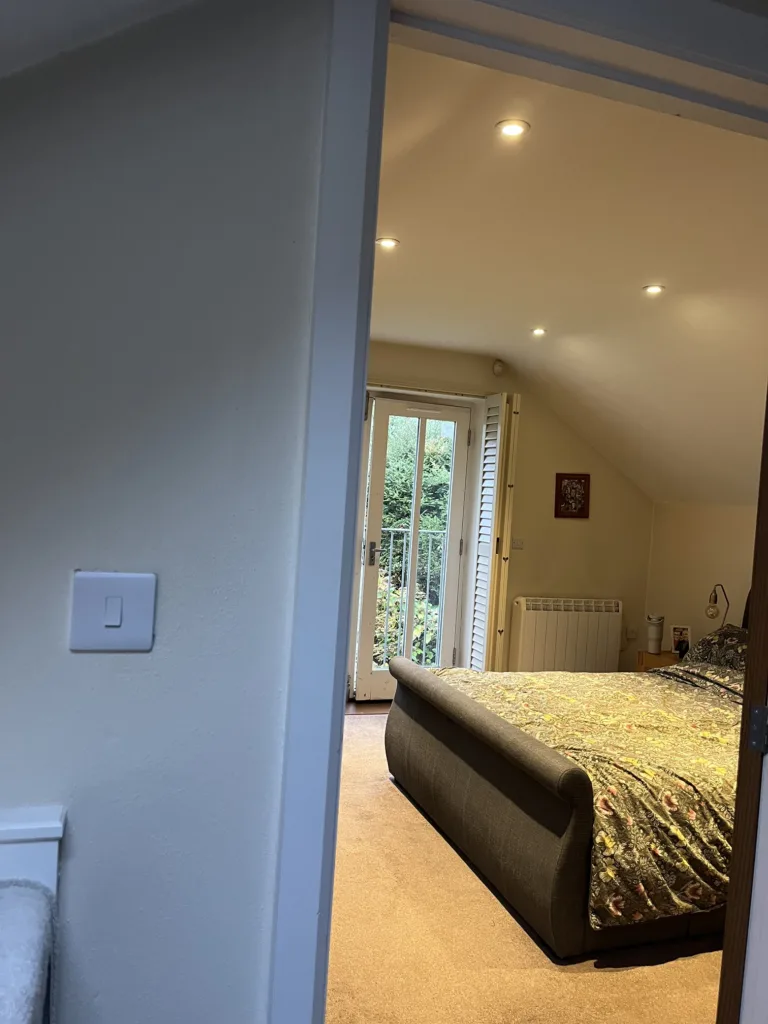
When residential lighting starts playing up, it’s usually down to either worn switches or failing LED units. This particular job came about after the homeowner noticed their bedroom switch was flickering intermittently and one of the kitchen downlights had stopped working altogether. Rather than leaving these issues to worsen over time, they got in touch to sort things out properly.
The bedroom switch was the first priority. Flickering switches are more than just annoying – they can indicate loose connections or worn internal components that need addressing. After testing the circuit and checking the existing installation, we established that the switch itself had simply reached the end of its working life. The back box and wiring were both in good order, which meant the job would be straightforward enough. We isolated the lighting circuit at the consumer unit before removing the old switch and disconnecting the cables.
Replacing a light switch might seem like a simple task, but there’s more to it than just swapping one unit for another. You’ve got to make sure the connections are secure and properly terminated, check that the earth bonding is correct, and verify the switch operates smoothly without any resistance or strange noises. The new single-gang switch went in cleanly, with each conductor reconnected to the appropriate terminal. Once everything was tightened down and the faceplate secured, we restored power and tested the operation several times to confirm the flickering issue was completely resolved.
The kitchen downlight presented a different challenge altogether. LED spotlights have transformed home lighting over the past decade, offering better efficiency and longer life than their halogen predecessors. However, they’re not immune to failure. This particular unit had given up completely, leaving a dark spot in the ceiling that was particularly noticeable during evening meal preparation. The first step was identifying the exact type of fitting already installed. Kitchen lighting schemes often use multiple downlights arranged in a specific pattern, so any replacement needs to match the existing units for consistency.
After confirming the circuit was isolated, we removed the failed downlight from its housing. These fittings typically use spring clips or twist-lock mechanisms that hold them firmly in the ceiling void. Once freed, we could access the connector block or terminal arrangement that links the fitting to the mains supply. The existing wiring was inspected carefully to verify it remained in serviceable condition. With LED downlights, you sometimes find that the driver unit has failed rather than the LED itself, but in this case, the entire fitting needed replacing.
The replacement downlight was selected to match the colour temperature and lumen output of the existing units. Getting this right matters more than people often realize. If you fit a cool white bulb alongside warm white ones, the difference is immediately obvious and can make the room look unbalanced. We made sure the new fitting would blend seamlessly with its neighbours before proceeding with the installation. The unit was connected to the circuit wiring, pushed back into position, and secured with its retention clips. A final power-on test confirmed it was working correctly and producing the same quality of light as the surrounding downlights.
Both repairs were relatively modest in scope, but they made a real difference to how the home functioned. The bedroom switch now operates reliably without any flickering or hesitation, whilst the kitchen has its full complement of downlights working again. These kinds of maintenance jobs might not be glamorous, but they’re an important part of keeping domestic electrical installations running as they should.
Working on lighting circuits requires careful attention to safety protocols throughout. Every cable must be properly identified before any work begins, and isolation procedures have to be followed without shortcuts or assumptions. We use voltage testers to confirm circuits are genuinely dead before touching any conductors, and we never rely solely on switching off at the wall. Once the work is complete, function testing goes beyond just checking whether the light comes on. We’re looking for proper operation, secure connections, and any signs of unusual behaviour that might indicate underlying issues.
The homeowner was pleased to have both problems sorted in a single visit. Electrical faults have a tendency to multiply if left unattended – a flickering switch can eventually fail completely, leaving a room without lighting until repairs can be arranged. Similarly, one failed downlight in a kitchen can create an uneven lighting pattern that makes the space less pleasant to use. By addressing these issues promptly, the home’s electrical system continues to provide reliable service without interruption.
These straightforward repair jobs form a significant part of residential electrical work. While new installations and full rewires grab more attention, keeping existing systems maintained and functional is equally valuable. Switches and light fittings have finite lifespans, and knowing when replacement is needed rather than attempting temporary fixes represents good practice. The materials used were standard quality components designed for years of reliable service, fitted to existing circuits that were confirmed to be in proper working order.