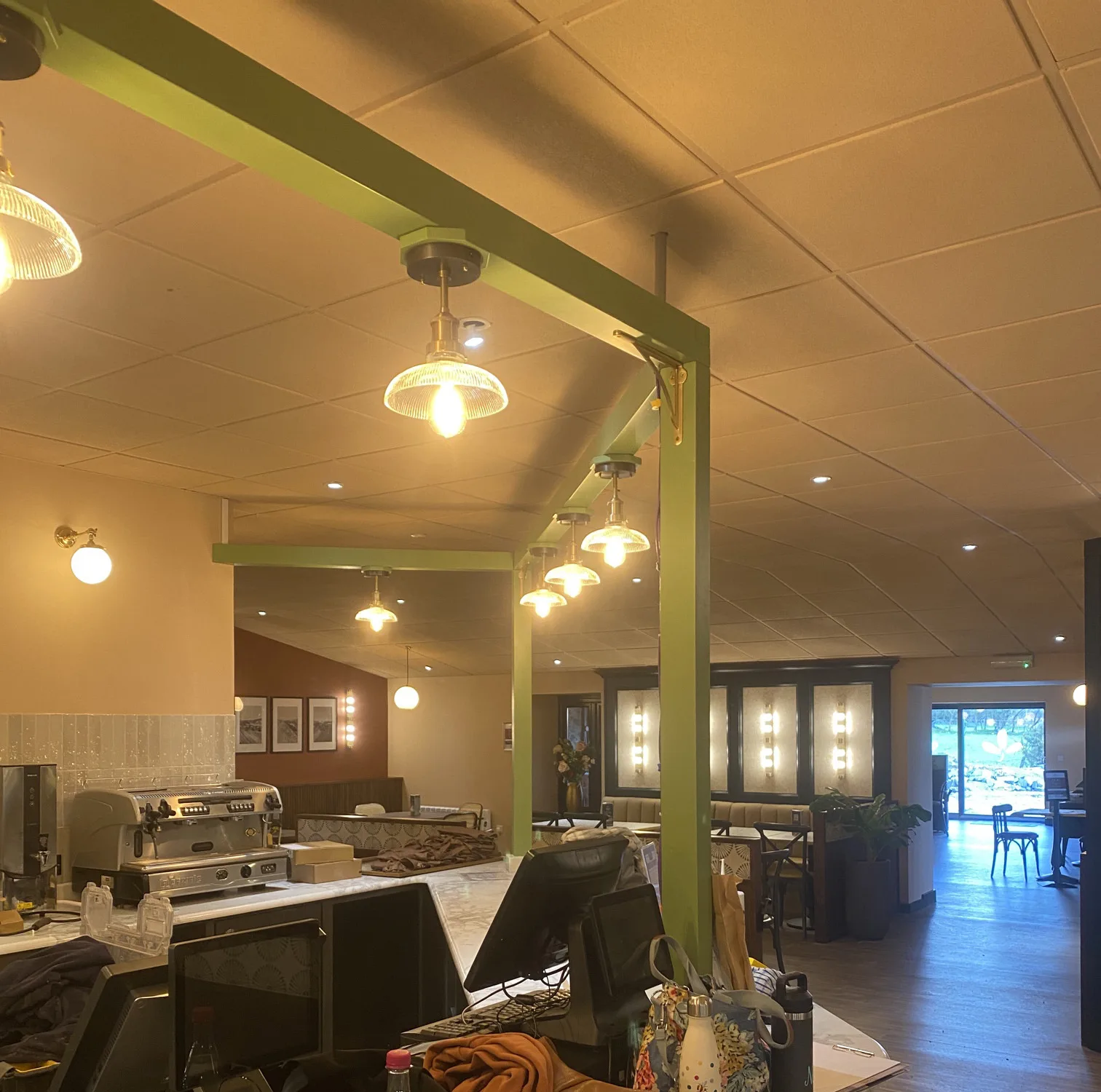
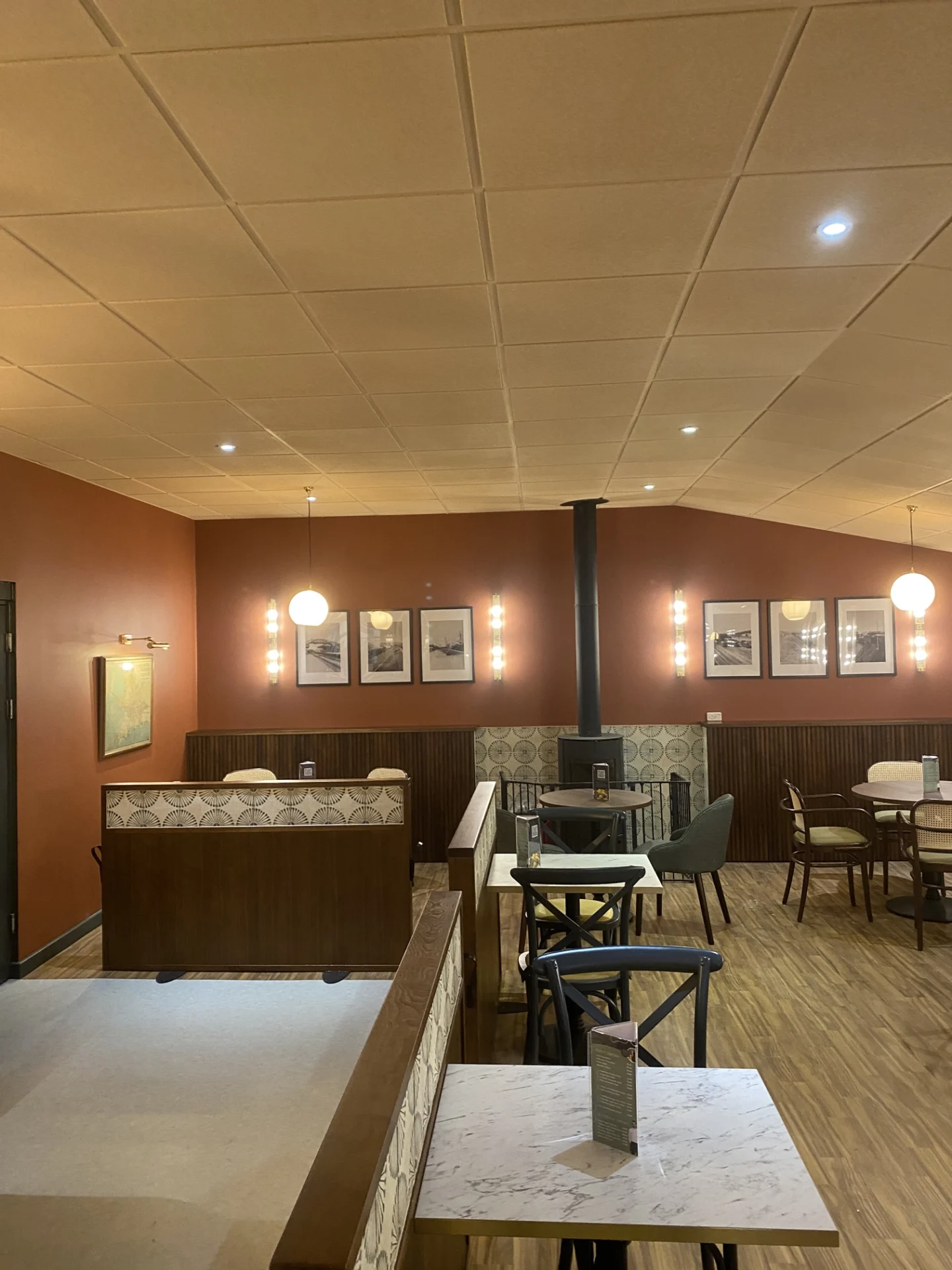
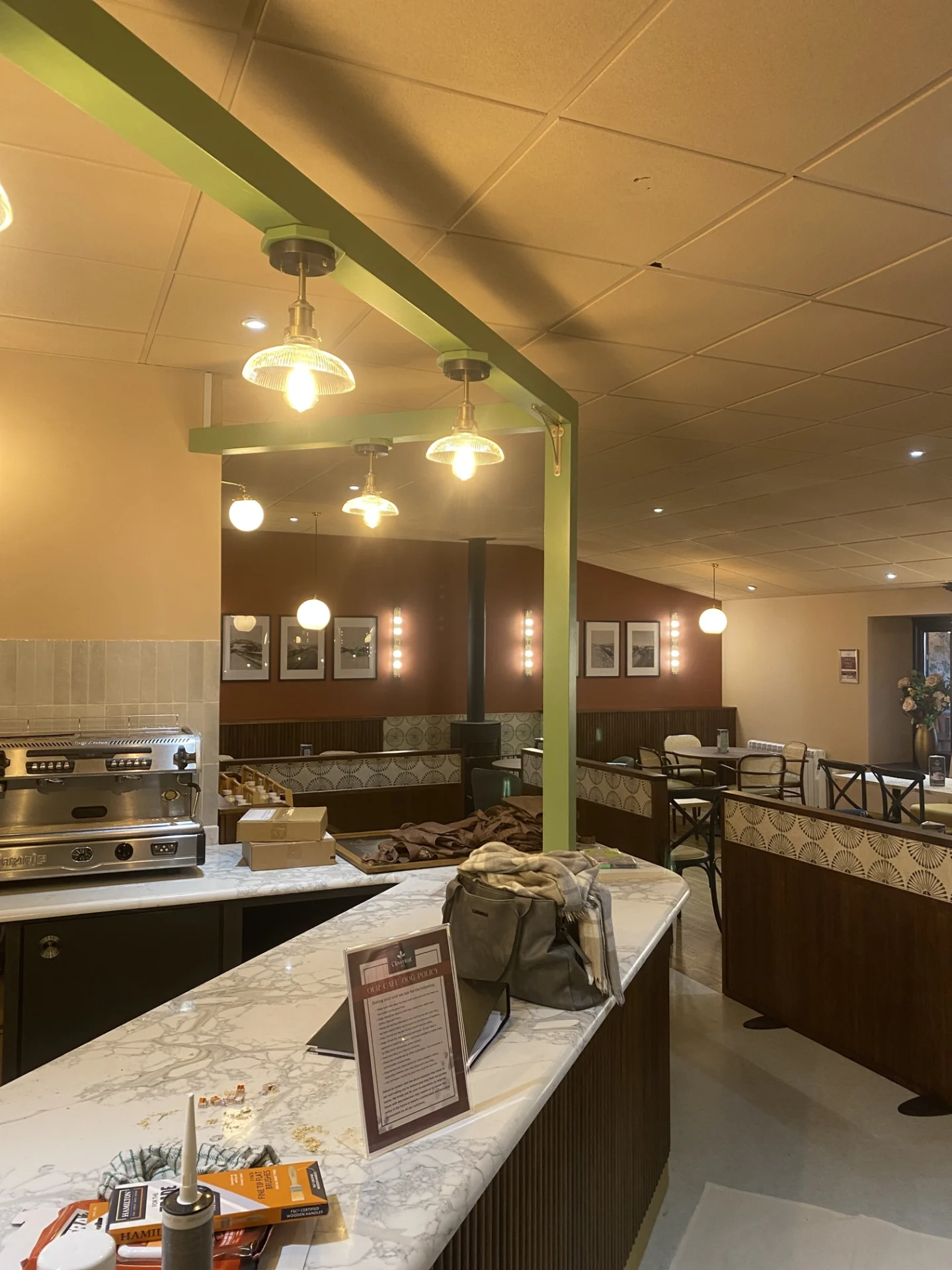
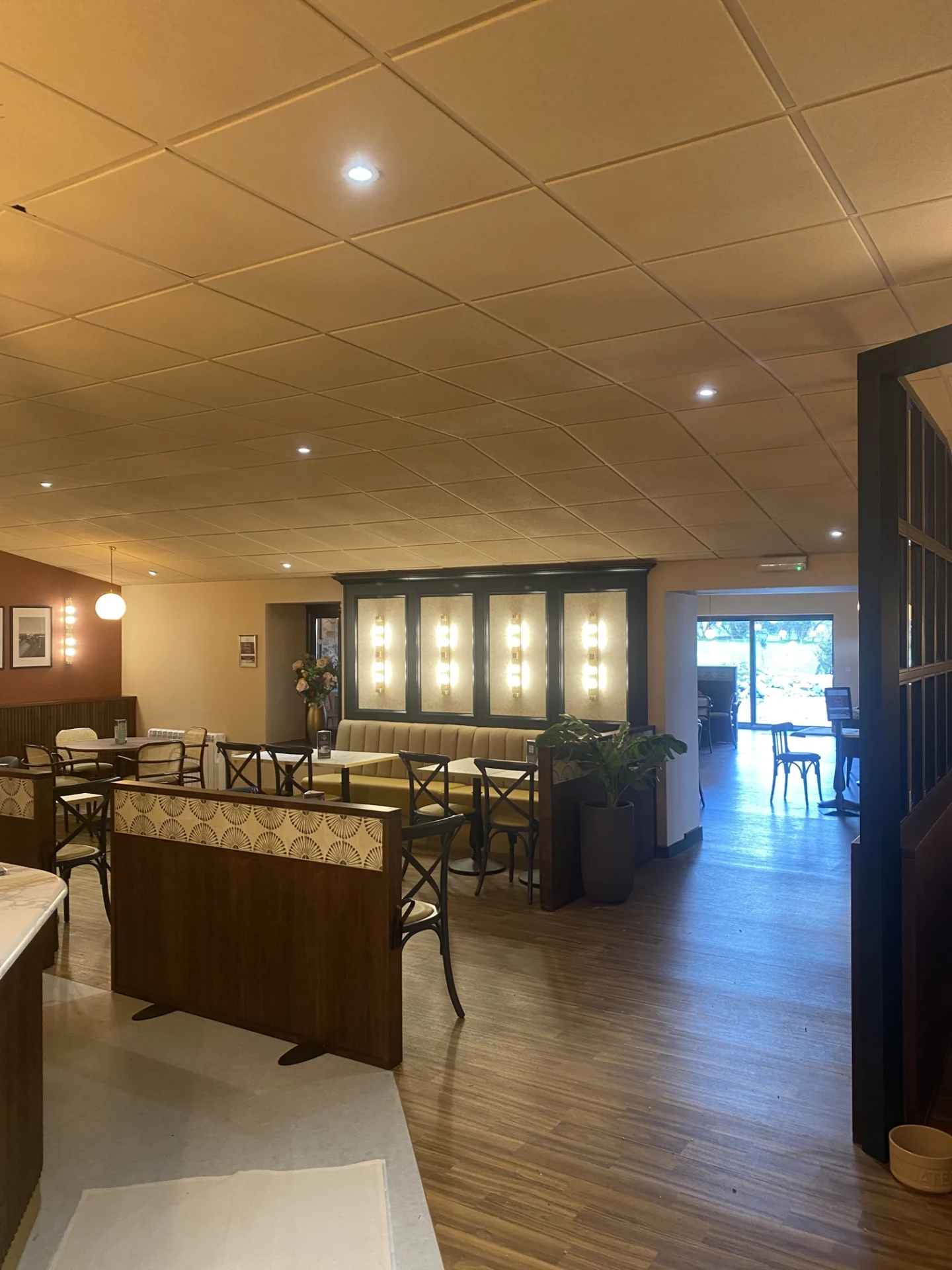
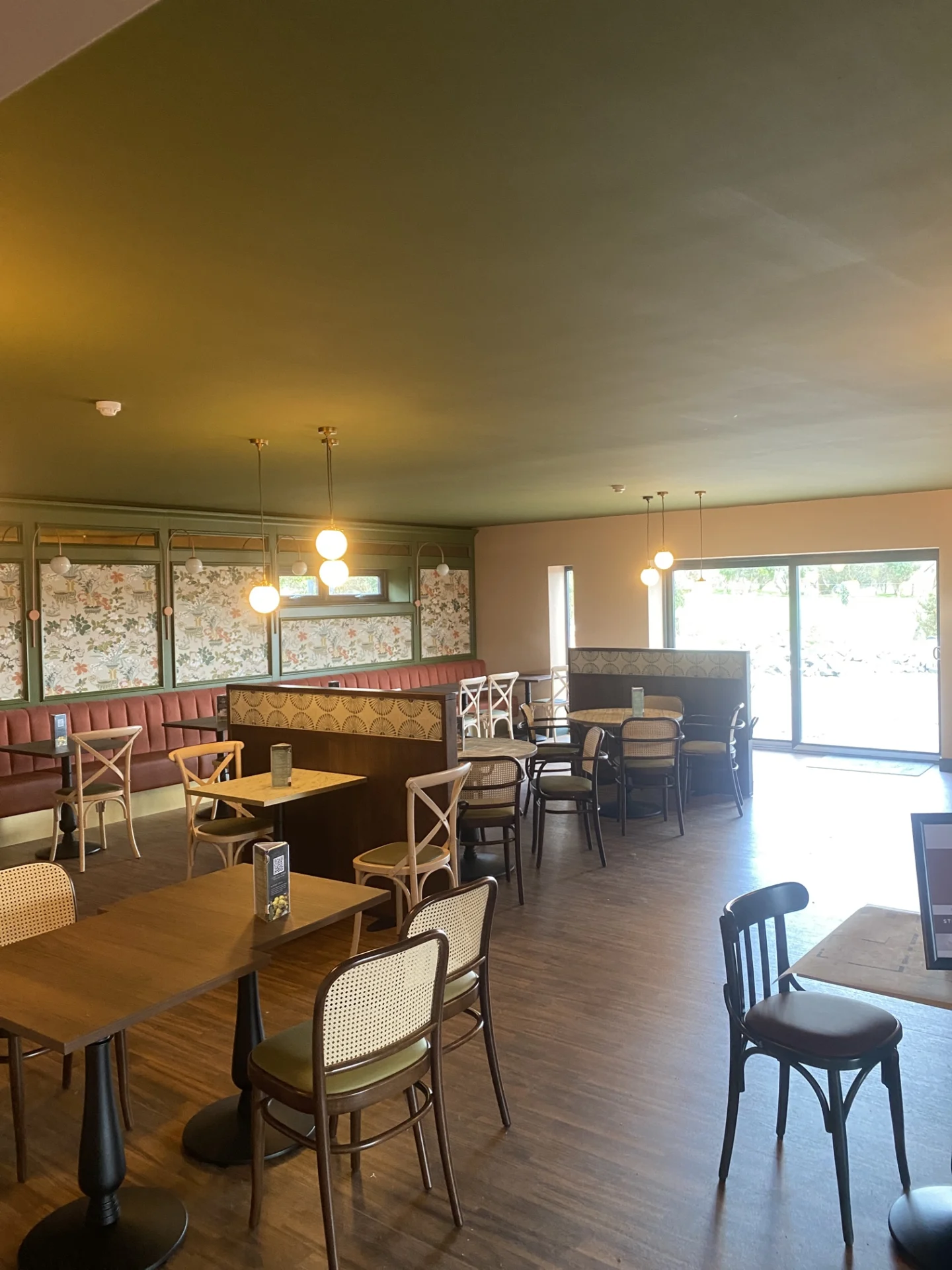
A full commercial electrical installation across the newly extended and refurbished The Clover Leaf Cafe at Chacewater Garden Centre, covering three-phase power distribution, decorative lighting, catering power circuits, electric heating supplies, and fire detection first fix - all completed to current wiring regulations with an Electrical Installation Certificate issued on completion.
Commercial cafe refurbishments don’t follow a simple formula. When a venue is expanding its footprint and simultaneously redesigning its existing spaces, the electrical scope tends to grow in every direction at once – new circuits layered alongside legacy wiring, high-level cable routes across extended structures, and a catering area that demands far more power than the average domestic or light commercial setup. That was exactly the brief for this project at The Clover Leaf Cafe, part of Chacewater Garden Centre, where we carried out a comprehensive electrical fit-out covering the new extension, the refurbished seating areas, the serving counter, heating circuits, and the first-fix fire detection wiring throughout the new section.
The foundation of the whole installation was a new three-phase power supply route. A 10mm five-core steel wire armoured cable was pulled from the main incoming distribution board and routed at high level, clipped to the rafters across the building. To carry out this work safely and without the need for hired scaffold towers, we used an on-site scissor lift. The cable terminated into a new eight-way three-phase consumer unit, positioned within the catering office area to give a logical, accessible distribution point for all the new circuits feeding the cafe. Working from a dedicated sub-distribution unit like this keeps the installation clean and straightforward to maintain – any future changes or additional circuits can be picked up from a single point rather than running back to the main board each time.
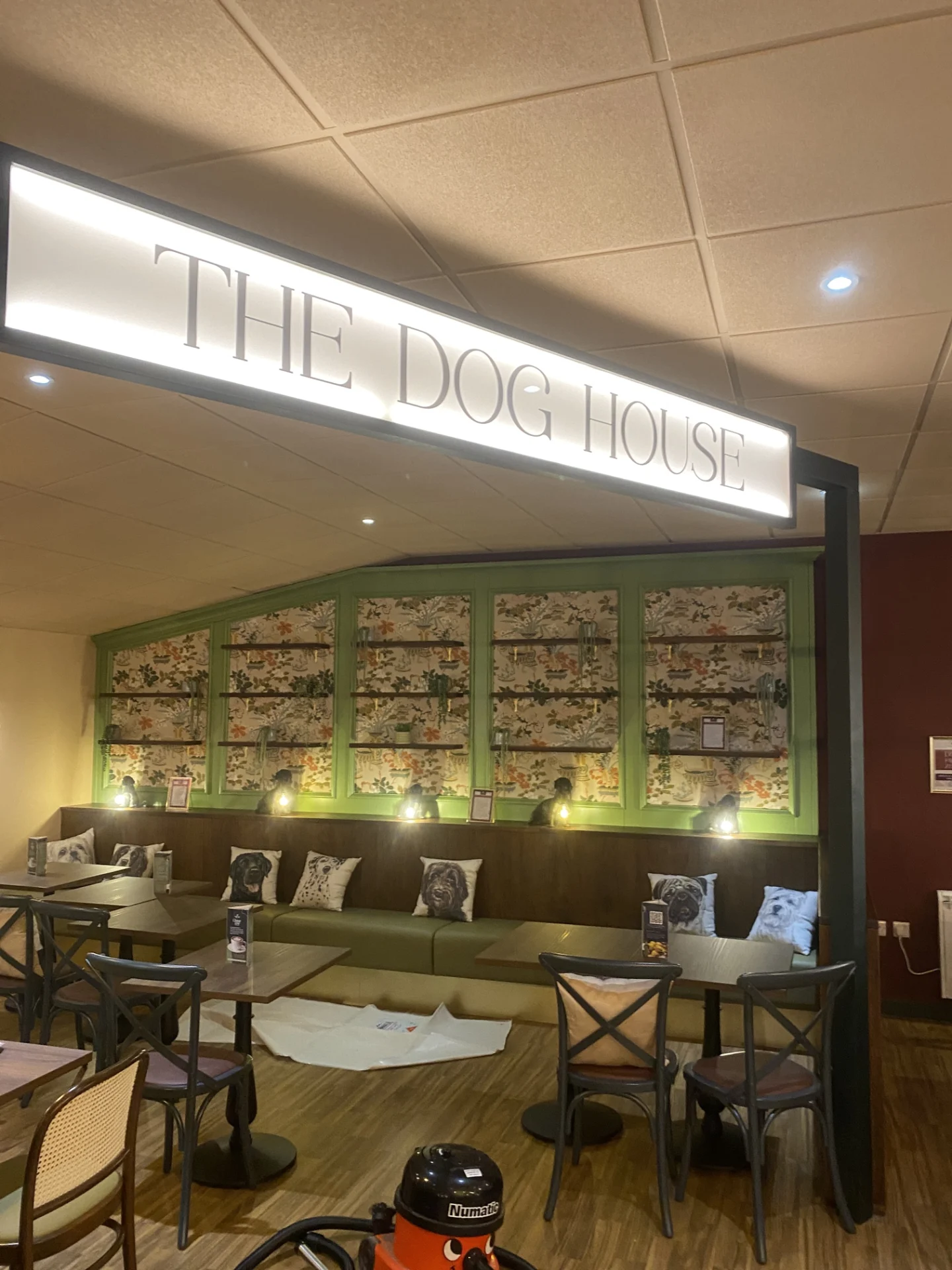
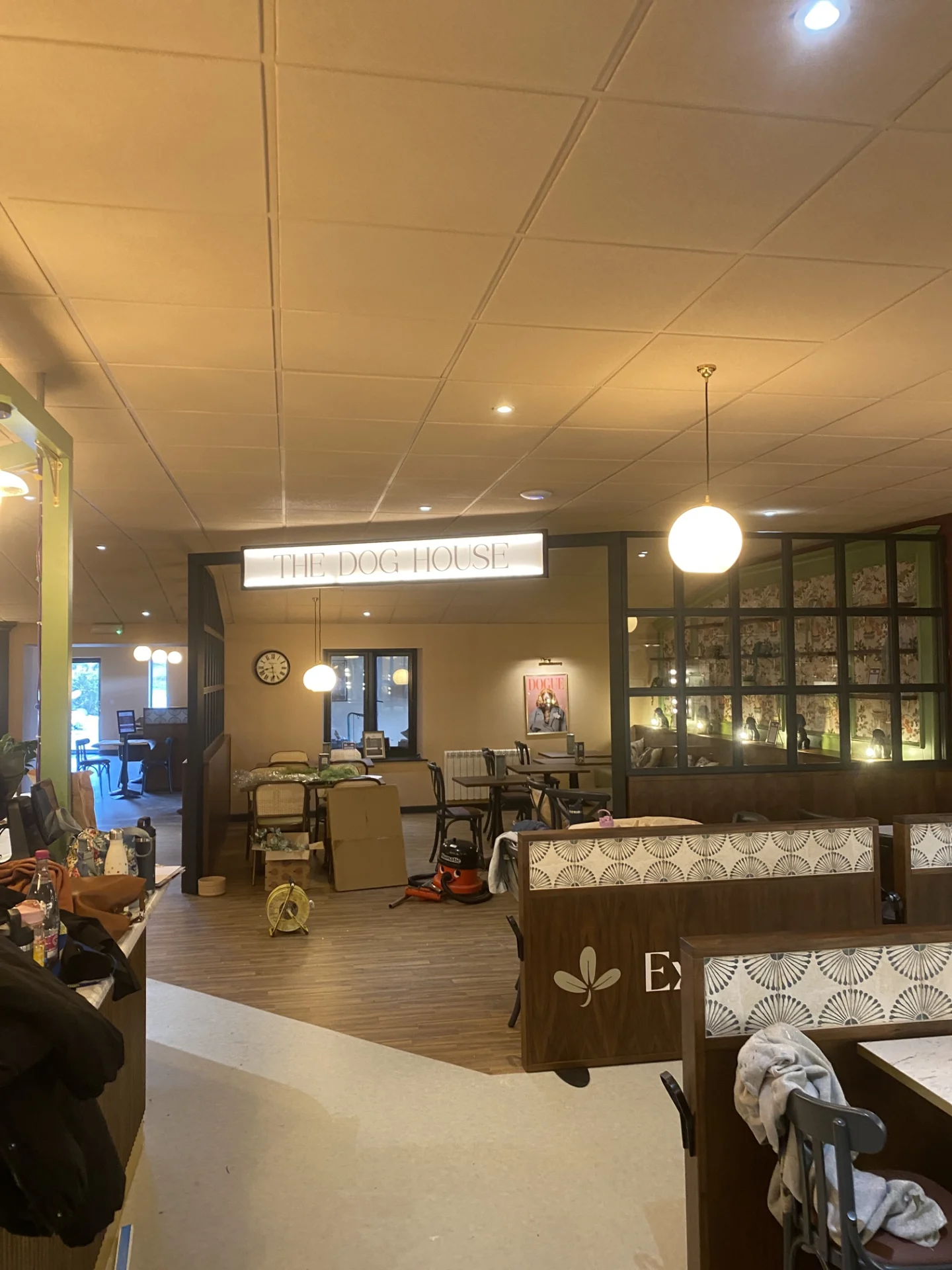
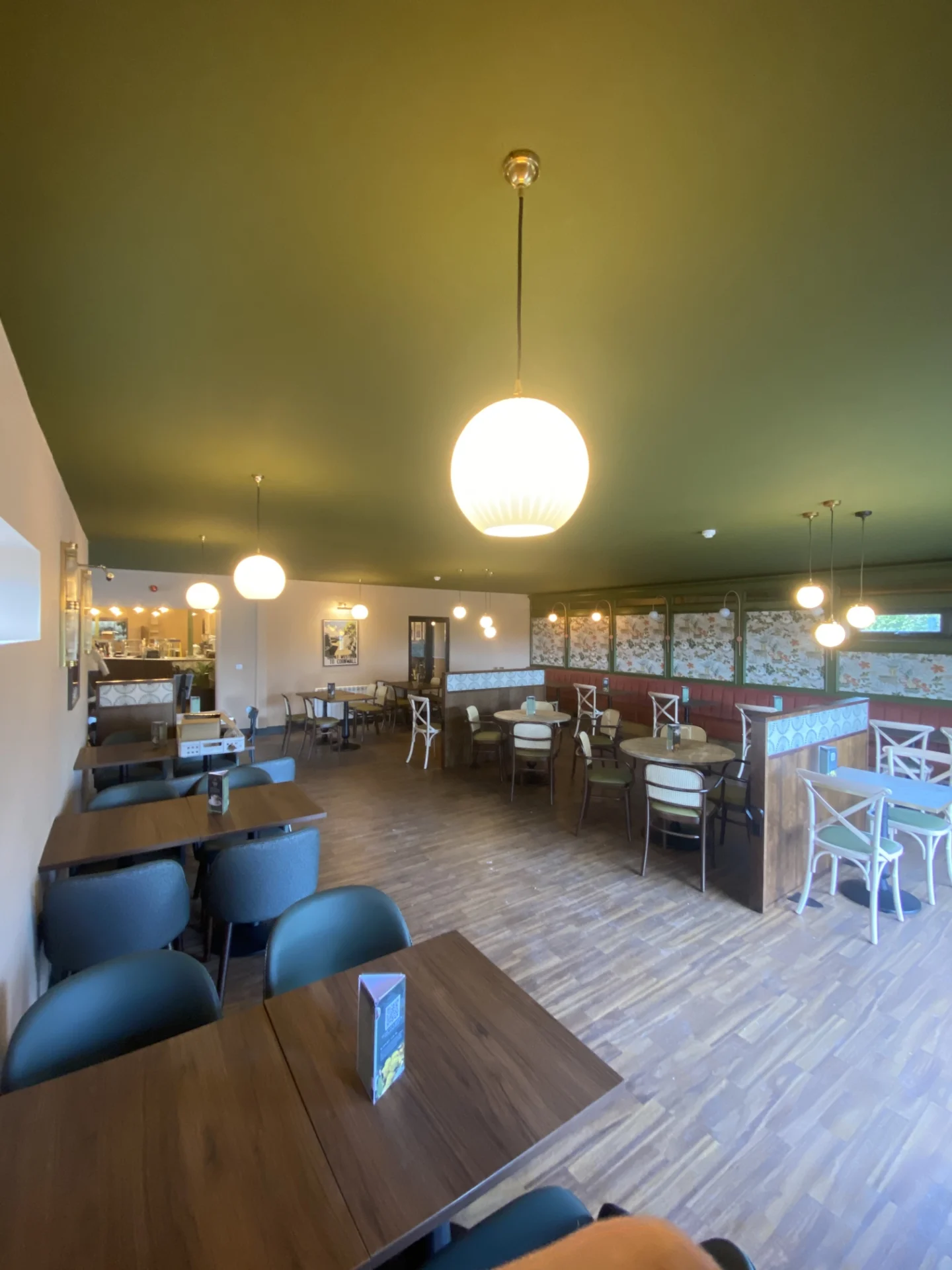
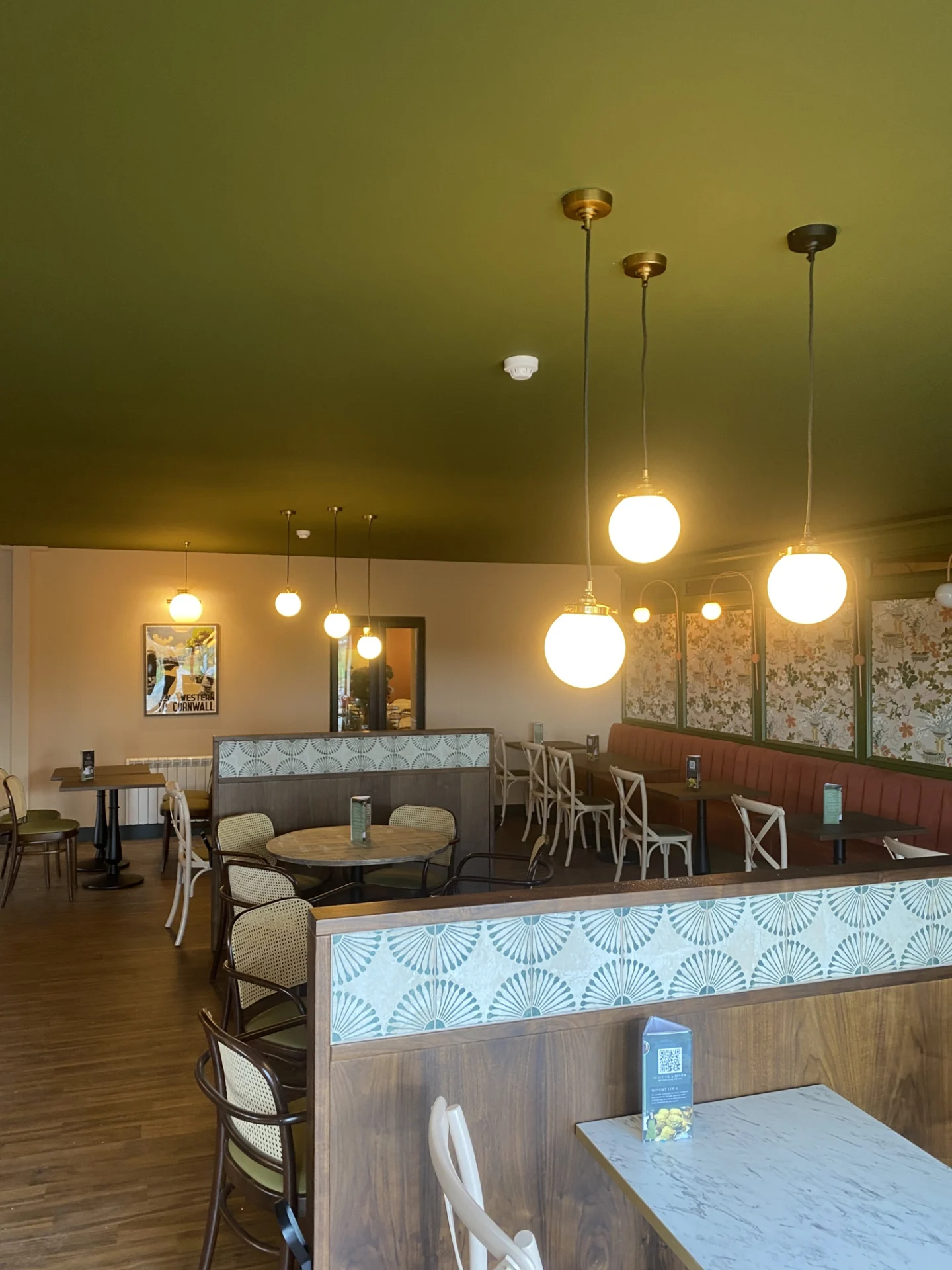
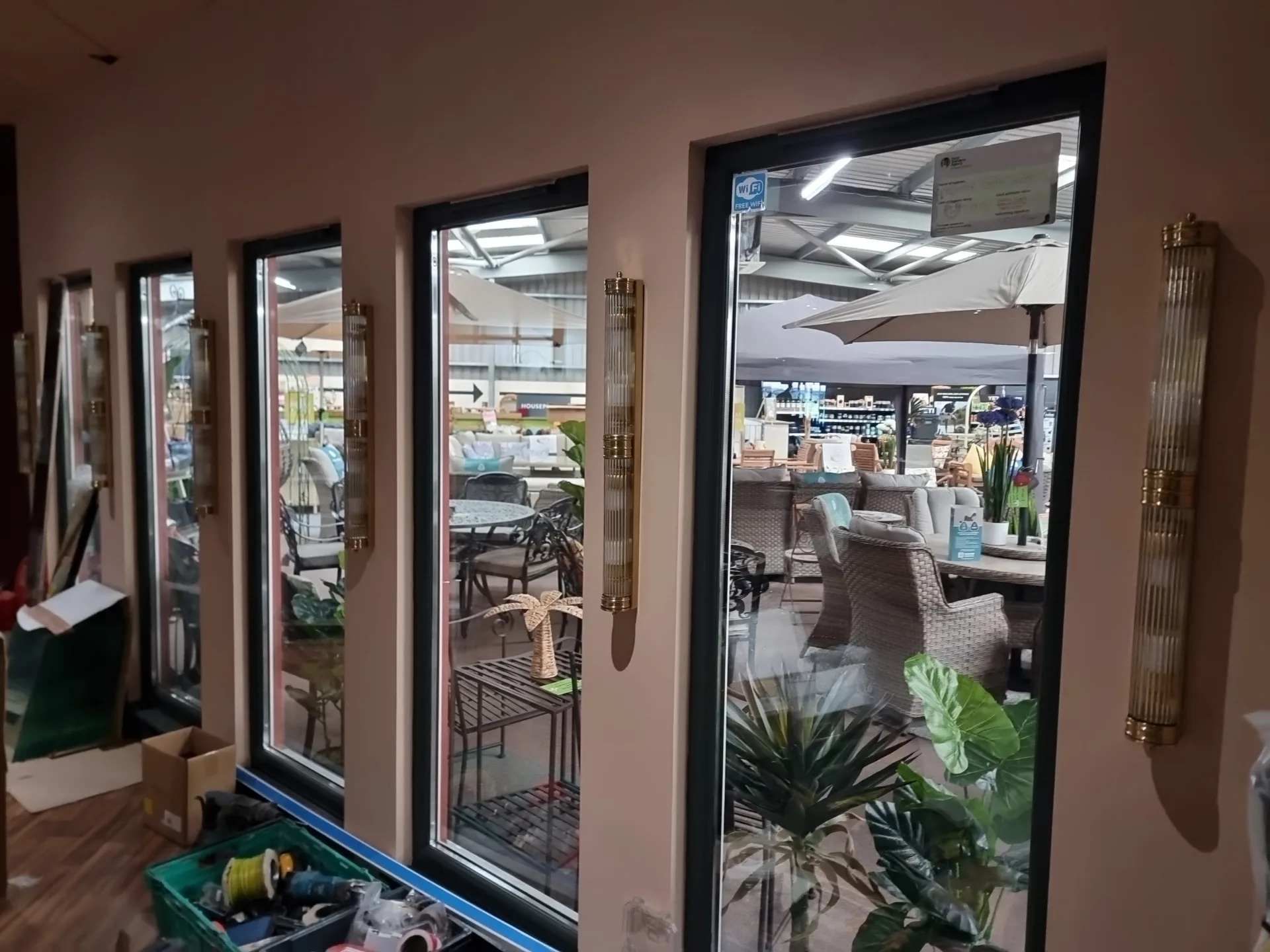
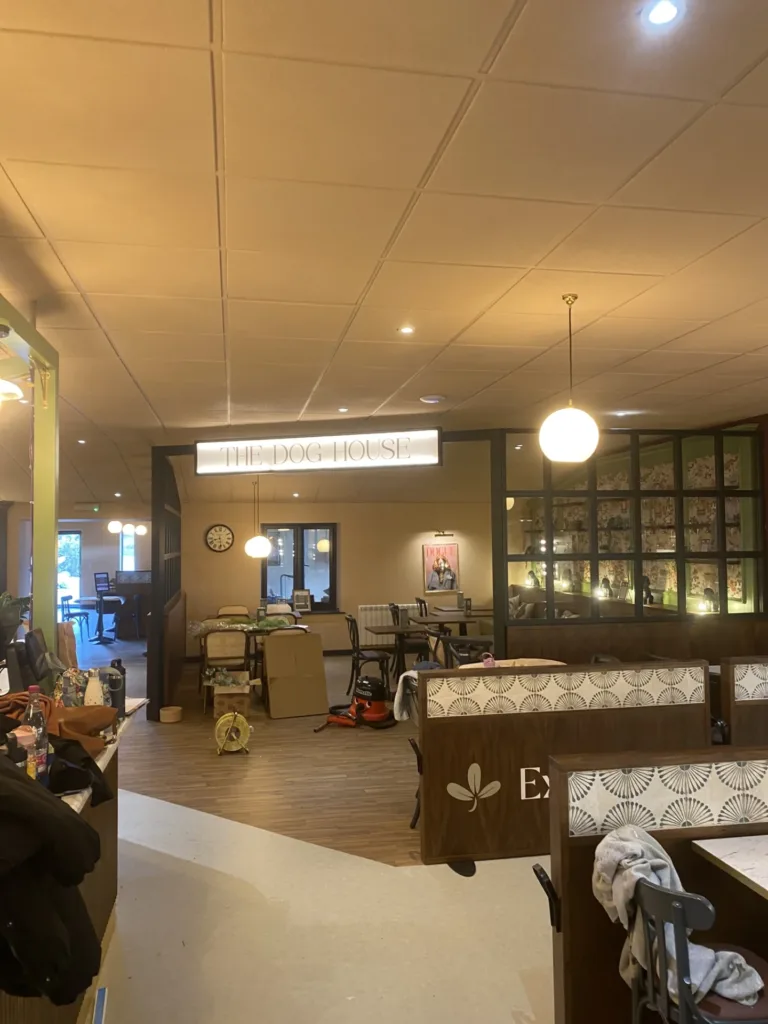
From that distribution unit, circuits were run out to serve every area of the venue. The new cafe extension received its own lighting arrangement – twelve wall light fittings supplied by the client, five pendant fittings including two three-gang cluster pendants, and two exterior wall lights positioned either side of the patio doors, all controlled via one-way switches. An emergency bulkhead was also installed in the extension, fitted with a key switch test point as required for commercial premises. The existing seating area was rewired for twenty-two wall fittings and a further six pendants, with individual one-way switch control throughout. A neat feature of the existing area was the indirect LED lighting installed within the Dog House sign itself – a detail that required careful wiring to sit flush within the built structure and give a clean, even result when lit.
The serving area is where the power demands really step up. Fourteen double socket outlets were installed around the counter, alongside a dedicated 20-amp supply for the water heater with its own local isolator, two 16-amp supplies for coffee grinders, and a 32-amp single-phase circuit feeding two 16-amp coffee machine outlets – again with a local isolator switch for safe isolation when required. All sockets and isolator switches within the counter area were finished in decorative matt black to match the design intent of the space, a specification that ran through the extension and seating areas too. USB-A and USB-C charging outlets were incorporated into the double sockets throughout the customer areas, including sockets built into the base of the bench seating – a practical detail for any modern hospitality venue.
Eight separate electrical supplies were run for electric radiators across the cafe, each with its own local isolator switch. The radiator units themselves were to be fitted separately, but having dedicated, individually switched feeds in place means the heating can be managed room by room without everything running from a single circuit. For a space that operates at different occupancy levels throughout the day, that flexibility makes a real difference to how the heating can be controlled in practice.
On the external side of the building, two IP-rated single-gang socket outlets were installed in the staff area, intended to serve walk-in refrigeration equipment. These circuits were kept entirely separate from the customer-facing power, which is standard practice in catering environments where kitchen and refrigeration loads need their own dedicated provision.
Cable routes throughout the masonry walls were formed using dustless extraction equipment – a channel cutting method that controls debris rather than filling the entire space with dust during an active refurbishment. Where cabling needed to pass through plasterboard, any holes were patched and first-filled on completion, leaving surfaces ready for the fine filling and decoration to be carried out by the finishing trades.
The fire detection first fix in the cafe extension covered wiring to three detector and alarm points, with all cabling run in FP200 mineral insulated fire-resistant cable. First fix at this stage means the cabling is in position and ready for the detector heads and panel connections to follow once the building works are at the right point, without needing to return and re-open walls or ceilings.
With all circuits installed across the extension, the existing seating area, the serving counter, and the staff side of the building, full electrical testing was carried out on every altered and newly installed circuit. An Electrical Installation Certificate was produced on completion, and the relevant Building Control Notification of Electrical Works was submitted – both required for any notifiable electrical work in a commercial setting and important documentation for the venue to hold going forward.