Complete electrical upgrade from single-phase to three-phase power supply for a busy Newquay cafe, including new consumer unit installation, dedicated circuits for commercial kitchen equipment, and comprehensive socket distribution across food preparation areas.
Running a cafe means dealing with substantial electrical demands, particularly when you’re operating commercial kitchen equipment, food preparation appliances, and maintaining separate areas for different food handling requirements. The existing single-phase electrical system at this Newquay cafe had reached its limit, and expanding operations required a fundamental upgrade to the power supply infrastructure.
The central challenge involved replacing the existing single-phase consumer unit with a commercial-grade three-phase system. This wasn’t just about swapping like for like – it meant upgrading the entire electrical backbone of the premises to handle current demands whilst allowing room for future growth. The new 24-way three-phase consumer unit replaced an 8-way single-phase board, immediately tripling the circuit capacity available to the cafe.
Before any installation work began, the incoming meter tails needed upgrading to 25mm double-insulated cabling. These cables form the connection between the electricity meter and the consumer unit, and the increased conductor size allows the system to safely handle the higher current draw that three-phase power provides. Proper sizing of these supply cables prevents overheating and voltage drop issues that could affect equipment performance or create safety concerns.
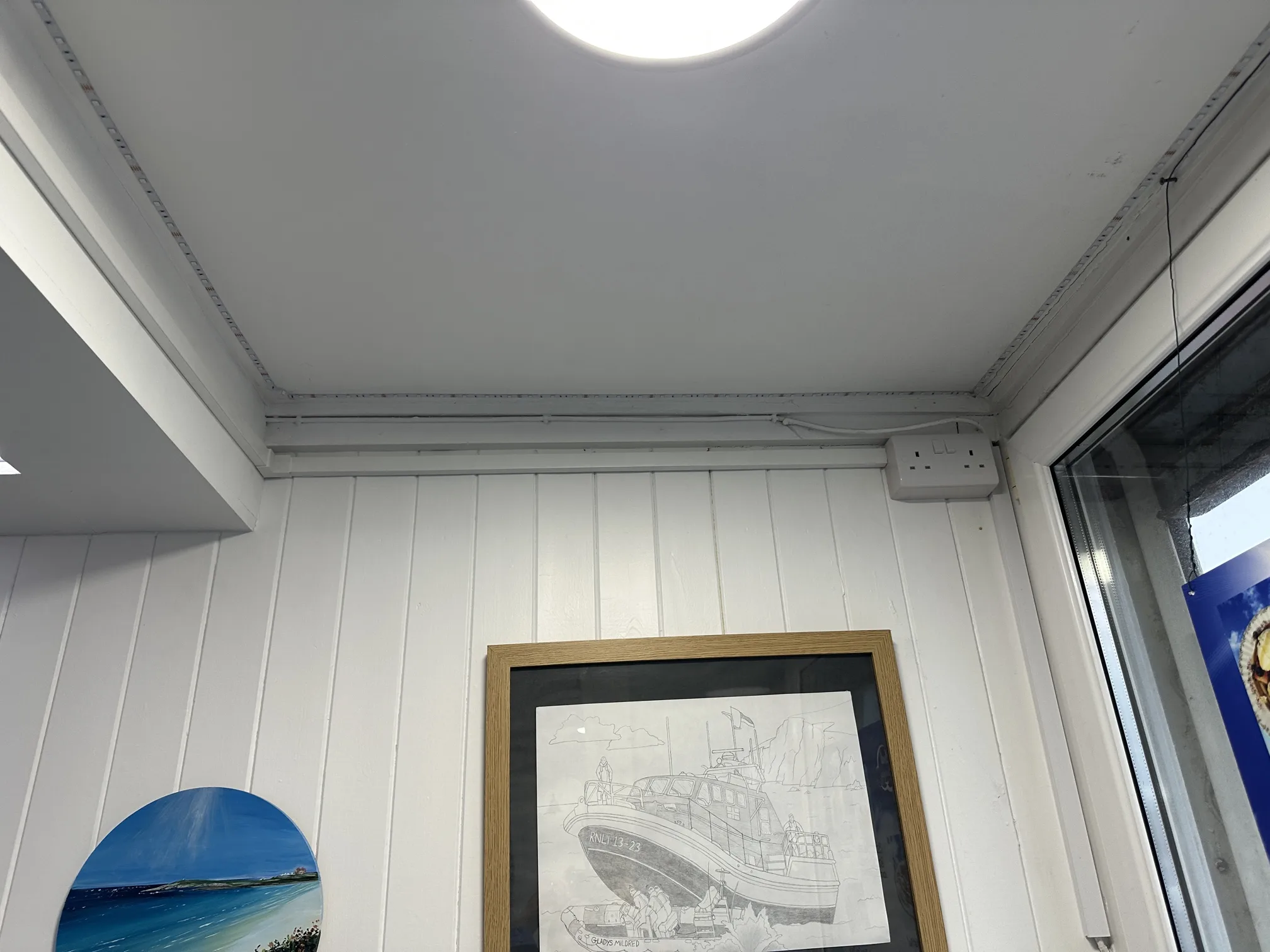
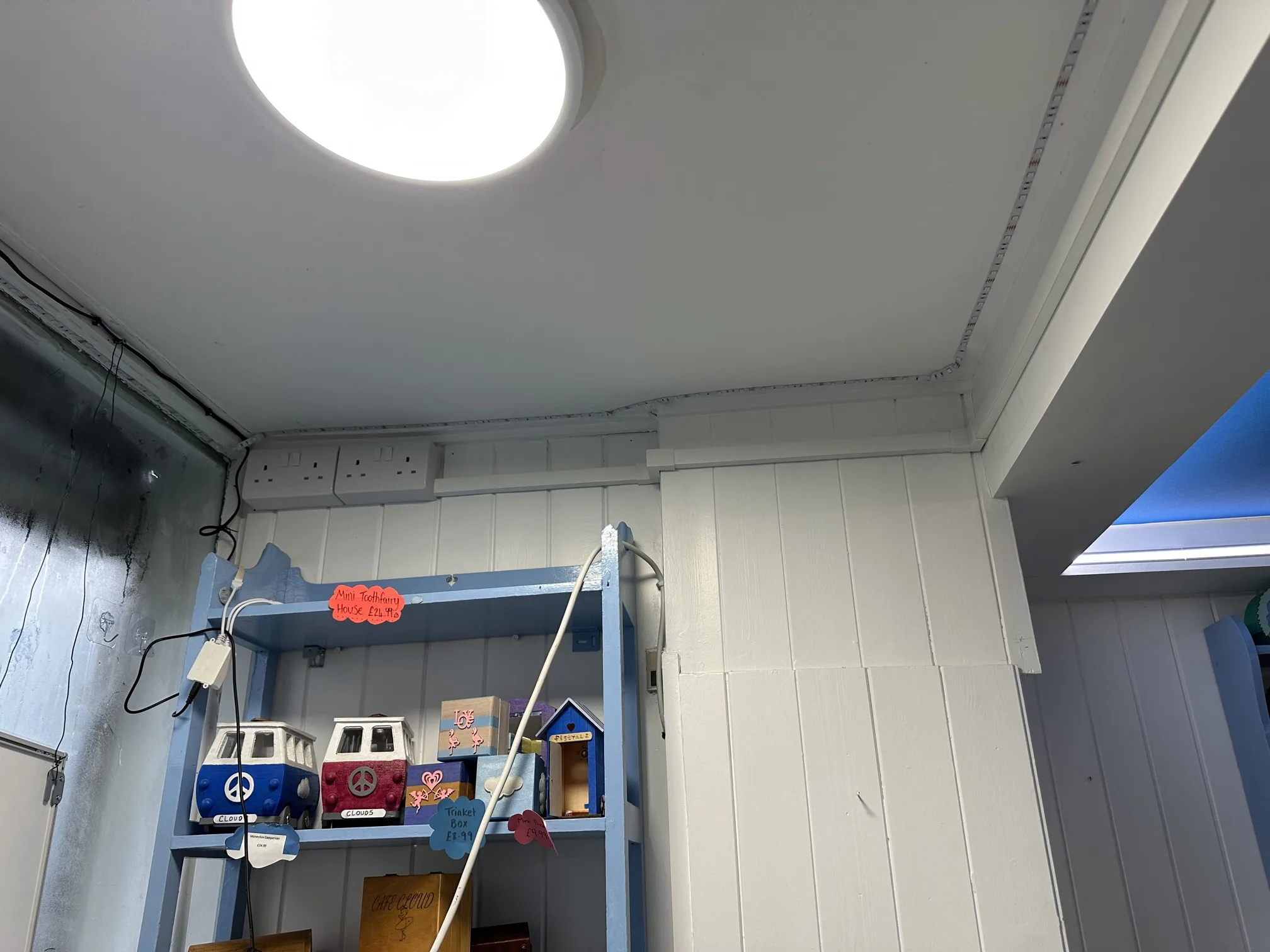
The consumer unit itself provides protection for 24 individual single-phase circuits, each safeguarded by appropriately rated RCBOs. These devices combine overcurrent protection with residual current detection, meaning they’ll trip if a circuit becomes overloaded or if there’s a fault to earth. Different circuits received different ratings based on the expected load – 6A for lighting circuits, 16A and 32A for socket circuits depending on the equipment they serve, and dedicated 20A, 25A, and 40A circuits for specific high-power appliances. White PVC trunking throughout the installation keeps all surface-mounted cabling neat and protected whilst maintaining the clean aesthetic a food service environment requires.
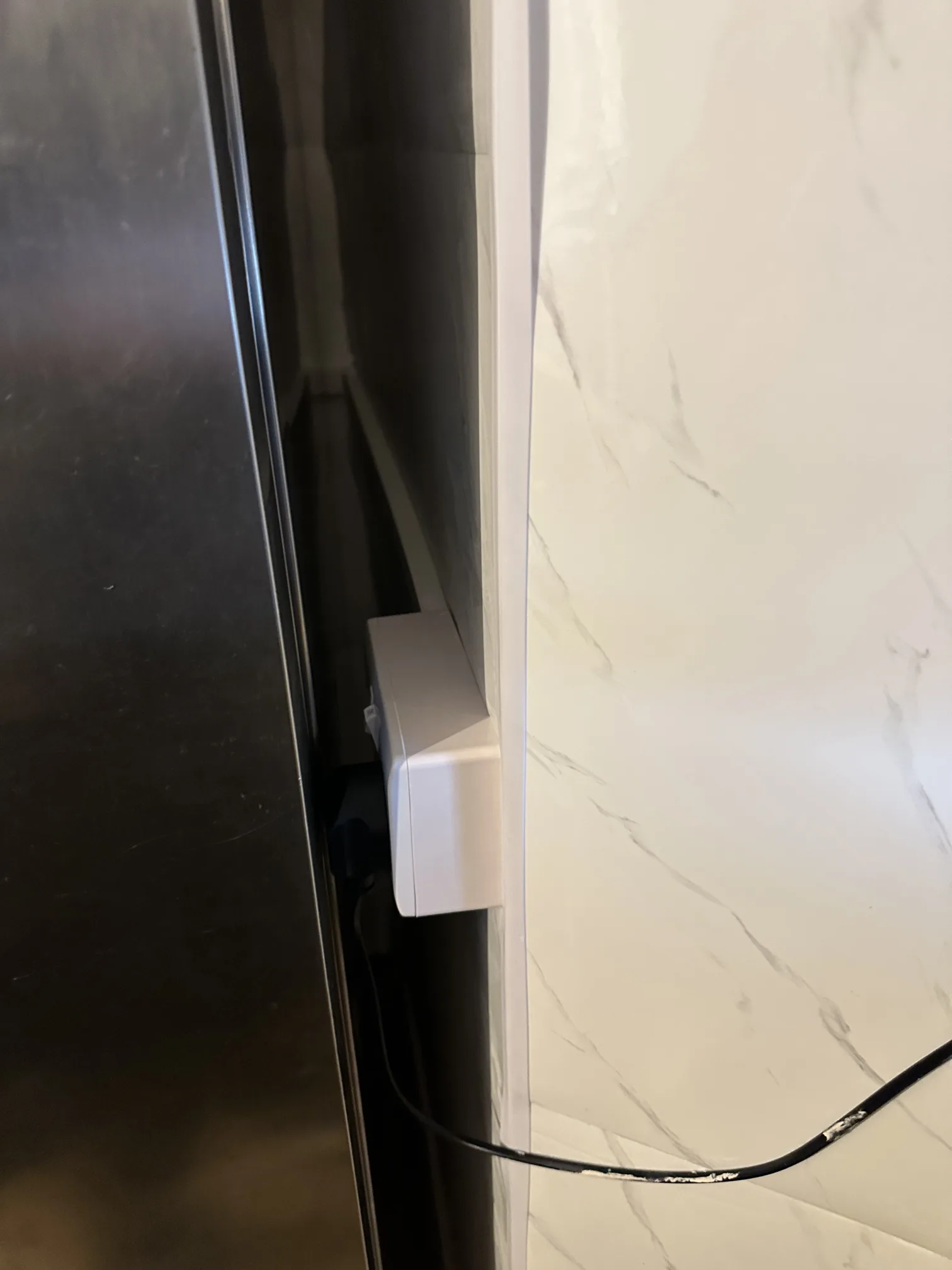
The serving area needed its own dedicated circuit for a water heater. Commercial water heaters and urns draw considerable current, particularly during busy periods when they’re working continuously. A 20A radial circuit runs from the consumer unit to this area, protected by a dedicated 20A RCBO. At the appliance location, a 20A double pole isolator switch provides local control, allowing staff to safely disconnect the heater for cleaning or maintenance without needing to access the main consumer unit.
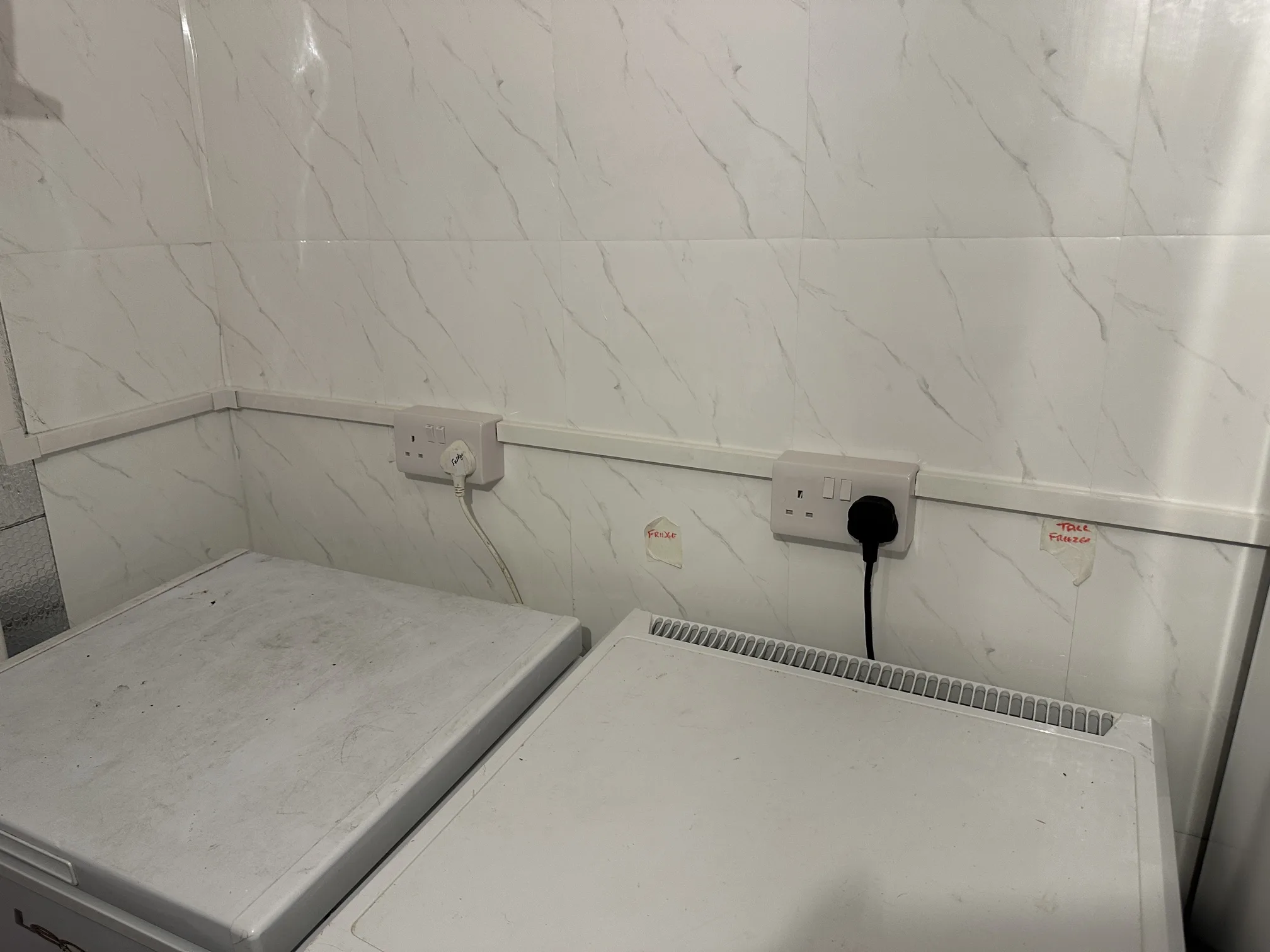
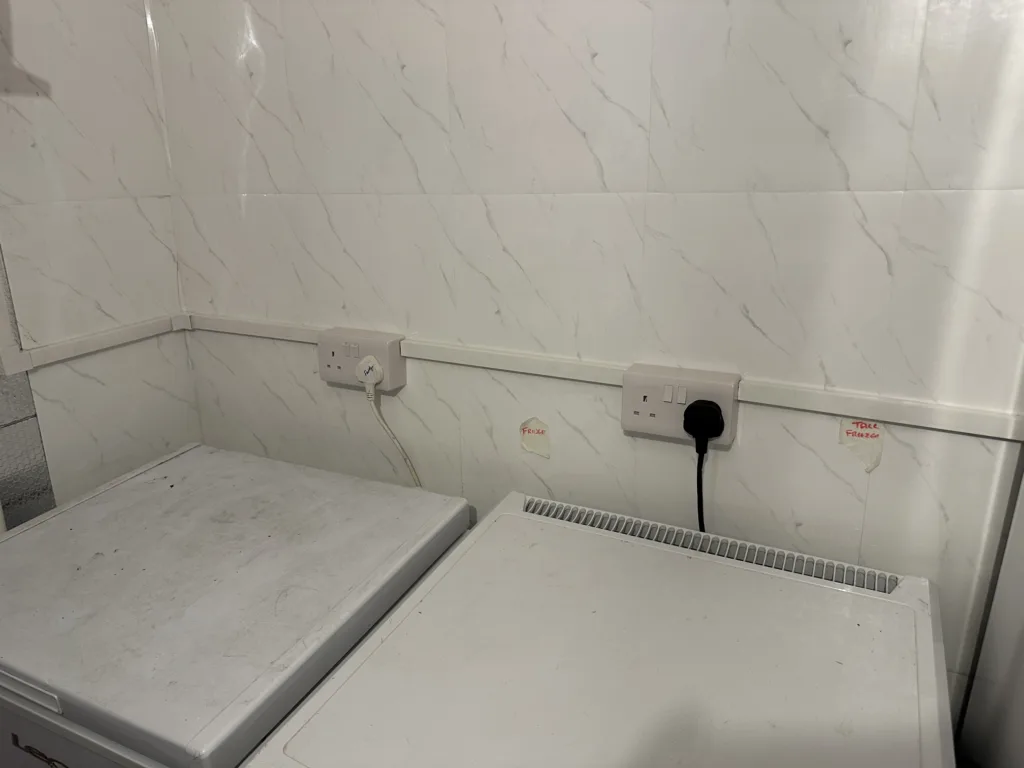
The back room presented different requirements. This area houses refrigeration units, cooking equipment, and requires power for a window-mounted sign light. Three double socket outlets handle these needs, positioned to serve the fridges, cooking equipment, and signage independently. Surface-mounted trunking routes the circuit cabling around the room at counter-top height, keeping sockets accessible whilst maintaining cables safely out of the way of daily operations. Each socket outlet on this circuit can handle the sustained load of refrigeration compressors, which cycle on and off throughout the day and night.
Food preparation areas in cafes often need substantial socket provision, and this installation created a dedicated circuit serving the main prep room and a separate gluten-free area. Eight double socket outlets distribute power across these spaces – three along each side of the main prep room and two within the gluten-free zone. Counter-top height positioning keeps sockets convenient for food processors, mixers, microwaves, and other preparation equipment whilst keeping them above potential water splash zones. The dedicated circuit prevents the prep room from sharing electrical capacity with other areas, reducing the risk of nuisance tripping when multiple appliances run simultaneously.
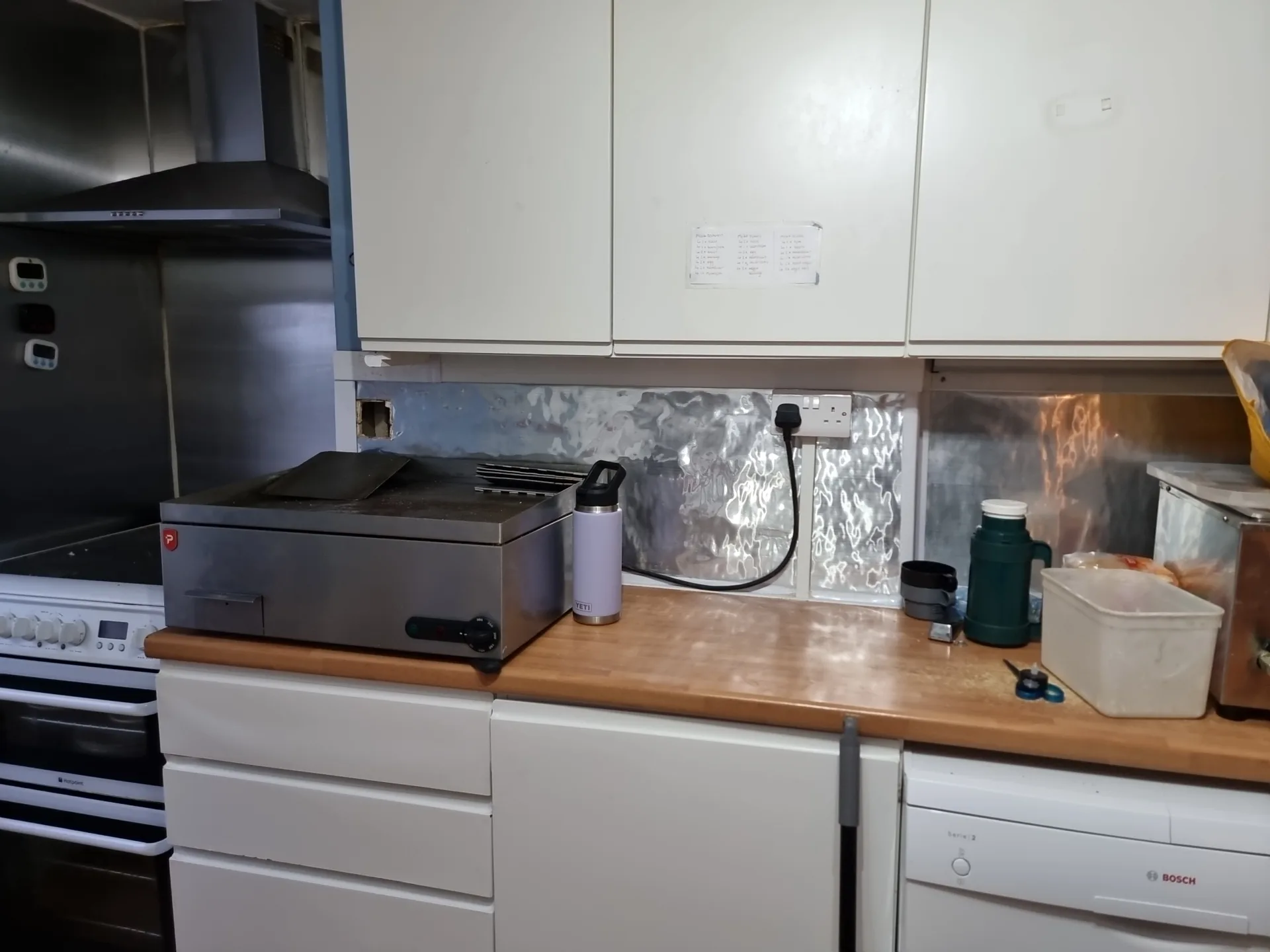
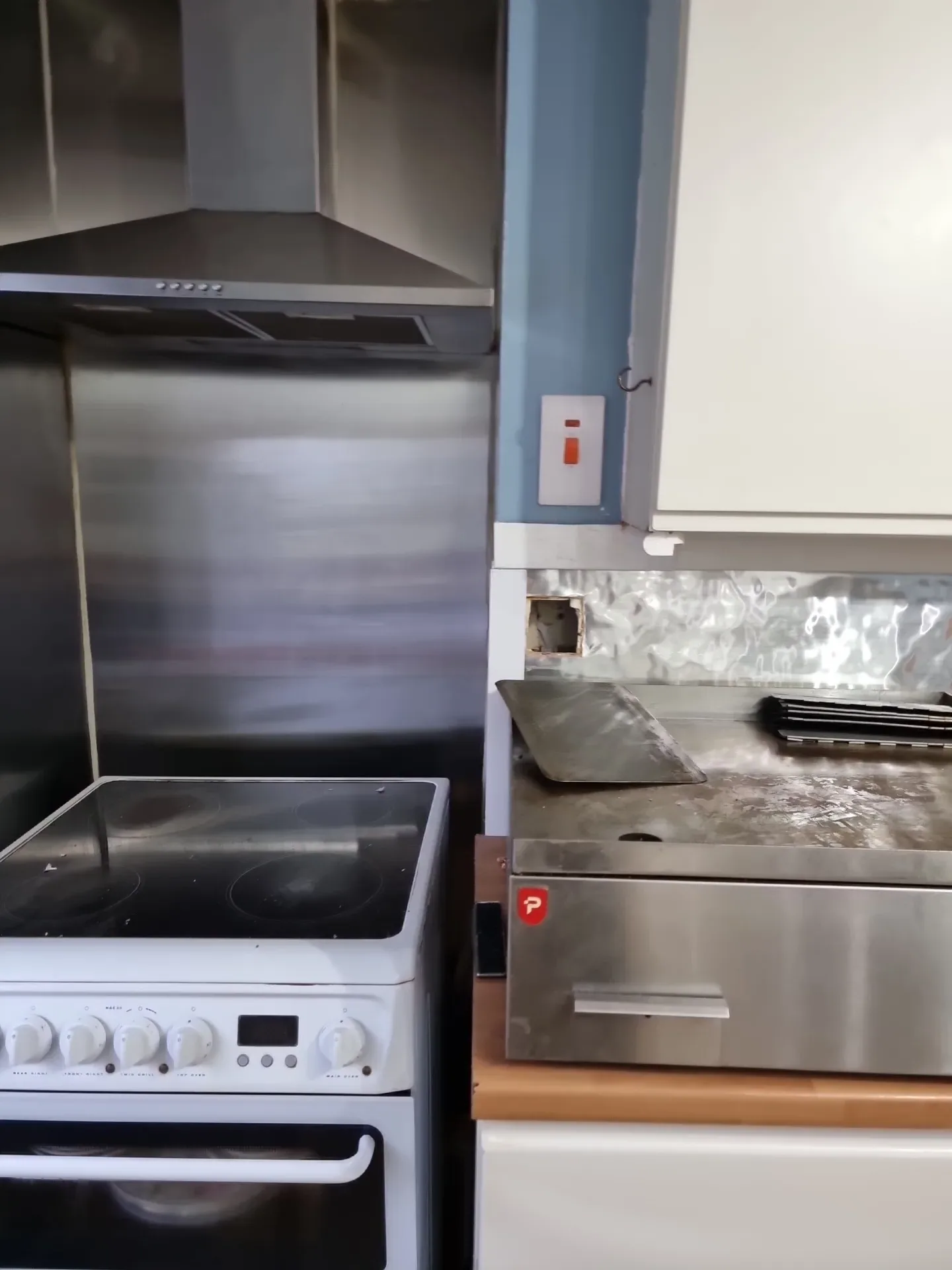
Commercial kitchens accumulate equipment over time, and socket positions don’t always match current needs. One existing socket sat at skirting level beside an oven – functional but awkward for countertop equipment. The installation work relocated this outlet to counter height near the egg grill, extending the existing circuit to reach the new position. All new cabling runs through trunking on the tiled walls, maintaining protection and keeping the installation looking deliberate rather than added as an afterthought. This type of circuit extension relies on the existing wiring being in serviceable condition, which inspection confirmed before work began.
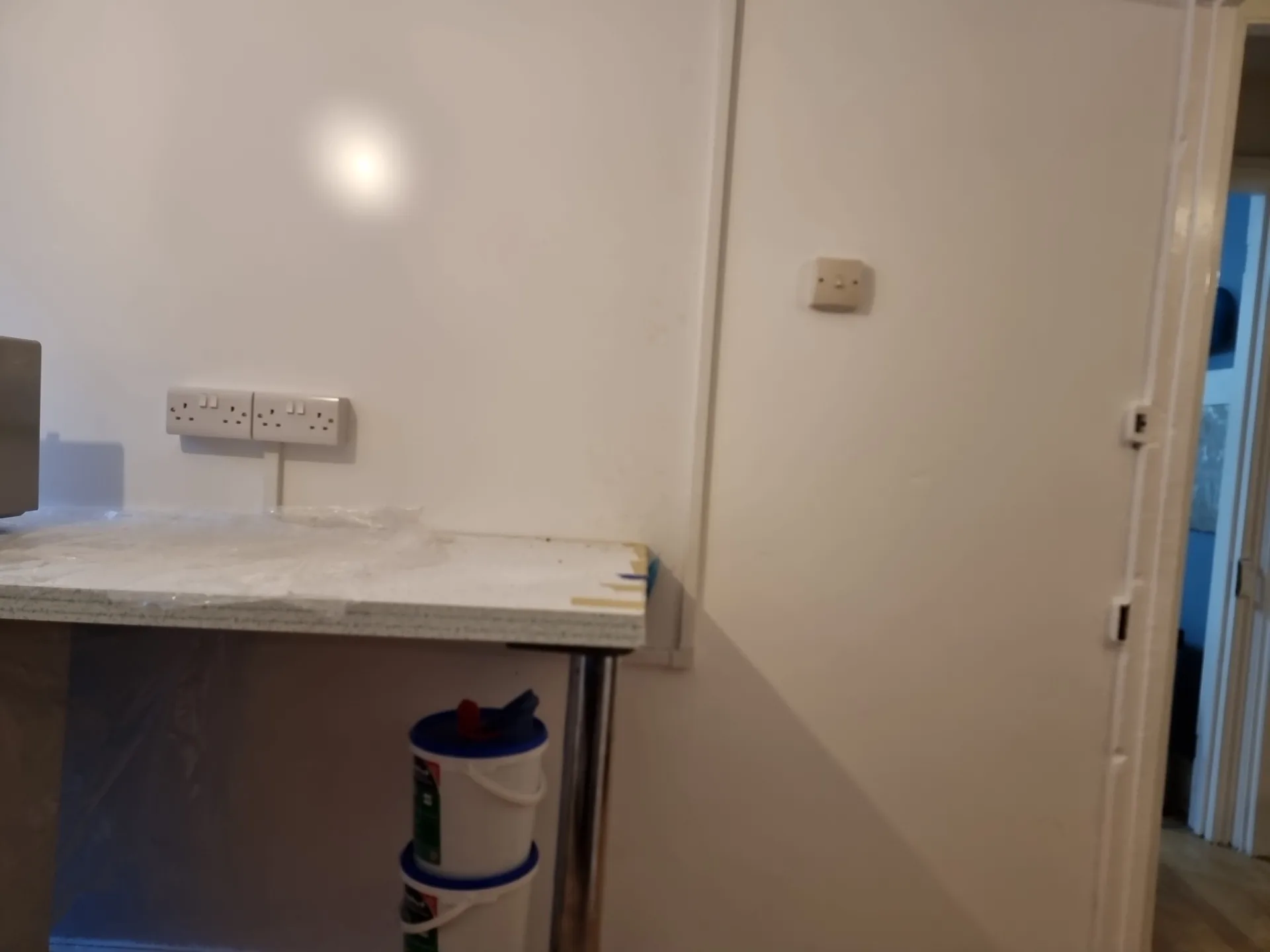
Kitchen equipment isolation switches need positioning where they’re easily accessible but won’t be operated accidentally. The existing 45A cooker isolator sat low on the wall, and the installation work moved it to a more practical height on the same wall. Depending on cable condition and length, this might involve replacing the circuit cable entirely or extending what’s already there. The new switch mounts directly onto the tiled surface, providing a secure fixing point and clearly visible control position for the cooking equipment.
Throughout the entire installation, compliance with the 18th Edition wiring regulations remained paramount. These regulations cover everything from cable sizing and protection devices to earthing arrangements and documentation. Once the physical installation work finished, comprehensive electrical testing verified every circuit. Insulation resistance tests confirm cables aren’t damaged and won’t leak current. Continuity tests verify protective conductors are properly connected. Earth fault loop impedance measurements check that protective devices will operate quickly enough if a fault occurs. Polarity tests make sure live and neutral connections are correct throughout.
All this testing data feeds into the Electrical Installation Certificate, the formal document that confirms the work meets current standards. This certificate serves multiple purposes – it demonstrates the installation is safe, provides a baseline for future testing and inspection, and allows notification to Building Control as required by building regulations. Any commercial premises should maintain proper electrical certification, both for insurance purposes and to demonstrate due diligence regarding staff and customer safety.
The completed installation transformed the cafe’s electrical infrastructure from a system that had reached its limits into one with capacity for current needs and future expansion. The three-phase consumer unit provides balanced load distribution across the supply phases, reducing the risk of overloading any single phase. Dedicated circuits mean critical equipment like refrigeration won’t lose power if another circuit trips. Proper circuit protection sized for each load provides safety without unnecessary nuisance tripping. Surface-mounted trunking keeps all new cabling protected, organized, and maintainable.
For food service businesses, electrical reliability matters as much as food quality. Equipment failures during service hours create immediate problems, but the safety of staff and customers can never be compromised. Modern electrical installations in commercial kitchens need to balance capacity, safety, accessibility, and future flexibility. The work completed at this Newquay cafe addresses all these requirements, providing a properly specified and professionally installed electrical system that supports the business today whilst allowing for tomorrow’s needs.