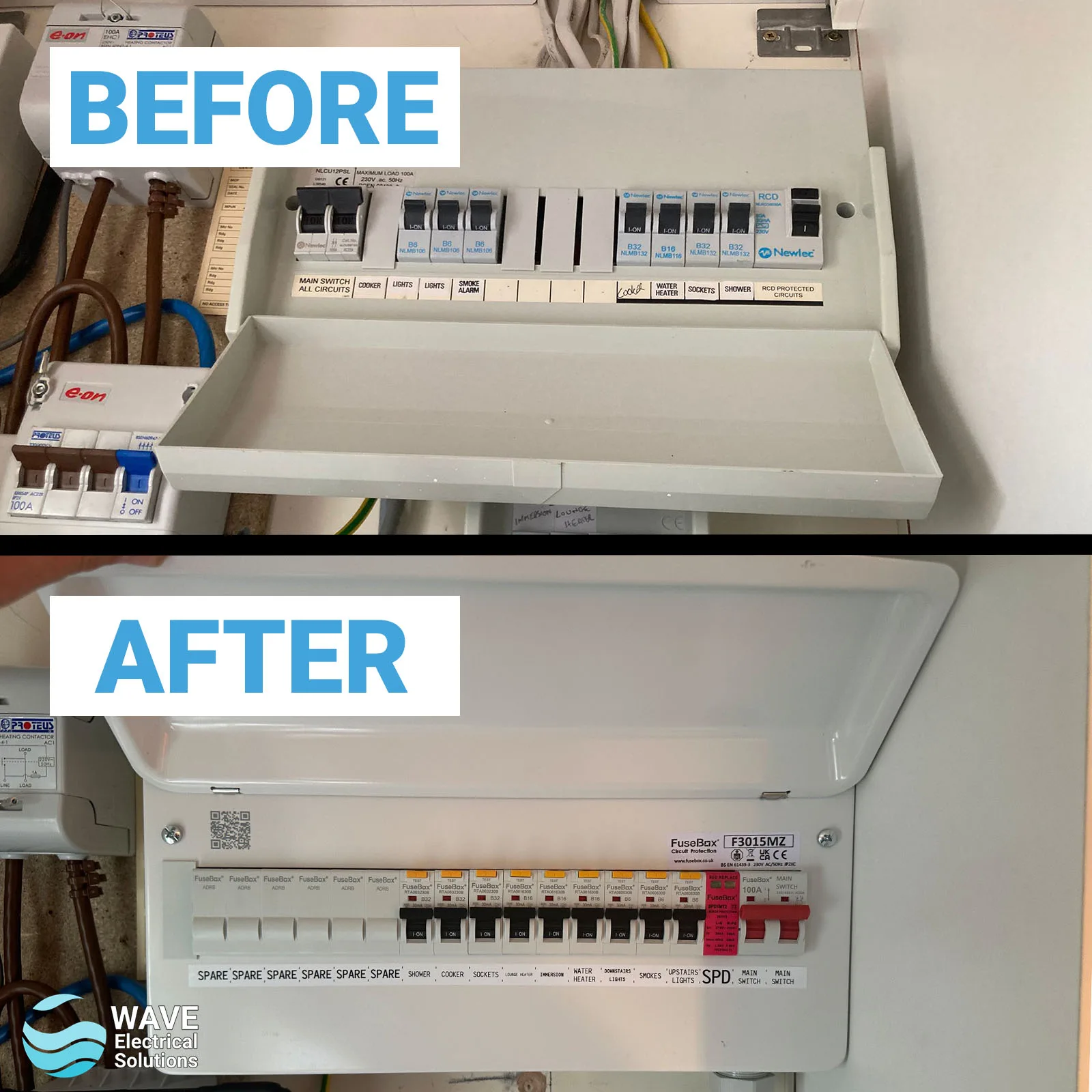
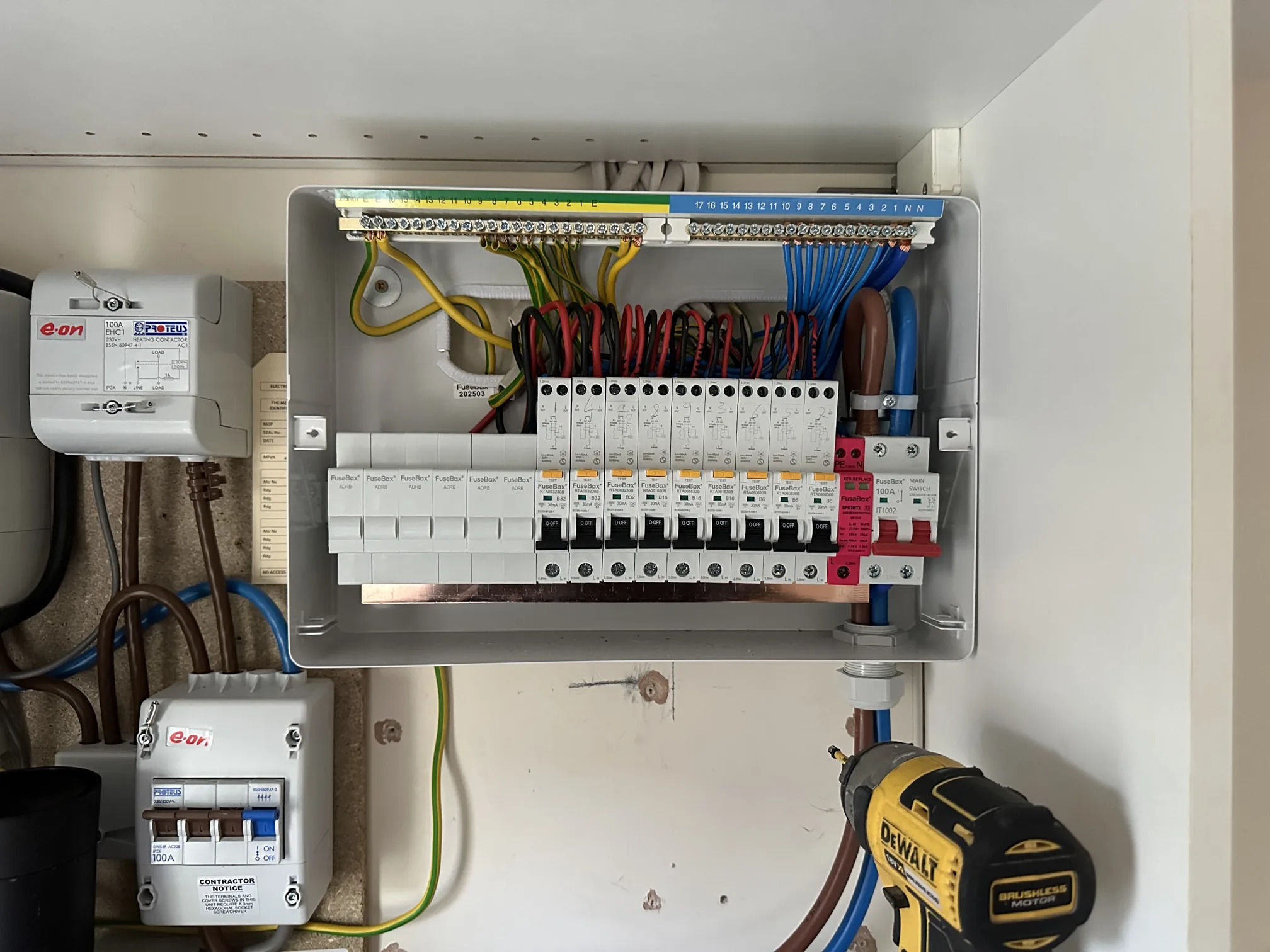
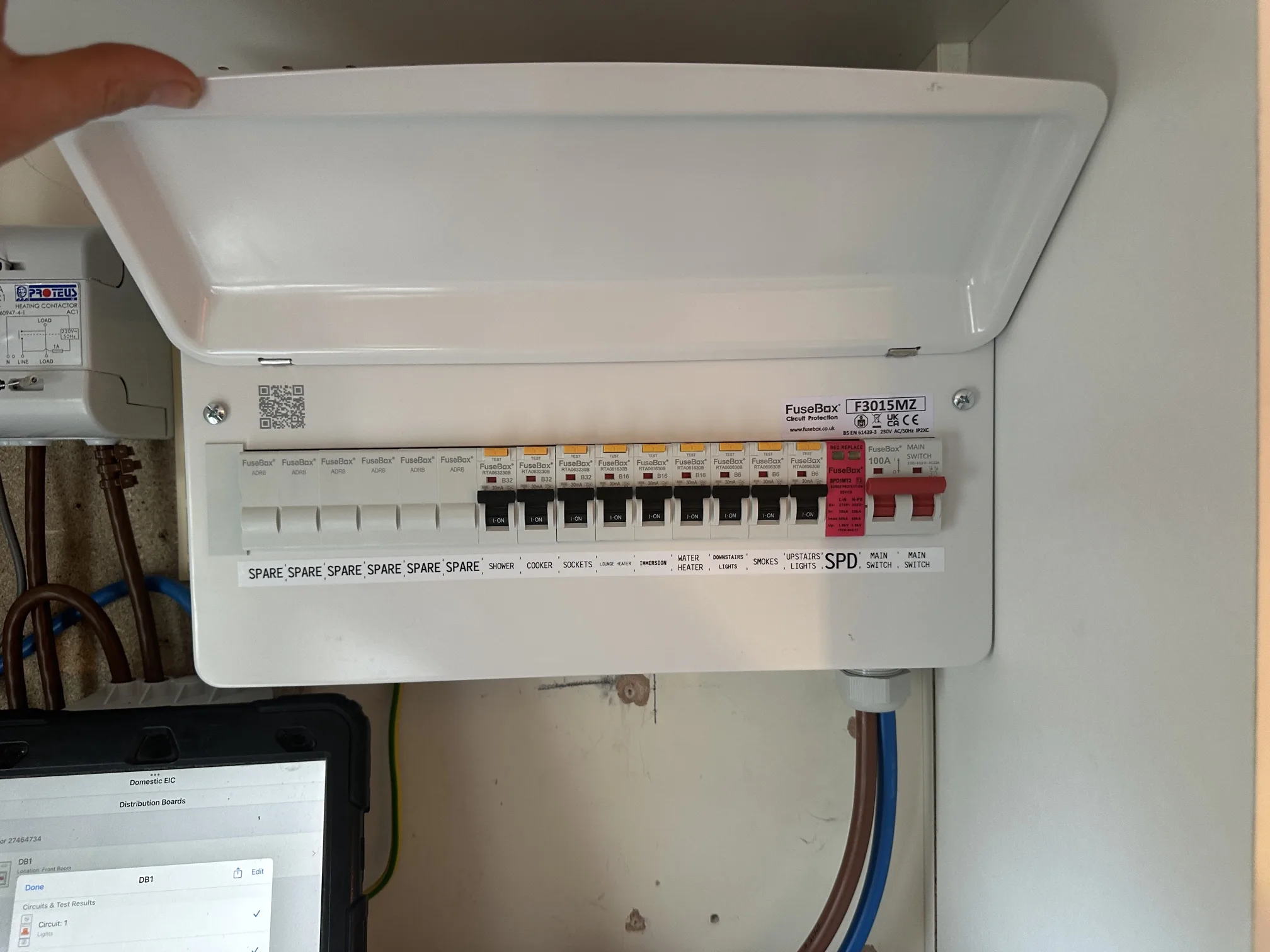
A residential property in St Austell required the consolidation of two separate distribution boards into a single modern consumer unit with integrated surge protection. The existing setup included a main board and an Economy 7 board, both of which were replaced with a 15-way RCBO consumer unit featuring an SPD. The incoming meter tails were upgraded to 25mm double insulated cabling, and all circuits were tested to current 18th Edition standards with a full Electrical Installation Certificate issued upon completion.
Modern electrical installations demand higher levels of protection than systems installed even a decade ago. Properties across Cornwall still operate with older split-board configurations, particularly those with Economy 7 heating systems that necessitated separate distribution boards. This St Austell property presented exactly that scenario, with two ageing consumer units managing different circuits throughout the home.
The existing arrangement featured a main distribution board handling standard circuits alongside a dedicated Economy 7 board for off-peak heating and hot water systems. Whilst this configuration served the property adequately when installed, it represented outdated practice by contemporary standards. Multiple boards increase the complexity of maintenance work, make fault-finding more time-consuming, and offer less comprehensive protection than current regulations require.
Consolidating these separate boards into a single consumer unit addressed several concerns simultaneously. The property would benefit from uniform protection across all circuits, simplified future maintenance, and compliance with the latest wiring regulations. The homeowner recognised that upgrading now would provide long-term reliability and meet requirements should they choose to sell the property in future.
We specified a 15-way consumer unit fitted with RCBOs rather than traditional MCBs with RCD protection. This approach provides individual circuit protection, meaning a fault on one circuit won’t trip others unnecessarily. Anyone who’s experienced an RCD trip taking out half the house understands the value of this arrangement. Each circuit operates independently, reducing inconvenience when faults occur.
Surge protection formed another key component of the upgrade. The integrated SPD protects connected electronics from voltage fluctuations and power surges originating from the electricity grid. Modern homes contain expensive electronic equipment – computers, televisions, smart home systems, kitchen appliances – all vulnerable to damage from electrical surges. Whilst complete protection against lightning strikes remains challenging, SPDs significantly reduce the risk of damage from the more common voltage spikes that occur regularly on the grid.
The Economy 7 circuits required particular attention during the consolidation process. These circuits operate on different tariff schedules, typically powering storage heaters and immersion heaters during off-peak hours when electricity costs less. Maintaining their functionality whilst integrating them into the new consumer unit meant careful planning of circuit arrangements and proper identification of each circuit’s purpose. All Economy 7 circuits were transferred successfully, preserving the homeowner’s ability to heat their property economically.
Upgrading the incoming meter tails to 25mm double insulated cabling formed an integral part of the work. The existing tails, connecting the electricity meter to the consumer unit, were undersized for modern electrical demands. Houses today draw far more current than they did when many were first wired, with multiple high-power appliances operating simultaneously. Properly sized meter tails handle this increased load safely, reducing heat buildup and potential fire risk.
The physical installation involved careful removal of both existing boards, assessment of all incoming circuits, and methodical connection to the new consumer unit. Each circuit was identified, tested for condition, and connected to an appropriately rated RCBO. Cable labelling received attention throughout, providing clear identification for future reference. The homeowner would be able to identify which breaker controlled which circuits without guesswork.
Testing formed a substantial component of the project. Every altered circuit underwent thorough examination using calibrated test equipment. Insulation resistance, polarity, earth continuity, and RCD operation were all verified to meet 18th Edition requirements. These tests don’t simply tick boxes for compliance purposes – they confirm the installation operates safely and will continue doing so reliably.
The Electrical Installation Certificate documented all test results and installation details comprehensively. This certificate serves multiple purposes beyond legal compliance. It provides a detailed record of the installation’s condition at completion, forms part of the property’s documentation for future sales, and meets Building Control notification requirements for the electrical work undertaken.
Fire-rated consumer units have become standard specification for installations where the consumer unit sits on escape routes or within sole means of escape. Modern regulations recognise that a fire within a consumer unit could block evacuation routes, particularly in properties where the consumer unit location coincides with exit paths. The fire-rated enclosure contains any internal fire for a specified period, allowing occupants time to evacuate safely.
Circuit arrangements within the new consumer unit balanced several considerations. Related circuits were grouped logically, high-current circuits received appropriate isolation, and the layout facilitated straightforward future maintenance. Labelling extended beyond simple room descriptions, providing detail about specific outlets and appliances served by each circuit. Future electricians working on the installation would appreciate this clarity.
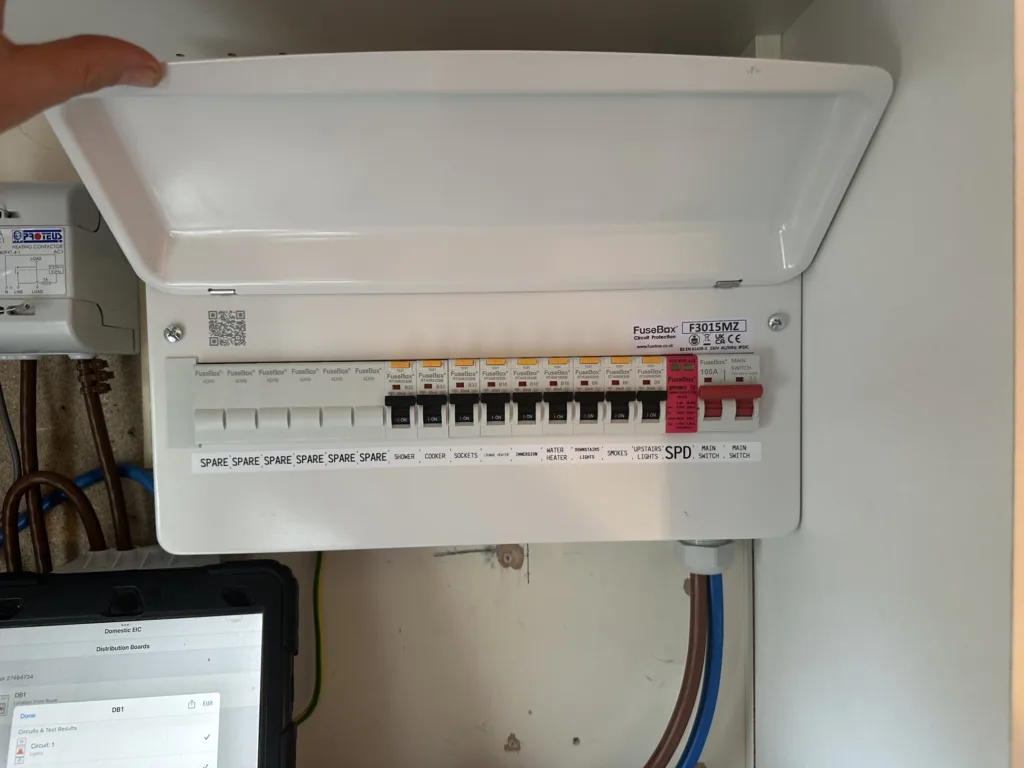
The completed installation transformed the property’s electrical infrastructure from a dated split-board arrangement into a contemporary system offering comprehensive protection and improved functionality. The homeowner gained peace of mind knowing their electrical installation met current standards and would serve them reliably for years ahead.
Properties throughout St Austell and the wider Cornwall area still operate with older consumer unit configurations that don’t meet present requirements. Many homeowners remain unaware that their installations, whilst functional, fall short of current standards for surge protection, individual circuit protection, and fire safety. Regular electrical inspections identify these shortcomings, allowing planned upgrades rather than reactive work following failures.
Consumer unit replacement represents one of the most impactful electrical upgrades available to homeowners. The relatively modest investment delivers substantial improvements in safety, convenience, and compliance. Modern consumer units with RCBOs and surge protection offer far superior protection compared to older boards with traditional rewirable fuses or even first-generation MCBs and RCDs.
The consolidation aspect particularly benefits properties with multiple boards. Troubleshooting becomes simpler when all circuits originate from one location. Resetting tripped breakers doesn’t involve checking multiple boards. Future circuit additions or modifications work from a single consumer unit rather than determining which board should accommodate new circuits.
St Austell properties, like homes across Cornwall, vary considerably in age and condition. Older properties often require sensitive handling of existing installations, working within the constraints of traditional building methods whilst bringing electrical systems up to contemporary standards. This particular installation demonstrated how modern protection devices integrate effectively with existing circuit arrangements, delivering current levels of safety without requiring complete rewiring.