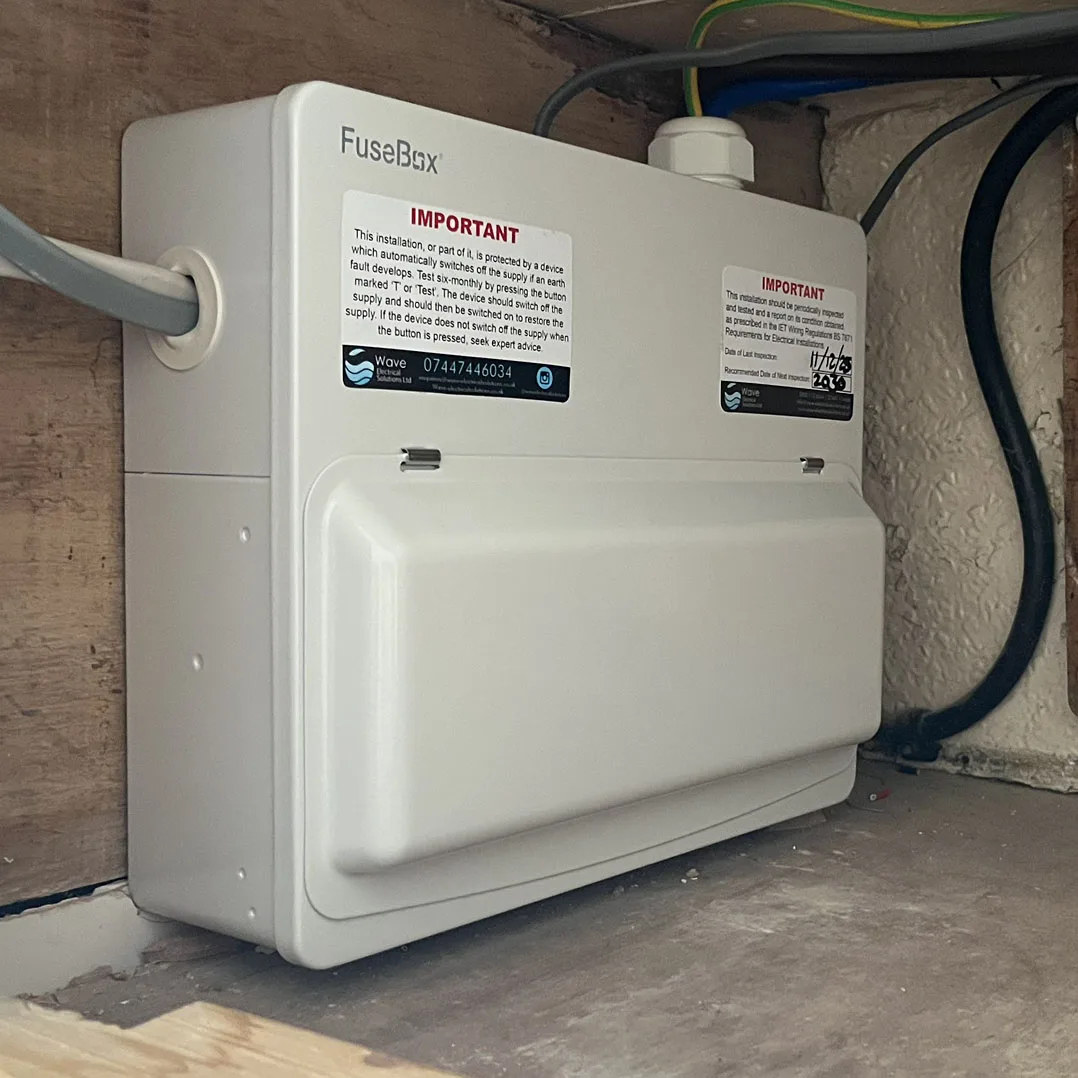
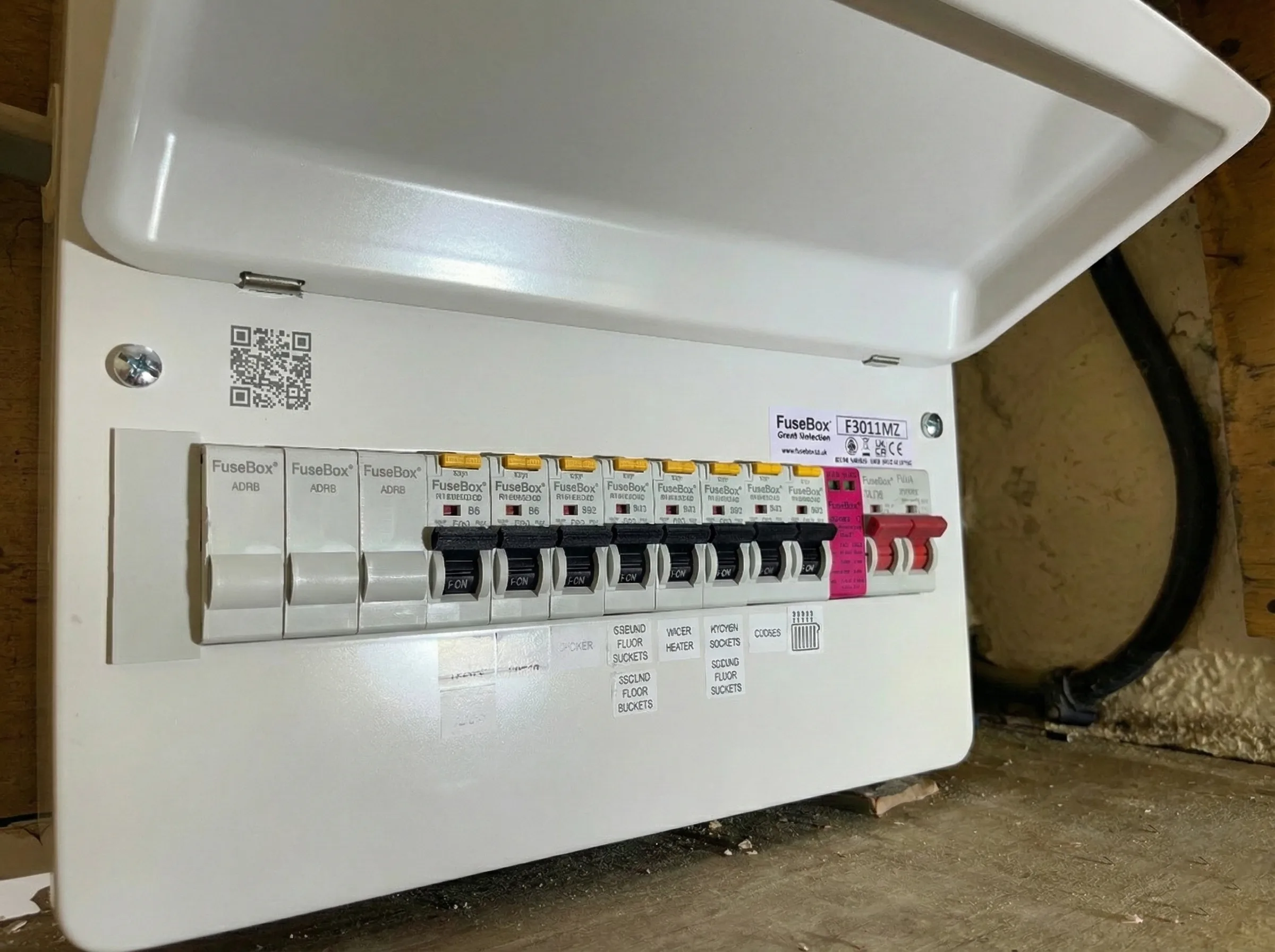
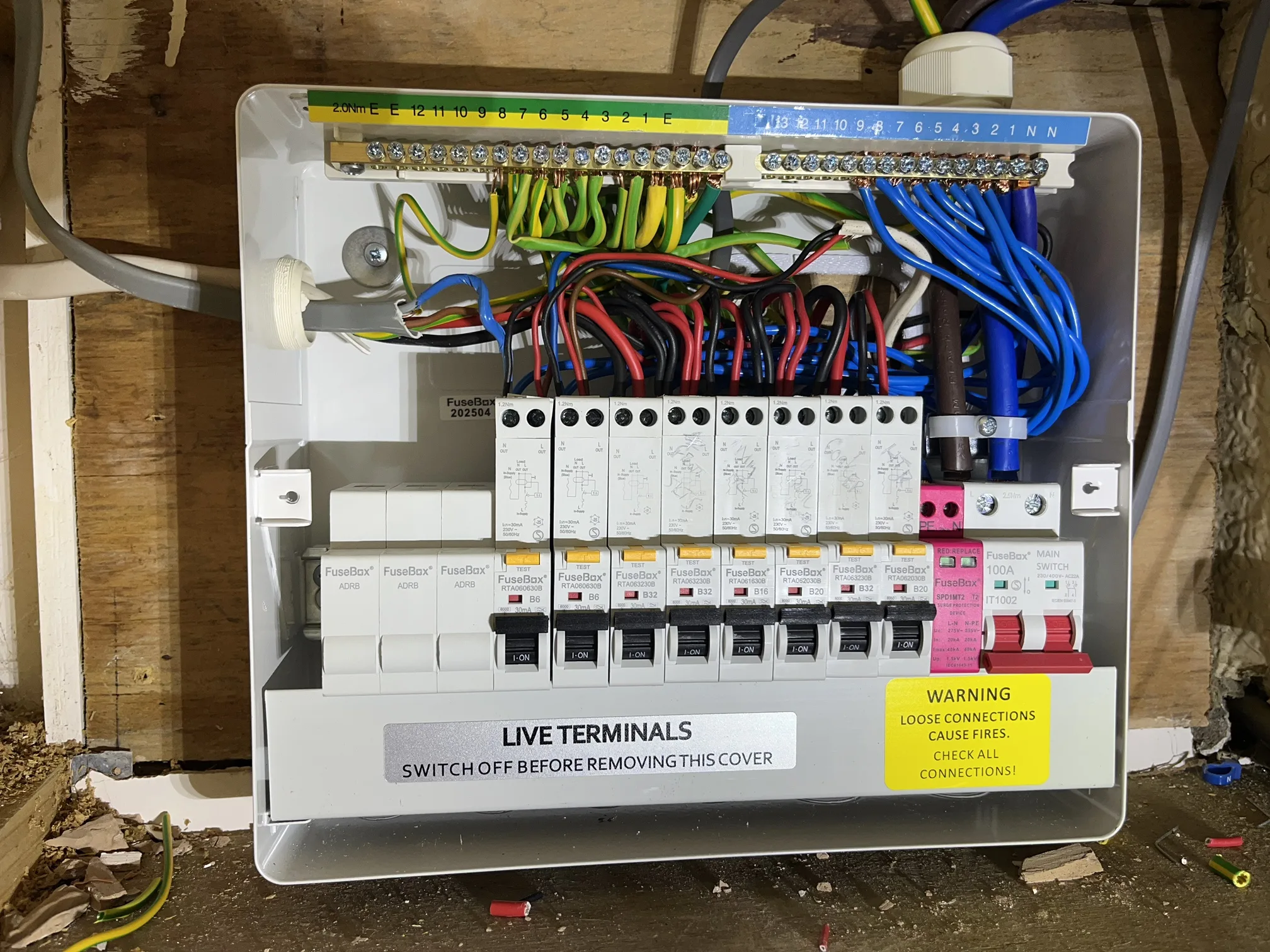
A property in St Ives required urgent electrical work following an inspection that identified several safety concerns. The job involved replacing the existing consumer unit with a modern 11-way RCBO board featuring surge protection, upgrading the meter tails, and rectifying multiple EICR observations including a neutral fault that needed investigation and repair.
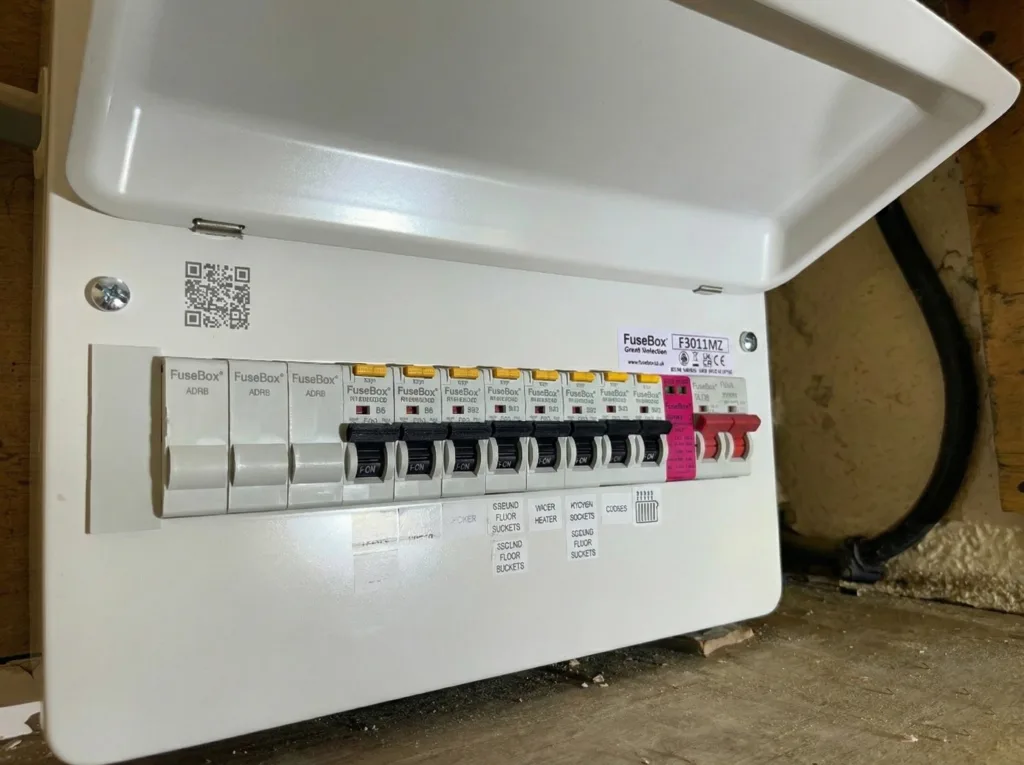
Working on a property in St Ives, we were called to address a number of electrical issues that had been flagged during a previous inspection. The homeowner had received an unsatisfactory EICR, and several observations needed sorting before the property could be considered electrically safe. The main focus was replacing an outdated consumer unit and dealing with various circuit faults that posed potential risks.
The existing consumer unit wasn’t meeting current standards, which is something we see fairly often in older properties. These boards might have served well for years, but electrical regulations evolve and safety devices improve. The homeowner needed a complete replacement rather than just patching up the old unit. We specified an 11-way RCBO consumer unit with integrated surge protection, which would give each circuit individual protection whilst also safeguarding sensitive electronics from voltage spikes coming through the grid.
Modern consumer units differ significantly from older boards in how they protect circuits. Rather than having a couple of RCDs protecting groups of circuits, RCBO boards give each circuit its own combined overcurrent and residual current protection. This means if a fault occurs on one circuit, only that specific circuit trips rather than taking out half the house. It’s a more sophisticated approach that reduces nuisance tripping and makes fault-finding considerably easier.
The surge protection device integrated into this consumer unit adds another layer of defence. Power surges from the electrical grid can damage computers, televisions, kitchen appliances and any other electronics plugged in around the home. These surges might come from lightning strikes affecting the local network, switching operations at substations, or other grid events. The SPD diverts excess voltage safely to earth before it can reach household appliances, which can save thousands of pounds worth of equipment over the unit’s lifetime.
Before fitting the new consumer unit, we needed to upgrade the meter tails. The existing cables running from the meter to the consumer unit were undersized for the new installation. We replaced them with 25mm double insulated cabling, which provides the necessary current-carrying capacity whilst meeting current regulations. This work had to be done carefully, coordinating with the meter setup and making sure everything was properly terminated and tested.
One of the EICR observations that needed addressing was a neutral fault on circuit three, which supplied sockets in the kitchen, utility room and back bedroom. High resistance readings on the neutral conductor indicated a loose connection somewhere along the circuit. This kind of fault can cause all sorts of problems – from intermittent power loss to overheating at the poor connection point. We had to trace the circuit systematically, testing at each junction and accessory until we located where the neutral wasn’t properly terminated.
Circuit tracing in older properties takes patience because wiring routes aren’t always logical, and previous alterations might have complicated things further. We worked through the circuit methodically, checking continuity at each point and narrowing down where the fault lay. Once located, we re-terminated the neutral conductor properly, tested the circuit again to confirm the fault was cleared, and documented the work.
The rest of the EICR observations covered various issues that needed rectifying. Some circuits required labelling corrections, others needed bonding improvements or earthing upgrades. Each observation was dealt with systematically, with testing carried out to verify the work met regulations. Grey cables throughout the installation needed sleeving with blue at terminations to correctly identify neutral conductors, which is a requirement that’s sometimes overlooked in older installations but matters for safety and clarity.
With the new consumer unit installed, all circuits were tested thoroughly. Each RCBO was verified for correct operation, earth fault loop impedances were measured, insulation resistance tests confirmed circuit integrity, and polarity checks made sure everything was connected correctly. The testing regime for this kind of installation is comprehensive because we needed to produce an electrical installation certificate for the new board work and then a satisfactory EICR for the whole property once remedials were complete.
Properties in St Ives vary considerably in age and condition, which means electrical installations can differ quite widely. Some homes have been well maintained with regular upgrades, whilst others might not have had significant electrical work for decades. When an EICR throws up multiple observations, it’s usually because the installation hasn’t kept pace with changing standards or because gradual deterioration has reached a point where intervention is needed.
The homeowner was understandably keen to get everything sorted properly. An unsatisfactory EICR can affect property insurance, cause issues with mortgage lending, and obviously represents genuine safety concerns. Working through the observations systematically meant we could address each issue properly rather than just doing the minimum to scrape a pass. The consumer unit replacement formed the core of the remedial work, giving the property a modern, safe distribution board that will serve reliably for many years.
Installing the fire-rated consumer unit added another safety feature. If a fault does occur within the board itself, the fire-rated enclosure contains any resulting fire and prevents it spreading into the surrounding structure. This is particularly important where consumer units are located under stairs or in other areas where a fire could quickly become serious. The regulations around consumer unit locations and fire safety have tightened considerably, reflecting real-world incidents that demonstrated the need for better protection.
Once all remedial work was complete and testing confirmed everything met standards, we could issue the satisfactory EICR the property needed. This gave the homeowner documentary proof that their electrical installation was safe and compliant, which sorted their insurance requirements and provided peace of mind. The electrical installation certificate for the new consumer unit and altered circuits went to building control as required, keeping everything properly documented and above board.
The job demonstrates how electrical remedial work often involves both immediate safety issues and longer-term upgrades. Replacing the consumer unit addressed current protection shortcomings whilst future-proofing the installation with surge protection and individual circuit RCBOs. Fixing the neutral fault eliminated a potentially dangerous condition that could have worsened over time. Together, these interventions transformed an installation with multiple problems into one that meets current standards and will continue to operate safely.