A residential property in St Austell required a complete electrical safety assessment and consumer unit upgrade. Following a thorough inspection and testing of the existing installation, we replaced the outdated board with a modern 21-way RCBO consumer unit featuring integrated surge protection, upgraded the meter tails to 25mm cabling, and resolved identified safety concerns to bring the installation in line with current regulations.
When homeowners in St Austell contacted us about their electrical installation, they were concerned about the age of their existing consumer unit and wanted peace of mind about the safety of their home’s electrical system. The property’s fusebox had been in place for many years, and with modern electrical demands and updated safety standards, it was the right time to have everything checked properly.
We started by carrying out a comprehensive electrical installation condition report. This process involves methodical testing of every circuit in the property to assess the overall safety and condition of the wiring. Each circuit gets individual attention during the inspection, with continuity tests, insulation resistance measurements, and checks for proper earthing and bonding throughout. The testing process gives us a complete picture of how the electrical installation is performing and whether any concerns need addressing.
The inspection revealed that whilst the property’s wiring was generally in reasonable condition, the existing consumer unit was outdated and lacked the protection features that modern installations provide. We also identified a loose earth connection on one of the ring main circuits, which needed sorting before it could develop into a more serious problem. The meter tails connecting the supply to the consumer unit were also due for upgrading to handle the property’s electrical load safely and efficiently.
Based on these findings, we recommended replacing the existing consumer unit with a contemporary installation that would provide far better protection for the property and its occupants. Modern consumer units have moved on significantly from older fusebox designs, offering multiple layers of safety that simply weren’t available when many properties were first wired.
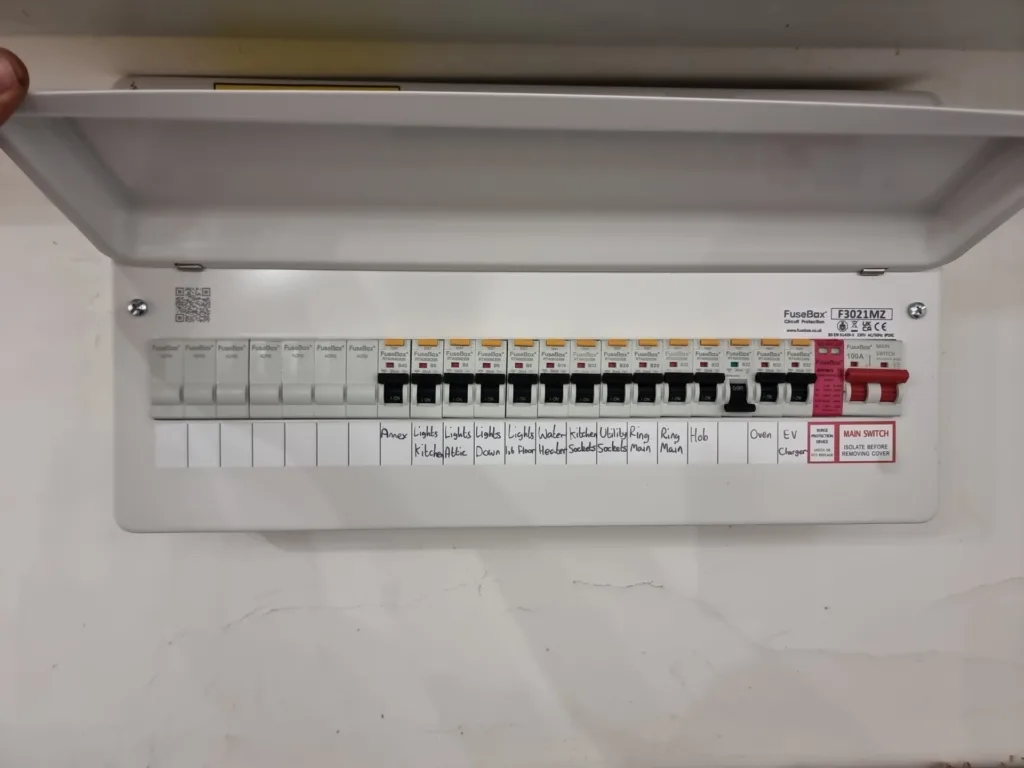
The new installation centres around a 21-way consumer unit equipped with residual current circuit breakers with overload protection on every circuit. This means each individual circuit in the property has its own dedicated protection device, rather than groups of circuits sharing protection as in older designs. If there’s a fault on the kitchen ring main, for instance, only that circuit trips rather than taking out half the house. This arrangement makes life far more convenient when issues do occur, and it provides better discrimination between circuits.
We configured the board to accommodate all the property’s existing circuits whilst leaving room for any future additions. The distribution includes several 6 amp circuits for lighting, a 16 amp circuit, a 20 amp circuit, multiple 32 amp circuits for sockets and high-demand appliances, and a 40 amp circuit. Blanking modules fill the remaining ways, keeping the installation neat and maintaining the integrity of the enclosure.
One of the key features of this installation is the integrated surge protection device. Power surges coming from the electrical grid can damage sensitive electronics, and modern homes are filled with computers, televisions, and appliances that contain vulnerable circuitry. The surge protection device monitors the incoming supply and diverts excess voltage safely to earth before it can reach connected equipment. It’s a relatively recent requirement in electrical installations, but it provides valuable protection for all the expensive kit that people rely on daily.
We upgraded the meter tails to 25mm double-insulated cabling as part of the work. These cables form the connection between the electricity meter and the consumer unit, carrying all the power that feeds into the property’s circuits. Properly sized tails are fundamental to a safe installation, and the upgrade meant the connection could handle the property’s electrical demand without any concerns about overheating or voltage drop.
The consumer unit itself needed relocating within the existing cupboard space. We positioned it above the doorway, which required careful planning to work with the existing cable runs whilst keeping everything accessible for future maintenance or additions. The location provides good access to the board whilst keeping it out of the way of everyday activities in the cupboard space.
Before we could complete the installation, we needed to track down and fix the loose earth connection that the inspection had identified. Earth connections are absolutely fundamental to electrical safety, providing the path that fault current takes when something goes wrong. A loose connection in the earthing system can compromise the entire protective setup, so we took time to locate the problem on the ring main circuit and rectify it properly. After making the repair, we ran continuity tests to verify that the earth path was sound throughout the circuit.
Installing the new consumer unit involved carefully transferring each circuit across to its new protection device, testing as we went to make sure everything was functioning correctly. We terminated the upgraded meter tails into the new board and connected them through to the individual circuit breakers. Each connection was made with attention to the termination torques and routing of cables to keep everything neat and compliant with current standards.
The installation complies fully with the 18th Edition of the wiring regulations, which represents the current benchmark for electrical safety in the UK. These regulations are updated periodically to reflect new technologies, improved understanding of electrical hazards, and changes in how people use electricity in their homes. Bringing an installation up to the current edition means homeowners can be confident their electrical system meets contemporary safety expectations.
We completed electrical installation certificates for all the work carried out, documenting the test results and installation details. These certificates provide a formal record of the installation and the testing that verified its safety. They’re valuable documents for homeowners, whether for insurance purposes, future electrical work, or when selling the property.
Throughout the job, we took photos documenting the installation with both the cover removed to show the internal arrangement and with the cover fitted showing all the required labelling. Proper labelling is more important than people often realise – in an emergency or when maintenance is needed, clear identification of circuits can save valuable time and prevent mistakes.
The cupboard location for the consumer unit presented some practical considerations during the installation. We needed to work carefully in the confined space whilst maintaining proper cable management and keeping everything accessible. The fire-rated consumer unit enclosure provides an additional layer of safety, containing any potential electrical fire within the metal housing.
After completing the installation and remedial work, the property now has an electrical distribution system that provides multiple layers of protection. The RCBO protection on each circuit offers both overcurrent and earth fault protection, the surge protection device guards against voltage spikes from the grid, and the properly sized meter tails handle the electrical load without stress. The homeowners gained peace of mind knowing their installation had been thoroughly tested and upgraded to current standards.
Working on electrical installations in St Austell properties often reveals systems that have served reliably for decades but lack the safety features that are now standard. Upgrading these installations doesn’t just meet current regulations – it provides tangible safety benefits through better fault protection, surge suppression, and properly rated components throughout the distribution system. The investment in a modern consumer unit pays dividends through improved safety, better circuit discrimination when faults occur, and a platform that can accommodate future electrical needs as they arise.