A domestic property in St Austell received a complete consumer unit replacement featuring integrated surge protection and RCBO protection for individual circuits. The installation included upgraded 25mm meter tails, full electrical certification, and the replacement of outdated fluorescent garage lighting with modern LED batten lights, alongside fault finding work to resolve an intermittent tripping issue on the lighting circuit.
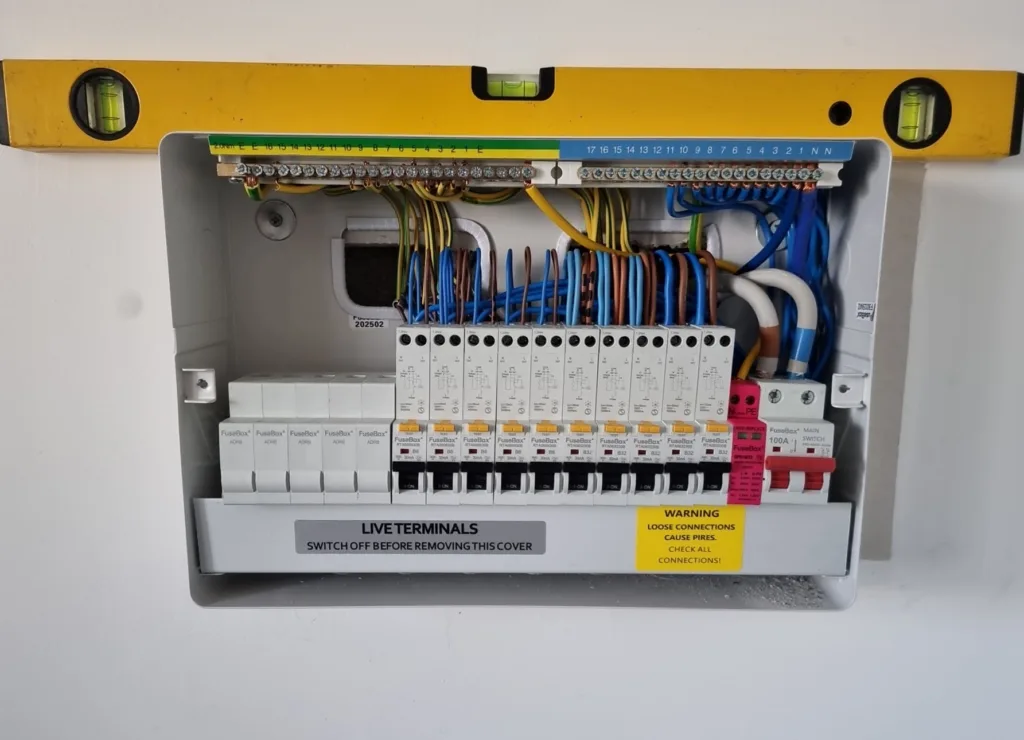
Electrical installations don’t last forever, and consumer units are no exception. When we visited this St Austell property, the homeowner needed their old fuse box replacing with a modern unit that could handle today’s electrical demands whilst providing superior protection. The existing consumer unit had served its time, but modern properties require better circuit protection and safeguards against power surges that older installations simply can’t provide.
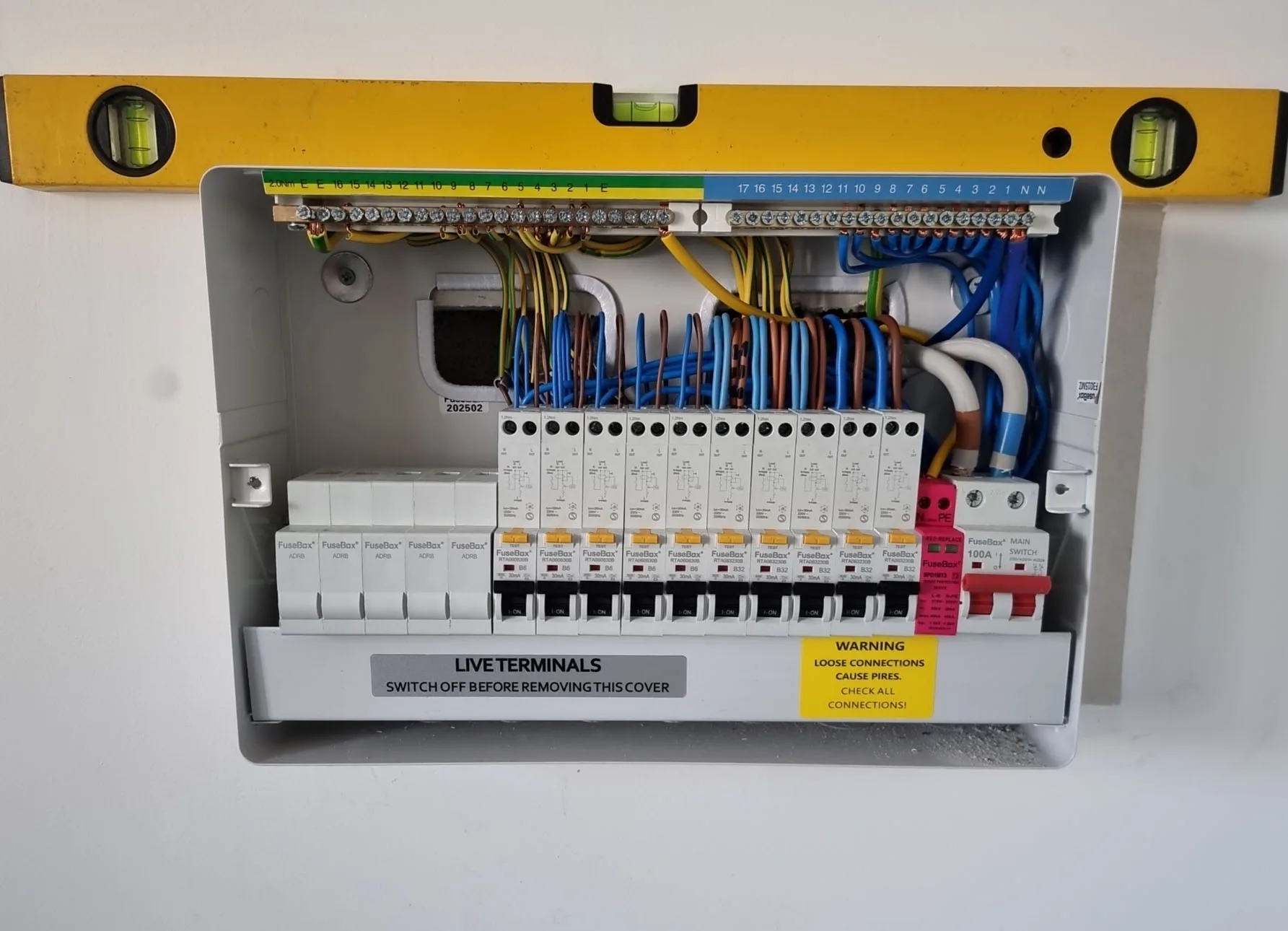
The scope of work involved installing a 15-way RCBO consumer unit with integrated surge protection. This wasn’t just a straightforward swap – the existing meter tails needed upgrading to 25mm double-insulated cabling to meet current standards. Meter tails form the connection between the electricity meter and your consumer unit, and they need to be appropriately sized to safely carry the maximum current your home might draw. Undersized tails create resistance, generate heat, and pose a fire risk, which is why we upgraded them as part of this installation.
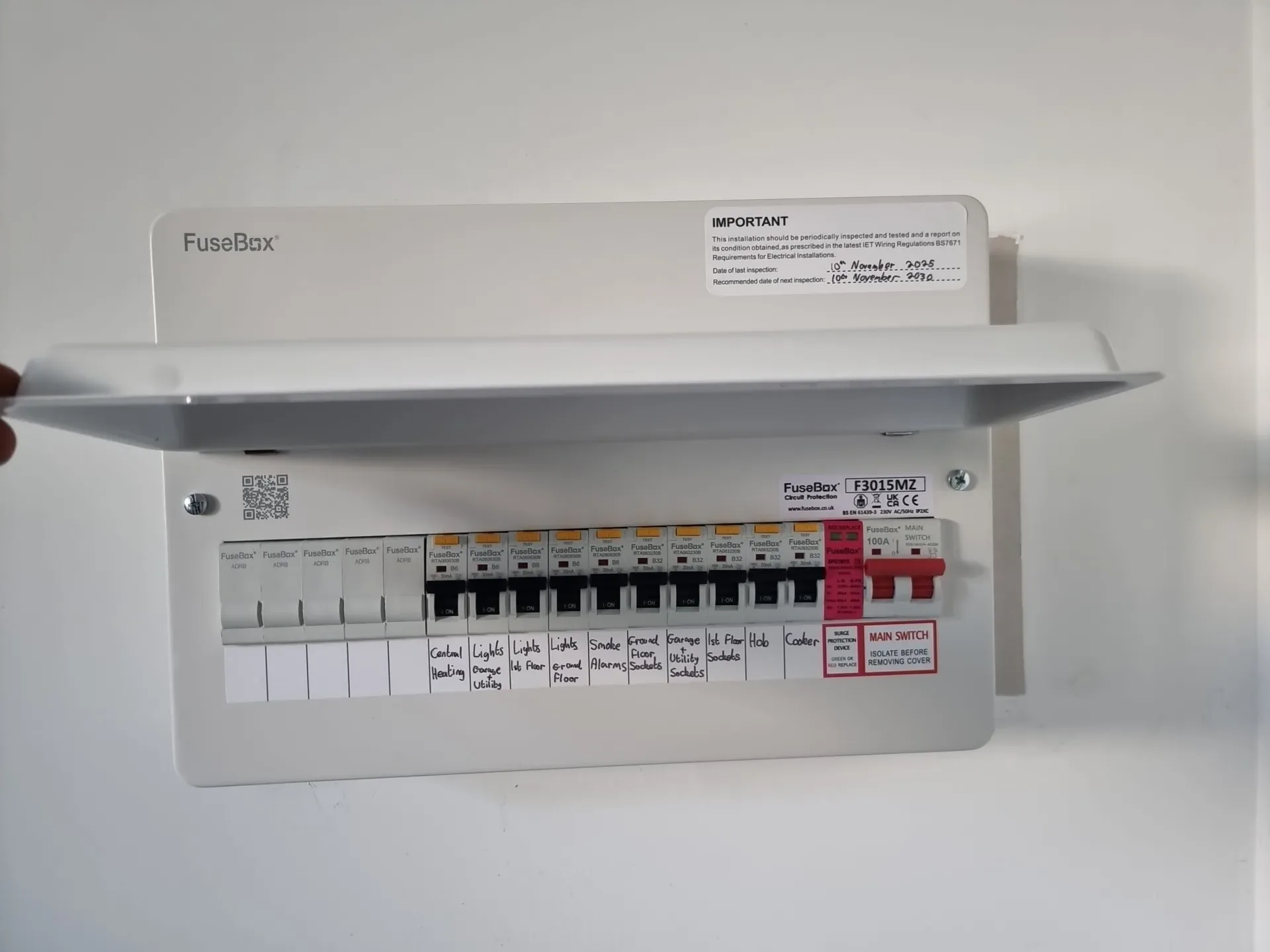
Modern consumer units differ significantly from older fuse boxes. The unit we installed features RCBO protection for each individual circuit rather than having circuits grouped under shared RCD protection. An RCBO combines overcurrent protection with residual current protection in a single device, meaning each circuit has its own dedicated protection. This approach offers significant advantages – if a fault occurs on one circuit, only that circuit trips rather than taking out half the house. It’s particularly useful when a fault develops, because you immediately know which circuit has the problem rather than having to test multiple circuits to find the issue.
The installation included five 32-amp RCBOs and five 6-amp RCBOs, providing appropriate protection levels for different circuit types. Higher-rated circuits like cookers, showers, and socket rings require 32-amp protection, whilst lighting circuits typically use 6-amp devices. Matching the protection device to the circuit type and cable size forms a fundamental aspect of electrical safety – the protective device must disconnect the supply before the cable overheats in fault conditions.
Surge protection devices have become increasingly relevant in modern electrical installations. The SPD integrated into this consumer unit protects connected electronics from voltage spikes and surges that can enter your property through the electricity supply. These surges might originate from lightning strikes, switching operations by the distribution network operator, or large electrical loads switching on and off nearby. Modern homes contain expensive electronic equipment – computers, televisions, kitchen appliances with electronic controls – and a significant voltage surge can damage or destroy these items in seconds. The SPD diverts these surges to earth, protecting your equipment and giving you peace of mind.
The 18th Edition of the wiring regulations now requires surge protection in most new installations and significant alterations, recognising the increasing reliance on electronic equipment in homes and the potential financial impact of surge damage. Installing the SPD as an integrated component within the consumer unit provides protection whilst maintaining a neat, compact installation.
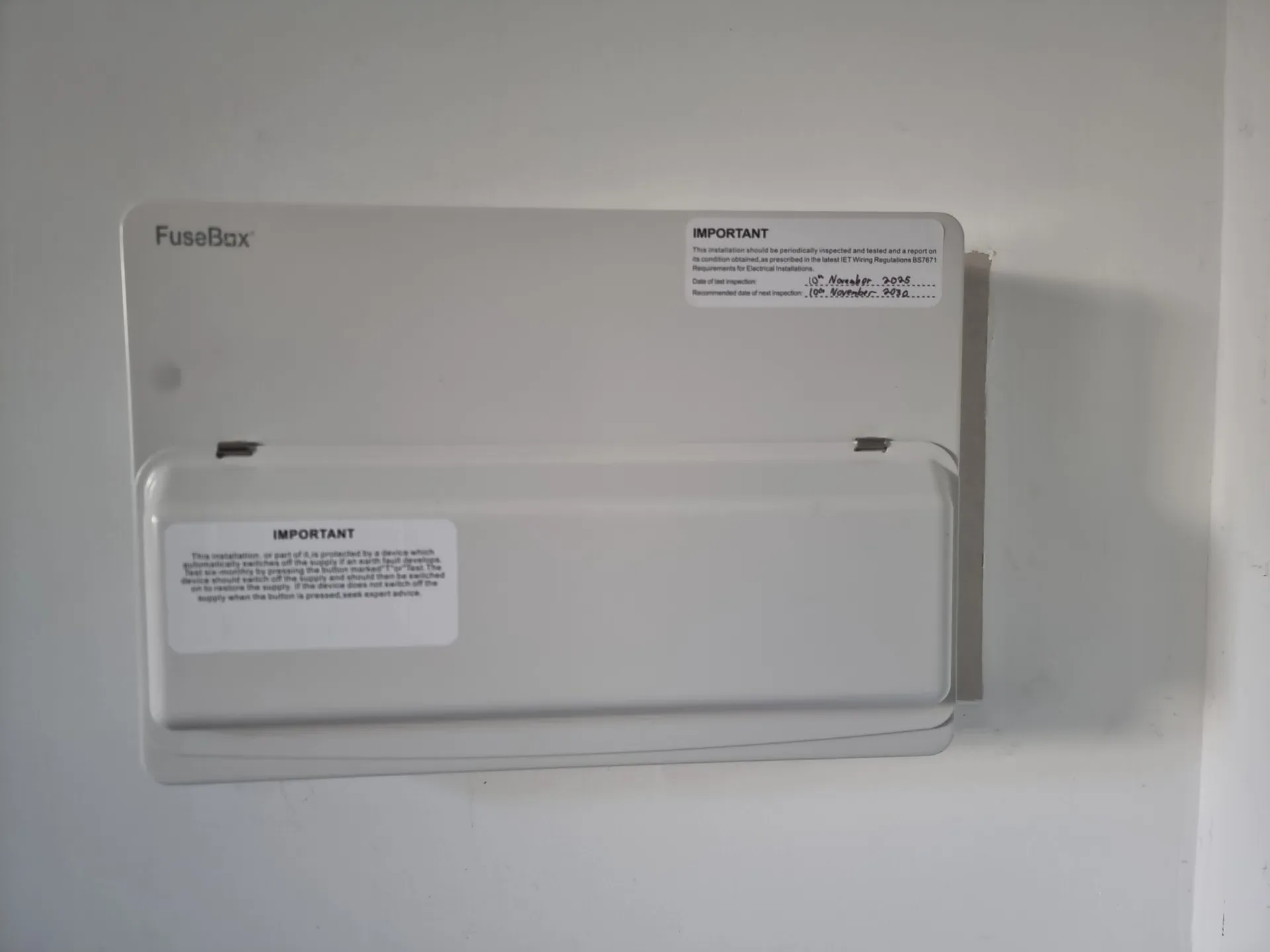
After completing the consumer unit installation, we carried out comprehensive testing on all altered circuits to verify their safety and compliance. This testing produces an Electrical Installation Certificate, which provides documented evidence that the work meets the required standards. The EIC isn’t just a piece of paper – it records test results, confirms the installation complies with BS 7671, and becomes part of the property’s electrical history. We then submitted Building Control notification, as required for this type of work.
The homeowner had also been experiencing an intermittent fault on one of the lighting circuits. Intermittent faults can be particularly frustrating because they don’t always occur when you’re investigating them. The circuit would trip occasionally without any obvious pattern, leaving the homeowner in the dark about what was causing it. These types of faults require methodical investigation – checking connections, looking for damaged cables, testing individual light fittings, and monitoring the circuit behaviour. Through careful fault finding, we identified and resolved the issue, restoring reliable operation to the lighting circuit.
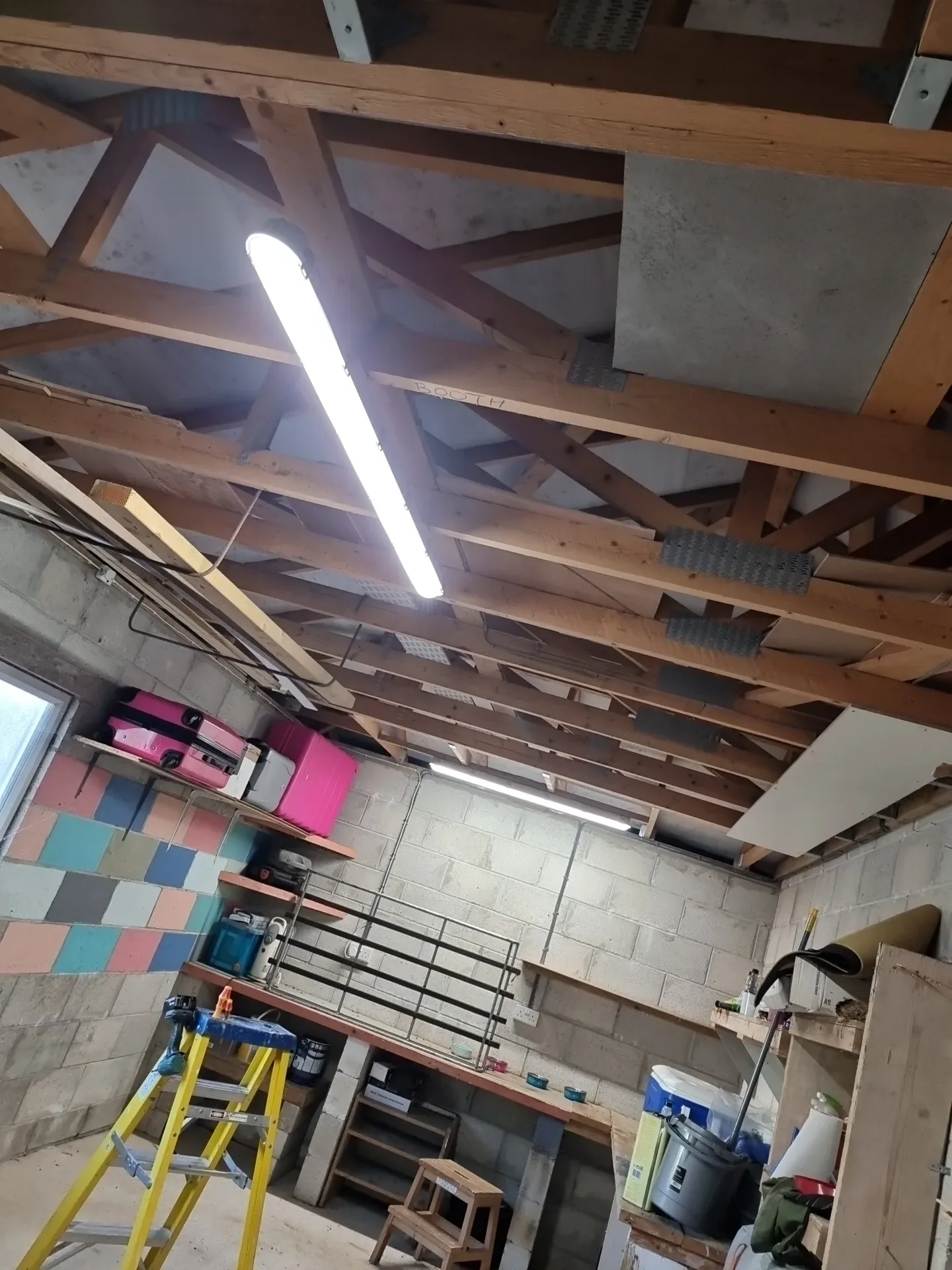
Whilst we had access to the property’s electrical systems, the homeowner requested that we replace the fluorescent lighting in their garage. Fluorescent tubes have been the standard for workshop and garage lighting for decades, but they come with drawbacks. They can take time to warm up, particularly in cold conditions. They flicker as the tube ages. They require ballasts that can fail. And they’re not particularly energy efficient compared to modern alternatives.
We replaced the two existing fluorescent fittings with 4ft LED batten lights. LED technology has transformed commercial and industrial lighting over recent years, and these benefits translate perfectly to domestic garage and workshop applications. LED battens provide instant, flicker-free light with no warm-up period. They consume a fraction of the energy that fluorescent tubes use whilst producing comparable or better light output. They have substantially longer lifespans – an LED batten will typically run for 30,000 to 50,000 hours compared to perhaps 10,000 hours for a fluorescent tube.
The quality of light from LED battens suits workshop environments particularly well. They produce clean, bright illumination that makes detailed work easier and safer. There’s no colour shift as the fitting ages, unlike fluorescent tubes that can develop an increasingly yellow cast over time. And because they generate much less heat than fluorescent fittings, they’re more comfortable to work under during extended periods.
Installation of LED battens is straightforward – they mount directly to the ceiling or overhead structure, connect to the mains supply, and they’re done. No separate control gear to install, no tubes to fit, no starters to worry about. The homeowner now has reliable, efficient garage lighting that will serve them well for years to come.
This type of comprehensive electrical work – consumer unit replacement, circuit testing, fault finding, and lighting upgrades – demonstrates how different aspects of electrical work often combine in a single visit. Rather than making multiple trips for separate issues, we could address all the homeowner’s electrical concerns efficiently. The property now has a modern, compliant electrical installation with proper surge protection, individual circuit protection, and efficient LED lighting in the garage.
The consumer unit installation complies fully with the current 18th Edition wiring regulations and carries the necessary certification and Building Control notification. The homeowner can be confident that their electrical installation provides the safety and protection expected in a modern domestic property, whilst the LED lighting upgrade will deliver immediate energy savings and improved working conditions in their garage.