A homeowner in Truro needed their faulty electric shower replaced with a new Mira Sprint unit, restoring reliable hot water to their bathroom while maintaining the existing electrical setup.
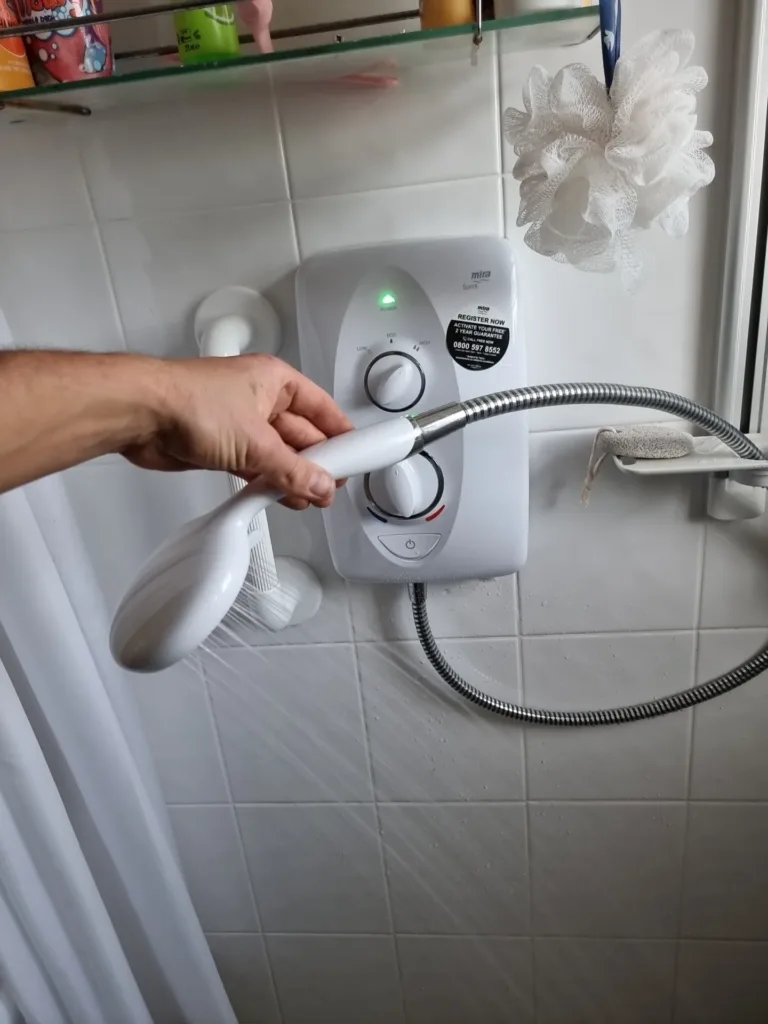
When your electric shower stops working properly, it can throw your entire morning routine into chaos. That’s exactly what happened to a homeowner in Truro who contacted us after their Mira Sprint shower unit started playing up. The shower had been gradually deteriorating, with temperature fluctuations becoming more frequent until it eventually packed in altogether. Rather than attempting a temporary fix that might only last a few weeks, they decided to get the unit replaced properly.
Electric showers are brilliant bits of kit when they’re working well. Unlike mixer showers that rely on your hot water system, electric showers heat the water on demand as it passes through the unit. This means you can have a hot shower even if your boiler’s on the blink or you’ve run out of hot water elsewhere in the house. The downside is that when they fail, there’s usually no quick DIY fix available. Most faults require a complete unit replacement rather than just swapping out a component or two.
The property had been fitted with a Mira Sprint 9.5kW model, which is a solid mid-range electric shower that’s popular in homes across Cornwall. When we arrived to assess the situation, it was clear the unit itself had reached the end of its service life. The homeowner wanted a like-for-like replacement, which made perfect sense given that the existing electrical supply and water connections were already sized and positioned for this particular model. Going with the same specification meant we could swap the units without needing to upgrade cables or modify pipework.
Before we started removing the old shower, we checked the existing isolator switch. This is something that often gets overlooked during shower replacements, but it’s actually quite important. The isolator switch – which is usually a pull cord or switch located nearby – allows you to cut power to the shower without having to go to the main consumer unit. Over time, these switches can suffer from thermal damage, especially if they’ve been working hard for several years. The contacts inside can become worn or scorched, which creates resistance and generates heat. In severe cases, this can lead to the switch failing or even creating a fire hazard.
In this instance, the isolator appeared to be in reasonable condition with no obvious signs of overheating or discolouration around the faceplate. However, given that we were already on site doing the shower replacement, we gave it a thorough inspection to be certain. We tested the connections, checked for any loose terminals, and examined the switch mechanism itself. Everything looked good, so we were able to reuse the existing isolator rather than needing to fit a new one. This saved the homeowner a bit of money and meant we could focus entirely on getting the new shower fitted and tested.
We isolated the electrical supply at the consumer unit before disconnecting the old shower unit from the wall. The existing cables were in good condition, which isn’t always the case with older installations. Sometimes you’ll remove a shower and find that the cable insulation has become brittle or that the connections have been getting quite hot. When that happens, you might need to run new cabling back to the board, which turns what should be a straightforward swap into a much bigger job. Fortunately, that wasn’t necessary here.
With the old unit removed, we could properly examine the mounting surface and check the water supply connection. The wall tiles were intact, and the pipework was in good shape. We positioned the new Mira Sprint unit, making sure it sat level and flush against the wall. Getting this right matters more than you might think. If the shower isn’t mounted level, water can pool in the wrong places or the internal mechanisms might not work properly. It only takes a few degrees off true to cause issues down the line.
The electrical connection needed to be done carefully. A 9.5kW shower draws quite a bit of current, so the cable cores need to be properly prepared and securely terminated into the unit’s connection block. We stripped back the outer sheath, prepared the individual cores, and made sure each connection was tight and secure. Loose connections in high-current applications like this can cause all sorts of problems, from nuisance tripping to serious overheating. After tightening everything up, we gave each terminal a gentle tug to verify the cables were properly secured.
Once the electrical connections were sorted, we connected the water supply. The shower needs a good cold water feed to work properly, and the inlet connection has to be watertight. We used a new fibre washer and tightened the connection by hand before finishing it off with a wrench. Over-tightening can actually damage the threads or crack the plastic components inside the shower, so there’s a balance to strike. After connecting everything up, we restored the water supply and checked carefully for any leaks before moving on to the electrical side of things.
Before energising the circuit, we ran through our standard testing sequence. This included checking the continuity of the protective conductor, verifying the polarity of the connections, and measuring the earth loop impedance to make certain the circuit would disconnect safely in the event of a fault. All of these tests came back within acceptable limits, so we were confident the installation was safe to power up.
The moment of truth came when we switched on the isolator and powered up the shower for the first time. The unit went through its startup sequence, the pump engaged, and water began flowing through at the correct rate. We ran it through several temperature settings, checking that the heating elements were working properly and that the thermostatic control was responding as it should. Everything functioned exactly as expected, with stable temperature control and good water pressure throughout the range.
We spent a few minutes showing the homeowner how to operate the new controls, even though they were very similar to the previous model. Different shower units have slightly different quirks, and it’s worth taking the time to explain things like how far you need to turn the temperature dial or what to do if the shower cuts out unexpectedly. We also reminded them about the importance of descaling in hard water areas, though Truro’s water isn’t particularly harsh compared to some parts of the country.
The installation left the bathroom fully functional again with minimal disruption. Because we were doing a like-for-like swap using the same mounting points and connections, there was no need for any major remedial work or redecoration afterwards. The homeowner could start using their shower immediately, with the confidence that comes from having a brand new unit installed to the proper standards.
Electric shower replacements like this one might seem straightforward, but there’s more to them than simply swapping one unit for another. Proper testing, secure connections, and careful attention to detail make the difference between an installation that works reliably for years and one that causes problems down the road. When you’re dealing with electricity and water in close proximity, there’s no room for cutting corners or rushing the job.