A bathroom renovation in Newquay required the replacement of an existing electric towel rail with a new client-supplied unit. During the installation, we discovered the original power supply had failed, requiring a complete electrical re-supply from the kitchen circuit to restore functionality.
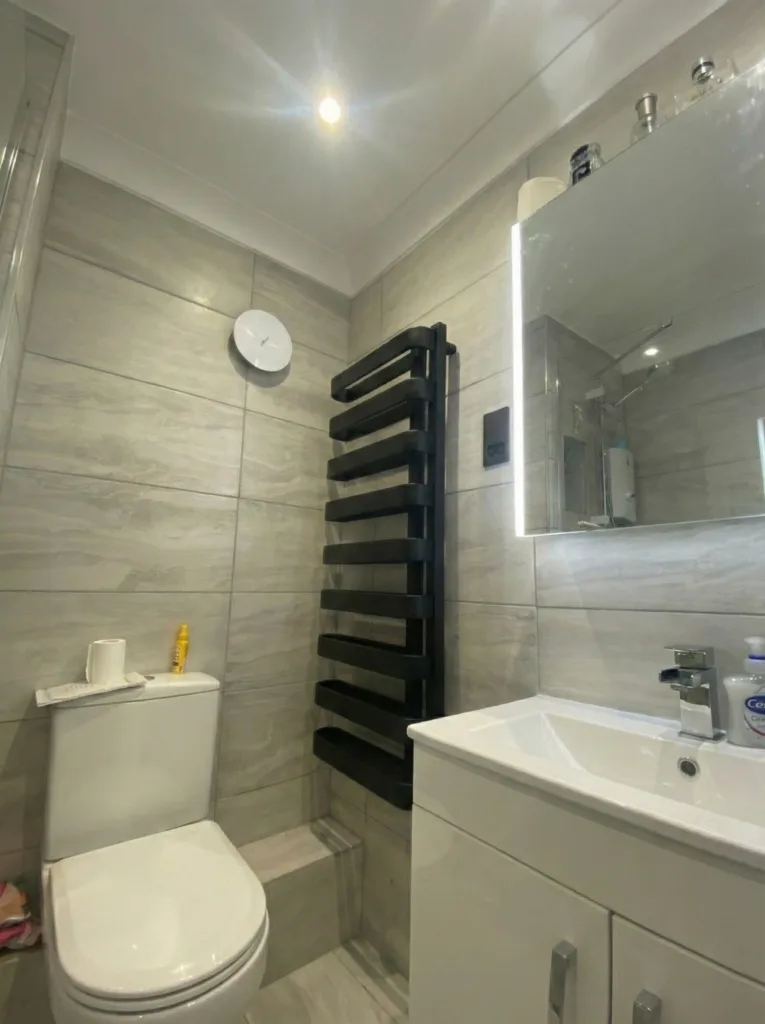
Bathroom upgrades often focus on the visible elements like tiles, fixtures and fittings, but the electrical infrastructure behind these features can present unexpected challenges. This Newquay property needed a straightforward towel rail replacement as part of a bathroom refresh, though what seemed like a simple swap quickly became more involved once we started investigating the existing installation.
The homeowner had chosen a new electric towel rail to match their updated bathroom aesthetic, and the initial plan was to remove the old unit and connect the replacement to the existing power supply. Before making any connections, we carried out thorough testing of the original outlet to check for continuity and safety. This step isn’t just good practice – it can save considerable headaches further down the line. In this case, those tests revealed that the existing cabling had failed and wasn’t providing any power to the outlet.
Dead circuits in bathrooms aren’t uncommon, particularly in older properties where wiring might have been subjected to moisture ingress over the years or where previous installations weren’t quite up to scratch. Rather than trying to trace and repair potentially faulty cabling hidden within walls and floors, the most reliable solution was to establish a completely new electrical supply for the towel rail. This approach gives you a fresh start with known-good cabling and connections, rather than gambling on the condition of existing wiring that’s already demonstrated problems.
The solution involved running a new electrical connection from the kitchen socket circuit, which was accessible and had sufficient capacity to support the additional load of the towel rail. We installed a spur from this circuit, routing the new cable to the bathroom and housing all connections within an appropriate junction enclosure beneath the kitchen units. This method provides a neat, code-compliant installation whilst keeping all connection points accessible for future maintenance if ever needed.
Electric towel rails have become increasingly popular in modern bathrooms because they offer heating without taking up floor space or requiring connection to the central heating system. They’re particularly useful in properties where extending wet heating systems would be impractical or costly, and they give you independent control over bathroom heating separate from your main heating schedule. During warmer months when you might not want the central heating on, an electric towel rail can still provide warmth for towels and take the chill off the bathroom.
The installation itself required careful attention to the physical mounting as well as the electrical connection. The previous towel rail had left fixing holes in the tiled wall, which needed addressing to prevent potential water ingress and to improve the overall appearance. We filled these redundant holes with grey silicone, chosen to blend with the existing grouting and provide a watertight seal. It’s these finishing touches that make the difference between a rushed job and one that’s been completed properly.
Mounting the new unit securely was particularly important given that towel rails can carry considerable weight when loaded with wet towels. The fixings need to be solid and properly anchored into the wall structure, not just relying on the tile surface. We made sure the new brackets were positioned to hit solid substrate, providing the strength needed for daily use over years to come.
Once the physical installation was complete and the electrical connections made, we carried out final testing to verify everything was working correctly and safely. The new towel rail fired up without issue, and the homeowner had a fully functioning unit that matched their renovated bathroom. What started as a simple replacement had required problem-solving and additional electrical work, but the end result was a reliable installation that should serve the property well.
This job highlights why testing existing installations before making assumptions is so valuable. Had we simply connected the new towel rail to the failed supply without testing, the homeowner would have been left with a non-functional fitting and we’d have been called back to investigate anyway. Taking the time to verify the electrical supply first meant we could identify and resolve the problem efficiently, completing the entire job in one visit.
Working in bathrooms always requires particular attention to electrical safety given the presence of water. All our work complied with current wiring regulations, with proper consideration given to zones, circuit protection and cable routes. The junction box location under the kitchen units keeps connections away from the bathroom environment whilst remaining accessible, striking the right balance between practicality and compliance.
The client-supplied hardware aspect of this job is worth mentioning. When customers provide their own materials, we always make clear that we can’t accept liability for any inherent faults, suitability issues or warranty matters relating to those items. Our responsibility is to install the equipment safely and correctly, but we can’t guarantee the performance or longevity of products we haven’t specified. In this case, the supplied towel rail was a good quality unit that installed without difficulty.
Bathroom electrical work in Newquay properties often involves dealing with the effects of the coastal environment. Salt air and higher humidity levels can accelerate deterioration of electrical components and fittings compared to inland locations. Regular inspection and maintenance becomes even more important in these conditions, and choosing quality materials designed to cope with moisture is worthwhile.
The re-supply work also demonstrates the importance of having properly qualified electricians tackle even apparently simple jobs. Running a new circuit spur requires understanding of circuit loading, cable sizing, protection devices and compliance requirements. Getting these fundamentals wrong can create safety hazards or cause problems with insurance and property sales down the line. Having the work done right first time provides peace of mind and avoids potential complications.
For anyone considering similar work, it’s worth understanding that bathroom electrical installations fall under specific regulations designed to protect occupants from the unique risks present in wet environments. DIY electrical work in bathrooms isn’t just inadvisable – it’s actually prohibited by building regulations in most cases. Using qualified electricians who understand these requirements protects both your safety and your property value.
The completed installation transformed a non-functional situation into a working system that will provide warmth and comfort for years ahead. Sometimes the most satisfying jobs are those where you solve unexpected problems and deliver a solution that works properly, rather than bodging around issues or leaving them for someone else to discover later.