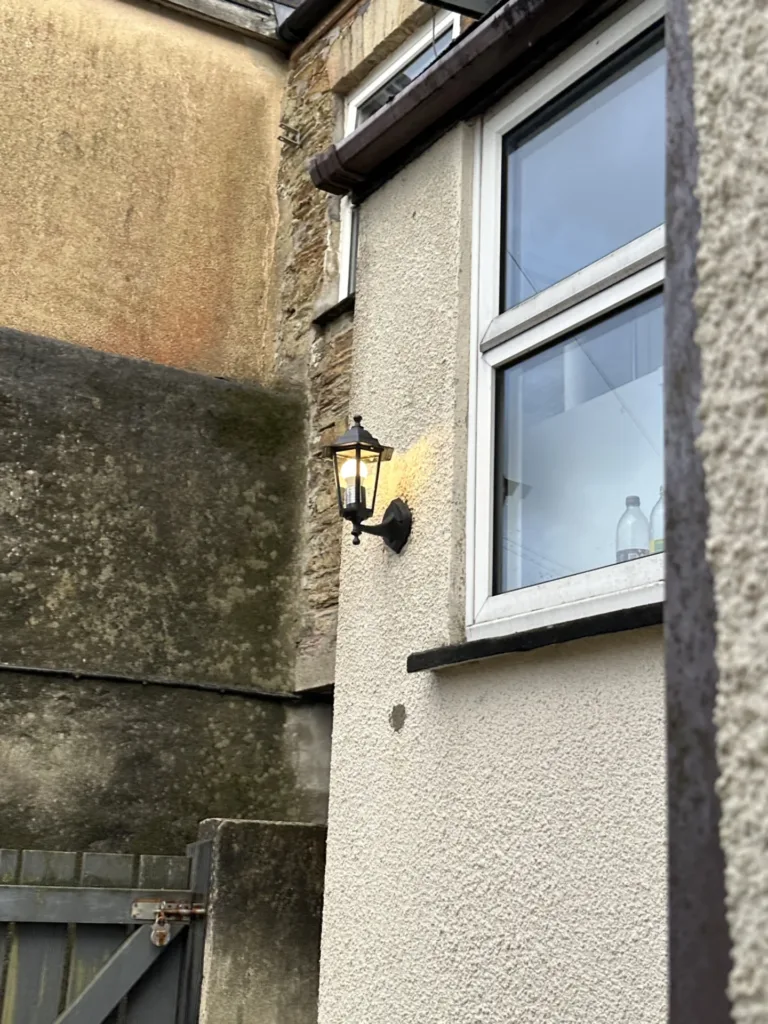
There’s a fairly common pattern with electrical work in older properties – something needs replacing, and once you start looking at the wider installation, it becomes clear that a proper condition check is well overdue. That was the situation at this property in Bodmin, where a failing exterior light fitting prompted the homeowner to get both jobs sorted at the same time.
The outside light itself had reached the end of its life. Exterior fittings take a lot of punishment – rain, wind, temperature changes – and even a well-made fitting will eventually give up. Getting it swapped out was straightforward enough, but the homeowner also wanted the peace of mind that comes from knowing the wider electrical installation was in good shape. That’s where the EICR came in.
An Electrical Installation Condition Report is a thorough inspection and test of a property’s electrical system. It’s not a quick visual check – it involves testing individual circuits, examining the consumer unit, checking earthing and bonding arrangements, and looking at all the fixed wiring throughout the property. The aim is to determine whether the installation is safe to use and identify anything that needs attention, whether that’s urgent or just something to keep an eye on going forward.
For properties in Bodmin and across Cornwall, EICRs come up for a number of reasons. Landlords are required to have them carried out on rental properties on a regular cycle, but plenty of homeowners also request them when buying a property, after a flood or fire, or simply because the electrics haven’t been looked at in a long time. Older homes in particular can have wiring that was installed decades ago and may not meet current standards, so understanding the condition of the system is genuinely useful information to have.
The report itself follows a standardised format, with observations coded by severity. A C1 observation indicates immediate danger – something that poses a risk right now and needs fixing before the installation can be considered safe. A C2 is a potentially dangerous condition that should be addressed promptly, while a C3 is a recommendation for improvement rather than an urgent concern. Once the inspection is complete, the outcome is either satisfactory – meaning the installation can continue to be used – or unsatisfactory, which means remedial work is needed before it’s safe.
For this particular job in Bodmin, the inspection covered all the circuits in the property, with each one tested in line with the requirements set out in BS 7671, which is the standard that underpins all electrical installation work in the UK. The consumer unit was examined, all accessible wiring checked, and the earthing and bonding arrangements verified. The exterior circuit feeding the new light fitting was also checked as part of the process, which made sense given the work being carried out.
Exterior lighting circuits are worth paying attention to because they’re exposed to more demanding conditions than indoor wiring. Moisture ingress, UV degradation, and physical damage from weather are all real concerns, especially on older properties where the original installation may have used materials that weren’t designed to cope with prolonged outdoor exposure. Making sure the new fitting was installed correctly and the circuit feeding it was in good order was a straightforward part of the job but an important one.
The new exterior fitting was mounted to the wall and wired in, with the connection made good and the fitting seated properly against the external surface to prevent water getting behind it. Exterior fittings need an appropriate IP rating for where they’re positioned – essentially a measure of how well the fitting is protected against moisture and solid particles – and this was taken into account when the work was carried out.
With the light sorted and the inspection complete, the homeowner received their EICR documentation. That certificate is useful to have on file – it’s something mortgage lenders, insurers, and prospective buyers may ask for, and it gives a clear record of the installation’s condition at a specific point in time.
Getting electrical work done in Bodmin, as with anywhere, isn’t just about fixing the immediate problem. It’s about understanding what you’ve got and making sure it’s safe and fit for purpose. An EICR gives you that picture clearly and, where everything comes back satisfactory, it’s reassuring to have on paper. Where observations are raised, you at least know what you’re dealing with rather than finding out the hard way later down the line.