Fire detection in a lodge or holiday let is a different conversation to a standard domestic property. Guests don’t know the layout, they’re unfamiliar with escape routes, and they’re often asleep when risk is at its highest. That raises the bar for what an alarm system needs to do – and why the setup across two lodge properties in Liskeard called for a proper, planned approach rather than a quick fix.
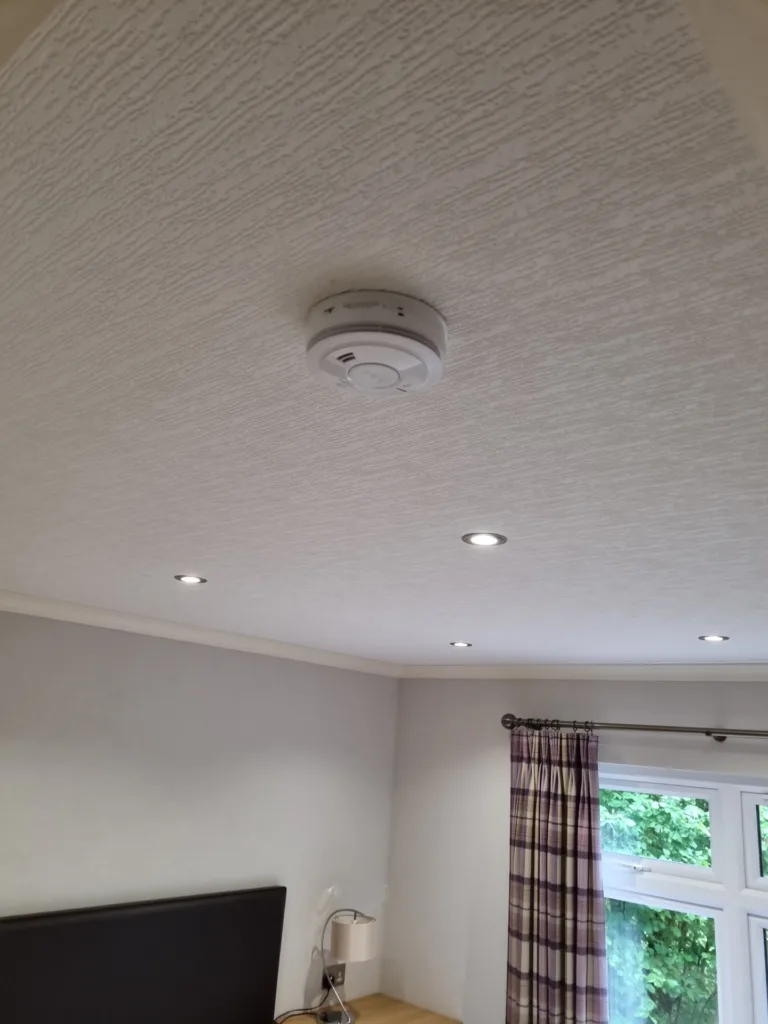
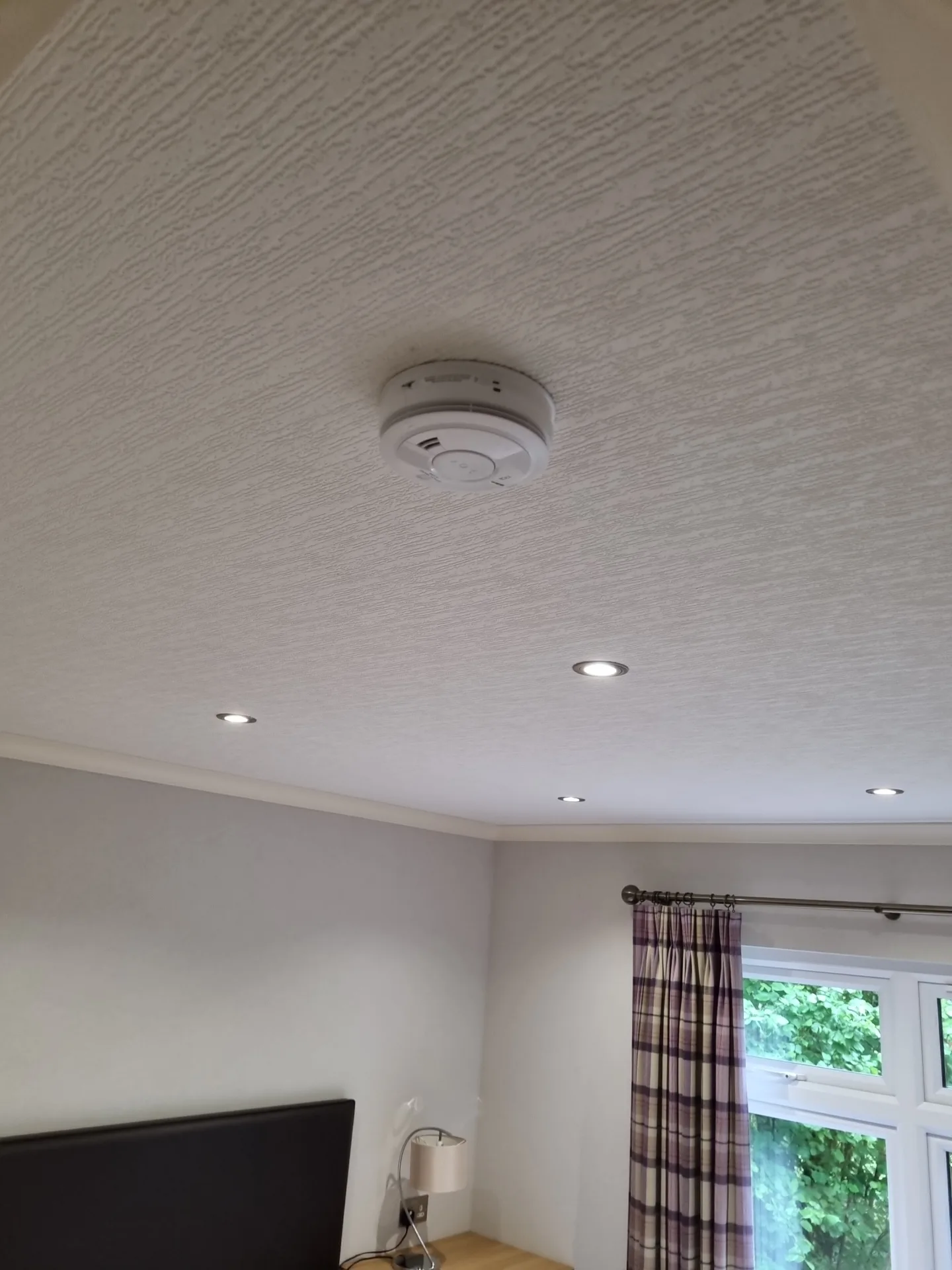
The scope covered both properties, with identical works carried out at each. The installation involved repositioning and upgrading the alarm in the main living area, and adding mains-powered smoke alarms to all three bedrooms – master bedroom, bedroom 2, and bedroom 3. Every new device was fitted with an RF wireless interlinking module, meaning the entire system across the property communicates without any hardwired interconnection between units.
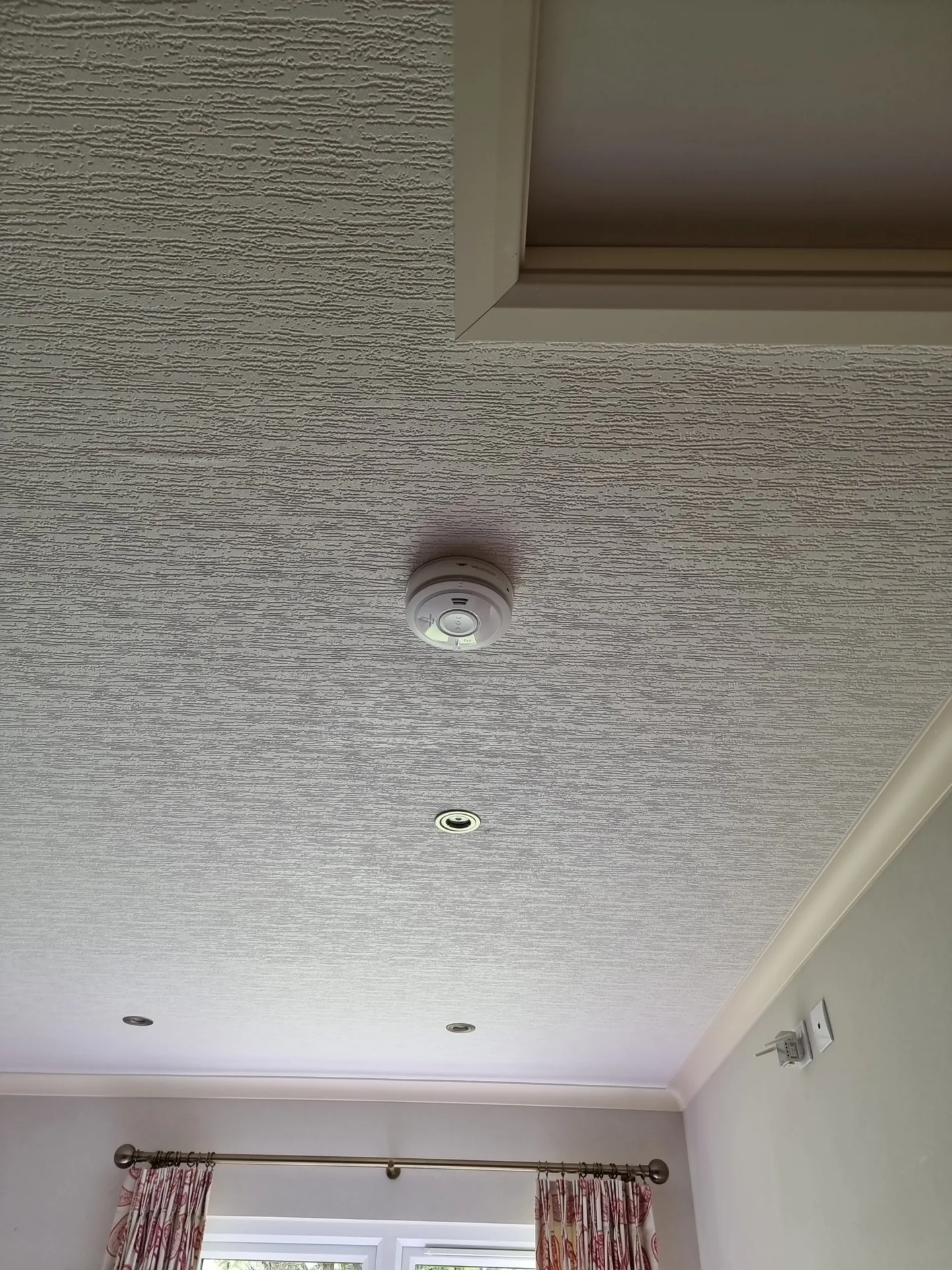
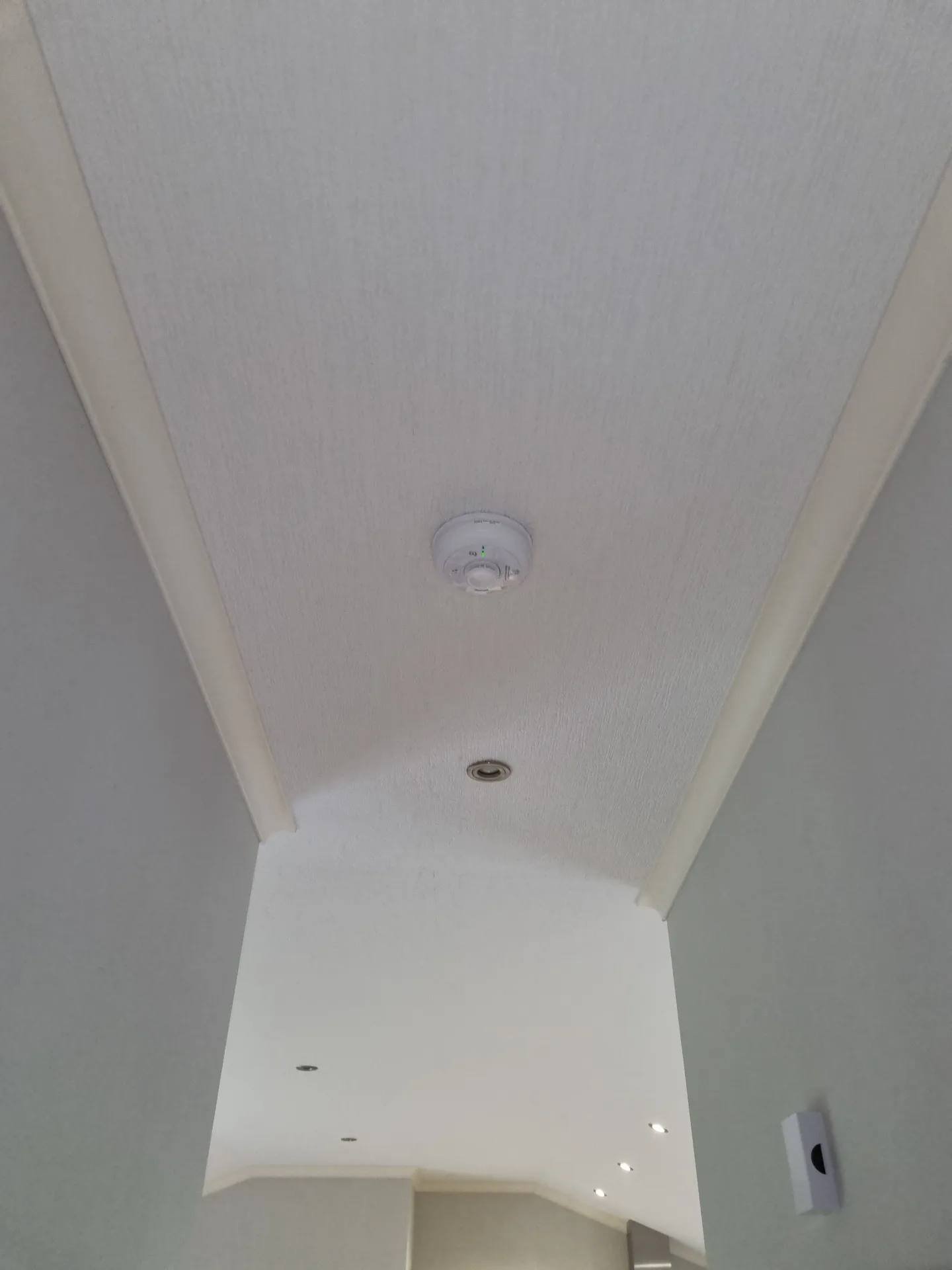
Starting with the main area, the existing smoke alarm was repositioned further into the room and replaced with a combined heat and carbon monoxide alarm. The relocation was kept as close to the existing cable route as reasonably practicable. That approach avoids unnecessary ceiling repairs and keeps the installation neat. Heat detection in a main living area makes sense for a lodge – it responds to a rapid rise in temperature rather than airborne particles, which reduces the likelihood of nuisance trips from cooking or steam. Adding carbon monoxide detection to the same unit gives the room dual coverage without doubling the hardware on the ceiling.
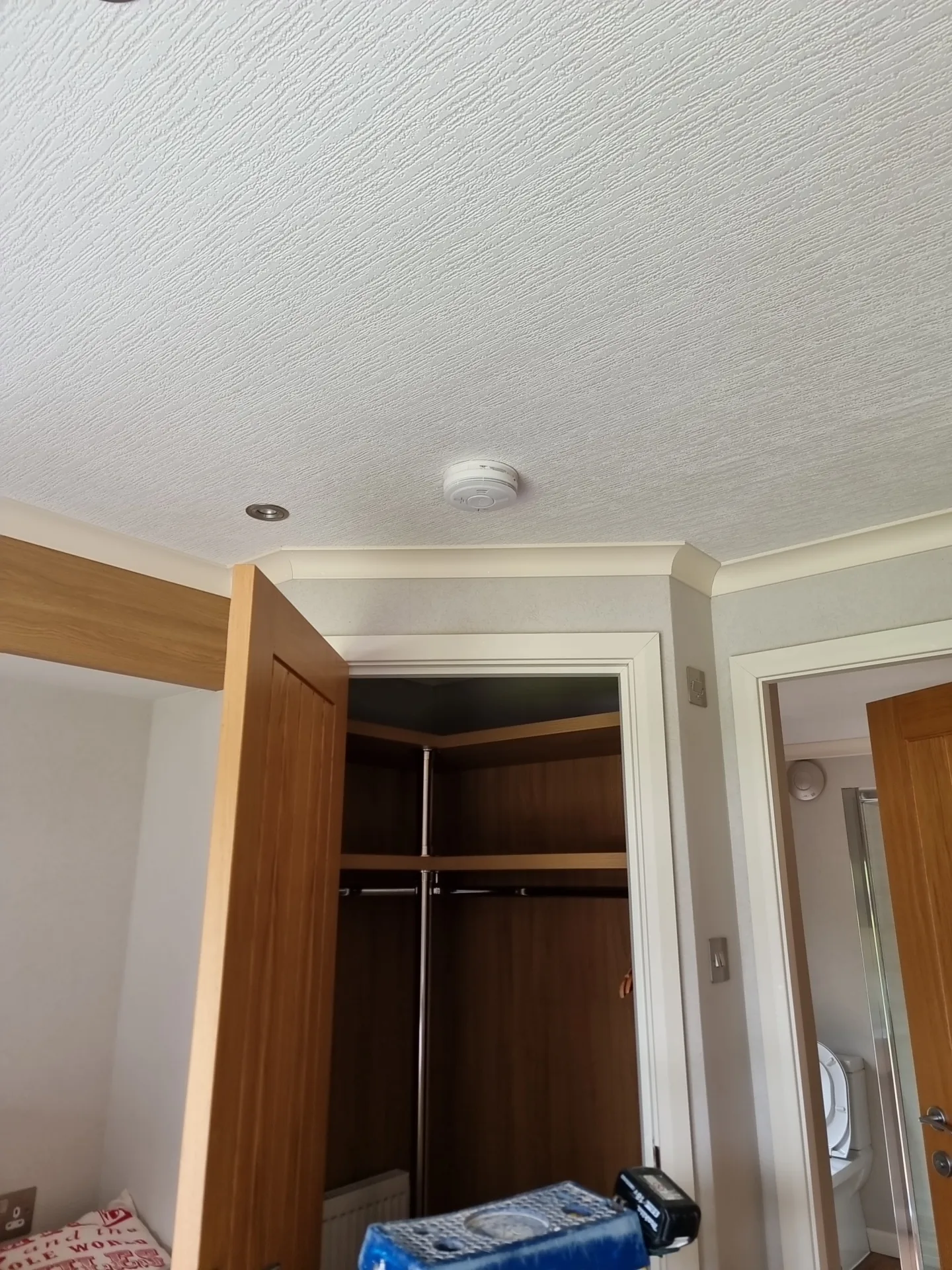
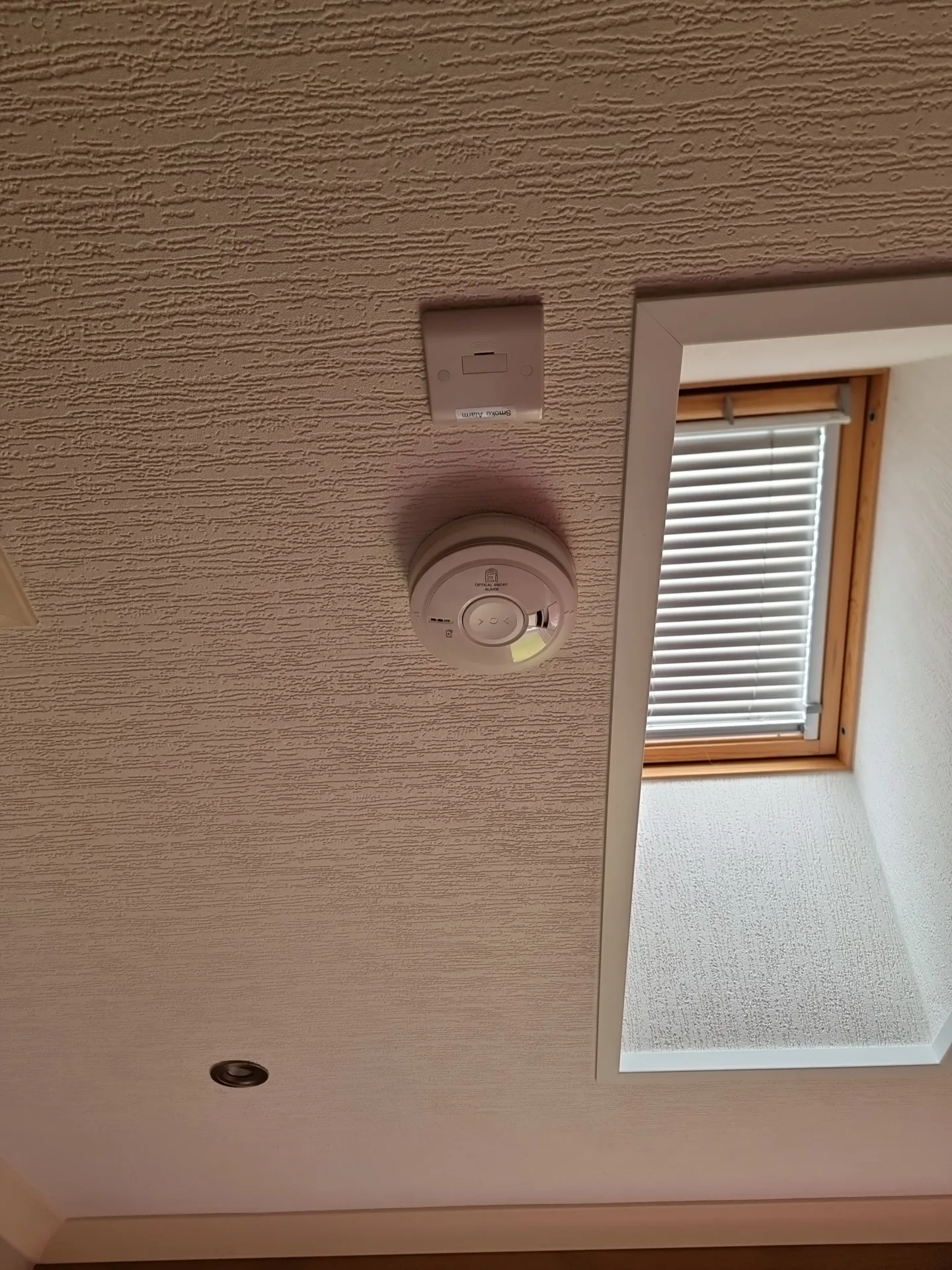
In the master bedroom, the power supply for the new smoke alarm was taken from the local fan isolator. Cabling between the isolator and the ceiling location was contained within 25mm white PVC trunking, which was routed through the cupboard space to keep the run tidy and out of sight. This avoids surface-mounted cabling through the bedroom itself, which matters particularly in a let property where presentation is part of the product.
The approach in bedroom 2 and bedroom 3 was slightly different. Rather than drawing from an isolator or running a new circuit, an unswitched fused spur was installed in each room, fed from the existing high-level television socket. It’s a clean and practical solution – the TV sockets were already in a suitable position and on a circuit capable of supplying the load. An unswitched spur means the smoke alarms are permanently live and can’t be inadvertently switched off at the socket. That’s exactly what you want for a life-safety device.
All four alarms – the heat and carbon monoxide unit in the main area plus the three bedroom smoke alarms – are interlinked via their integrated RF wireless modules. When one device detects a problem and triggers, every other unit on the network activates simultaneously. In a lodge with multiple bedrooms, that matters considerably. A fire starting in one part of the building will alert occupants throughout, even if they’re in a room with no direct detection issue of its own.
Wireless interlinking removes the need to run interconnect cables between devices, which is a significant practical advantage in a property where routing cable between rooms would mean either surface-fixed trunking through multiple areas or lifting flooring. The RF approach achieves the same functional outcome – a property-wide alarm response – without that level of disruption.
The same installation was duplicated at the second lodge, meaning both properties now have a consistent, matched fire detection setup. For a landlord or operator managing multiple units on one site, having identical systems across both buildings simplifies testing, maintenance, and any future replacements.
Mains-powered alarms with RF interlinking represent a solid standard for this type of property. The units draw their power directly from the building’s electrical supply and are not reliant on battery condition for their primary operation, which is relevant for a let property that may sit unoccupied between guests. The RF modules allow the system to function as a cohesive network rather than a collection of standalone devices.
The combination of heat detection, carbon monoxide detection, and interlinked smoke alarms across all sleeping rooms gives this lodge a layered approach to fire safety that stands up well for the type of occupancy it sees.