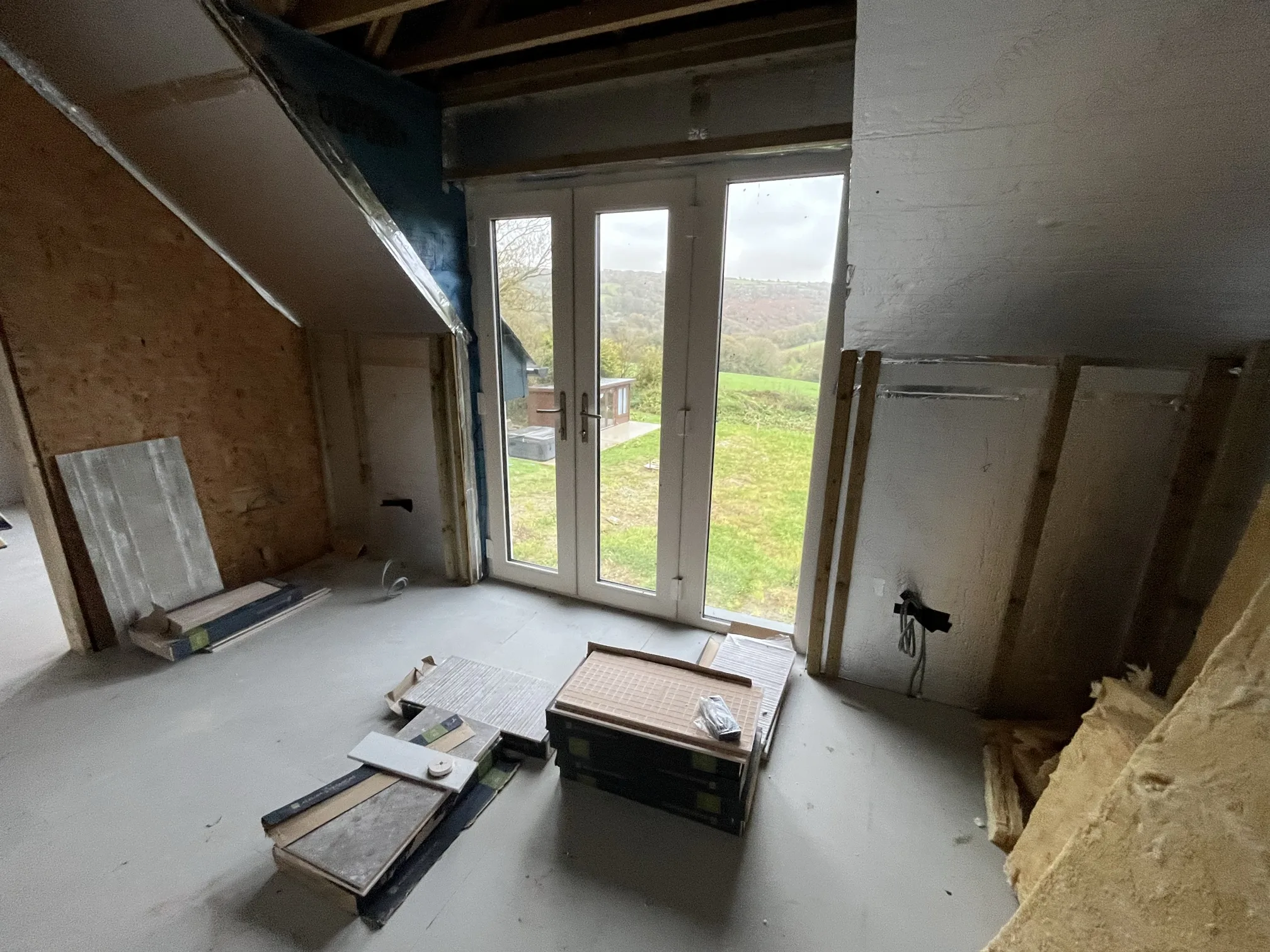
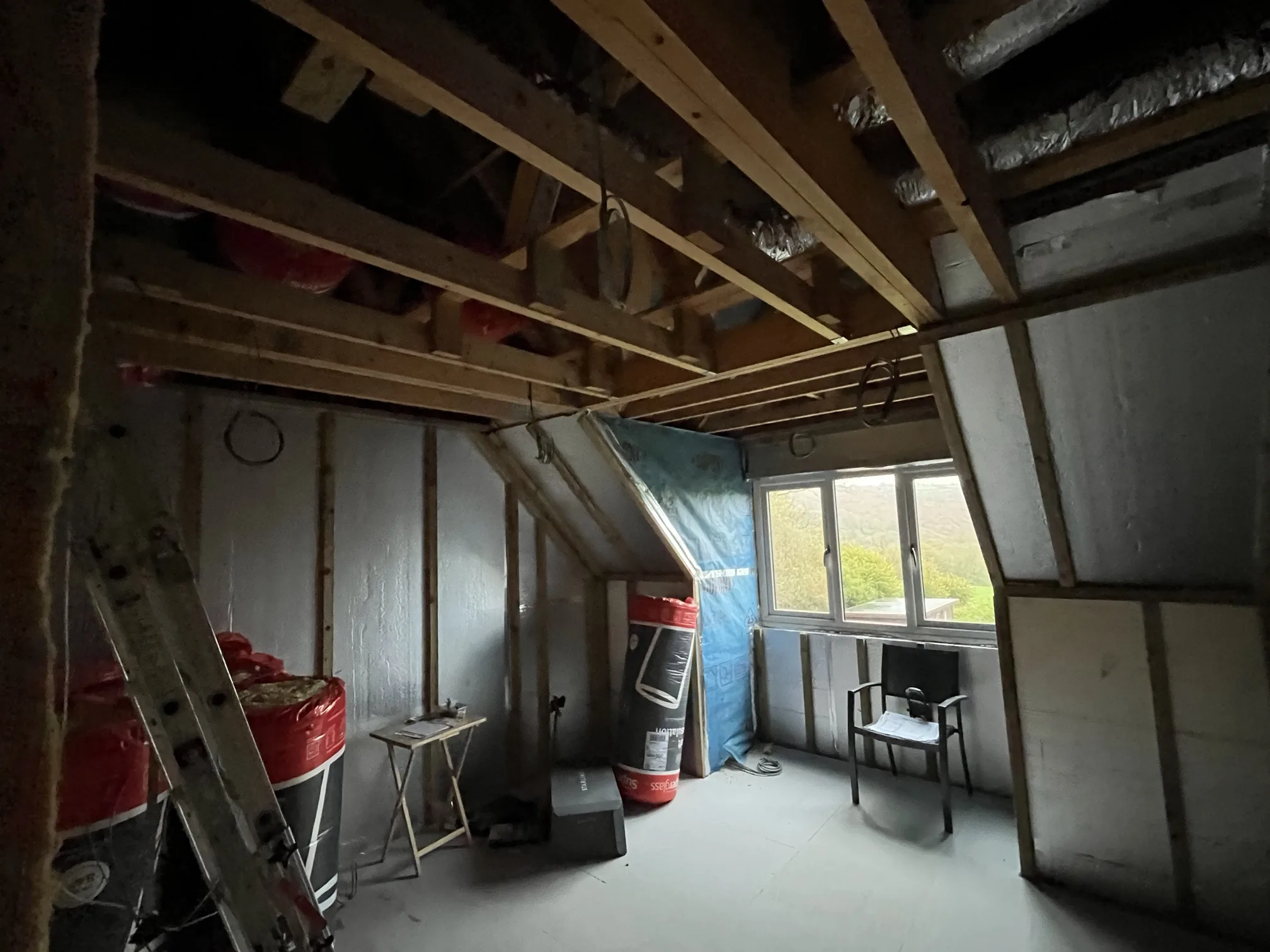
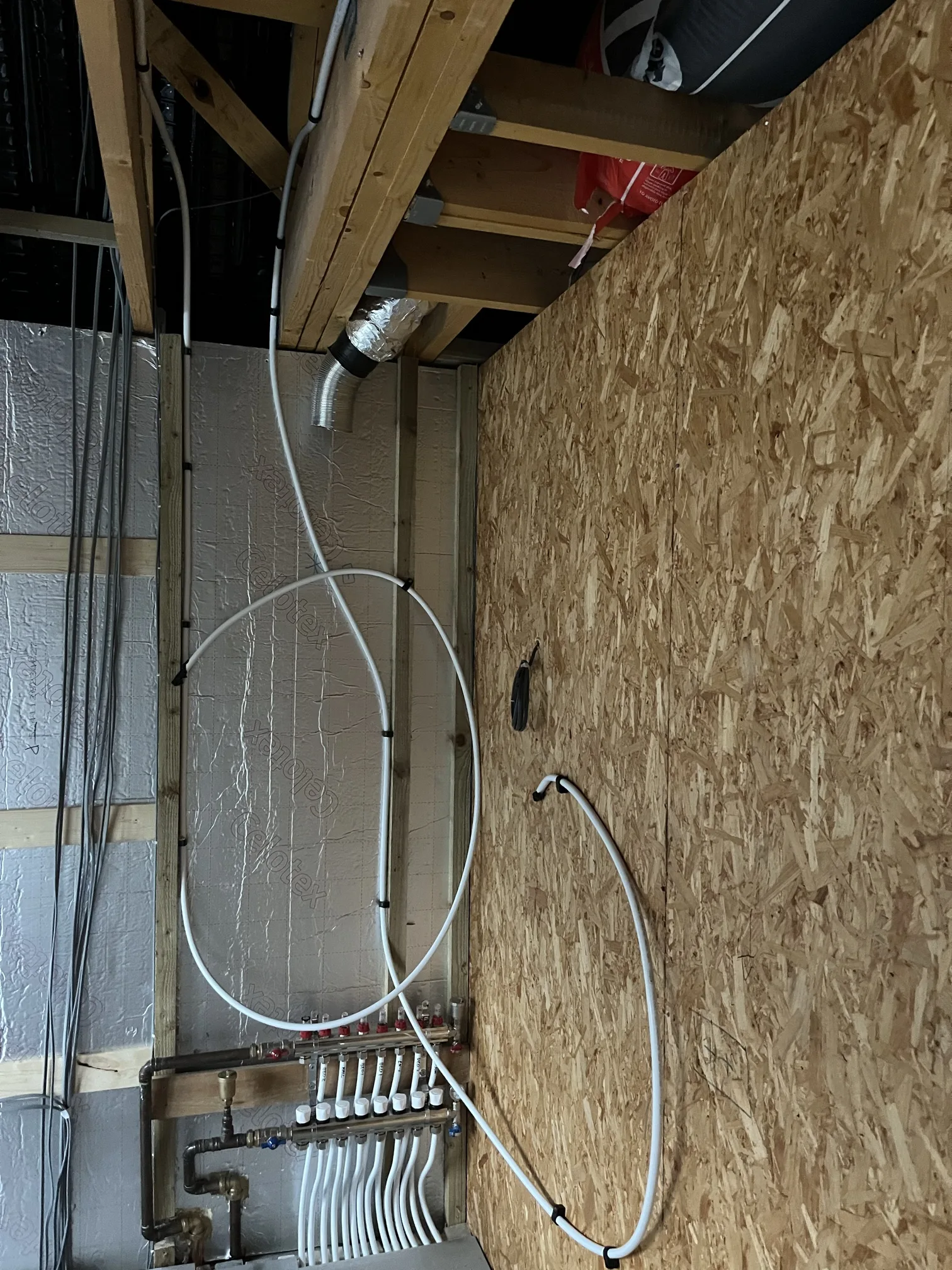
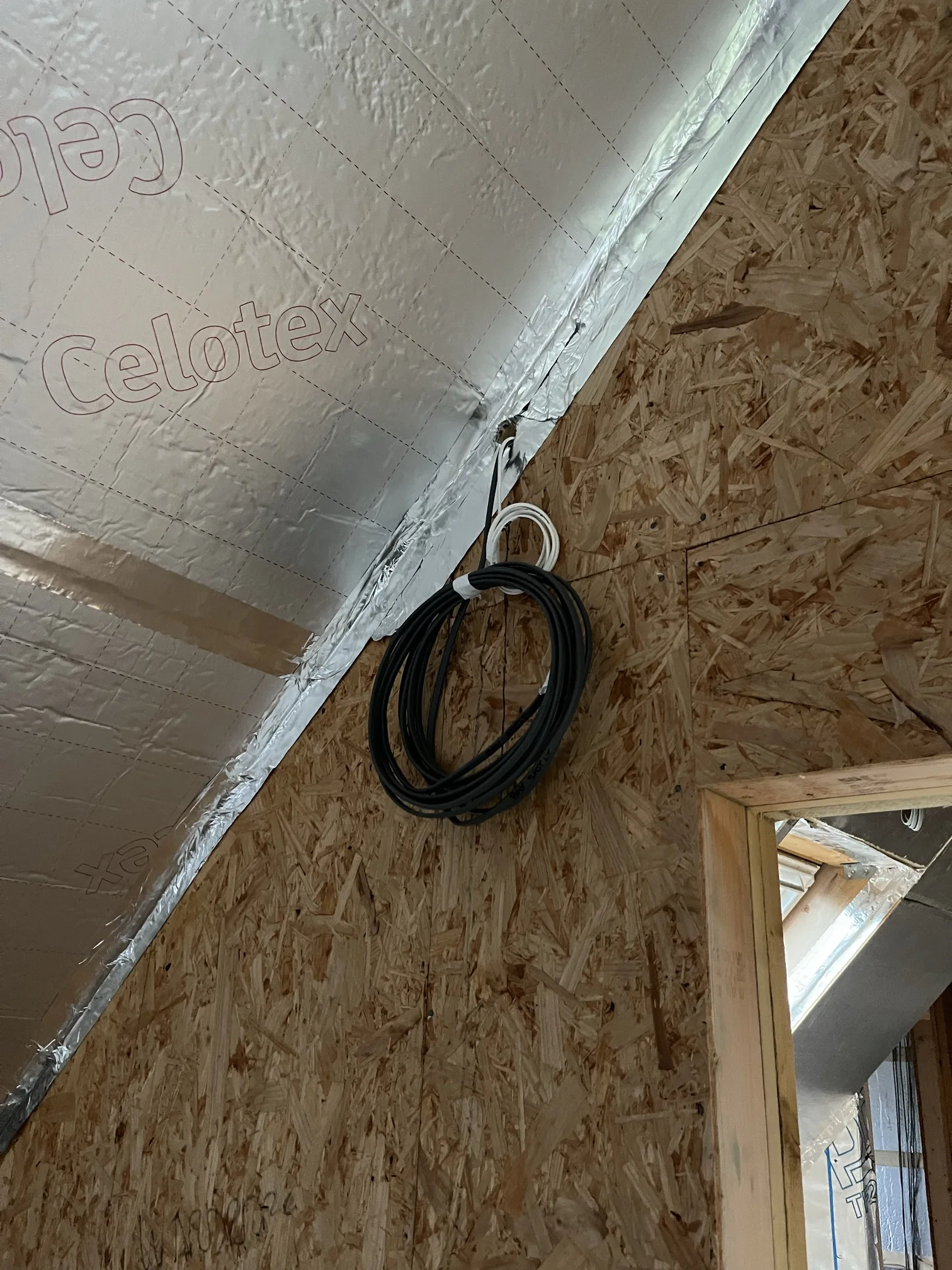
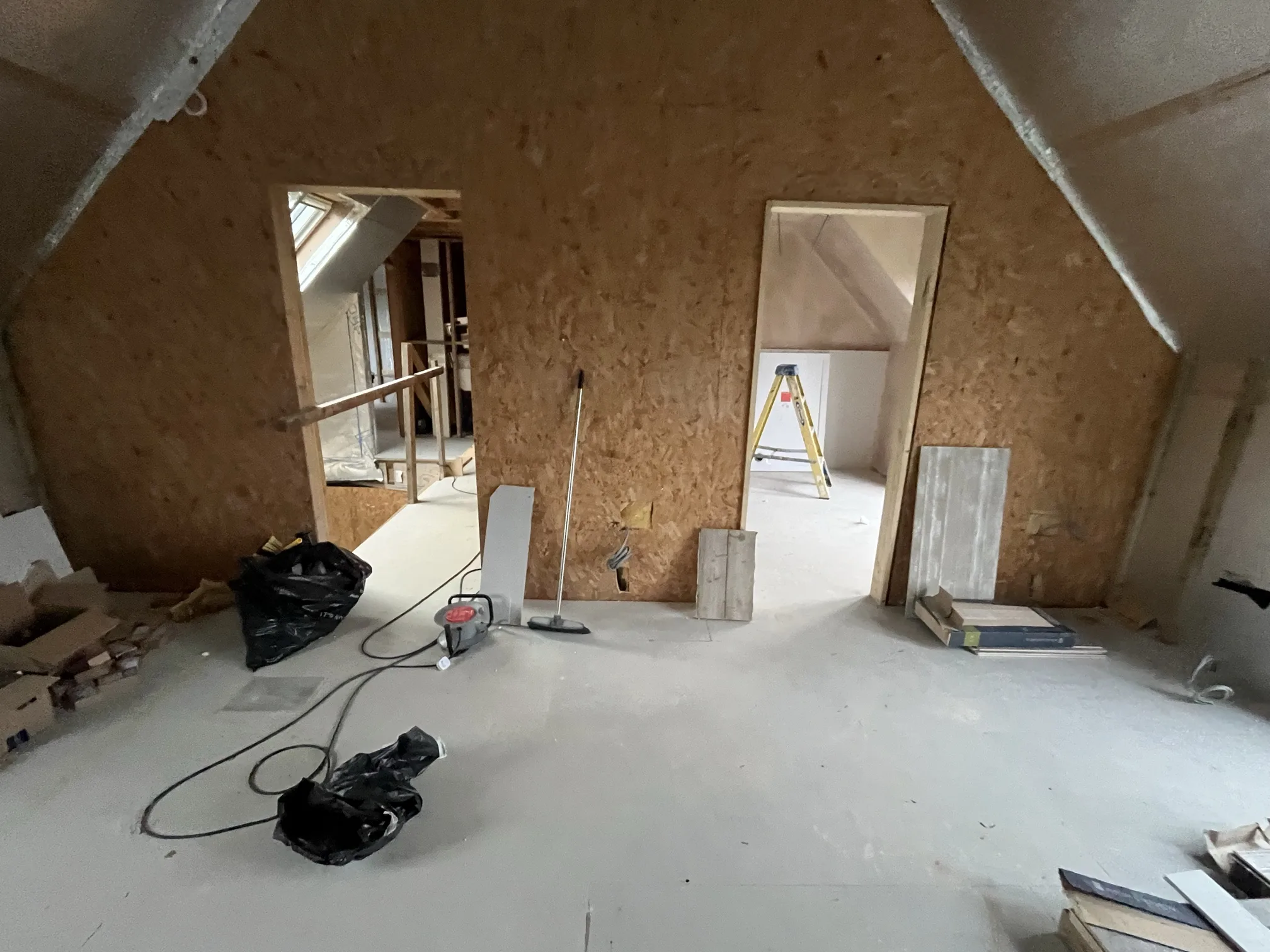
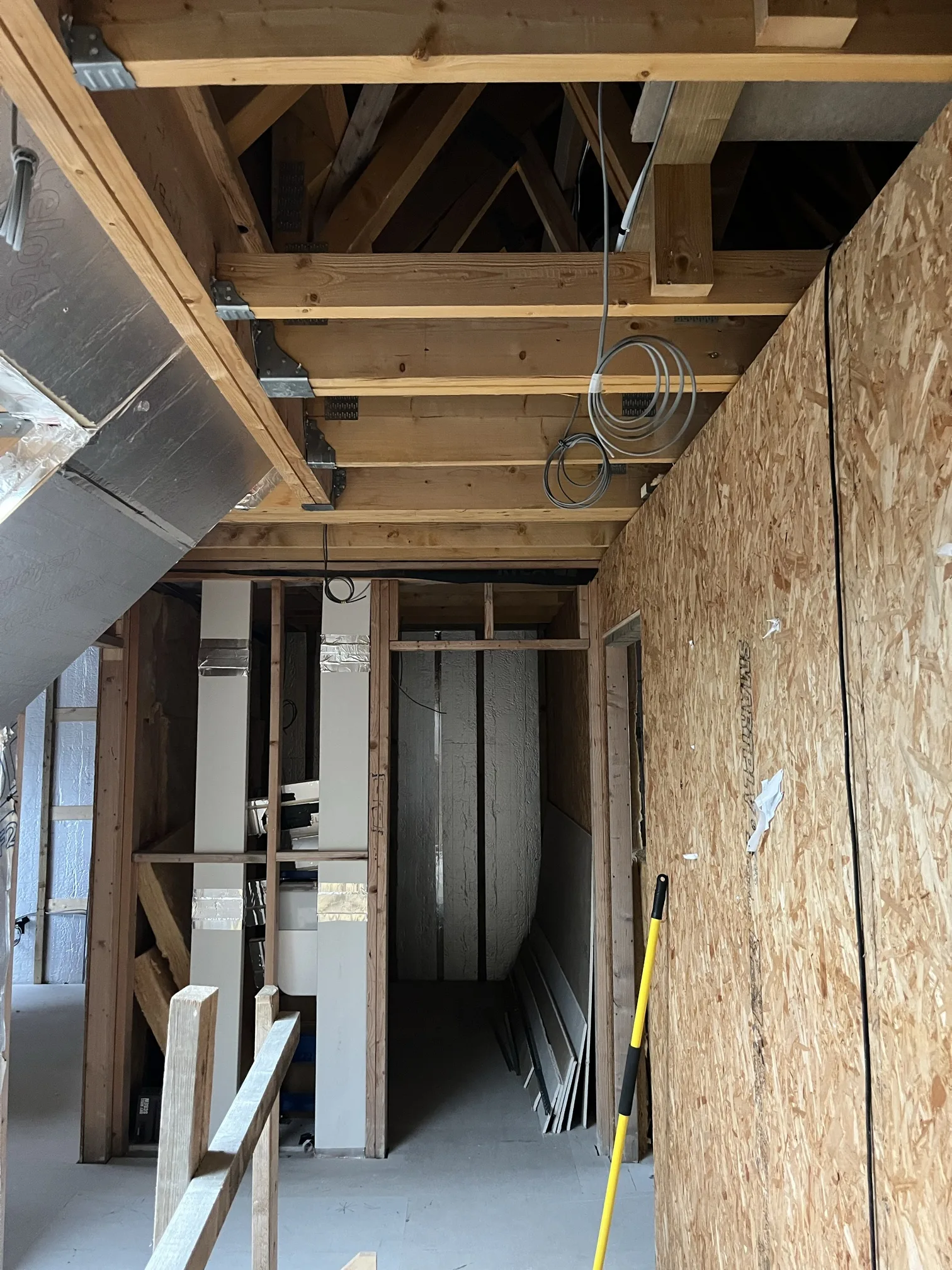
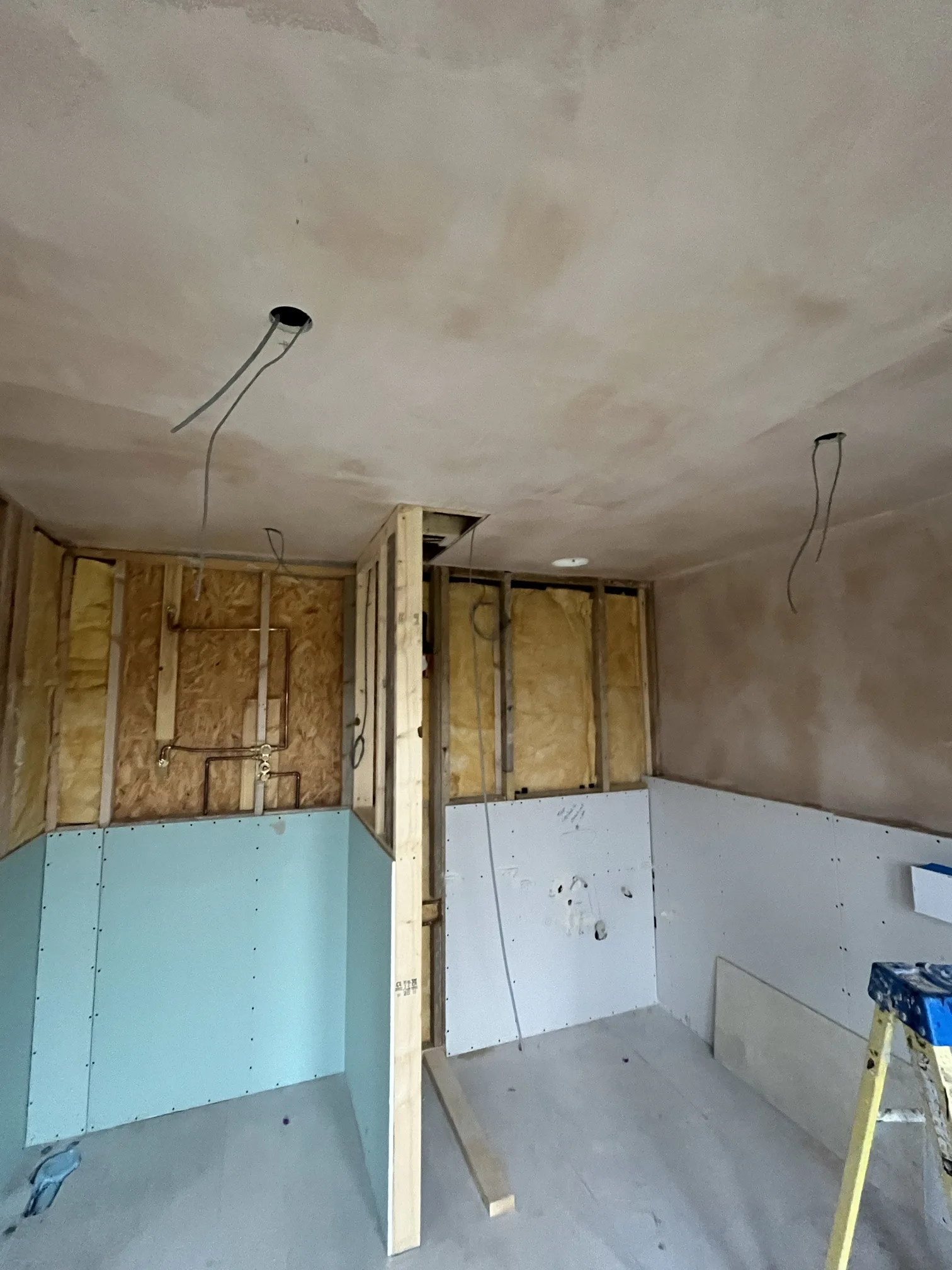
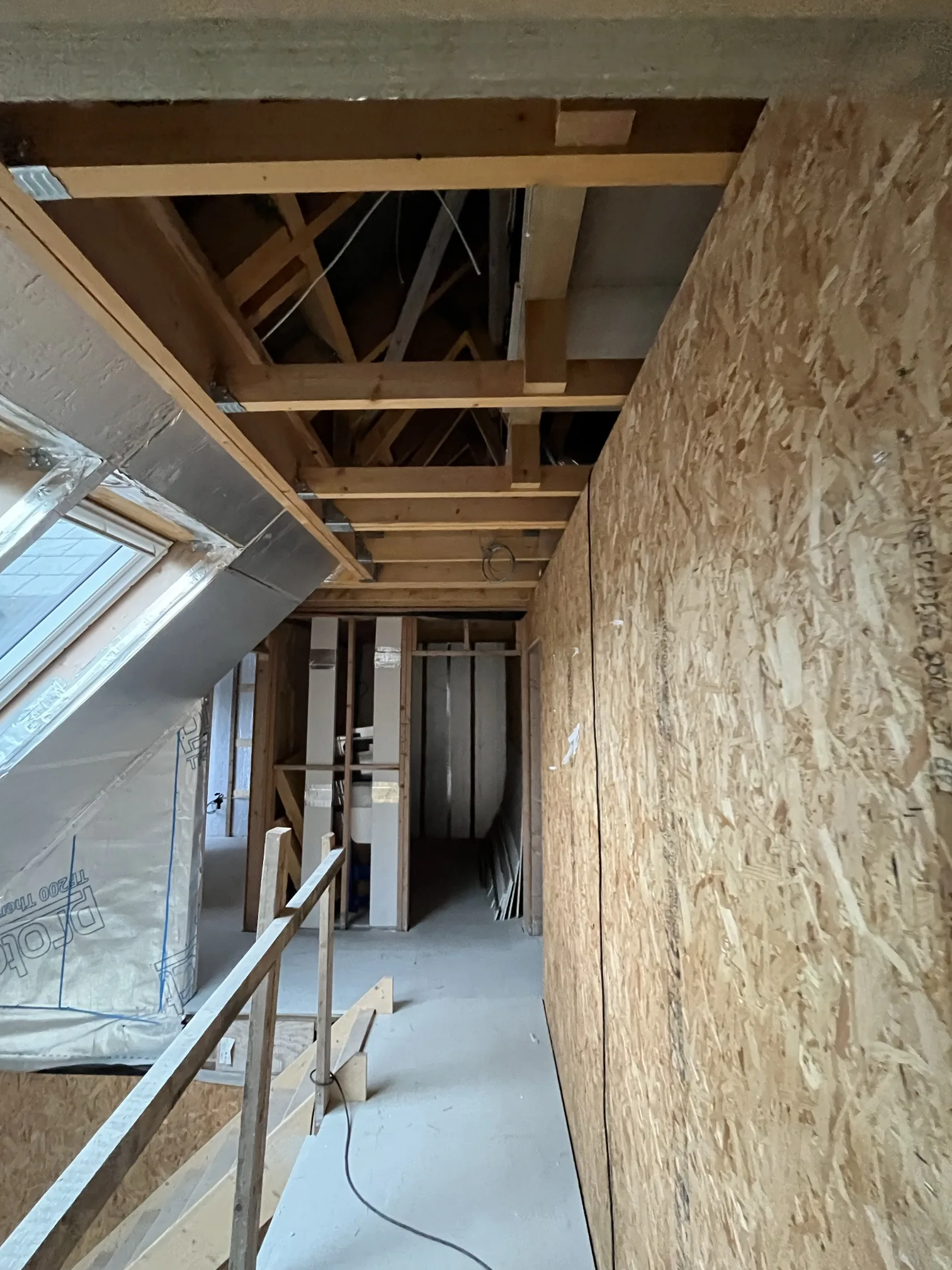
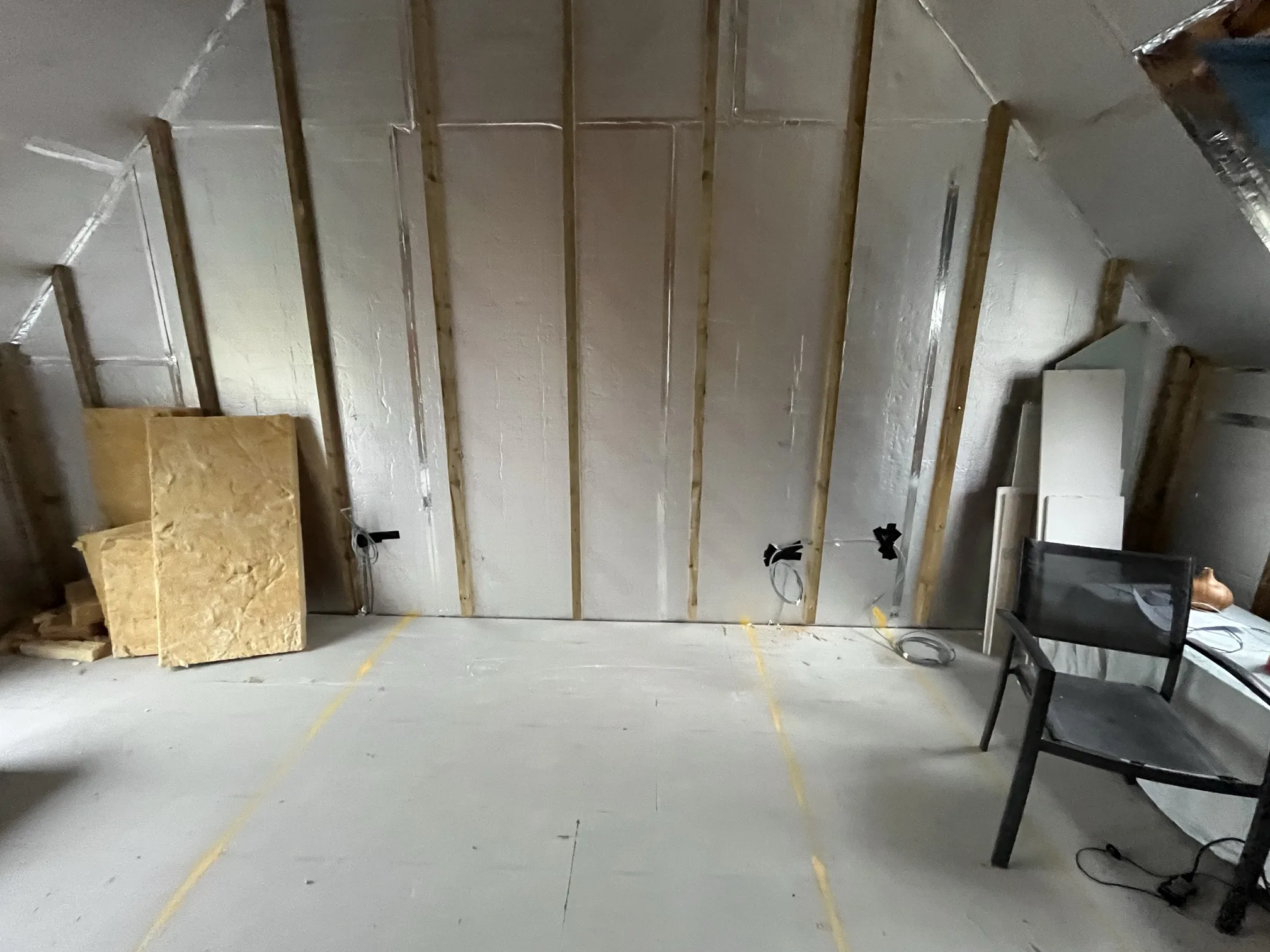
Complete first-fix electrical installation across a first floor conversion in Bodmin, featuring three bedrooms with en-suite and wardrobe facilities, plus family bathroom and landing areas, all within a timber frame construction.
Working within timber frame construction presents distinct opportunities for electricians. The structure allows cables to be routed efficiently between studs and joists, which means we can plan circuit runs that make the most of the building’s design whilst maintaining compliance with current wiring regulations.
This first floor installation covered three bedrooms, each with different electrical requirements. The main bedroom needed particular attention given its vaulted ceiling design and separate wardrobe area. We installed six double socket outlets throughout the bedroom space, positioned to accommodate furniture placement and everyday charging needs without trailing leads across the floor.
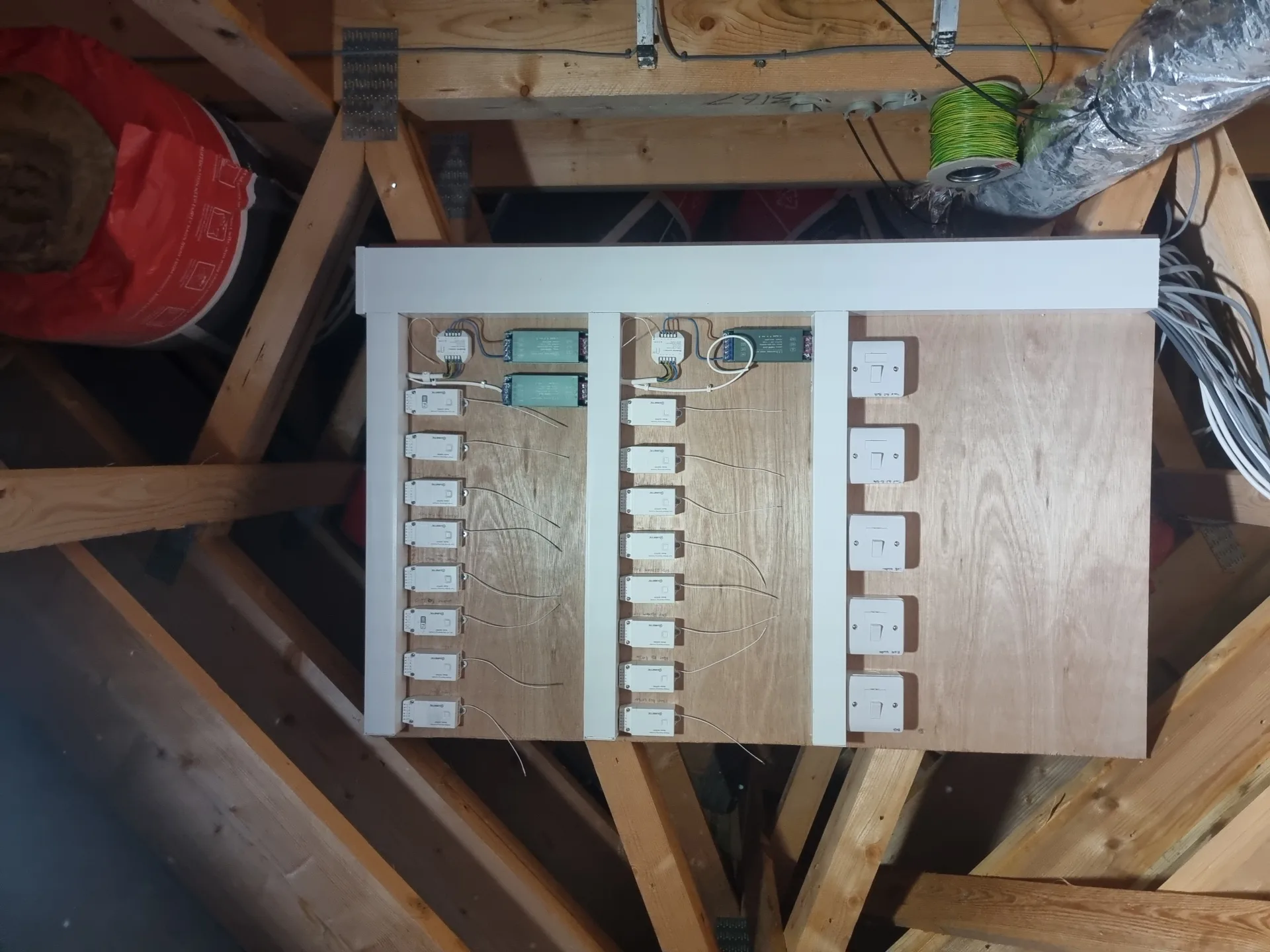
The lighting design in this bedroom moved away from traditional central pendants. Instead, we ran LED strip lighting along either side of the structural roof beam. These strips sit within aluminium channels fitted with diffusers, which prevents glare whilst providing ambient lighting across the vaulted space. The switching arrangement includes three-way control, with switches at the room entrance and on both sides of where the bed will eventually sit. Having bedside control means you’re not walking across a dark room to turn the lights off, which is something people often overlook during the planning stage but really appreciate when they’re living in the space.
The wardrobe area connects to the main bedroom but needed its own lighting circuit. We installed another LED strip along the wall adjoining the bedroom, again housed within an aluminium channel. A single socket outlet serves this space, which gives options for charging devices or running a dehumidifier if needed. The lighting runs from a switch positioned at the entrance to the wardrobe area.
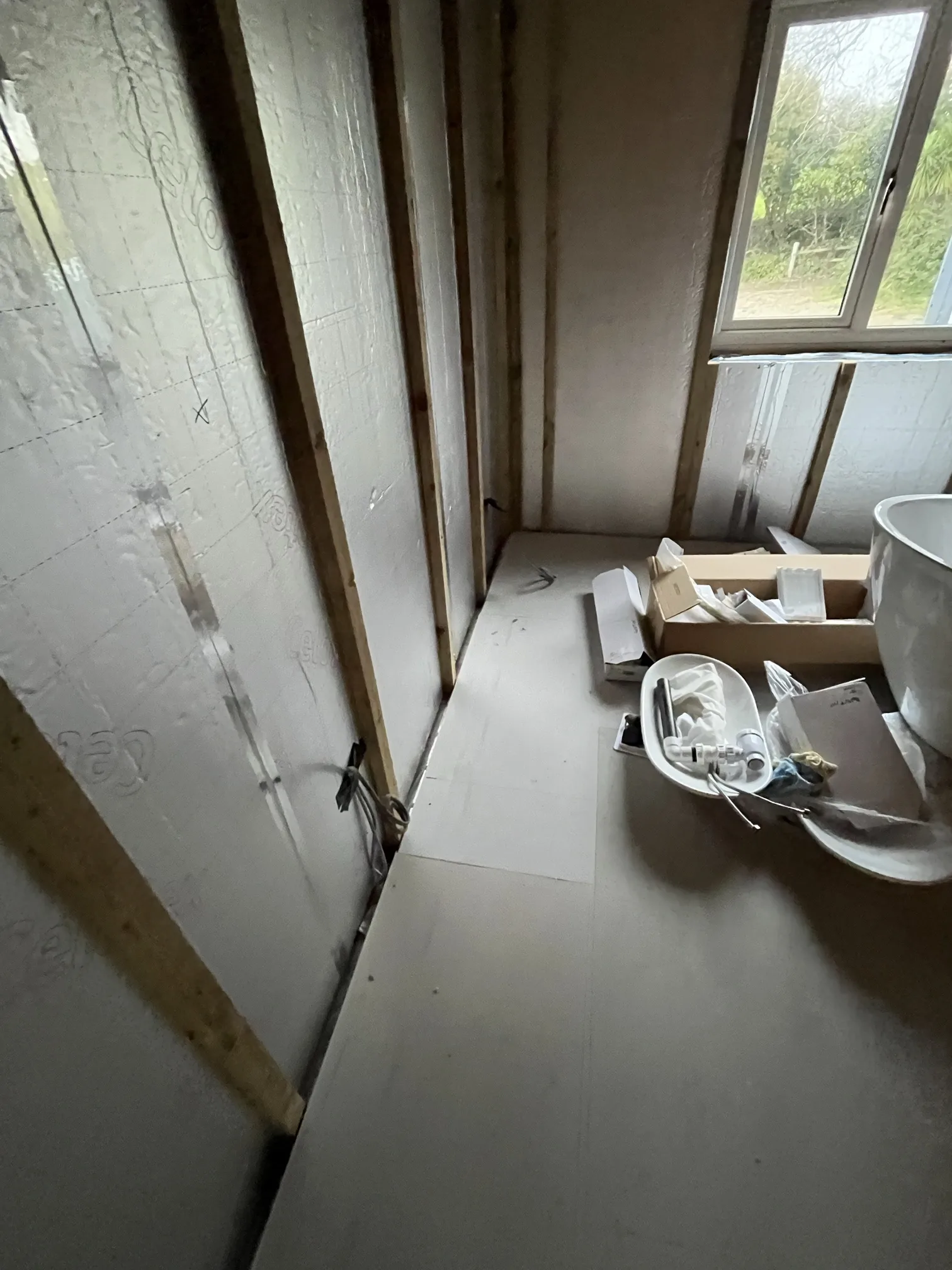
The en-suite bathroom connected to this bedroom required careful planning around moisture and ventilation. We fitted five recessed downlights controlled from outside the bathroom, keeping the switch accessible but away from water zones. LED niche lighting along the back wall creates feature lighting, and we’ve run the cabling to support this. The niche lights work in conjunction with additional LED strip lighting, all controlled together from the same switch point outside the room. We also installed supplies for the LED mirror, an extractor fan with its isolator positioned outside the bathroom, and both a towel rail supply and a shaver point. The towel rail has its own isolator switch externally, which means it can be isolated for maintenance without affecting other circuits in the bathroom.
Moving to bedroom two, the requirements were more straightforward. Four double socket outlets provide adequate power points around the room, and we’ve installed a central pendant with single-way switching at the entrance. A single recessed downlight sits above where the basin will be installed, controlled by a local switch. This gives task lighting for the basin area without needing to illuminate the whole room.
Bedroom three needed five double sockets distributed around the space. The main lighting comes from five recessed downlights on a single-way switch at the entrance, plus another downlight above the basin area with local switching. This bedroom also includes access to a loft area, so we’ve installed a pendant light within that space, controlled by a switch near the loft hatch entrance. Having dedicated lighting in storage areas makes them far more usable and safer to access.
The family bathroom followed similar principles to the en-suite. Two recessed downlights provide the main illumination, switched from outside the bathroom. We’ve run supplies for LED niche lighting and an LED mirror, plus installed the towel rail circuit with external isolator, a shaver point, and an extractor fan with its isolator. Getting the isolator switches positioned correctly outside the bathroom but near enough to be convenient takes a bit of thought, but it’s worth doing properly.
The landing and gallery area connects the upstairs spaces together. We’ve installed a central pendant light controlled by two-way switching at the top and bottom of the stairs, which is a building regulation requirement but also just makes practical sense when you’re carrying things up and down. Two recessed downlights illuminate the landing area itself, again with two-way switching at either end of the space. We’ve also provided a power outlet for the Velux window, which allows for electric operation of the roof window.
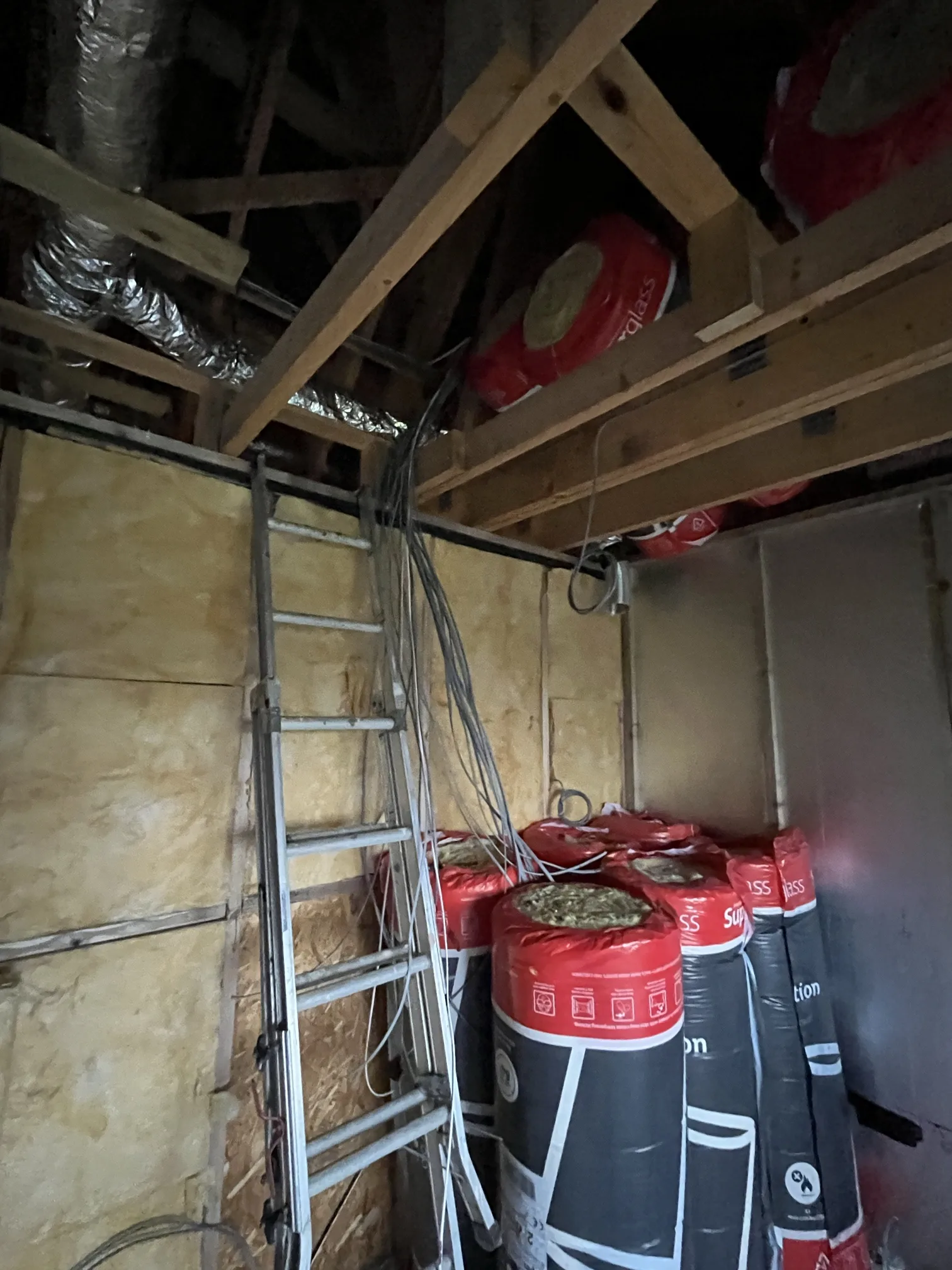
Throughout this first floor, we’ve used metal fire-rated back boxes mounted on fire-rated timber frame mounting brackets. Timber frame construction requires particular attention to fire barriers, and using the correct mounting hardware maintains the integrity of the fire resistance whilst providing solid fixing points for outlets and switches. The cabling routes through the timber structure using compliant methods that protect the cables whilst keeping them accessible for any future work.
We also connected the waste plant during this installation. Getting this done during first fix means the drainage system is ready when the bathroom fittings go in, and it’s one less thing to coordinate during the finishing stages.
The whole installation took three days with two of our electricians on site. Working in timber frame means you’re fitting around other trades’ schedules, particularly the carpenters and plasterboard fixers. Coordinating the work so cables are run before boards go up but not so early that they’re at risk of damage from other trades requires good communication with the site manager.
First-fix work doesn’t have the visual impact of a finished installation, but it sets the foundation for how the electrical system will perform. Taking time to position cables neatly, secure them properly, and leave enough slack for second-fix terminations means the finishing work goes smoothly. It also makes life easier for anyone who needs to work on the installation in years to come.
All circuits were terminated ready for testing once the property reaches second-fix stage. The cabling between floors and to external services like the septic tank was completed as part of this work, which means the electrical infrastructure is in place throughout the building. When we return for second fix, we’ll be connecting accessories, testing circuits, and commissioning the installation rather than running new cable routes.