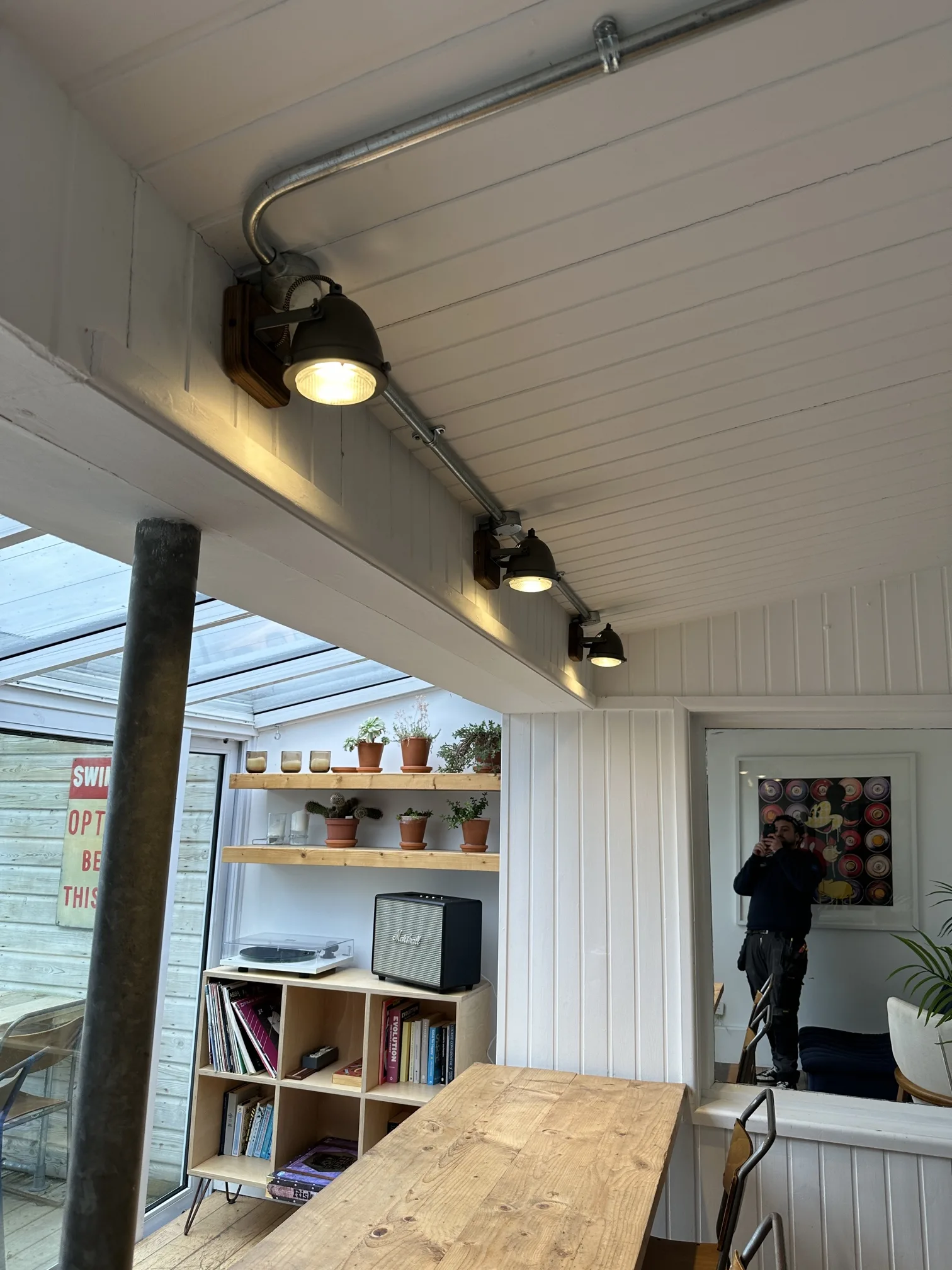
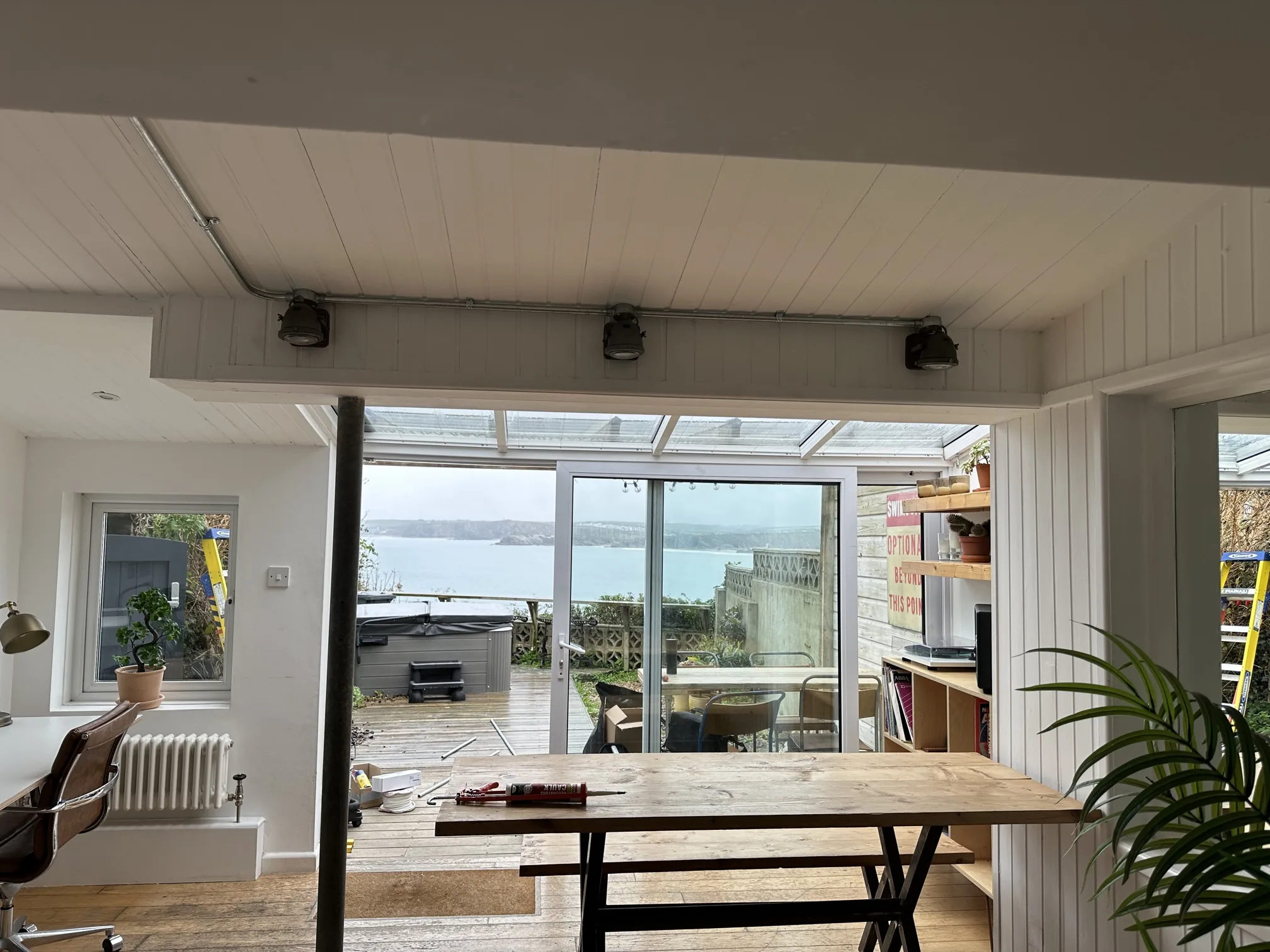
Installing a surface-mounted galvanised conduit system to supply contemporary adjustable spotlights in a modern conservatory space, combining industrial aesthetics with practical electrical infrastructure.
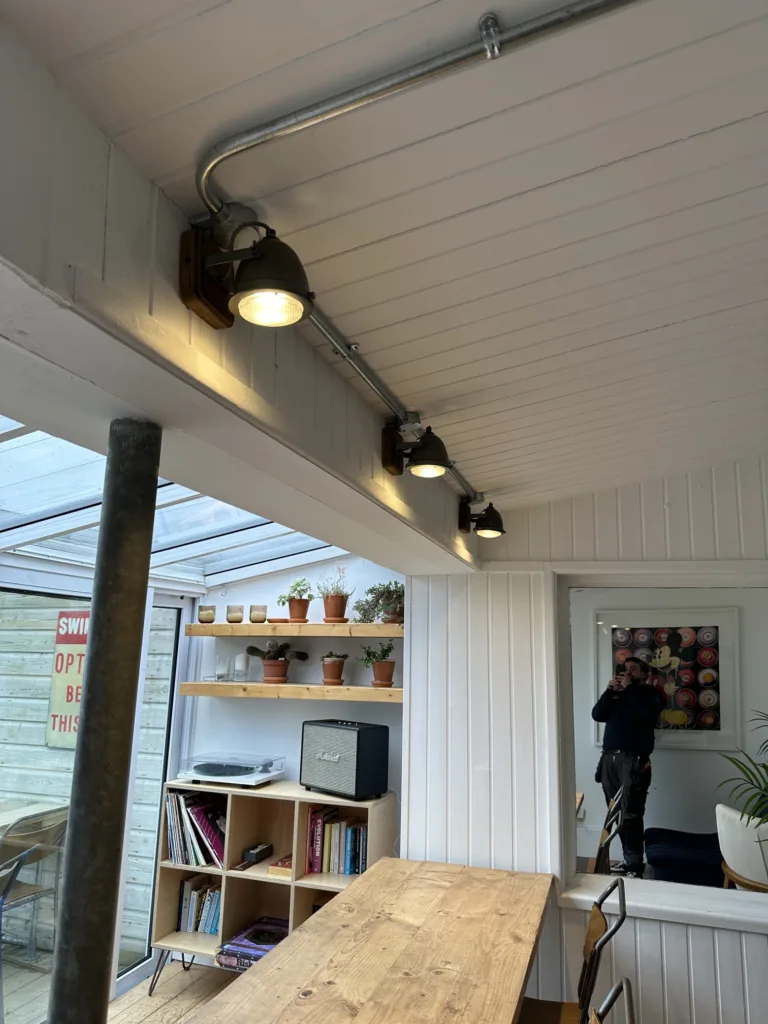
Working on properties where form meets function presents some of the more interesting challenges in domestic electrical installations. This conservatory space in Newquay needed a lighting solution that could deliver both performance and visual appeal whilst remaining true to the modern industrial aesthetic the homeowners had created throughout their living spaces.
The brief centred on installing three adjustable spotlights supplied by the client, which needed to be powered through a surface-mounted conduit system rather than concealed wiring. This wasn’t simply about getting power to the fittings – the conduit itself would become a design feature, running exposed across the white tongue-and-groove ceiling panels. Getting this right meant planning the route carefully so the installation looked deliberate rather than makeshift, with clean lines that complemented the room’s architecture rather than cluttering it.
Surface-mounted conduit work requires a different approach compared to hidden cable runs. You’re working with rigid metal tubing that needs to be measured, cut, and bent precisely before installation. Each section has to align properly with the next, and any slight miscalculation becomes immediately visible once everything’s fixed in place. We used 20mm galvanised conduit throughout, chosen for its robust construction and attractive metallic finish that suited the space perfectly.
The planning stage involved mapping out the most logical route from the power source to each of the three light positions. With exposed conduit, you can’t simply take the shortest path if it means awkward angles or unsightly runs across prominent areas. Instead, you need to think about how the eye will follow the lines, where natural break points occur in the ceiling structure, and how to minimise the number of visible joints whilst maintaining accessibility for future maintenance.
Bending conduit to achieve smooth curves rather than harsh angles takes practice and the right equipment. We used a conduit bender to create gentle transitions where the run changed direction, which gives a much more professional finish than trying to achieve the same result with multiple short sections and fittings. Each bend needs to be calculated beforehand because once you’ve committed to it, there’s no adjustment – the tube either fits or it doesn’t.
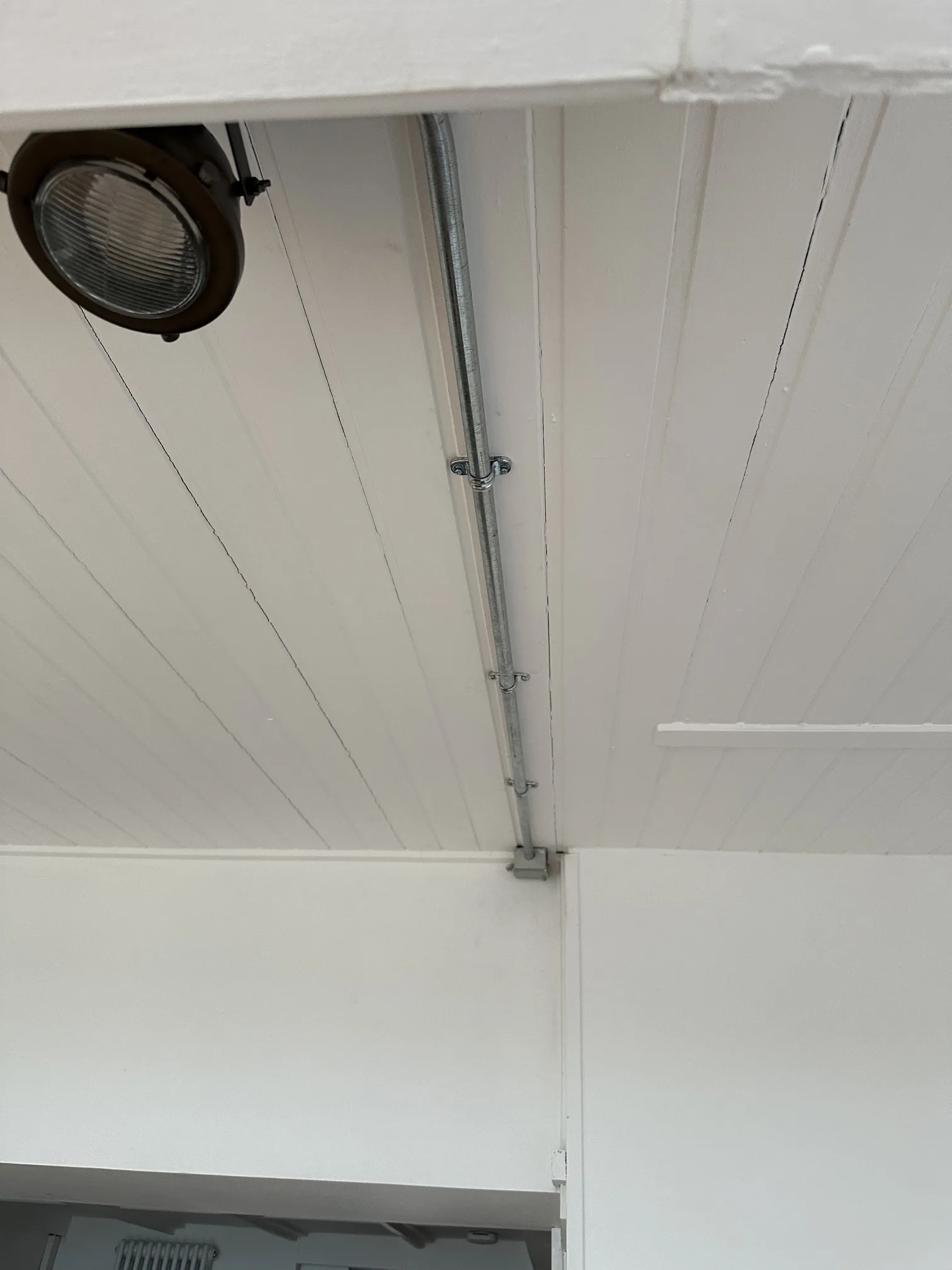
Fixing the conduit securely whilst keeping everything level presented its own considerations. We used saddle clips spaced at regular intervals, positioned to provide adequate support without creating a cluttered appearance. The white ceiling panels provided a clean backdrop, but they also meant that any deviation from straight lines would be immediately obvious. Taking time to mark out positions accurately and check alignment before final fixing prevented issues later.
At junction points where the circuit branched to reach different light positions, we installed through boxes. These serve both functional and aesthetic purposes – they provide access points for pulling cables through the system and create logical visual breaks in the conduit run. Each box needed to be positioned where it made sense both electrically and visually, mounted flush against the ceiling surface.
The cable installation through the conduit system required careful planning. You can’t simply push cables through once everything’s fixed in place if the run includes multiple bends and junctions. Instead, you need to thread the cables through each section during installation, which means coordinating the sequence of assembly carefully. Getting this wrong means dismantling sections to retrieve stuck cables, so measuring twice and cutting once definitely applies.
Connecting the client-supplied light fittings brought its own variables into the process. With fittings we supply ourselves, we know exactly what we’re working with – the connection method, terminal type, and any peculiarities of the design. Client-supplied items can sometimes spring surprises, so we always recommend getting them on site before starting installation work. Fortunately, these units were straightforward to connect, with clear terminal identification and adequate space for making secure connections.
The adjustable nature of these spotlights meant positioning them correctly had implications for how the space would function. Rather than simply centring them mathematically, we discussed with the homeowners how they actually used the room and where they needed light directed. This meant slight adjustments to the planned positions, which were much easier to accommodate before fixing everything permanently.
Part of the work involved disconnecting power to several zones of the electric underfloor heating system, excluding the bathroom area which remained operational. This required careful identification of the correct circuits to isolate, proper labelling, and securely blanking off the disconnected thermostats. It’s the kind of additional task that often accompanies renovation work, where changes in how rooms function mean existing installations need modification.
Working to a tight deadline added another dimension to the job. With guests due to arrive mid-afternoon, we needed to complete everything, test the installation, and clear the site by early afternoon. This meant having all materials prepared and organised beforehand, with contingency items on hand in case of unexpected requirements. Efficient time management becomes crucial when there’s no flexibility in the completion time.
The testing phase confirmed that all three lights operated correctly, with clean switching and no voltage drop issues despite the relatively long cable runs. The conduit system provided excellent mechanical protection for the circuit wiring whilst creating the industrial aesthetic the homeowners wanted. The galvanised finish caught the natural light coming through the glazed roof, adding an interesting textural element to the ceiling plane.
Surface-mounted electrical installations work well in spaces where the exposed infrastructure contributes to rather than detracts from the overall design. Conservatories and garden rooms often lend themselves to this approach, where the technical elements become part of the visual interest rather than something to hide away. The key lies in executing the installation with the same care and precision you’d apply to hidden work, because every aspect remains visible.
This type of installation also offers practical advantages beyond aesthetics. Future modifications or additions to the lighting circuit become straightforward because the wiring remains accessible throughout its length. If the homeowners decide to add more lights or relocate existing ones, the conduit system makes this possible without major disruption. It’s an approach that builds flexibility into the electrical infrastructure whilst delivering a contemporary look that many clients find appealing.
The completed installation transformed the usable lighting in the conservatory whilst maintaining the clean, uncluttered aesthetic the homeowners had worked to achieve throughout the space. Sometimes the most effective electrical work is that which integrates seamlessly with its surroundings, whether hidden away or displayed as a deliberate design choice.