Garden buildings have come a long way. Whether it’s a workshop, a hobby space, or somewhere to store tools that actually need power, a shed without electricity is quickly limiting. This Bodmin job was a straightforward outbuilding supply – but that doesn’t mean cutting corners on how it’s done.
The brief was to get a reliable mains supply from the property out to a garden shed roughly 25 metres away, with a usable double socket inside the building once the work was done.
Starting Point – Tapping Into an Existing Circuit
The supply was taken from an existing double socket on the rear wall of the property. Rather than running a new circuit all the way from the consumer unit, this approach worked well given the shed’s modest power requirements. A Wiska enclosure was fitted to the rear wall at the spur point – this gives a clean, weatherproof junction for the cable to leave the building, and keeps the connection accessible if anything ever needs checking in the future.
It’s worth saying that spurring from a socket is perfectly acceptable for supplying an outbuilding like a shed, provided the existing circuit can handle the additional load and the cable run is protected correctly. That last part is where the SWA cable comes in.
Why Steel Wire Armoured Cable for a Shed Run?
Steel wire armoured cable – SWA – is the standard choice for outdoor and underground electrical runs, and for good reason. The steel wire armouring around the conductors gives it mechanical protection that standard twin-and-earth simply doesn’t have. If the cable gets knocked, caught under something, or buried in the ground at some point, the armouring takes the impact rather than the conductors inside.
For a surface run along a rear wall and fence line, SWA also handles UV exposure and general weathering far better than non-armoured alternatives. A 25-metre run in 2.5mm three-core SWA was used here, which gives the circuit plenty of capacity for typical shed use – power tools, lighting, battery chargers and the like.
The cable was routed low along the rear wall of the property, then followed the fence line out to the shed. Keeping it low and clipped neatly to the fence means it stays out of the way and doesn’t become a trip hazard or an eyesore. SWA cleats were used throughout to secure the cable at regular intervals – this keeps everything tight to the surface and stops the cable from sagging or moving around over time.
Where the cable enters the shed, compression glands were fitted at both ends. These glands grip the steel wire armouring mechanically, which is how the armouring is earthed at each termination point. Getting this right matters – a loose or poorly fitted gland can compromise the earth continuity of the armouring, which defeats part of the purpose of using armoured cable in the first place.
Inside the Shed
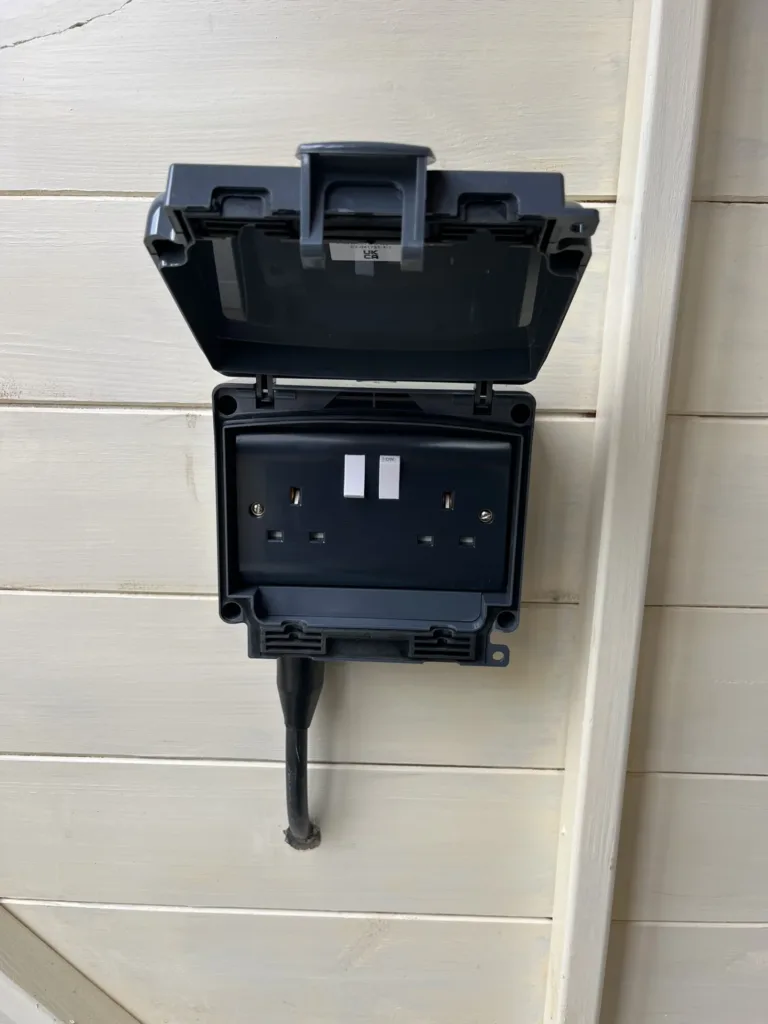
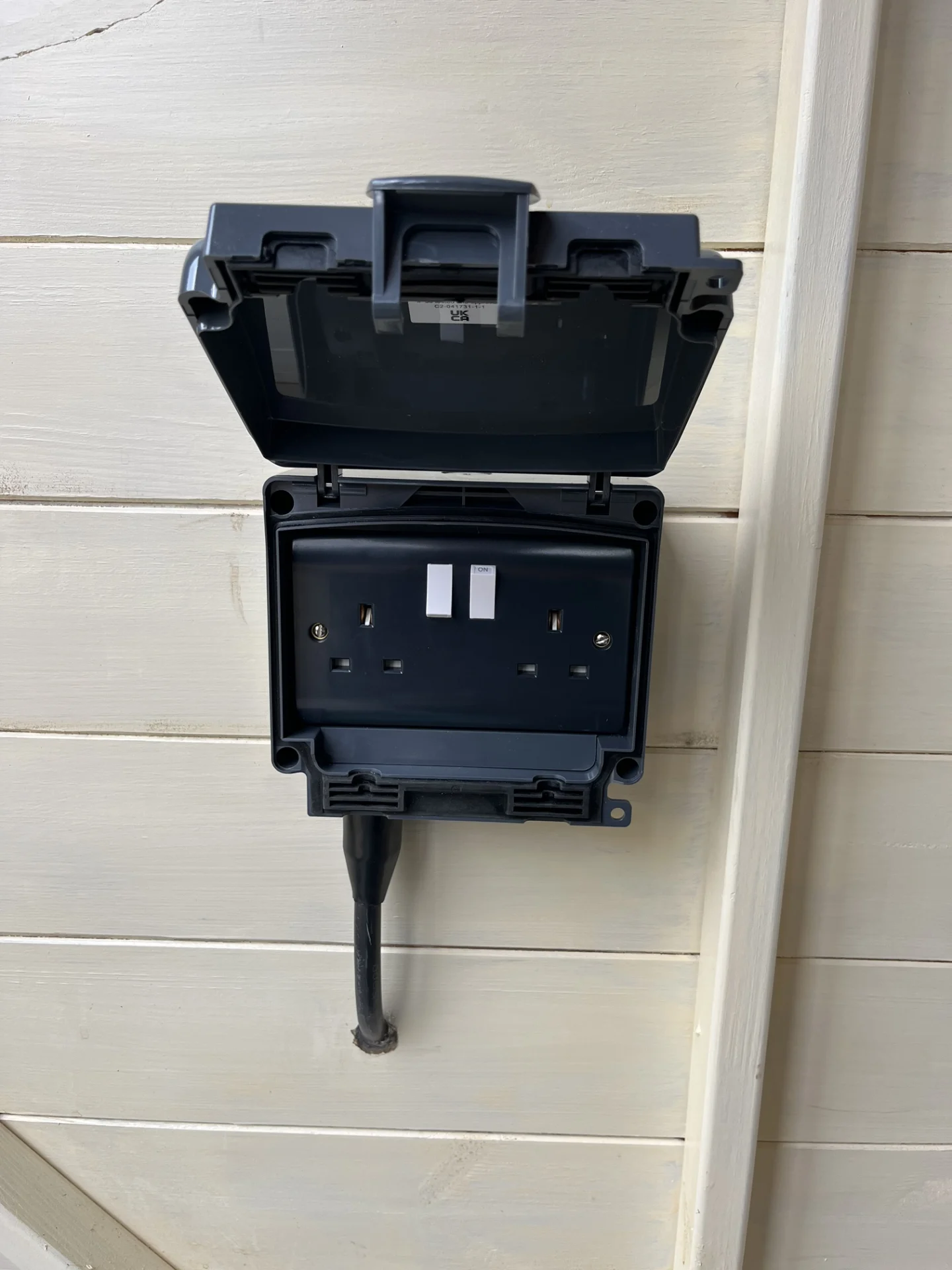
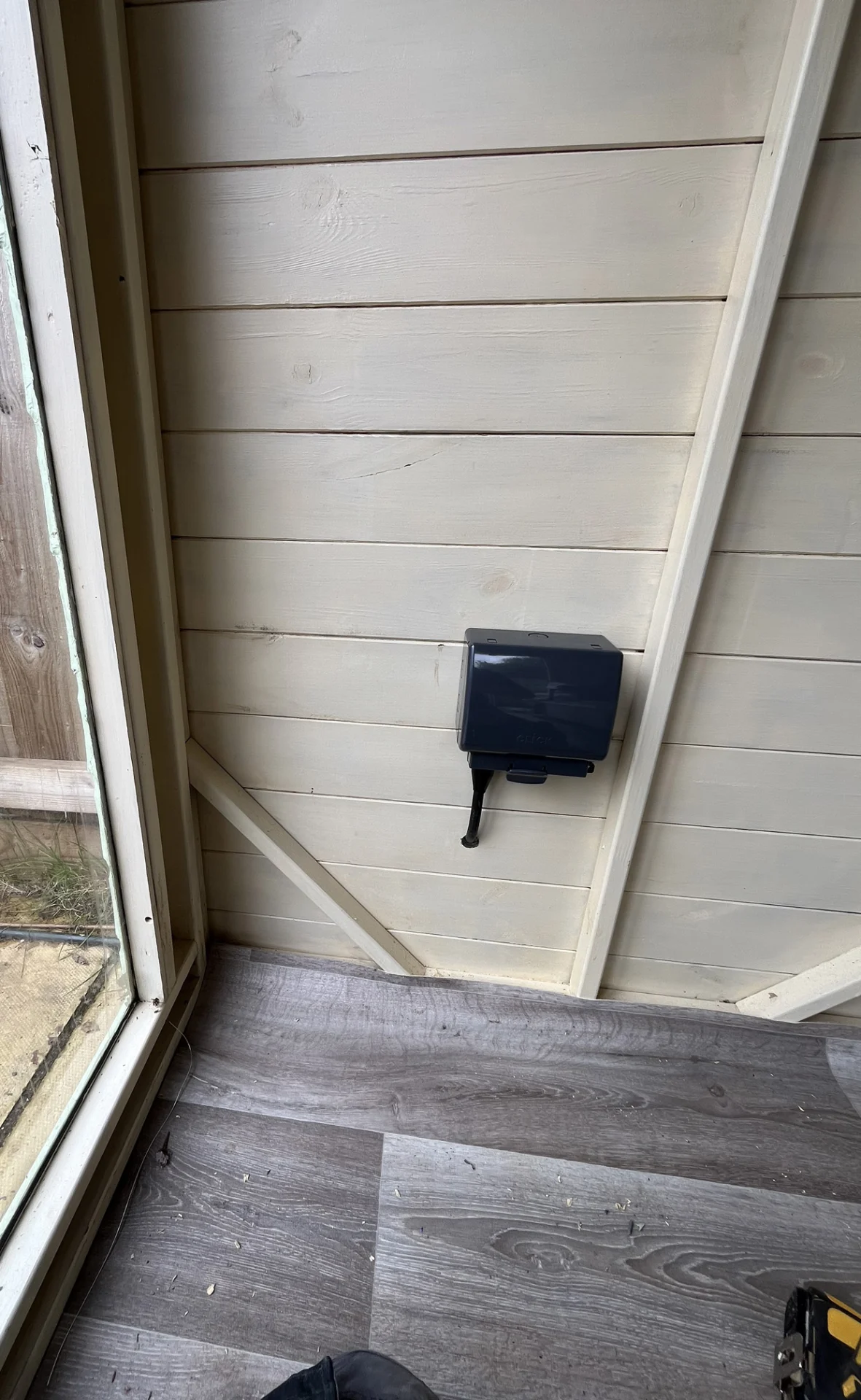
Once the cable was in and terminated properly, a double socket was fitted inside the shed to give two usable outlets. The position was chosen to make sense practically – accessible without being in the way, and suitable for the kinds of things the space would be used for.
The supply on the rear wall of the house was handled with a weatherproof IP-rated double socket fitted in place of the existing one. This gives the spur point weather protection suitable for an external wall, with a hinged cover that keeps rain and moisture out when nothing’s plugged in.
The Finished Result
From the house wall to the shed, the whole run came in at around 25 metres. Neatly clipped armoured cable running along the wall and fence, a clean junction point in the Wiska box, weatherproof fittings at the house end, and a properly terminated double socket inside the shed. Tidy, reliable, and done to a standard that’ll last.
Outbuilding electrical work is worth doing properly from the start. The materials cost a bit more than a workaround might, but armoured cable on a correctly protected circuit gives you something you can actually depend on – and means you won’t be revisiting it in a couple of years when something starts causing problems.
If you’re in Bodmin or the surrounding area and you’re looking to get power out to a garden shed, workshop, or other outbuilding, this is exactly the kind of work we handle regularly.