Upgrading from traditional heating controls to a Hive smart thermostat system for an oil combi-boiler in Truro, providing remote control and scheduling capabilities through Wi-Fi connectivity.
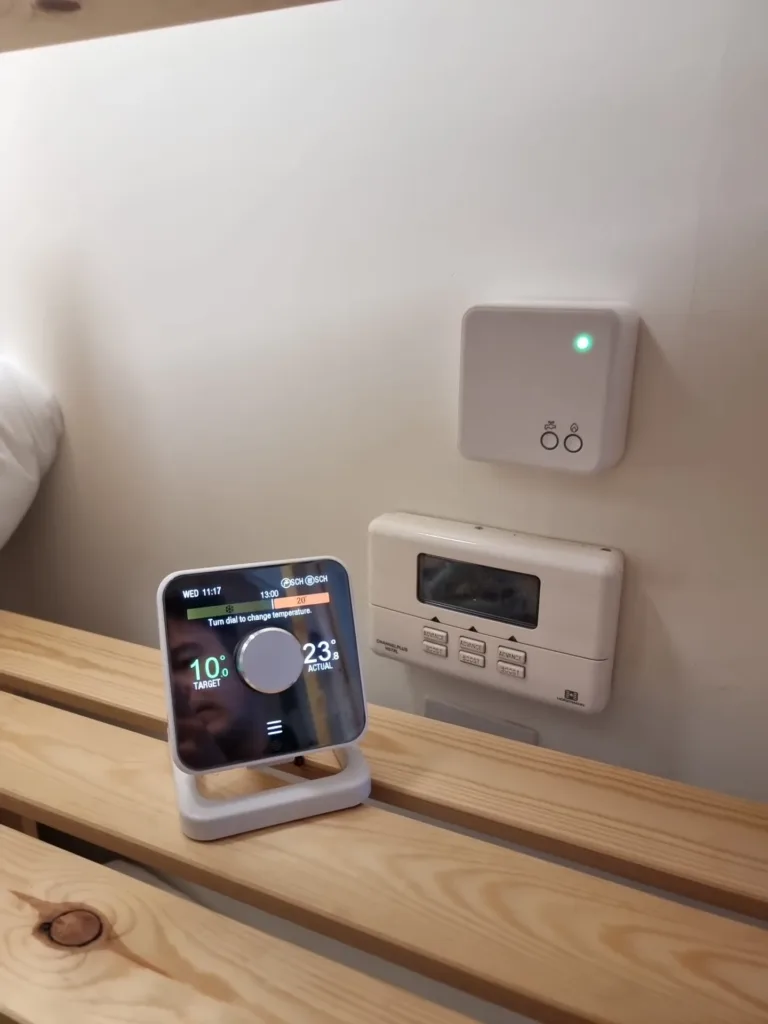
Smart heating controls have become increasingly popular across Cornwall, and this Truro property was ready to make the transition from conventional controls to a connected system. The homeowner had already purchased their Hive Active Heating Control system and needed it professionally installed to work with their existing oil combi-boiler.
Oil boilers require specific considerations when installing smart controls, particularly when it comes to the wiring configuration and ensuring the receiver communicates properly with the boiler itself. Unlike gas systems, oil-fired heating can have different control requirements, so understanding the existing setup was the first step. The old controls had served their purpose but lacked the flexibility and remote access that modern households have come to expect.
The Hive system consists of three main components that work together to give homeowners complete control over their heating. The smart thermostat sits in the living space, allowing temperature adjustment and schedule setting. The receiver unit connects directly to the boiler, acting as the link between the thermostat’s commands and the heating system itself. The Wi-Fi hub plugs into the home’s router, creating the connection that allows control through the Hive app from anywhere with an internet connection.
Before removing the existing controls, we documented the current wiring setup to understand how the boiler was being controlled. This step prevents any confusion during installation and makes certain the new system will function correctly from the start. The old thermostat and programmer were then carefully removed, with attention paid to the condition of the existing wiring. Sometimes older installations have wiring that needs updating, but in this case, the cables were in good condition and suitable for reuse.
The receiver unit installation required careful positioning near the boiler. This component needs to be accessible for future maintenance while remaining protected from potential moisture or excessive heat. We mounted it securely and began making the electrical connections between the receiver and the boiler. Each wire serves a specific purpose – some provide power to the system, others carry signals that tell the boiler when to fire up or shut down based on the thermostat’s readings and the homeowner’s programmed schedule.
Getting these connections right matters significantly because incorrect wiring could prevent the system from working or, worse, cause the boiler to behave unpredictably. We double-checked each connection against both the boiler’s wiring diagram and the Hive installation guide. Oil boilers often have slightly different terminal arrangements compared to gas boilers, so this verification step can’t be rushed.
With the receiver properly connected to the boiler, attention turned to the smart thermostat placement. The homeowner had chosen a location in their main living area – somewhere they’d see it regularly but where it wouldn’t be affected by direct sunlight, draughts, or heat from other sources like radiators or fireplaces. These factors can all influence the temperature readings and cause the system to call for heat when it’s not actually needed, or fail to heat when it should.
The thermostat mounts on a stand rather than being wall-mounted in this installation, giving the homeowner flexibility to move it if needed. The battery-powered design means no wiring to worry about for this component, though the batteries will need replacing periodically. The thermostat communicates wirelessly with the receiver, so positioning needs to account for signal strength, particularly in properties with thick walls.
Setting up the Wi-Fi hub came next. This small device plugs directly into the home’s router using an ethernet cable, creating the bridge between the heating system and the internet. Once powered on, the hub needs to be registered with the Hive system through the app. This process involves creating or logging into a Hive account and following the pairing procedure that links the hub, thermostat, and receiver together.
The commissioning phase involves more than just checking that everything turns on. We tested the system by adjusting the temperature on the thermostat and confirming that the receiver triggered the boiler to fire. This sounds straightforward, but there’s a brief delay while the wireless signal travels and the boiler responds, so patience during testing prevents false alarms about non-functioning equipment.
We also verified the Wi-Fi connectivity by accessing the system through the Hive app while standing in different rooms of the property. Signal strength can vary throughout a building, and whilst the hub only needs connection to the router, it’s worth checking that the homeowner can comfortably use the app anywhere they’re likely to want to adjust their heating.
The scheduling features received particular attention during handover. Hive allows multiple daily programs across different days of the week, giving homeowners precise control over when their heating comes on and what temperature to maintain. We walked through setting up a basic weekly schedule that matched their routine – warmer temperatures in the morning and evening when they’re home, lower settings during working hours and overnight.
The boost function got a demonstration too. Sometimes you need extra warmth without changing your entire schedule, and Hive’s boost feature provides this through the app or by turning the thermostat dial. Similarly, the holiday mode lets homeowners set a frost protection temperature when they’re away, preventing frozen pipes while avoiding unnecessary heating costs.
One advantage of oil boilers with smart controls is the ability to monitor heating patterns more closely. The Hive app provides usage reports that show when heating was active and for how long. This information helps homeowners understand their consumption and identify opportunities to adjust schedules for better efficiency. Unlike gas boilers where you might get monthly bills that obscure daily patterns, oil deliveries are less frequent, so having granular data about heating usage becomes more valuable.
The installation concluded with a final system test running through a complete heating cycle. We observed the thermostat requesting heat, the receiver activating the boiler, the boiler firing up, and then the subsequent shutdown once the target temperature was reached. Everything functioned as expected, with smooth communication between all components.
Remote access testing confirmed the homeowner could control their heating from their phone even when away from the property. This feature proves particularly useful when plans change – arriving home earlier or later than expected no longer means returning to a cold house or wasting energy heating an empty one.
The handover included discussion about ongoing maintenance and what to watch for. The Hive system itself requires little upkeep beyond occasional battery changes in the thermostat, but the boiler still needs its regular servicing regardless of the control system. We explained the difference between issues with the smart controls versus problems with the boiler itself, helping them understand what they might be able to troubleshoot through the app settings versus when to call for professional help.
Overall system performance depends on maintaining a good Wi-Fi connection. If the home network experiences problems, the heating will continue operating based on the schedule programmed into the thermostat, but remote access won’t work until connectivity is restored. This failsafe design prevents occupants being left without heating due to internet outages.
The transformation from basic controls to smart heating gives this Truro home modern convenience whilst working perfectly with their oil-fired system. The ability to adjust heating remotely, monitor usage, and create detailed schedules brings their heating into line with other smart home technologies whilst maintaining the reliability expected from a professionally installed system.