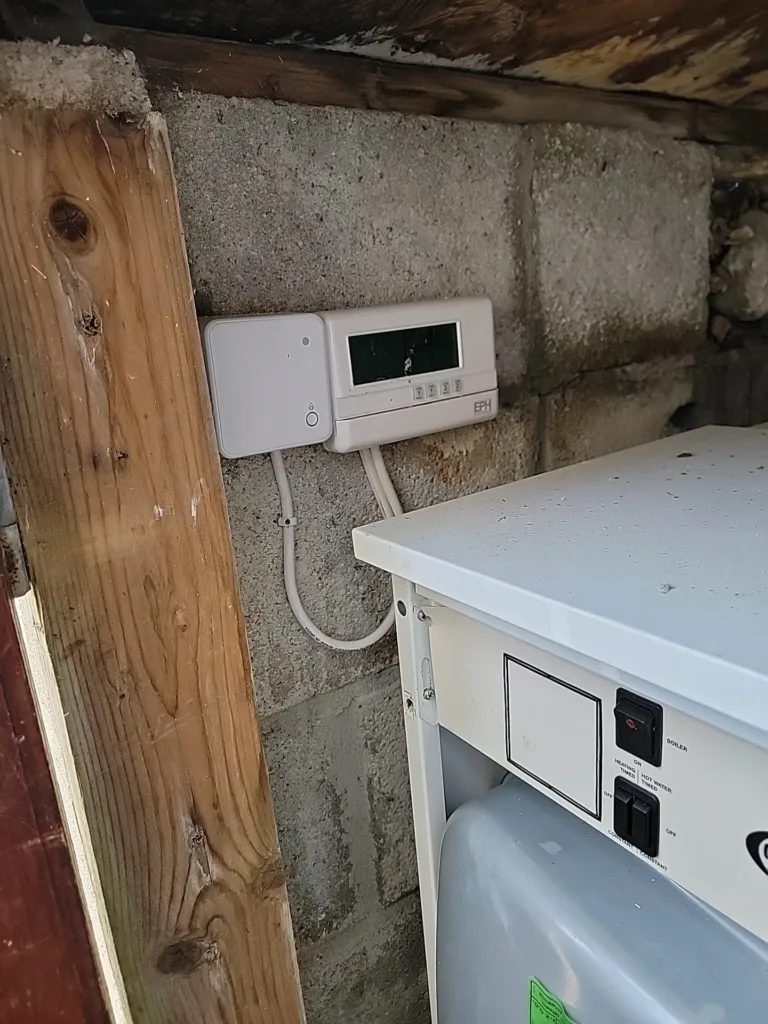
Smart heating controls have become increasingly popular over the last few years, and Hive is one of the better-known systems homeowners tend to go for. It works well on gas systems, but it’s also compatible with oil boilers – which matters in parts of Cornwall where mains gas simply isn’t an option. This job in Perranporth involved fitting a client-supplied Hive system to an existing oil boiler, and a good chunk of the value came from the conversation before any tools came out.
The homeowner had already bought the Hive kit – receiver, thermostat, and hub – and wanted it installed and set up properly. Before starting, we talked through how it would all work with the existing setup. The customer had purchased a single channel receiver, which controls one circuit. With a typical oil boiler arrangement running both heating and hot water, a single channel system means you have to decide which one gets the smart control. After going through the different options, the customer decided he wanted to keep his existing wall timer controlling the hot water and use the Hive purely for heating. It was a sensible call – the old timer was working fine, and there was no need to complicate things.
That kind of conversation is worth having before the job starts rather than halfway through. Understanding what the customer actually wants from the upgrade, and what kit they’ve supplied, shapes how the installation is approached. There’s no single right answer – it depends on the property, the boiler, and how the person uses their heating day to day.
With the plan confirmed, the existing heating controls were removed and the Hive receiver was wired in. The receiver sits between the boiler controls and the heating circuit, responding to calls for heat from the Hive thermostat. Wiring was routed neatly, with the receiver positioned close to the boiler in a practical location that kept the cabling tidy.
Once the hardware was in place, the hub was connected to the home’s Wi-Fi network. This is the part that makes remote control possible – the hub bridges the physical devices and the Hive app, so heating schedules can be set, adjusted, or overridden from a phone or tablet whether you’re at home or not. Getting the hub properly connected and talking to the rest of the system isn’t complicated, but it does need to be done methodically. Rushing the commissioning stage is where things can go wrong.
All three devices – the receiver, the thermostat, and the hub – were paired and the system fully commissioned. That means working through the app, confirming the thermostat communicates correctly with the receiver, and running a live test to verify the boiler fires when a heat demand is sent. The system was confirmed working before we left the property.
One point worth being clear about with client-supplied equipment: the responsibility for compatibility and suitability sits with the customer. That’s not a way of distancing ourselves from the job – it’s just honest. When someone chooses and purchases their own equipment, we can install it and commission it correctly, but we can’t carry liability for a product fault or a compatibility issue that wasn’t foreseeable from our side. In this case, the Hive kit was fully compatible with the oil boiler and everything worked as expected, so it was a non-issue. But it’s worth stating clearly upfront on any job where the customer supplies hardware.
Oil boiler systems are common across much of rural and coastal Cornwall, Perranporth included. Properties in these areas often have heating controls that are years old – basic programmers or mechanical timers that don’t offer much flexibility. Retrofitting a system like Hive gives the homeowner noticeably more control: heating schedules can be set around their routine, adjusted on the fly if plans change, and monitored through the app without having to physically touch the thermostat.
For this customer, the end result was a Hive system controlling the heating with the hot water continuing to run off the original wall timer. The system was explained clearly before we left – how to use the app, what the thermostat does, and how the two parts of the system work alongside each other. Walking a customer through the setup is part of the job, not an afterthought.