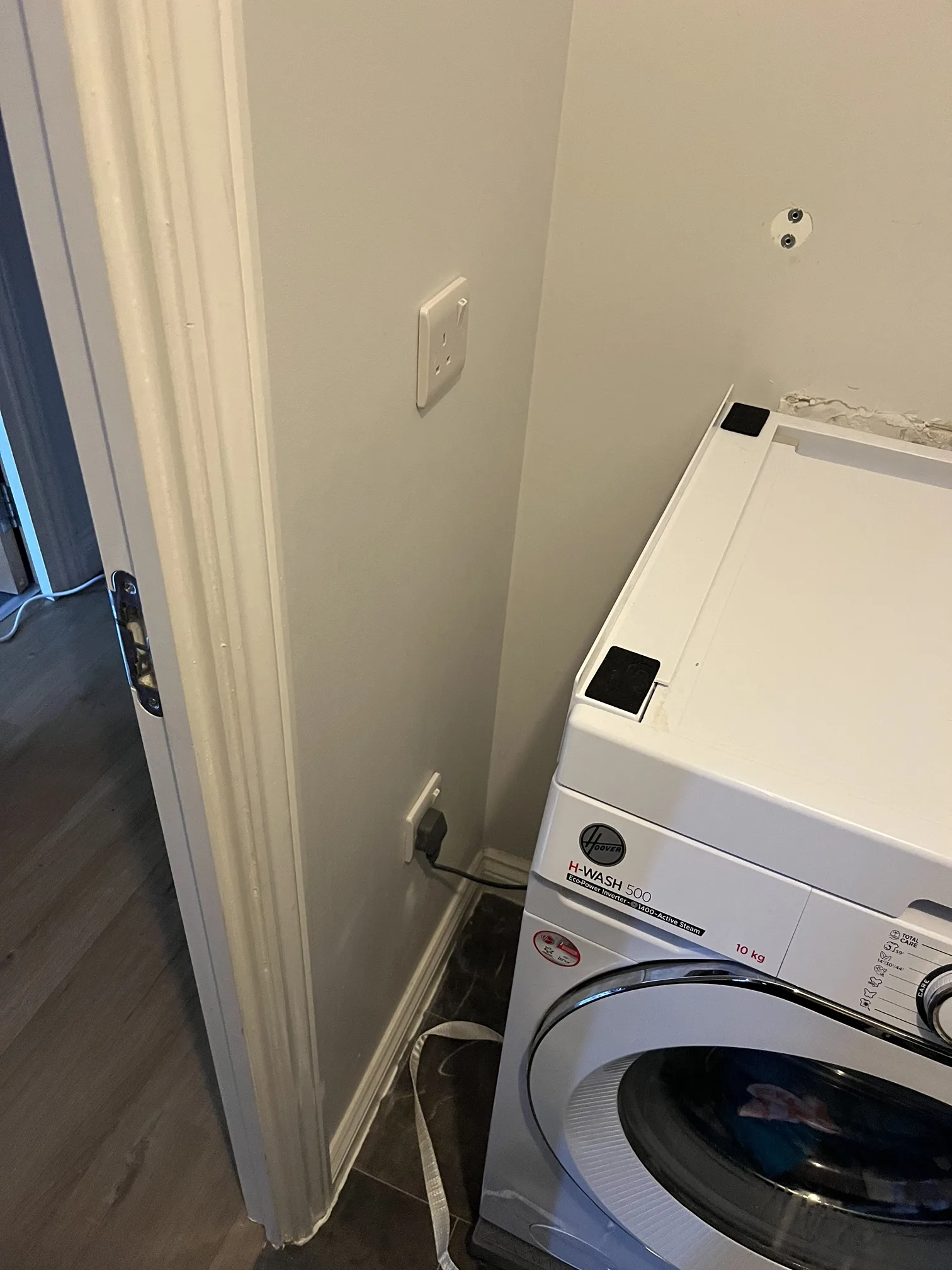
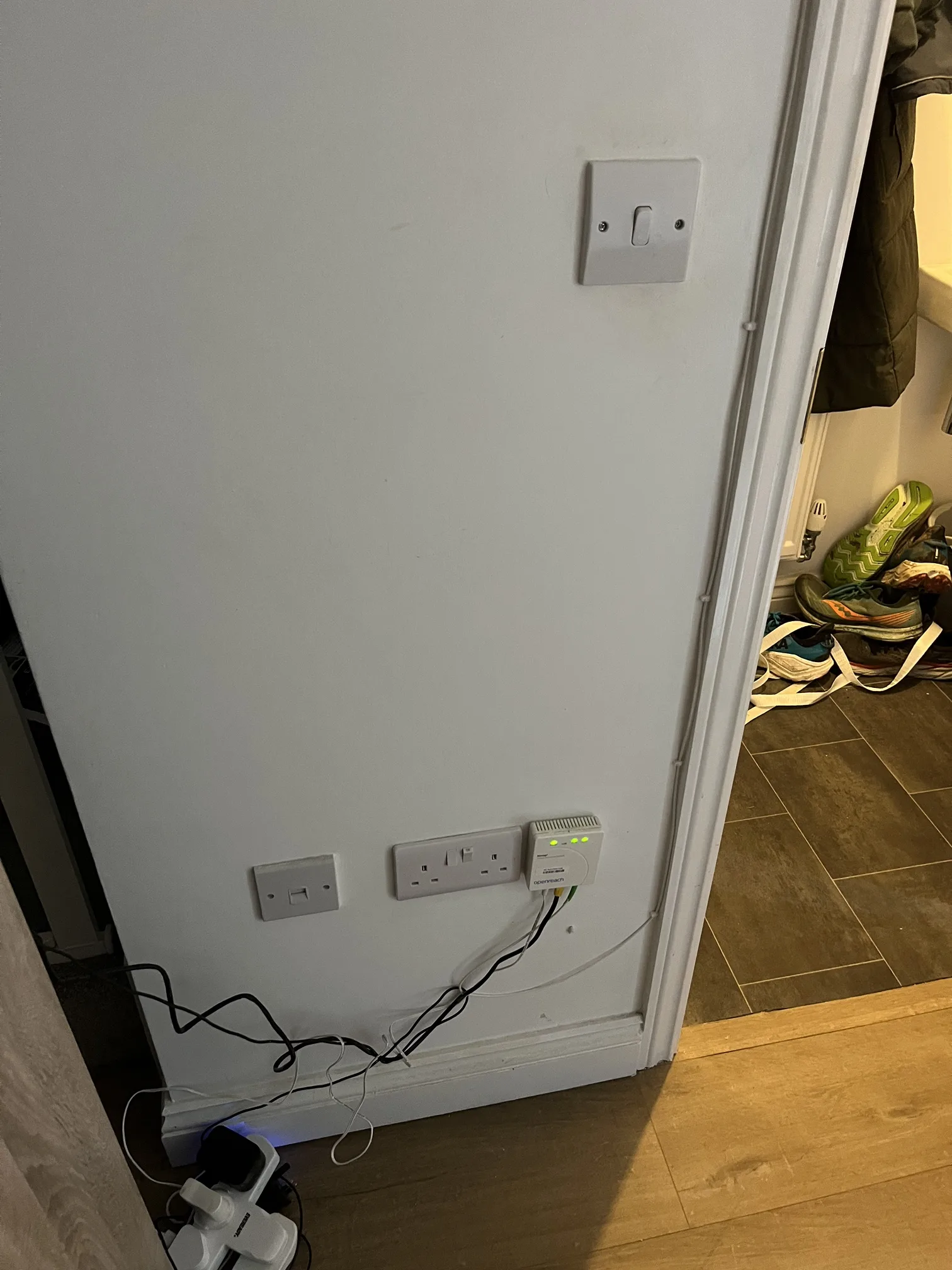
We completed a domestic electrical installation in Newquay, relocating cooker and fridge freezer circuits whilst adding new socket outlets in a utility room and WC to accommodate a kitchen refurbishment.
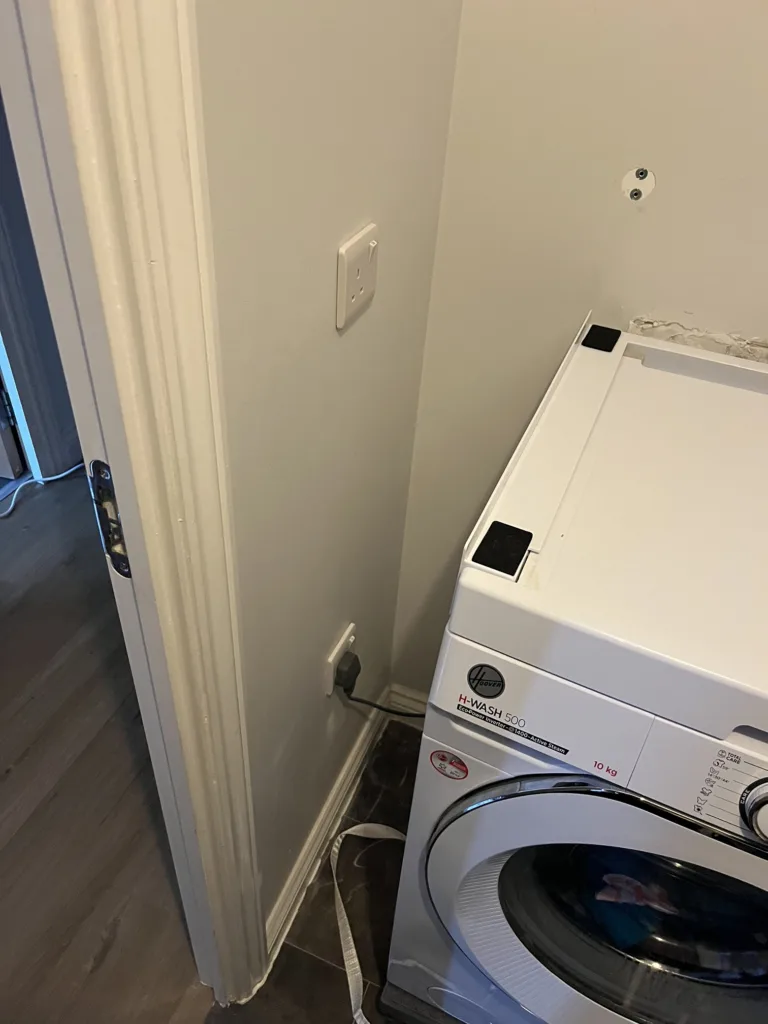
Kitchen renovations often require substantial electrical modifications, particularly when homeowners decide to reconfigure their layout. This Newquay property needed several circuits relocating to accommodate new appliance positions, alongside additional power provision in the utility room.
The existing cooker circuit required extending to reach the new appliance location. Rather than running entirely new cabling throughout the property, we accessed the original circuit within the ceiling void and installed a maintenance-free junction box to extend the supply. This approach offers several advantages for homeowners undertaking kitchen refits. Maintenance-free junction boxes provide a reliable, compliant connection point that doesn’t require future access for inspection, which matters when cables run above finished ceilings. The connection remains secure and safe for the lifetime of the installation, avoiding the need to disturb newly plastered or decorated surfaces down the line.
Before beginning any extension work, we verified that the existing cable was suitable for continued use. Older installations sometimes feature cable types or conductor sizes that aren’t appropriate for modern standards, but in this case, the original cooker cable was in good condition and of adequate specification. The circuit extended smoothly to the new cooker position, where we fitted a connection outlet within the integrated kitchen unit. We also installed a cooker isolator switch, giving the homeowner a convenient way to safely disconnect the appliance when needed.
Similar work was required for the fridge freezer supply. Built-in appliances have become increasingly popular in modern kitchens, offering a streamlined appearance that many homeowners prefer. However, achieving this aesthetic often means repositioning electrical supplies. We followed the same methodology here, accessing the existing circuit cabling in the ceiling void and installing another maintenance-free junction box to extend the supply. The new socket outlet sits discreetly behind the integrated unit, providing power without disrupting the clean lines of the finished kitchen.
Working in ceiling voids requires careful planning and execution. Not all properties offer straightforward access, and we always assess the situation before committing to this approach. In some homes, structural timbers, insulation, or other obstacles can complicate cable routing. This particular property had accessible ceiling spaces, allowing us to complete the extensions without excessive disruption. Where we needed to create access points in plasterboard, we patched and provided first fill, leaving surfaces ready for final finishing by the customer’s decorator.
The utility room and WC presented a different challenge. The space needed power for both a washing machine and tumble dryer, but no suitable electrical supply existed. We installed a double socket outlet to serve both appliances, drawing power from the adjacent hallway socket circuit. To comply with regulations and provide proper isolation, we fitted a dedicated double pole switched spur in the hallway. This arrangement gives the homeowner a clearly identifiable isolation point for the utility room sockets, which is particularly useful during appliance maintenance or in emergency situations.
Taking a spur from an existing socket circuit is often the most practical solution when adding new outlets during refurbishment work. It avoids the need to run cables back to the consumer unit, reducing both cost and disruption. However, this approach requires careful consideration of the existing circuit’s loading. We calculated the additional demand from the washing machine and tumble dryer to verify that the hallway socket circuit could accommodate the extra load without overloading. Modern washing machines and tumble dryers draw significant current, particularly during heating cycles, so this isn’t a step to skip.
The switched spur provides isolation without requiring homeowners to access the consumer unit, which many people find daunting. A flick of the switch in the hallway cuts power to the utility room sockets, offering straightforward control. We positioned it adjacent to the existing socket, keeping it accessible whilst maintaining a tidy appearance.
Cable routing through domestic properties always requires thought. We aim to take the most direct path possible whilst avoiding damage to the building’s structure and minimising visible impact. In this installation, we routed cables through ceiling voids and wall cavities, emerging only where necessary to connect to outlets and accessories. Where cables pass through timber joists or studs, we follow regulations for notching and drilling depth to avoid weakening structural elements.
Throughout the installation, we maintained clear communication about what the work would involve. Customers appreciate knowing whether holes need cutting, how much making good they’ll need to arrange, and what the finished installation will look like. We’d discussed the need for possible plasterboard access before starting, and the customer understood that they’d need to arrange final decoration after our work concluded.
Socket and switch finishes might seem like a minor detail, but they matter to homeowners creating their ideal space. Standard white plastic accessories suit most situations and keep costs manageable, but we always mention alternatives during the quotation stage. Some customers prefer brushed steel, black nickel, or other finishes to match their décor. Specifying these preferences before work begins avoids disappointment and allows us to order materials in time.
The work progressed smoothly across a continuous period. Whilst some customers prefer staged installations to minimise disruption, completing all electrical work in one visit often proves more convenient. It reduces the number of days the property experiences upheaval and can be more cost-effective than multiple call-outs. Each approach has merit, depending on the customer’s circumstances and the scale of their renovation.
This type of electrical work supports broader home improvements, allowing homeowners to realise their vision for updated kitchens and utility spaces. Modern appliances, changing layouts, and evolving standards mean that many properties need electrical modifications during renovation projects. Whether extending existing circuits or adding new ones, the goal remains the same: providing safe, compliant electrical installations that meet current needs whilst accommodating future requirements. Proper planning, quality materials, and careful execution deliver results that homeowners can rely on for years to come, supporting their daily routines without fuss or concern.