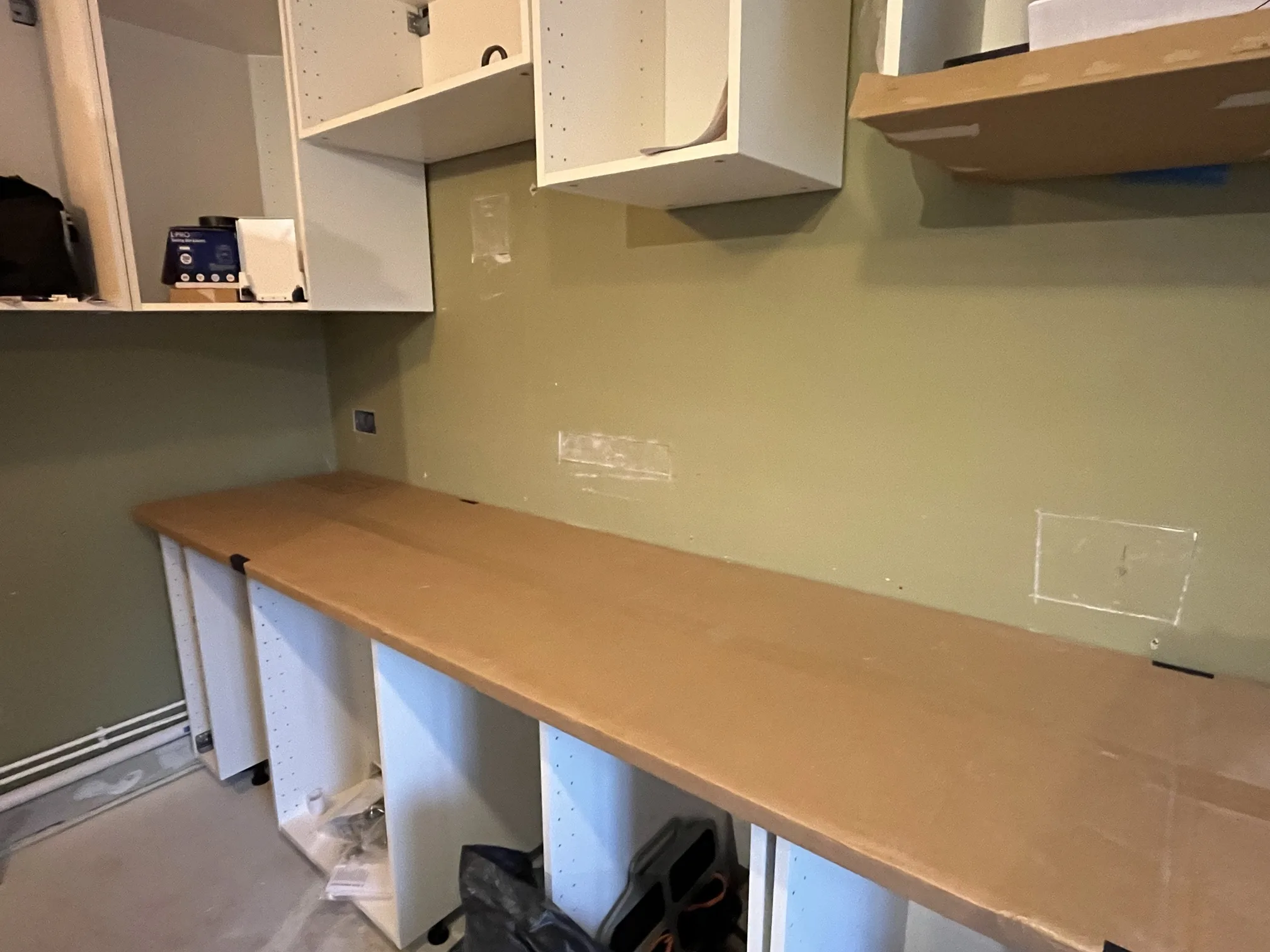
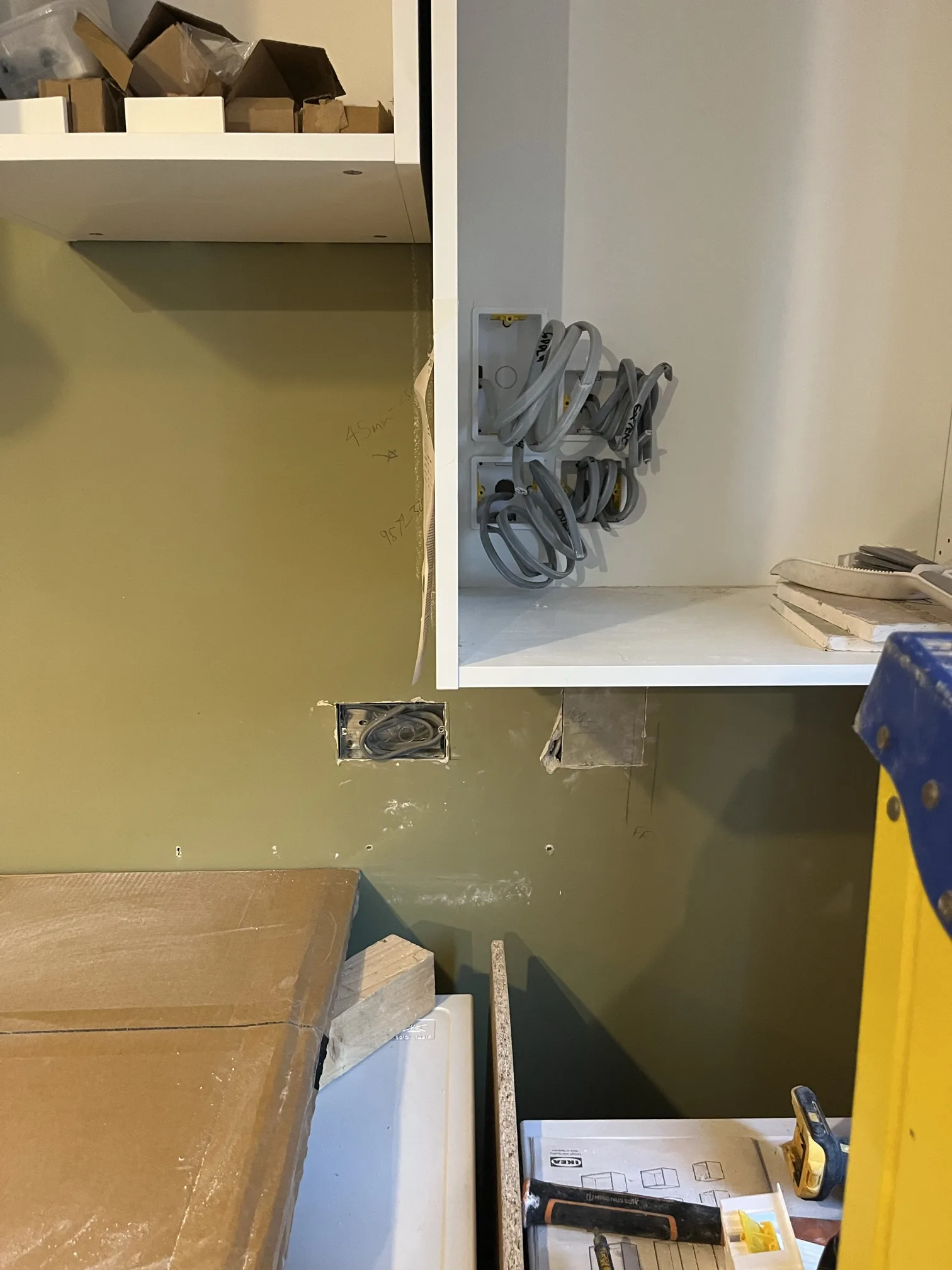
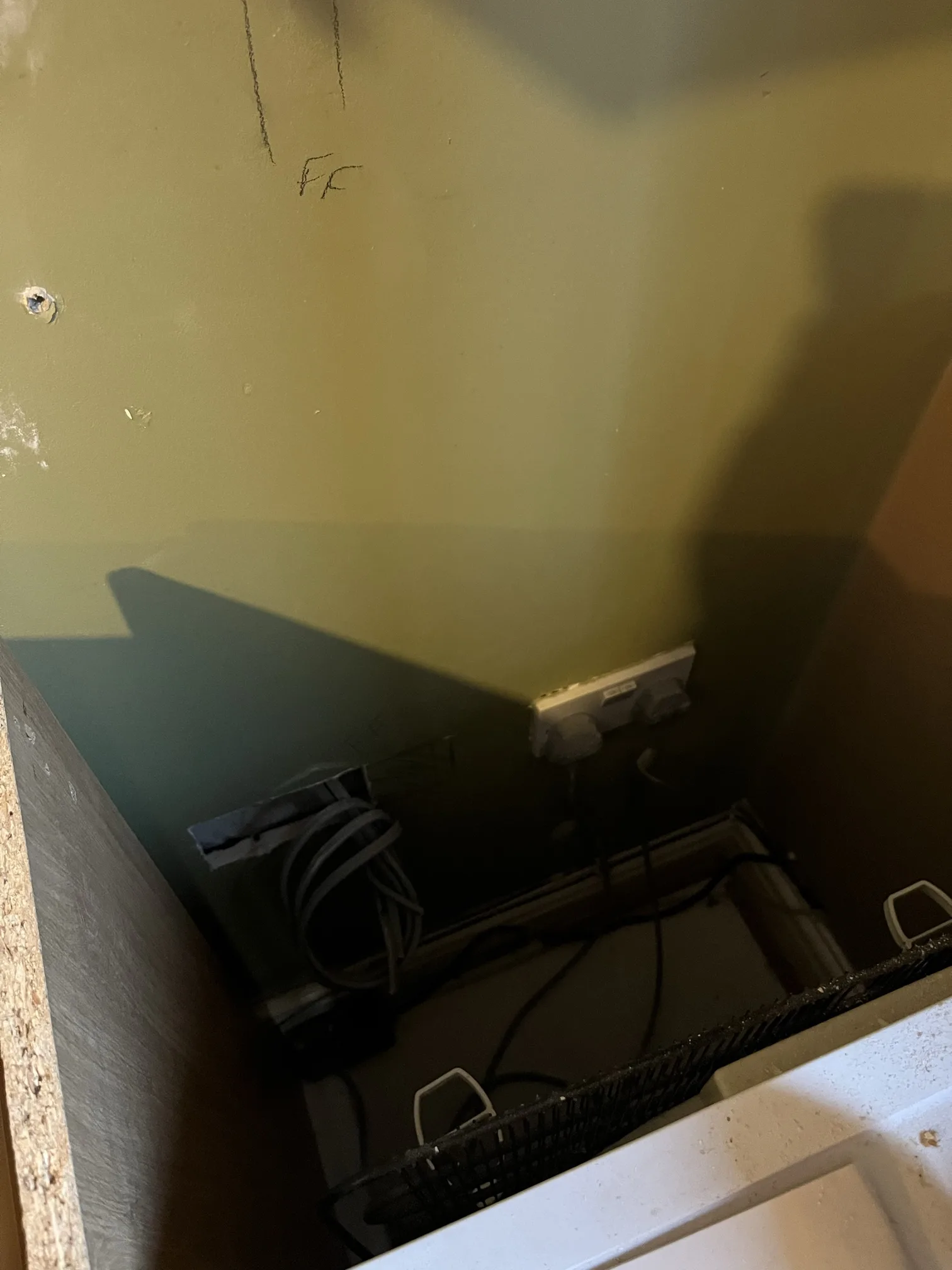
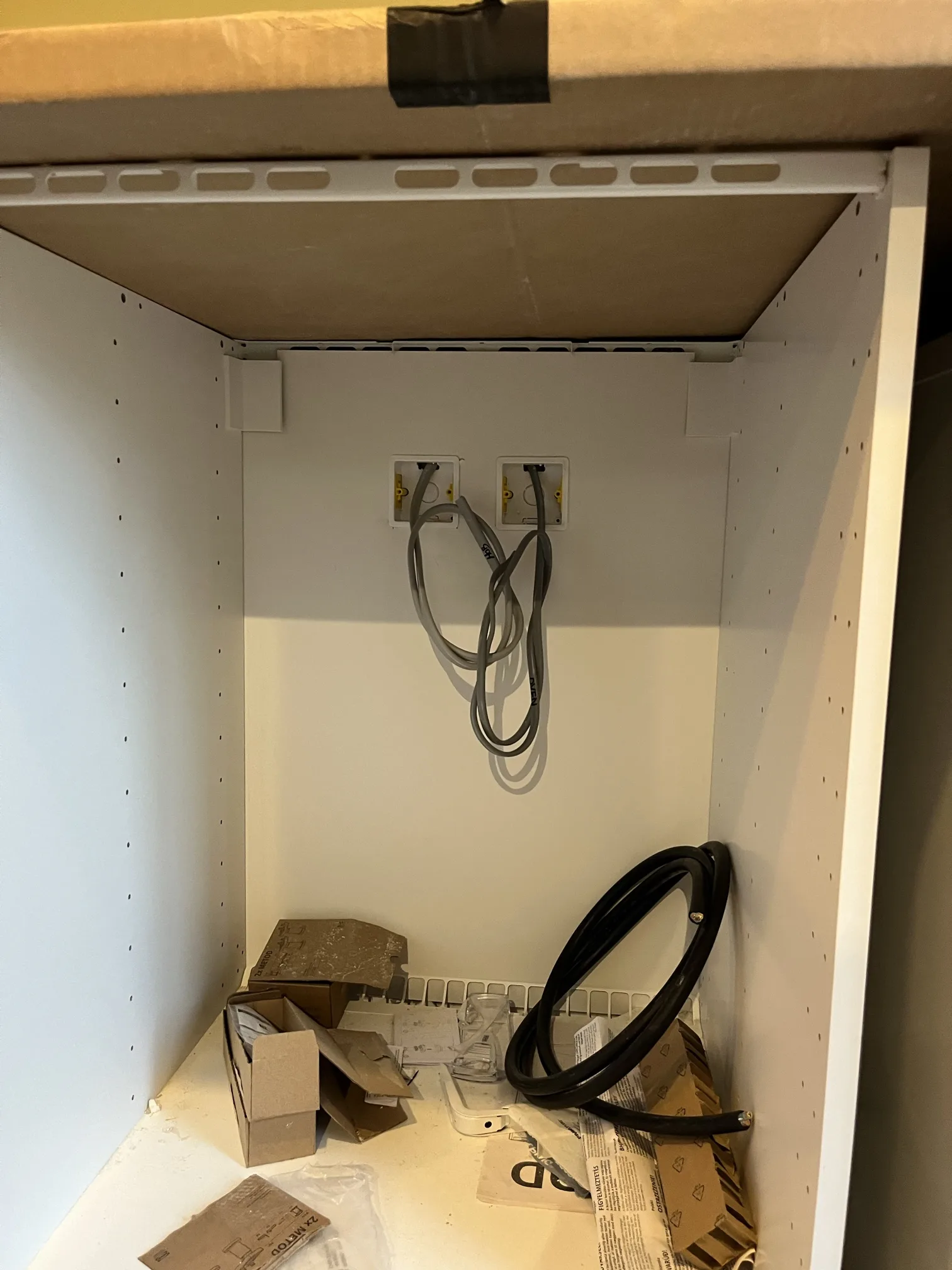
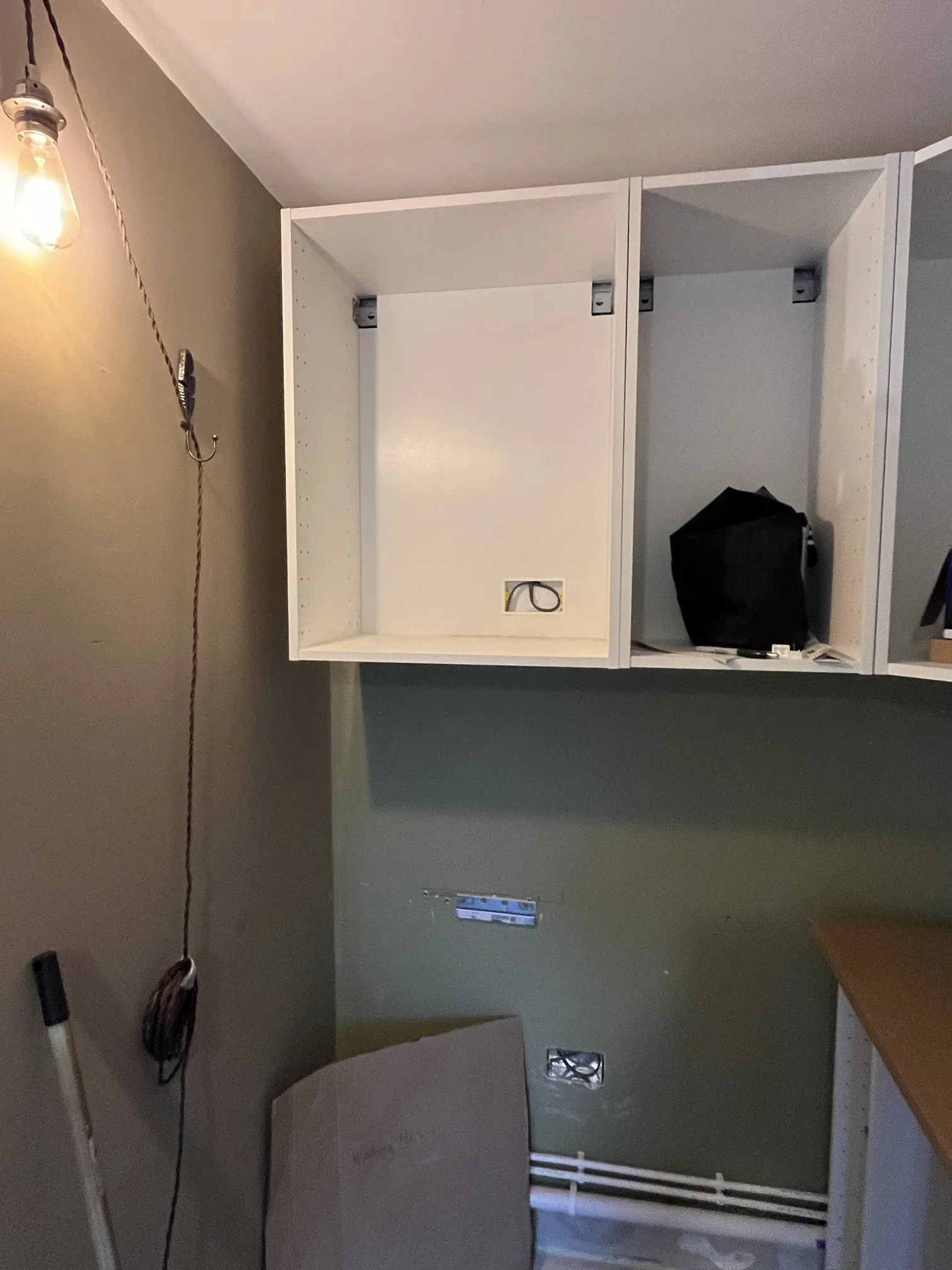
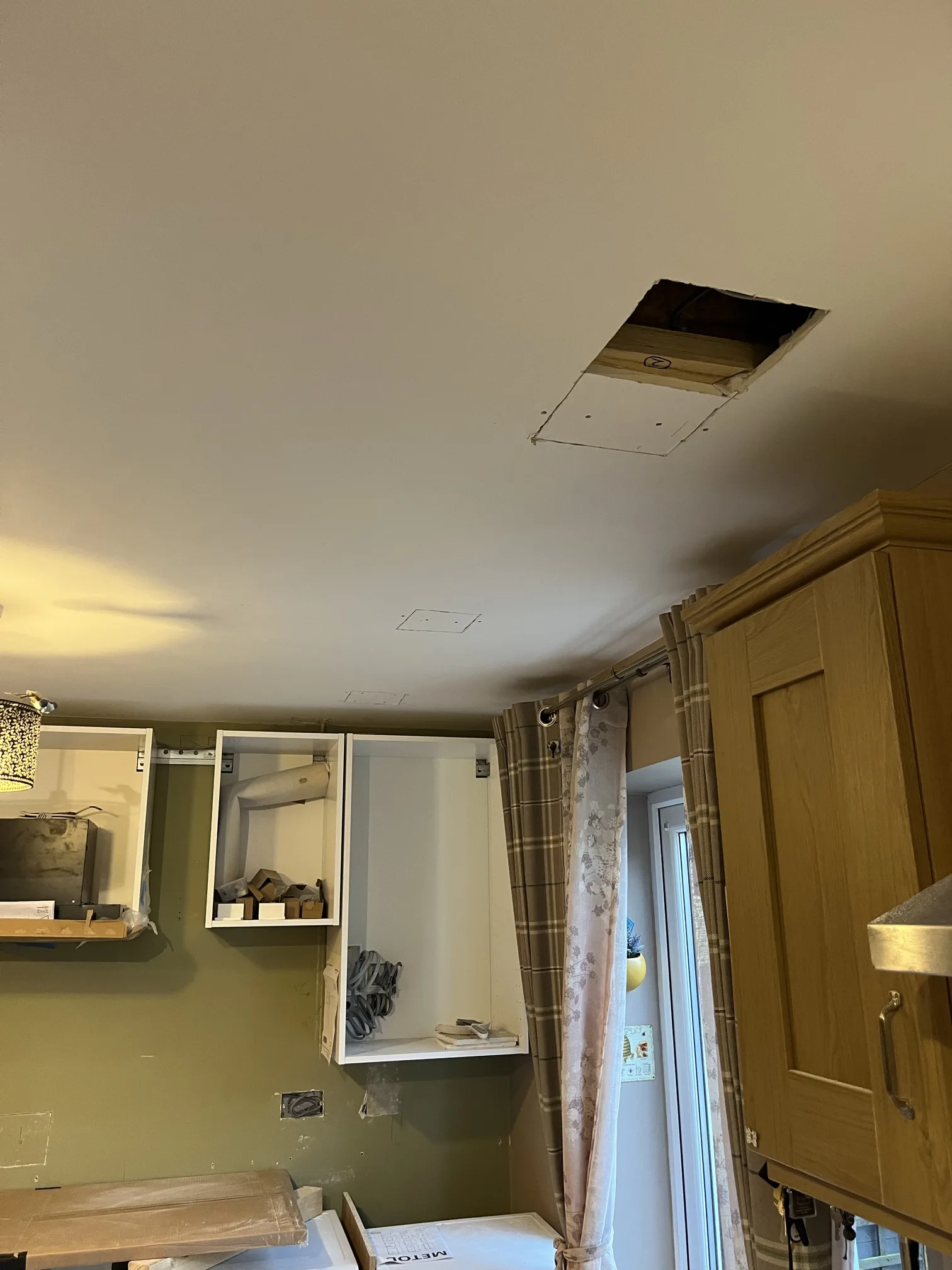
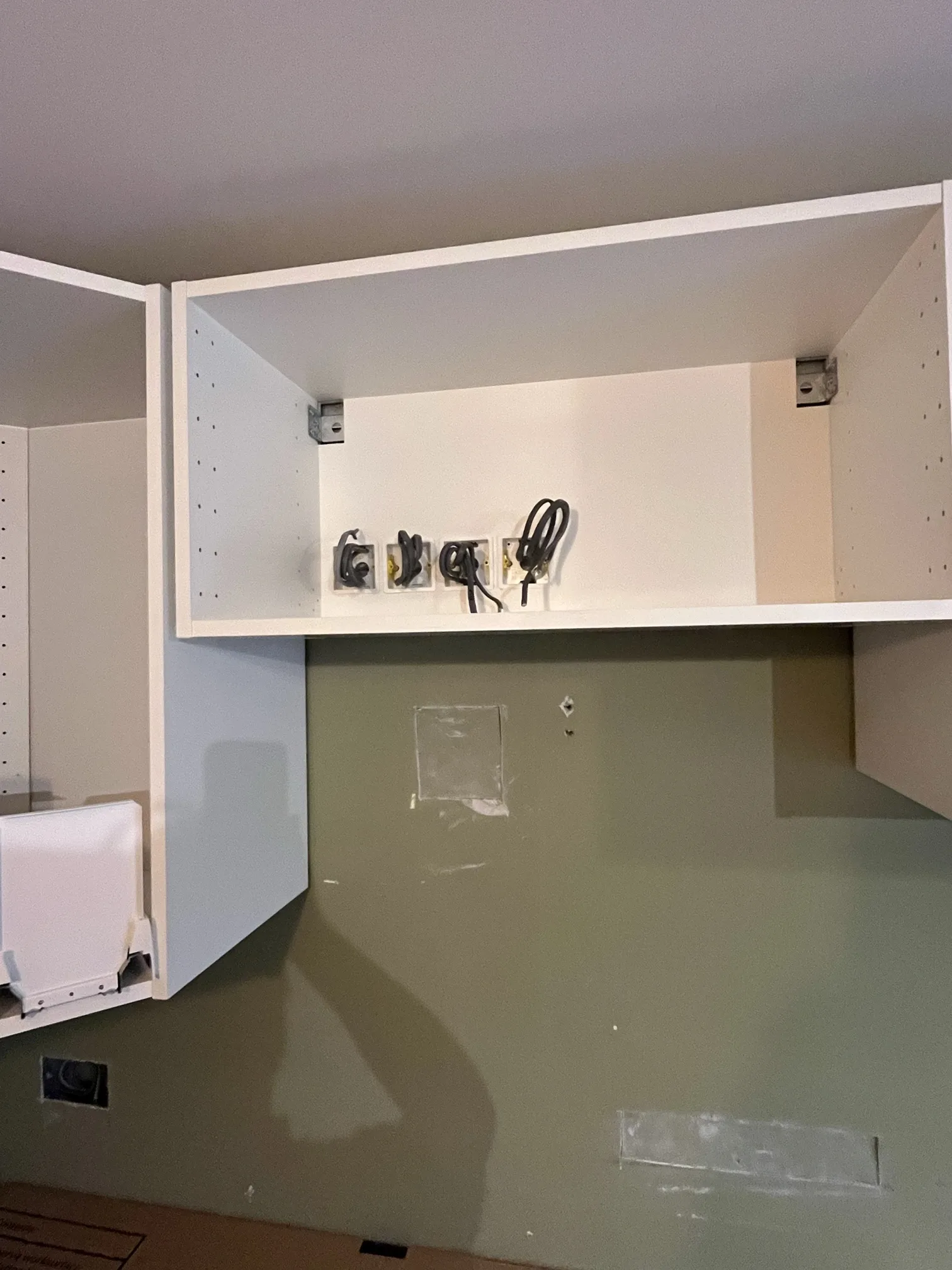
First fix kitchen electrics completed for a home in Shortlanesend, Cornwall, involving socket circuit extensions and cooker circuit alterations to accommodate a reconfigured kitchen layout.
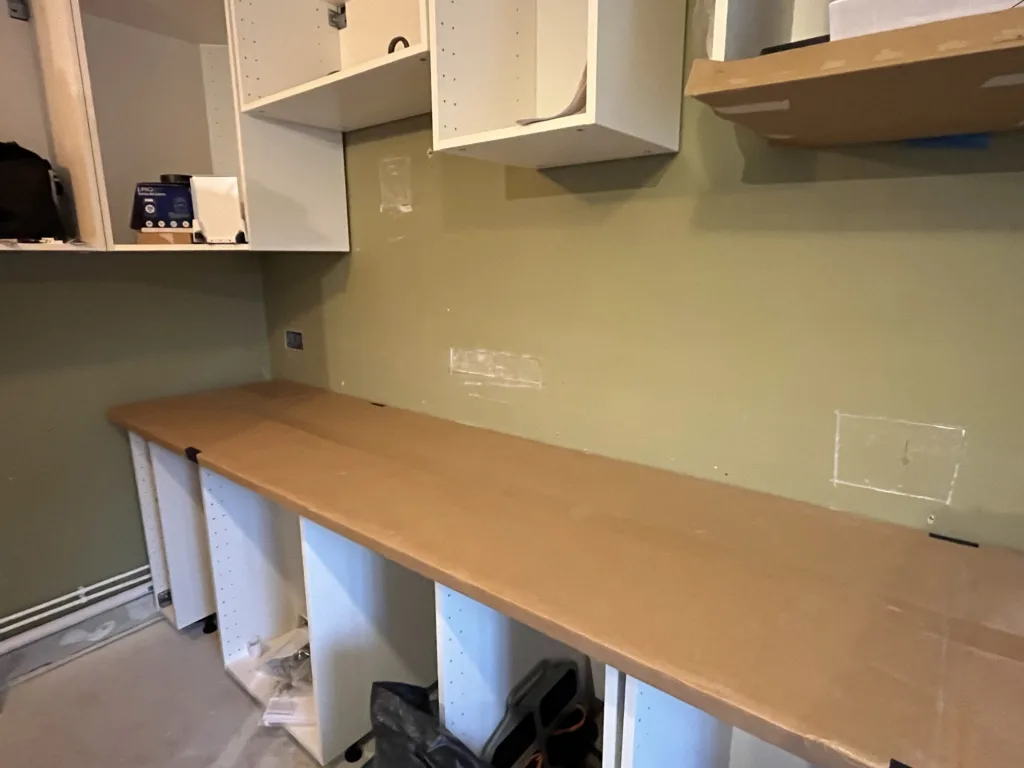
Working on the first fix electrics for a kitchen renovation in Shortlanesend gave us the chance to lay the groundwork for what will become a fully functional and practical cooking space. The homeowners had reconfigured their kitchen layout, which meant the existing electrical circuits needed extending and repositioning to serve the new arrangement of appliances and work surfaces.
The main task involved extending the existing dining area socket circuit so it could supply the reconfigured kitchen. Rather than installing a completely new circuit, we were able to work with what was already there and extend it to reach the new positions. This approach made sense given the property’s existing electrical infrastructure and the scope of the changes being made to the kitchen.
Three counter-top double socket outlets needed positioning along the work surfaces. These would give the homeowners plenty of options for plugging in kettles, toasters, food processors and whatever else ends up living on a kitchen counter. Getting the cable runs sorted at this stage meant everything would be ready for the second fix once the kitchen fitting and decorating work was done.
Beyond the standard socket outlets, we had to account for all the built-in appliances that would be part of the finished kitchen. A fridge, freezer, dishwasher, recirculating extractor fan, washing machine and integrated microwave all needed their own dedicated outlets. Each of these appliances would have isolators positioned in the cupboard above where the microwave would eventually sit, giving easy access for switching things off when needed without having to pull appliances out.
The cooker circuit also required attention during this first fix stage. The existing circuit that served the hob and oven needed extending to reach the new location chosen for the cooking area. We positioned the oven isolator switch at counter-top height, close to where the hob would be installed. This placement makes practical sense – you want to be able to quickly isolate the cooker without having to reach up high or hunt around for a switch tucked away somewhere awkward.
Before starting any first fix work on a kitchen, we always check the existing circuits to make sure they’re up to scratch. In this case, the current hob and oven circuit looked fine, which meant we could crack on with the extension work without worrying about needing to replace or upgrade what was already installed.
First fix electrical work involves running all the cables and positioning back boxes before any decorating happens. The cables get chased into walls or run through voids, and everything gets left ready for the kitchen fitters and decorators to do their bit. Once they’ve finished, we come back for the second fix to actually fit the sockets, switches and appliance outlets, testing everything to make sure it’s working properly.
Working in an older property sometimes means having to cut holes in plasterboard to get cables where they need to go. When this happens, we patch the holes and give them a first fill, which leaves them ready for someone else to do the fine filling, sanding and painting. It’s part of coordinating multiple trades on a renovation – electricians do their bit, plasterers do theirs, decorators do theirs, and it all comes together in the end.
The homeowners stuck with standard white plastic socket and switch outlets, which is what most people go for in a kitchen. We always mention that alternative colours or materials are available if someone wants something different, but there can be additional costs involved depending on what’s chosen. It’s worth thinking about early on so everything can be ordered in time.
Shortlanesend sits between Truro and Newquay, a village that’s seen quite a bit of development over the years. Properties here range from older cottages to more modern builds, and each one presents different challenges when it comes to electrical work. Understanding how a property is constructed and where the existing circuits run makes a massive difference to planning out first fix work efficiently.
Kitchen electrics need careful planning because there’s so much going on in terms of power consumption. Multiple appliances running at once, socket outlets getting used constantly, and everything needing to be positioned just right for the kitchen layout. Getting the first fix wrong means problems later on when it’s much harder to make changes.
The socket circuit extension for this kitchen took into account where the homeowners would actually be using their appliances day to day. Work surfaces with double sockets nearby, appliance outlets tucked away but accessible, and isolators positioned where they make practical sense. It’s about thinking through how the kitchen will actually function once everything’s installed.
Cooker circuits get used heavily and generate quite a bit of heat, so the cable sizing and protection has to be spot on. The isolator switch at counter-top height means if anything goes wrong with the hob or oven, it can be switched off immediately without any fuss. Safety features like this don’t get much attention until they’re actually needed, but they’re absolutely worth having in place.
First fix work might not look like much to someone walking through the property – just cables poking out of walls and back boxes screwed in place – but it represents the foundation for everything that comes after. Get this stage right and the second fix goes smoothly. Rush it or bodge it and you’ll be dealing with problems for years to come.
The recirculating extractor fan outlet was positioned with the ducting route in mind, even though we wouldn’t be connecting the fan itself until the second fix. The same principle applied to all the integrated appliances – we positioned outlets where they needed to be based on the kitchen plan, leaving everything ready for when the units got fitted.
This first fix in Shortlanesend will sit waiting now while other trades do their work. Kitchen fitters will install the units, decorators will sort out the walls and ceiling, and flooring will go down. Then we’ll be back to complete the second fix, fitting all the outlets and switches, connecting everything up, and testing the circuits to make sure it all works as it should. That’s when the kitchen really starts to take shape and you can see how all the planning and cable routing has paid off.