A comprehensive kitchen electrical installation in Helston featuring bespoke socket installations, integrated appliance supplies, and modern LED lighting solutions. The project combined practical electrical infrastructure with period-style finishes to complement the property's traditional character.

When homeowners in Helston decided to renovate their kitchen, the electrical works needed to strike a balance between modern functionality and traditional aesthetics. The project required careful planning across multiple stages, with initial first fix works followed by second fix completion once all decorative finishes were applied.
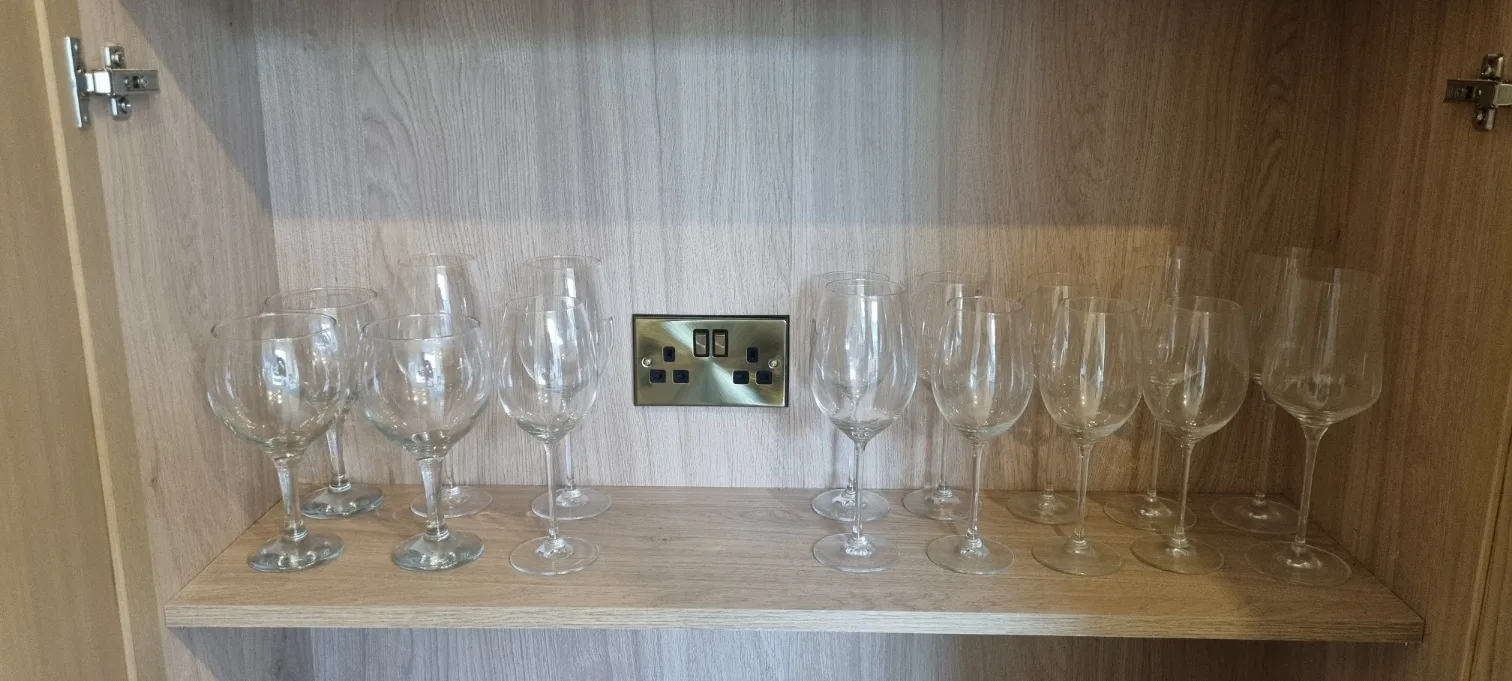
The socket provision formed a significant part of the installation. Counter-top double socket outlets were positioned around the kitchen workspace, finished in antique brass to complement the room’s traditional styling. These weren’t standard fittings – the antique brass finish required specific attention during installation and particularly when securing faceplates after painting and tiling had been completed. The decorative screws supplied with these fittings meant that standard installation techniques needed adapting, with socket screw extensions used rather than simply fitting longer screws that might compromise the aesthetic finish.
Dedicated electrical supplies were installed for several key appliances. The boiler water tap received its own circuit with an isolator switch positioned inside a cupboard, keeping controls accessible whilst maintaining the clean lines of the kitchen design. Similarly, the integrated dishwasher was provided with a dedicated supply, with its isolator switch tucked away in the under-sink cupboard where it could be easily reached for maintenance without cluttering visible wall space.
The double oven installation required more substantial provision. A dedicated 32-amp supply was run to the appliance, controlled by a 45-amp isolator switch located in a high-level cupboard. This positioning meant the switch remained accessible but out of sight, maintaining the kitchen’s streamlined appearance whilst providing the necessary control and safety isolation for the high-powered cooking appliance.
During the project, some amendments were made to the original specification. The counter-top socket arrangement was adjusted from the initial plan of five double sockets to a configuration of four double sockets and one single socket, better suiting the final kitchen layout and the homeowners’ anticipated usage patterns.
Lighting played an important role in transforming the kitchen space. Warm white LED strip lighting was installed beneath shelving, with approximately three metres of LED tape housed within aluminium profile. This created both functional task lighting for the work surface below and ambient illumination that added depth to the room. The lighting was controlled by a wall switch positioned at the kitchen entrance, making it easy to activate when entering the space.
Another section of LED lighting, around two metres in length, was fitted within an alcove. Rather than requiring new switching, this was integrated with the existing alcove light switch, keeping controls intuitive and avoiding unnecessary additional switches on the walls. The existing light switches throughout the kitchen were replaced with antique brass units – a one-gang and a two-gang switch – maintaining consistency with the socket finishes and contributing to the cohesive traditional aesthetic.
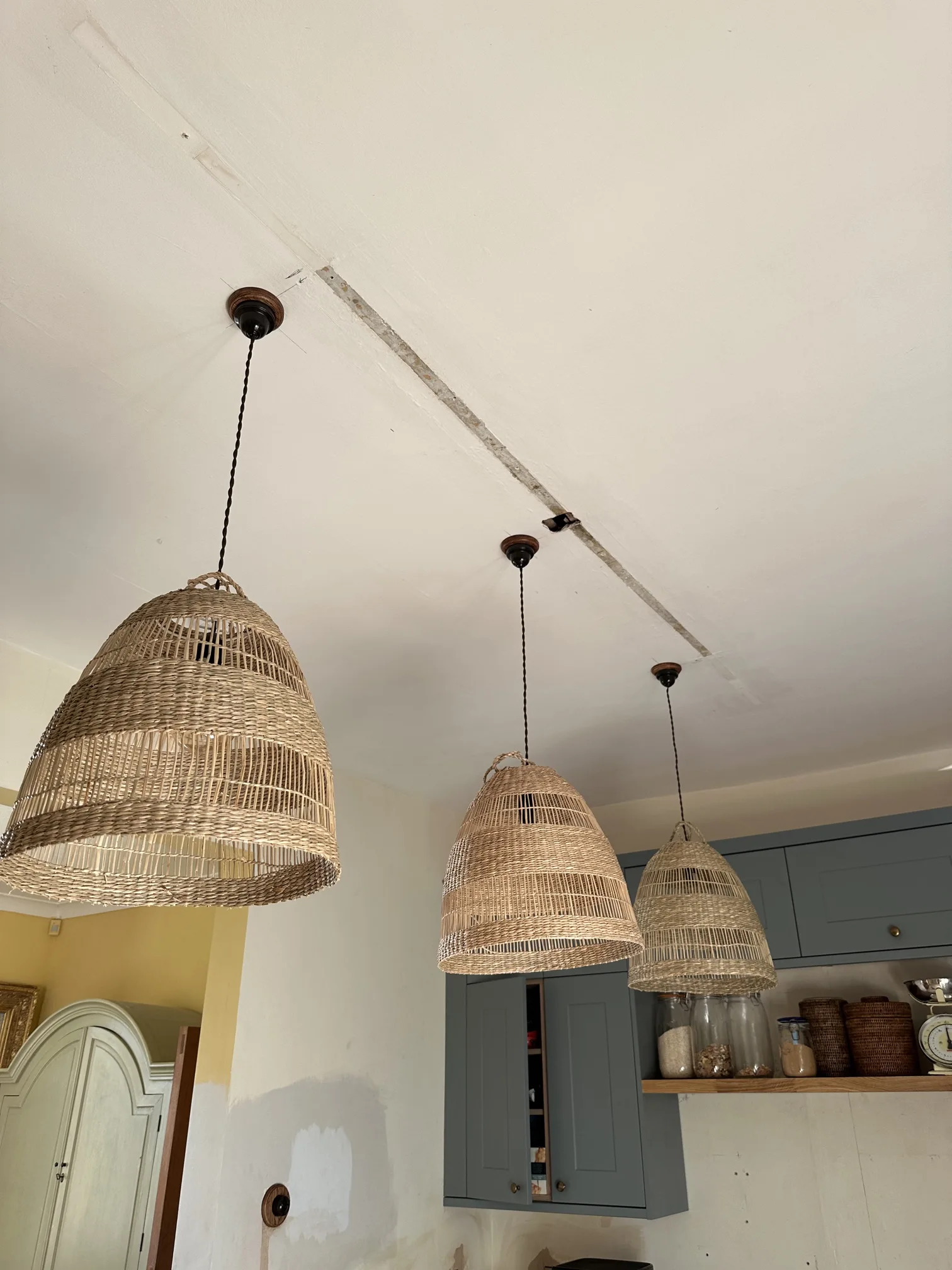
The centre lighting arrangement underwent modification during the project. Instead of standard ceiling fittings, three client-supplied pendant lights were installed, with wiring adjusted accordingly to accommodate their specific requirements and positioning. One of these pendants was fitted in the kitchen, whilst LED components were installed within the kitchen chimney breast. This installation presented an interesting challenge – the LED driver and components needed to be concealed up inside the chimney structure, hiding the technical elements whilst allowing the light output to create a feature within this architectural detail.
All cabling throughout the installation was fully recessed into the masonry walls. This involved creating channels through the walls using dustless extraction equipment, minimising disruption and keeping the working environment as clean as possible. The technique of chasing channels into masonry requires precision – routes need to be planned to avoid structural elements and existing services whilst providing the most direct and logical cable paths.
Once cables were positioned within these channels, they were filled with bonding coat plaster. This initial filling process provided a stable base, though fine filling, sanding, and final decoration would be completed by other trades once the electrical work was finished. Throughout the property, any sockets that had been installed required bonding and filling work around their edge plates, particularly where wall finishes met the electrical accessories. This attention to the junction between electrical fittings and surrounding surfaces helps achieve that seamless finish where it’s difficult to discern where one trade’s work ends and another begins.
The project was structured around two distinct stages. First fix works involved all the hidden infrastructure – running cables through walls, making connections at the consumer unit, and installing back boxes and mounting points. This stage had to be completed before plasterers, tilers, and decorators could finish the walls and surfaces. The second fix stage followed once these decorative works were completed, involving the installation of all visible accessories, light fittings, and final connections.
Two dedicated circuit breakers (RCBOs) were installed in the existing consumer unit to provide safe, independent protection for the new oven and boiler tap circuits. This assumed suitable spare ways were available in the board, which fortunately they were, avoiding the need for consumer unit upgrades. Each of these circuits benefits from its own protection, meaning that a fault on one appliance won’t affect other circuits in the property.
The kitchen sockets required particular attention during the second fix stage. After all painting and tiling work had been completed around the kitchen, each socket needed to be carefully screwed back into position. This timing was deliberate – installing faceplates before decorative works would have meant protecting them from paint splashes, plaster, and tile adhesive, or risking damage to expensive brass finishes. By leaving this final step until after decoration, the pristine finish of each socket outlet was preserved.
Working in Helston, the project demonstrated how electrical installations can support both the practical demands of modern kitchen appliances and the aesthetic preferences of homeowners who appreciate traditional styling. The combination of dedicated appliance circuits, well-planned socket provision, and thoughtfully integrated lighting created a kitchen that functions efficiently whilst maintaining its visual appeal. The antique brass finishes throughout added that touch of period character that many properties in Cornwall retain, blending the necessary electrical infrastructure with the architectural heritage of the building.