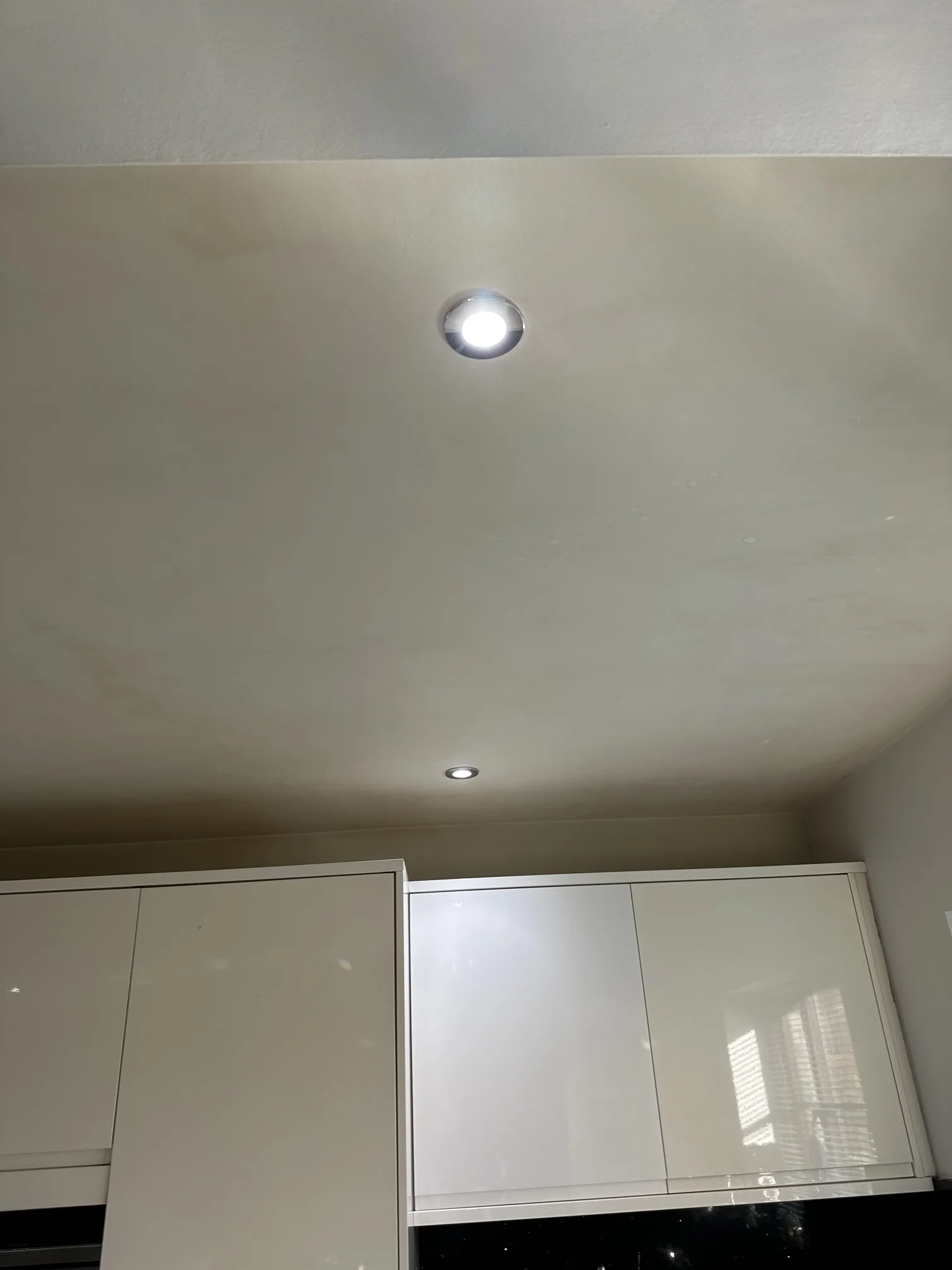
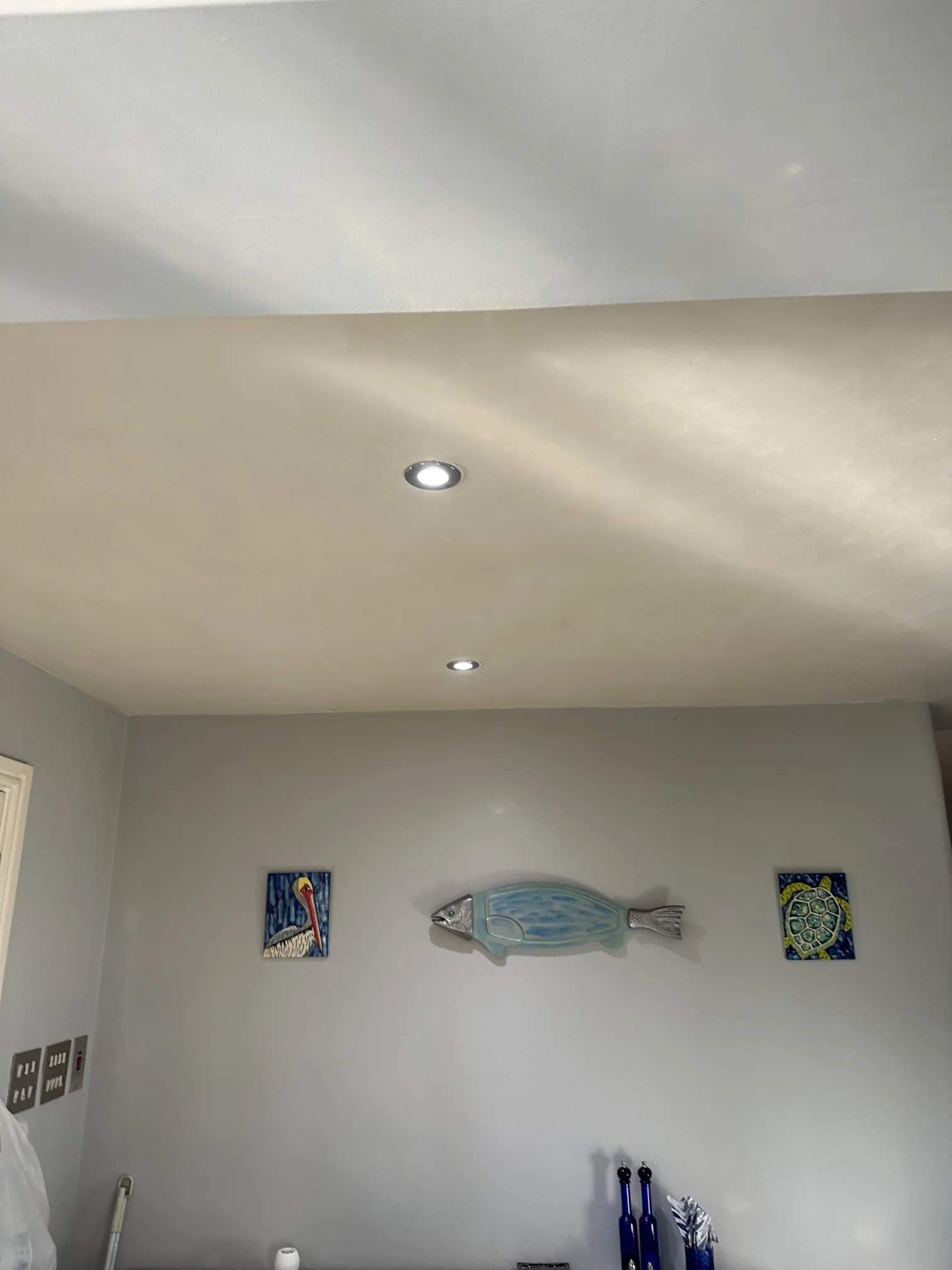
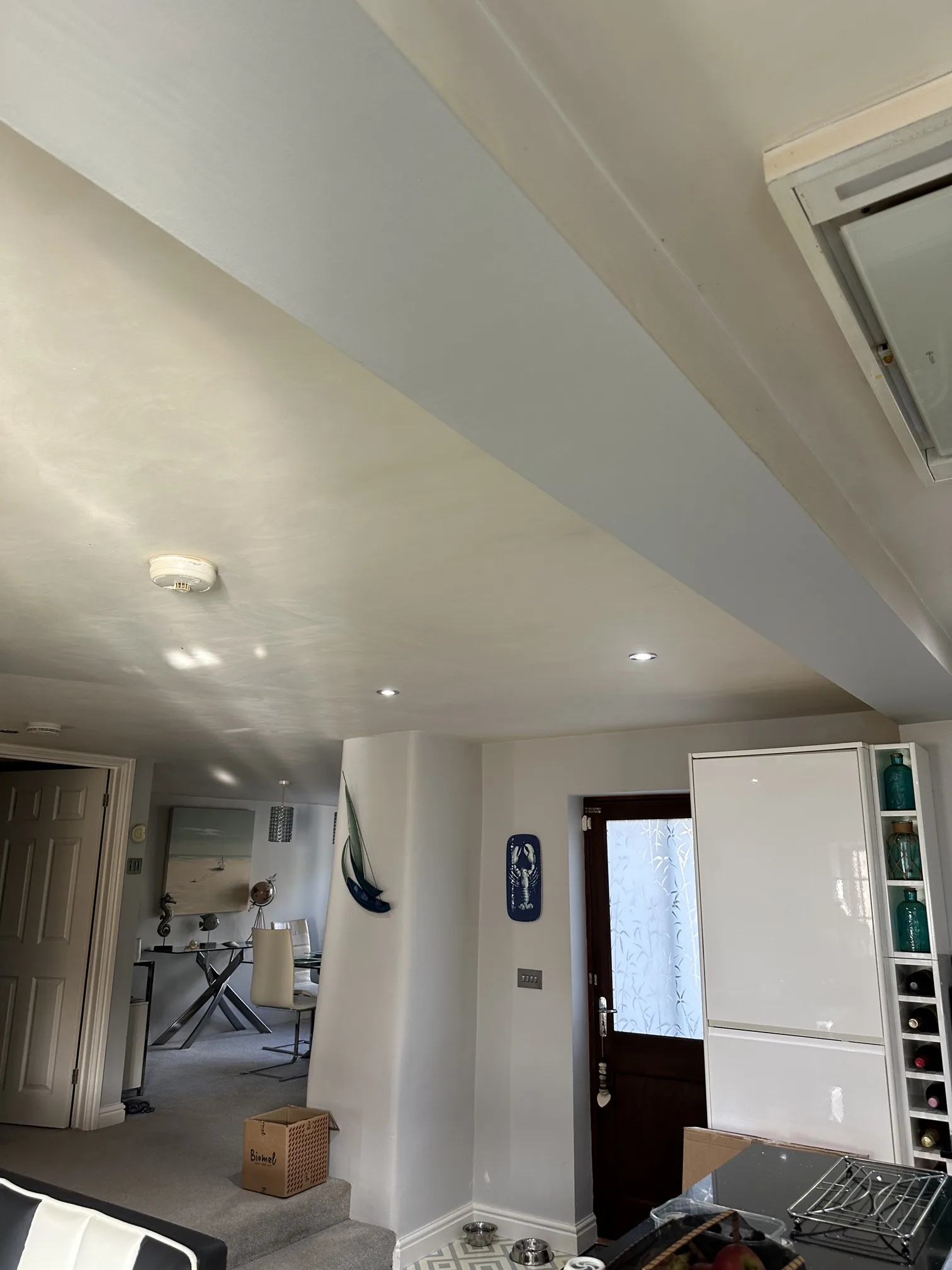
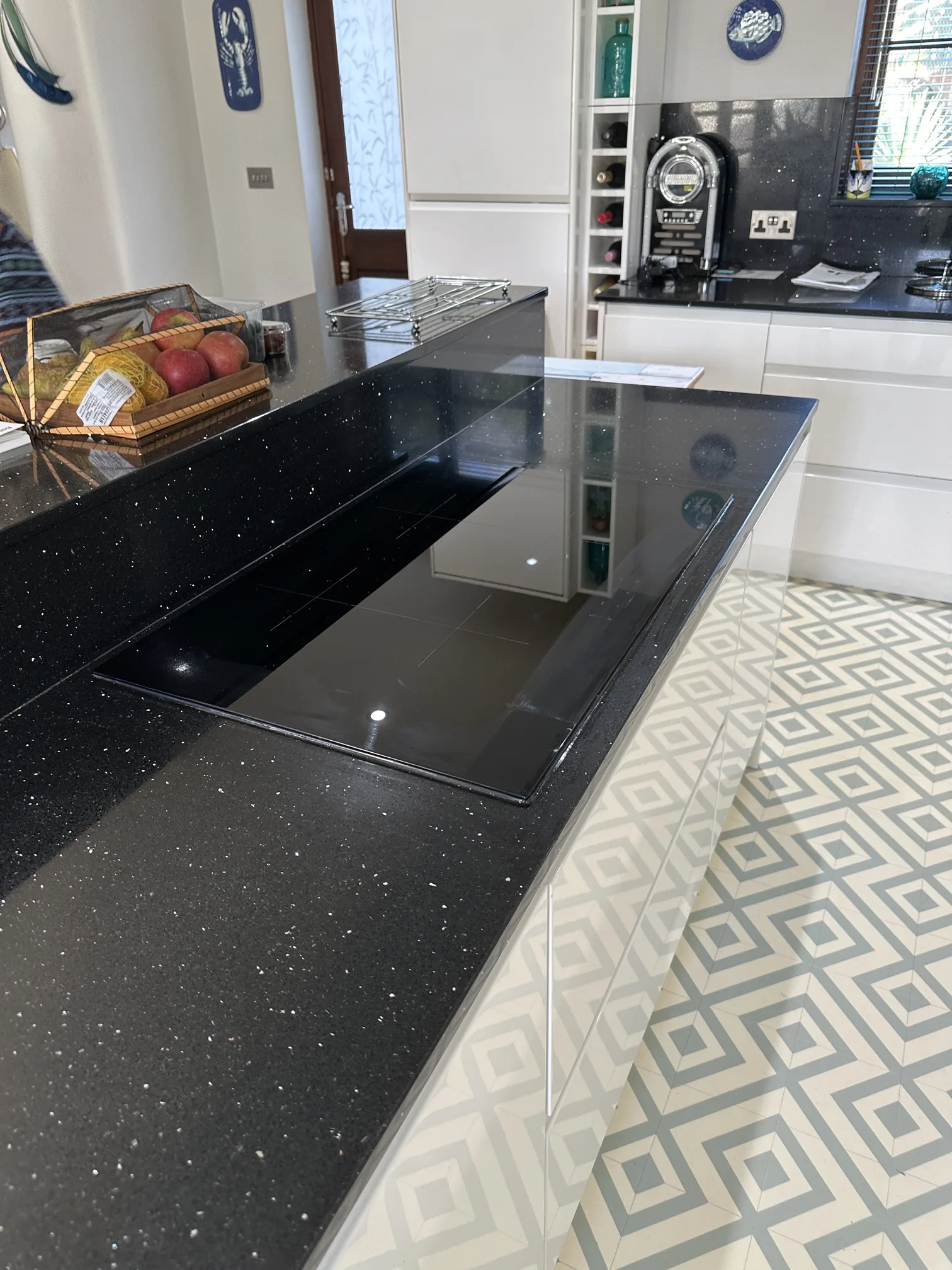
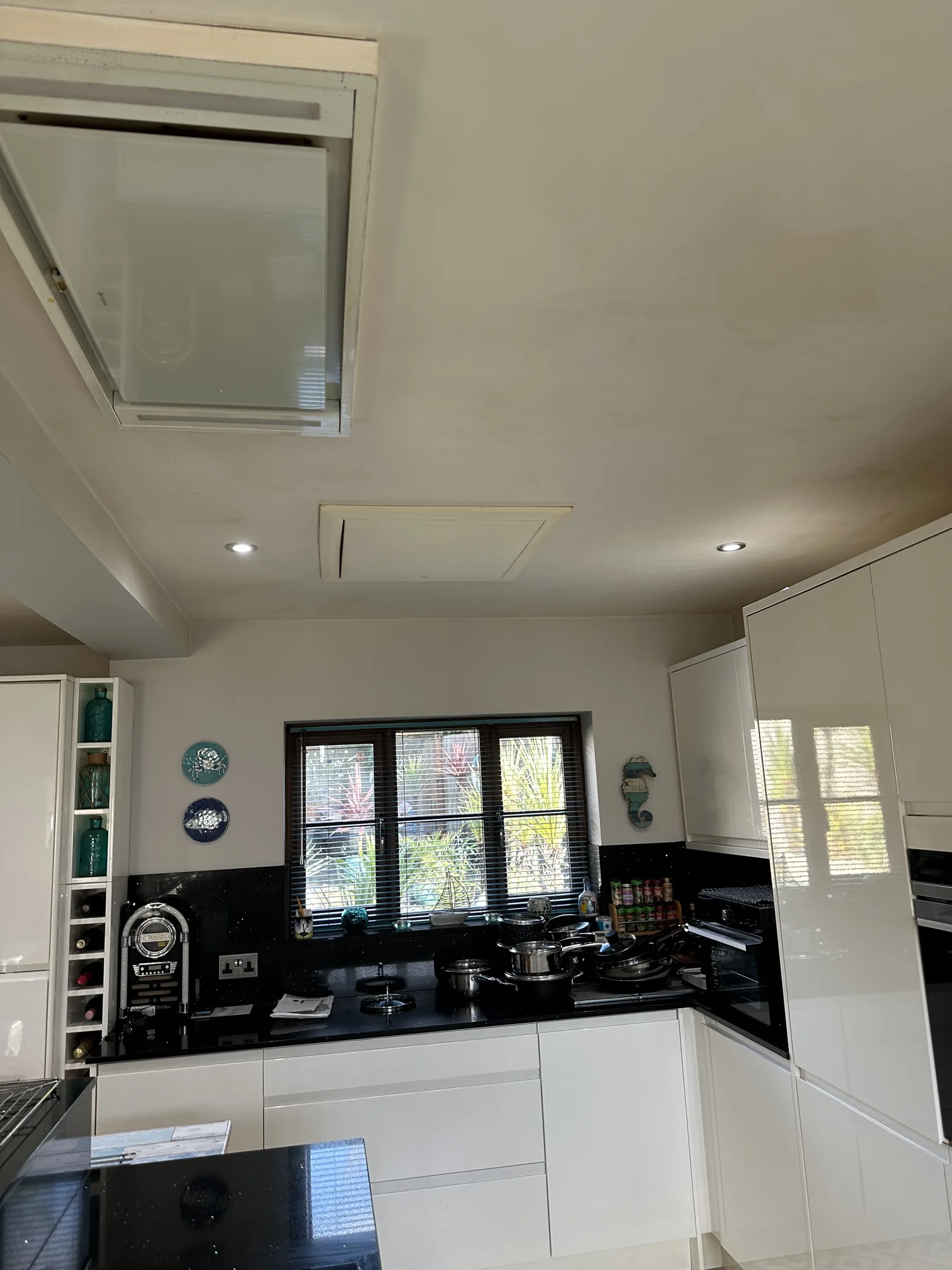
Complete kitchen lighting transformation and electric hob installation for a Lostwithiel property, featuring modern LED downlights with stainless steel fittings and careful attention to existing circuit integration.
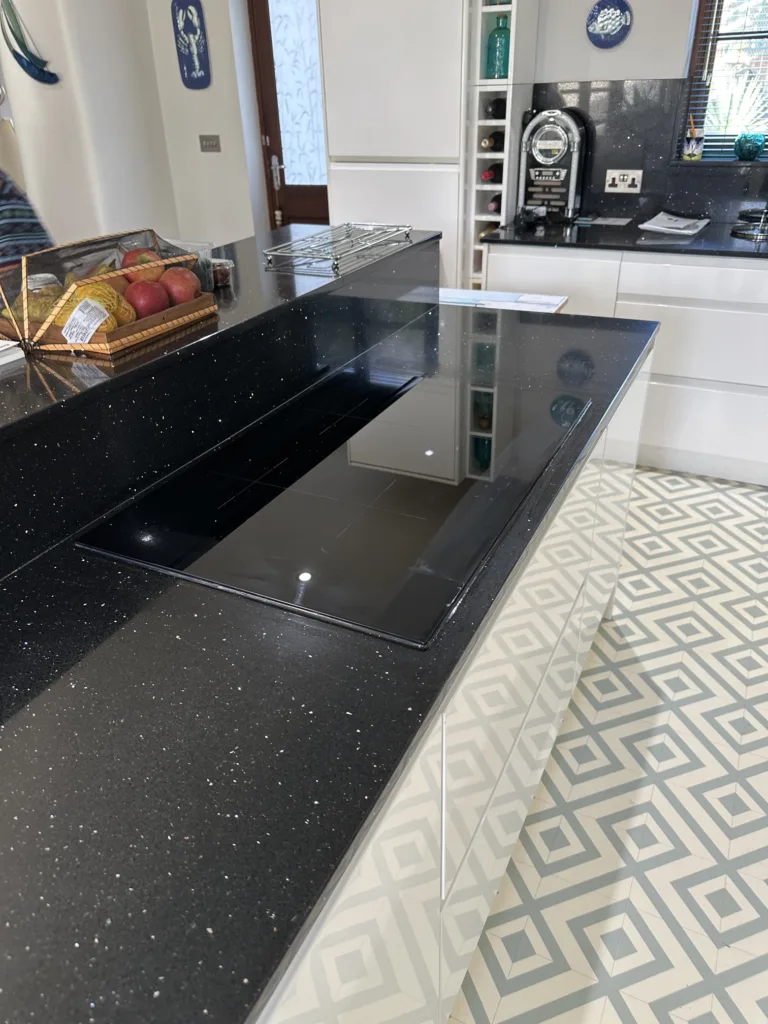
Working in a Lostwithiel home, we tackled a combination of lighting upgrades and appliance installation that brought both practical improvements and a fresh aesthetic to the property’s kitchen and living spaces. The homeowners wanted to modernise their kitchen lighting whilst also installing a new electric hob they’d chosen themselves, which meant coordinating different elements of electrical work across the property.
The kitchen lighting was showing its age, and the existing downlights weren’t providing the kind of brightness or finish the homeowners were after. They’d decided on daylight white LEDs with stainless steel bezels, which would give the space a clean, contemporary look whilst dramatically improving visibility for food preparation and cooking. We removed the eight old downlights and fitted the new 4000k LED units in their place, taking care to connect everything to the existing lighting circuit. Before starting, we’d checked the circuit wiring to confirm it was in good condition and could support the new fixtures without any issues.
The LED units offer a significant improvement over older lighting technology. They run cooler, last considerably longer, and consume far less energy whilst producing better quality light. The 4000k colour temperature sits in that sweet spot between warm and cool white, giving a bright, neutral light that works well in kitchens where you need good visibility. The stainless steel bezels complement modern kitchen fittings and appliances, creating a cohesive look throughout the space.
Installing the client-supplied hob required a different approach. When homeowners purchase their own appliances, we need to work with whatever they’ve chosen whilst making sure the installation is done safely and properly. The first task was preparing the worktop opening to accept the new unit. We installed timber batten supports where needed, which provide a stable platform for the hob to sit on and prevent any stress on the worktop material itself. This kind of preparation work isn’t always visible once everything’s finished, but it makes all the difference to how securely the appliance sits and how long the installation lasts.
The hob needed connecting to the property’s dedicated cooker circuit. We ran heat-resistant 6mm cabling from the circuit to the appliance, which handles the electrical load safely and meets the requirements for this type of installation. Heat-resistant cable is specified for these applications because of the temperatures involved with cooking appliances – standard cable insulation can degrade over time when exposed to heat, but the proper grade maintains its integrity and keeps the installation safe.
Whilst we were working through the kitchen, we had seven spare downlights left over from the replacement work. The homeowners mentioned they’d been having trouble with one of the downlights in their living room, so rather than letting those serviceable kitchen units go to waste, we used one to replace the failed living room light. The remaining units were left with the homeowners as spares. This gives them replacements on hand if any other lights develop problems down the line, which is particularly useful since matching fittings can be hard to source years after installation.
The living room repair was straightforward since we were working with like-for-like fittings. We removed the faulty unit and installed the replacement, connecting it into the existing circuit. Having spare lights available means the homeowners can maintain consistency across their living spaces if they need to replace another unit in the future, rather than ending up with mismatched fittings.
Projects like this show how electrical work often involves balancing different types of tasks. The lighting upgrade required precision in fitting and careful circuit work to integrate the new LEDs properly. The hob installation meant preparing the physical mounting point correctly and running appropriate cabling to handle the appliance’s power requirements. The living room repair brought everything together by making practical use of the removed kitchen lights.
Working in Lostwithiel, we see a mix of property types and ages, each with their own electrical considerations. Older properties might have circuits that need upgrading before new work can be done, whilst newer homes typically have more modern wiring that’s straightforward to work with. This particular installation worked with the existing circuits, which were in good condition and suitable for the new fixtures and appliances.
The kitchen transformation makes a real difference to how the space functions day to day. Better lighting changes how easy it is to work in the kitchen, from checking if food’s cooked properly to reading recipe instructions or simply moving around the space safely. The LED technology means lower running costs and far less frequent bulb changes compared to older lighting. The stainless steel finish adds that professional look that ties in with modern kitchen designs.
For the hob installation, having the support battens properly positioned matters for longevity. Without adequate support, worktops can flex or crack over time, and the appliance itself can become unstable. Taking the time to get this foundation right means the hob will sit properly for years to come. The heat-resistant cabling similarly provides that long-term reliability – it’s specified for these applications precisely because it maintains safe operation under the conditions these appliances create.
We always clarify with clients when they’re supplying their own equipment that whilst we’ll install it properly and connect it safely, any issues with the appliance itself or questions about its warranty need to go back to whoever supplied it. This keeps expectations clear and makes sure everyone knows who to contact if problems arise. When we supply equipment ourselves, we can stand behind both the installation and the hardware, but with client-supplied items, our responsibility covers the installation work whilst the appliance warranty and support comes from wherever they purchased it.
The project wrapped up with everything tested and working properly. The kitchen lights provided the bright, even illumination the homeowners wanted, the hob was securely mounted and safely connected, and the living room repair sorted out the lighting issue in that space. Having those spare downlights on hand gives peace of mind for future maintenance needs.
These kinds of combined projects make efficient use of a single visit whilst addressing multiple improvements around the property. Rather than having electricians come back separately for different jobs, homeowners can get various works done together, which saves time and typically reduces overall costs compared to multiple callouts. Whether it’s lighting upgrades, appliance installations, or repair work, combining tasks when possible makes practical sense.