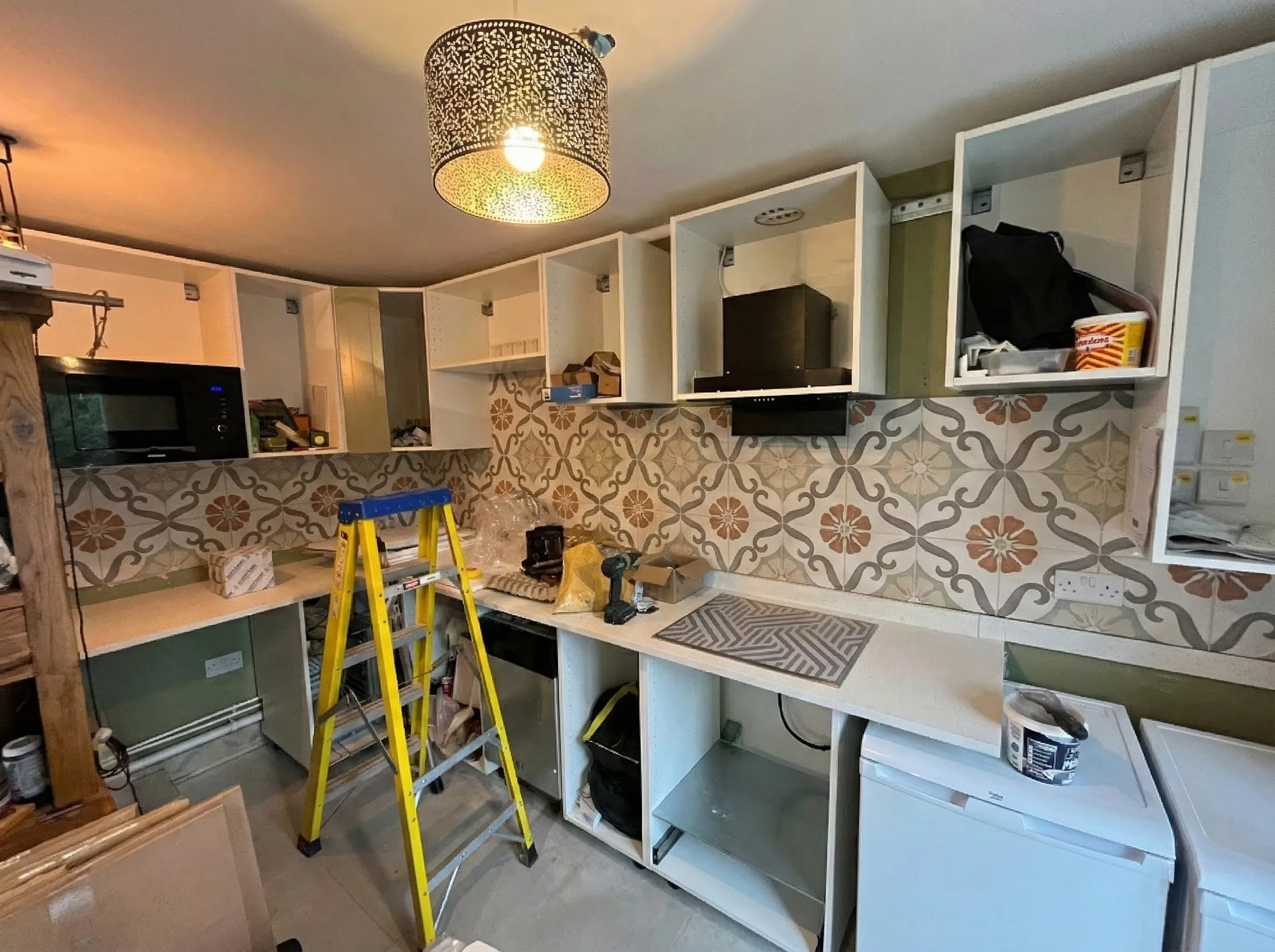
Complete second fix electrical installation for a reconfigured kitchen in Shortlanesend, including extended socket circuits, appliance outlets with dedicated isolators, and relocated cooker circuit to accommodate the new kitchen layout.
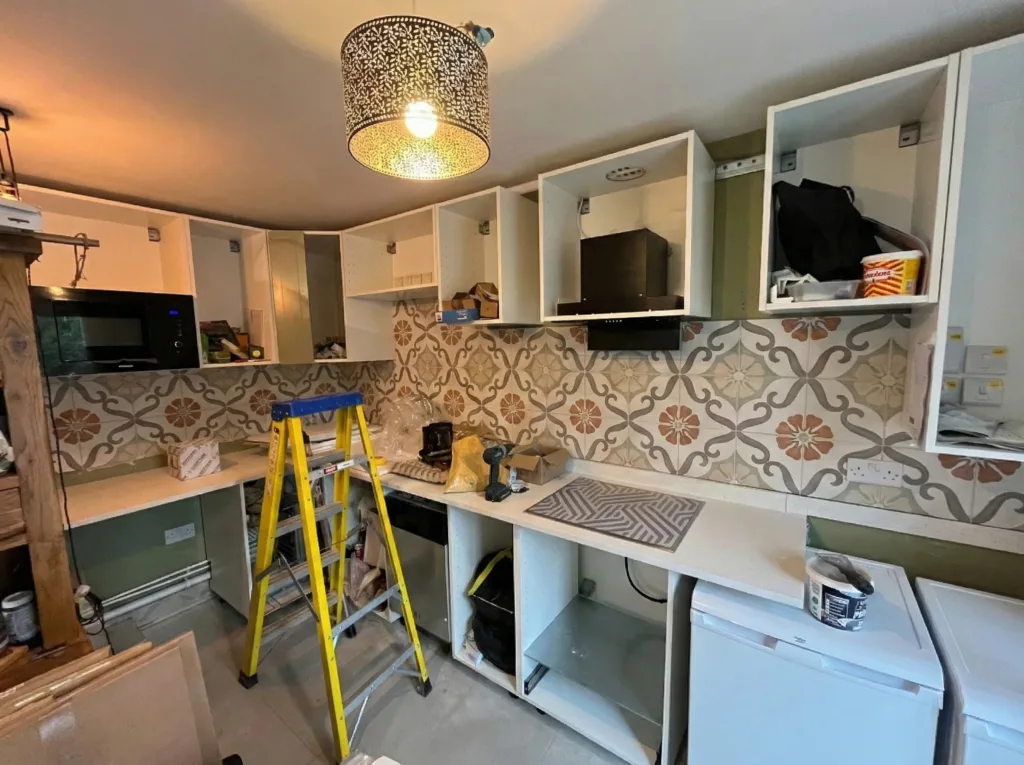
The kitchen is often described as the heart of any home, and getting the electrical installation right during a renovation makes all the difference between a space that works smoothly and one that causes frustration down the line. This particular job in Shortlanesend involved completing the second fix electrics for a kitchen that had been completely reconfigured, which meant extending existing circuits and creating new outlets to match the fresh layout.
The property owners had decided to reorganise their kitchen space entirely, moving appliances and work surfaces to create a more functional cooking and dining area. What this meant from an electrical perspective was that the original power outlets were no longer where they needed to be. The existing dining area socket circuit required extension to serve the reconfigured kitchen properly, and the cooker circuit needed relocating to accommodate the new position of the hob and oven.
Starting with the socket circuit, we extended the existing dining area ring to supply the new kitchen layout with adequate power points. Three double socket outlets were installed at counter-top level, positioned where they’d be most useful for everyday appliances like kettles, toasters, and food processors. Getting these heights and spacings right matters more than people sometimes realise – too high and they’re awkward to reach, too low and you’re bending down constantly.
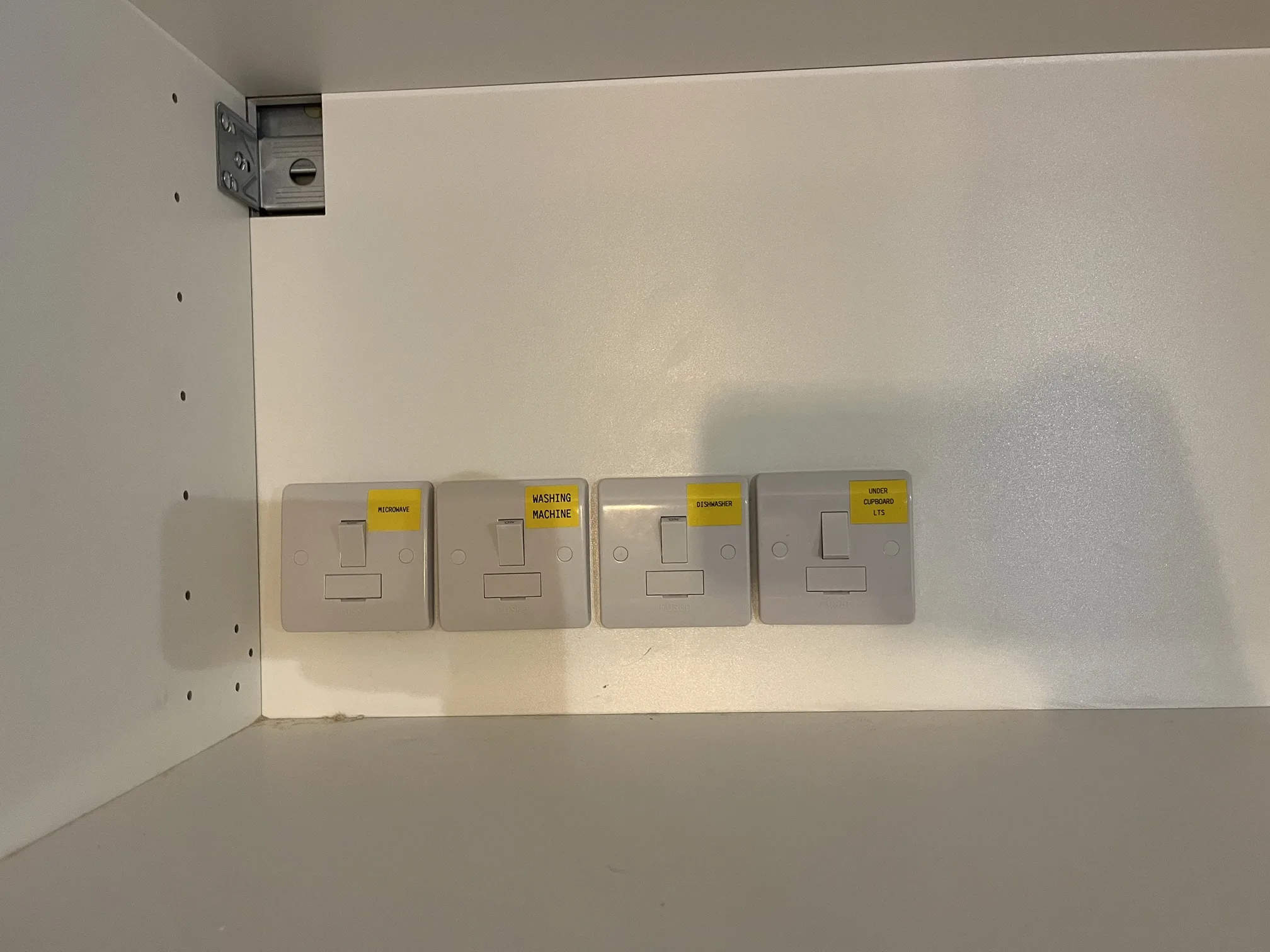
Beyond the general counter-top sockets, this kitchen needed dedicated outlets for quite a few built-in appliances. The fridge, freezer, dishwasher, washing machine, recirculating extractor fan, and integrated microwave all required their own power supplies. Rather than having these appliances plugged into standard sockets where they might accidentally get switched off or unplugged, we installed proper appliance outlets with fused connection units.
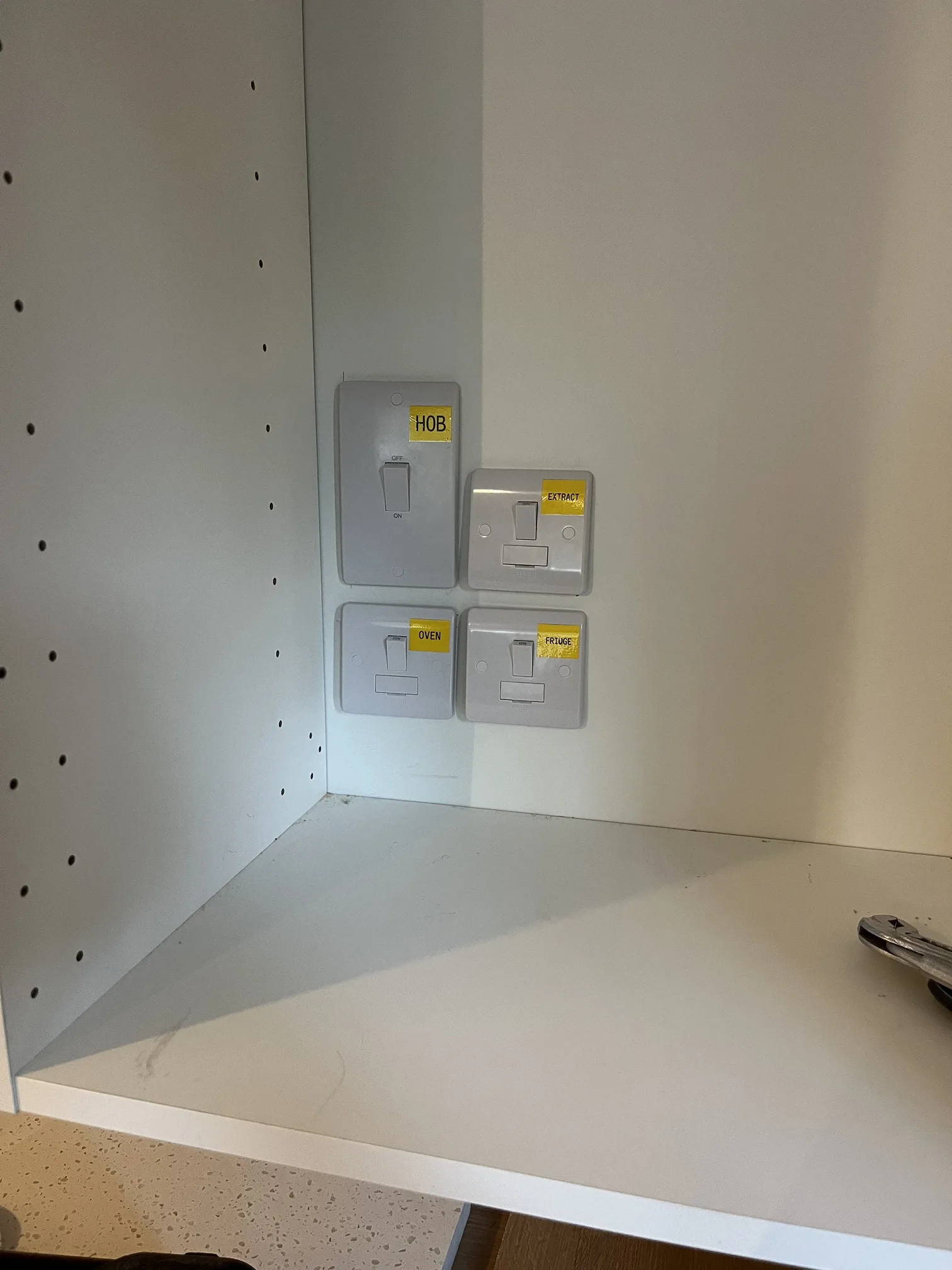
The isolator switches for these appliances were grouped together in the cupboard above the microwave position. This approach keeps them accessible without cluttering up the visible areas of the kitchen. If you ever need to isolate an appliance for maintenance or if there’s a fault, you can simply open that cupboard and switch off the relevant isolator. Each switch was labelled clearly – microwave, washing machine, dishwasher, extractor, fridge, and freezer – so there’s no confusion about which controls what.
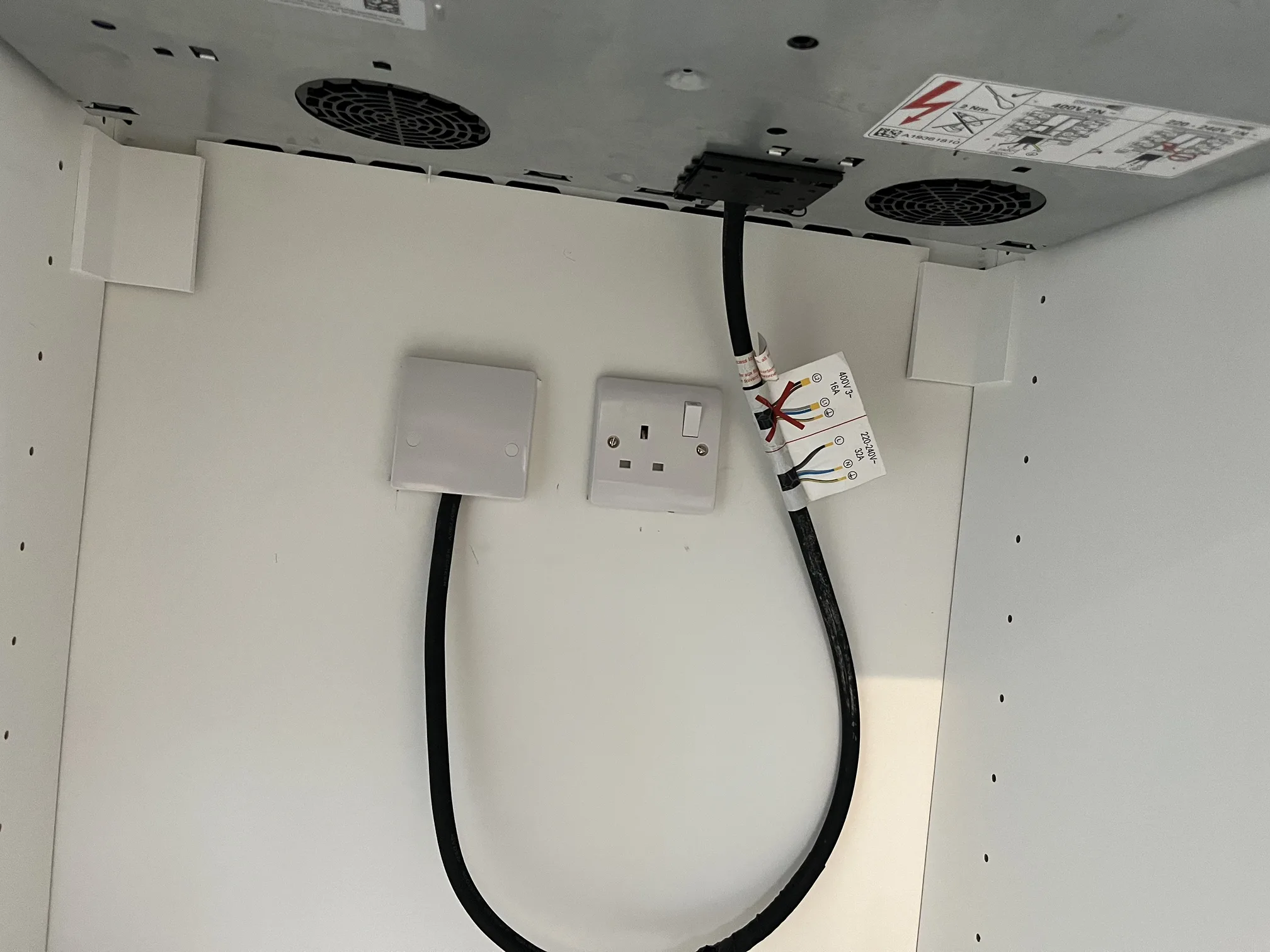
The cooker circuit presented its own requirements. The hob and oven had been relocated as part of the kitchen redesign, which meant we needed to extend the existing cooker circuit to reach the new positions. We installed a dual cooker switch at counter-top height, positioned close to where the hob would sit. This placement makes practical sense because you can easily isolate the cooker when needed without having to reach up high or fumble around behind units.
Working on a second fix means the kitchen units were already in place, which brings its own challenges compared to first fix work when you’ve got open walls and easy cable routes. We had to work around the installed cabinetry, sometimes requiring small access holes through plasterboard to route cables properly. Any holes needed for cable routing were patched and given an initial fill, leaving them ready for fine filling, sanding, and final decoration. The homeowners were handling the decorative finishes themselves, so we made sure everything was left in good condition for them to complete.
All the socket outlets and switches installed were standard white plastic fittings, which is what most people opt for in rental properties or homes where they want a clean, neutral finish. The quote had mentioned that alternative materials or colours could be fitted if requested, but the clients were happy with the standard specification.
One thing worth noting about kitchen electrical work is that it needs to be done in stages when you’re working as part of a larger renovation. The first fix happens before plastering and before kitchen units go in – that’s when you run all your cables and get everything positioned correctly behind the walls. The second fix, which this job was, happens after the kitchen units are installed but before final decoration. You’re fitting all the faceplates, making final connections, and doing the testing.
The work involved quite a bit of cable extension and circuit alteration, but the existing circuits were in good condition, which helped things progress smoothly. We were able to extend the dining area socket circuit without any concerns, and the hob and oven circuit extended to the new location without encountering any issues with the existing installation.
Getting the positioning right for everything mattered hugely here. The counter-top sockets needed to be at the right height for convenient access – typically around 100-150mm above the work surface. The cooker switch had to be within easy reach but not so close to the hob that it might get splashed during cooking. The appliance isolators needed to be accessible but didn’t need to be immediately visible since they’re not operated daily.
Kitchen electrical installations have become more complex over the years as we’ve added more built-in appliances. Twenty years ago, a kitchen might have had a cooker, a fridge, and maybe a washing machine. Now it’s common to have a fridge, a separate freezer, a dishwasher, a washing machine, an extractor fan, an integrated microwave, and possibly other appliances too. Each one needs its own properly protected circuit, and having individual isolators makes the whole setup safer and more maintainable.
The Shortlanesend property now has a kitchen electrical installation that matches its new layout perfectly. Every appliance has the power it needs, the counter-top sockets are positioned where they’ll actually get used, and everything can be safely isolated when required. The clients can move forward with their finishing touches knowing the electrical side is sorted and ready for many years of reliable service.
This sort of work – adapting existing electrical installations to match renovated spaces – forms a significant part of domestic electrical work. Houses get reconfigured, kitchens get modernised, and the electrics need updating to match. Done properly, with appropriate circuit extensions and well-positioned outlets, the result is a kitchen that’s both safe and genuinely practical to use every day.