Loft spaces tend to get overlooked when it comes to proper electrical provision. A single lamp holder dangling from a joist might do the job for a quick rummage, but when something goes wrong with it – or when the original fitting gets damaged during other work – it becomes clear just how much a poorly lit loft affects the usability of the whole space. This job in Bodmin was exactly that kind of situation. The existing loft lighting had been damaged and was no longer functioning correctly, and while the issue was being addressed, the bathroom extractor fan needed attention too.
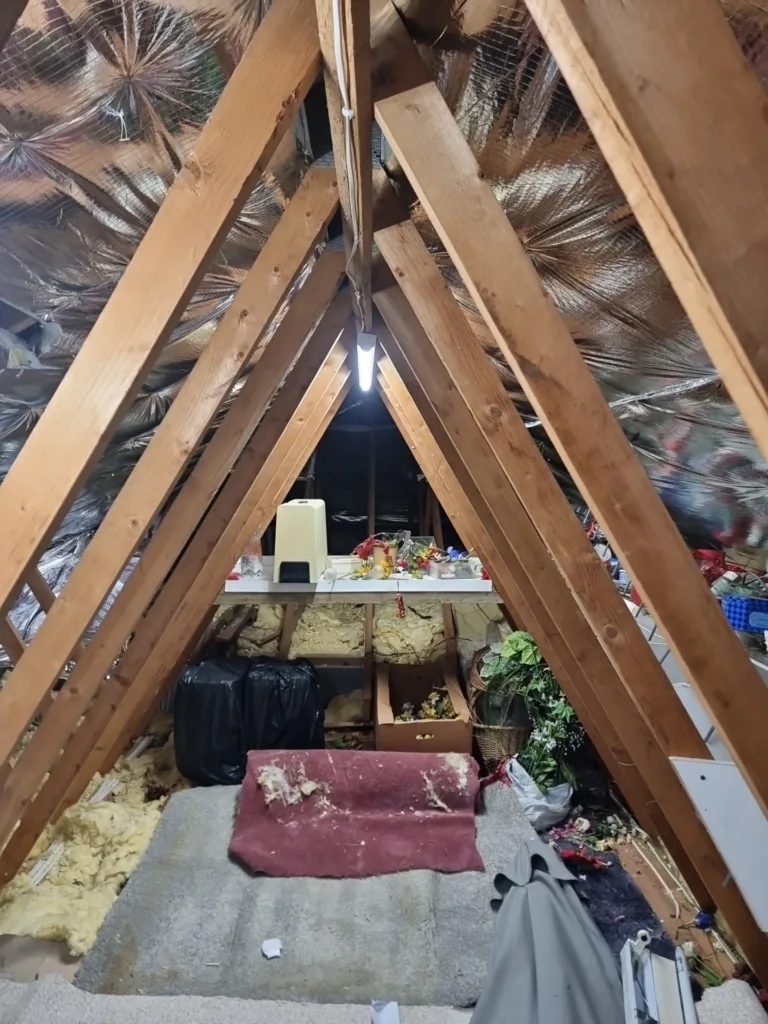
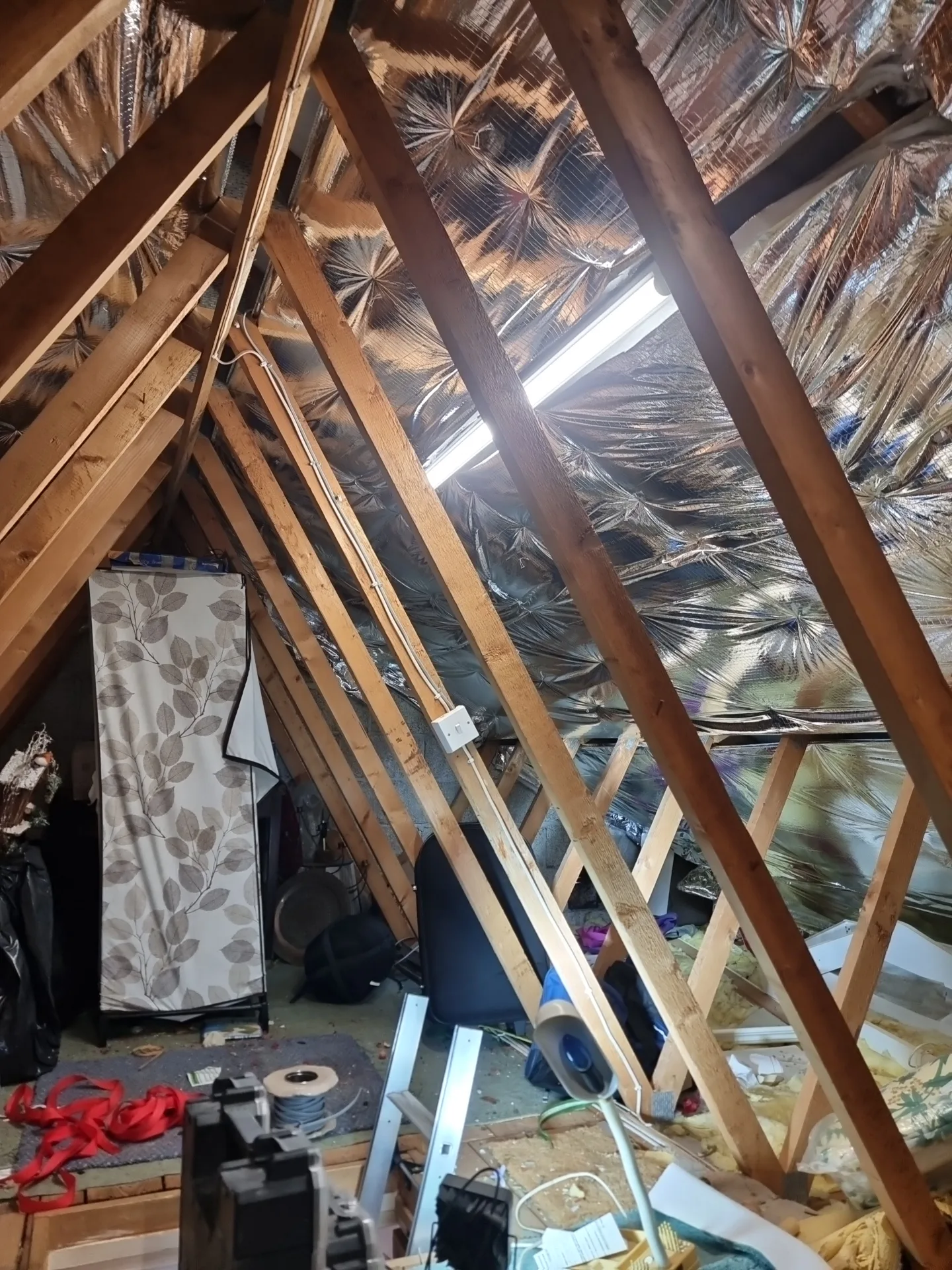
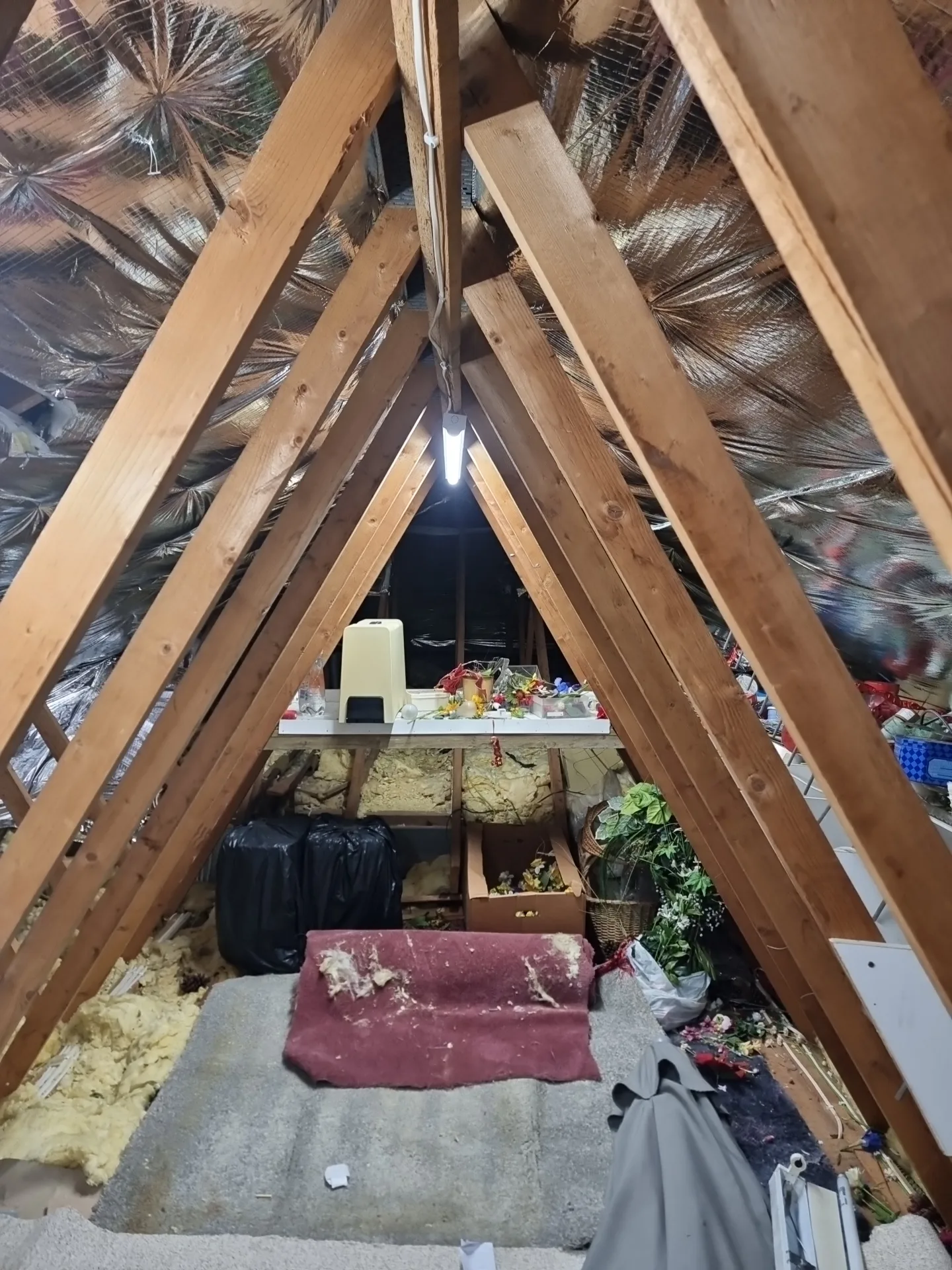
The loft lighting had suffered damage during boarding work carried out previously, leaving the existing setup unfit for use. Rather than simply like-for-like replacing what was there, the decision was made to install two 4ft LED batten fittings – one at each accessible end of the loft space. That positioning makes a real difference. A single central light source in a loft tends to throw everything beyond the apex into shadow, particularly in a space with a steep pitch. By positioning a fitting at either end, the whole loft floor area receives far more even coverage, which matters when you’re moving around in there, accessing stored items, or doing any kind of work.
LED battens are well suited to loft environments. They run cool, draw considerably less power than older fluorescent or incandescent alternatives, and they’re robust enough to handle the temperature swings that loft spaces go through – cold in winter, potentially very warm in summer. The long, narrow form factor also works well against the angle of the rafters, sitting flush and out of the way rather than projecting into the headspace.
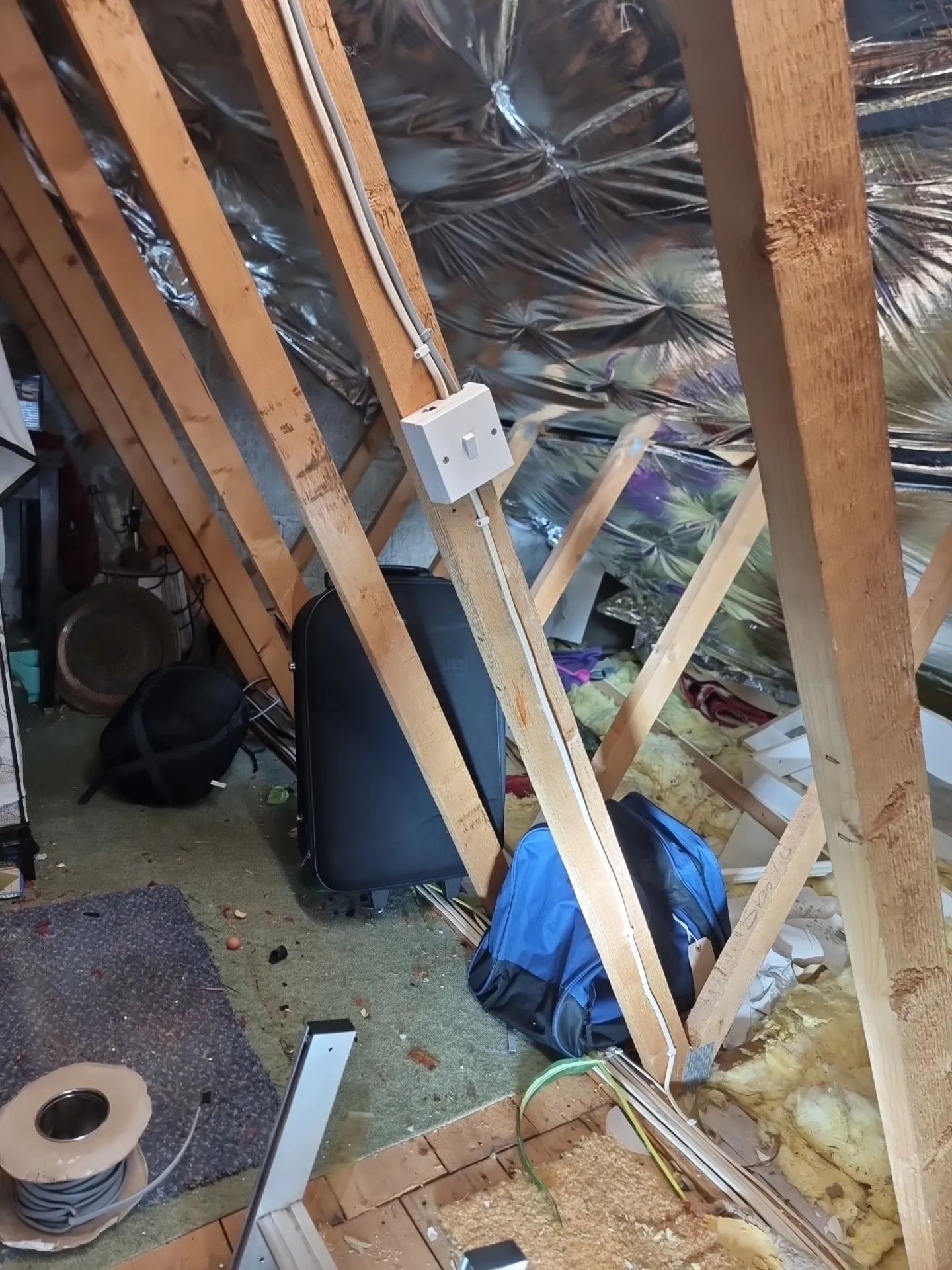
As part of the same scope of work, the existing local light switch was replaced. When wiring or a switch unit has been disturbed or is showing signs of wear, replacing it at the same time as associated work is the sensible approach. It keeps everything consistent and avoids the risk of an aging component failing shortly after new fittings have been installed. The new switch was wired to control the two batten lights, giving clean and reliable operation from a single point.
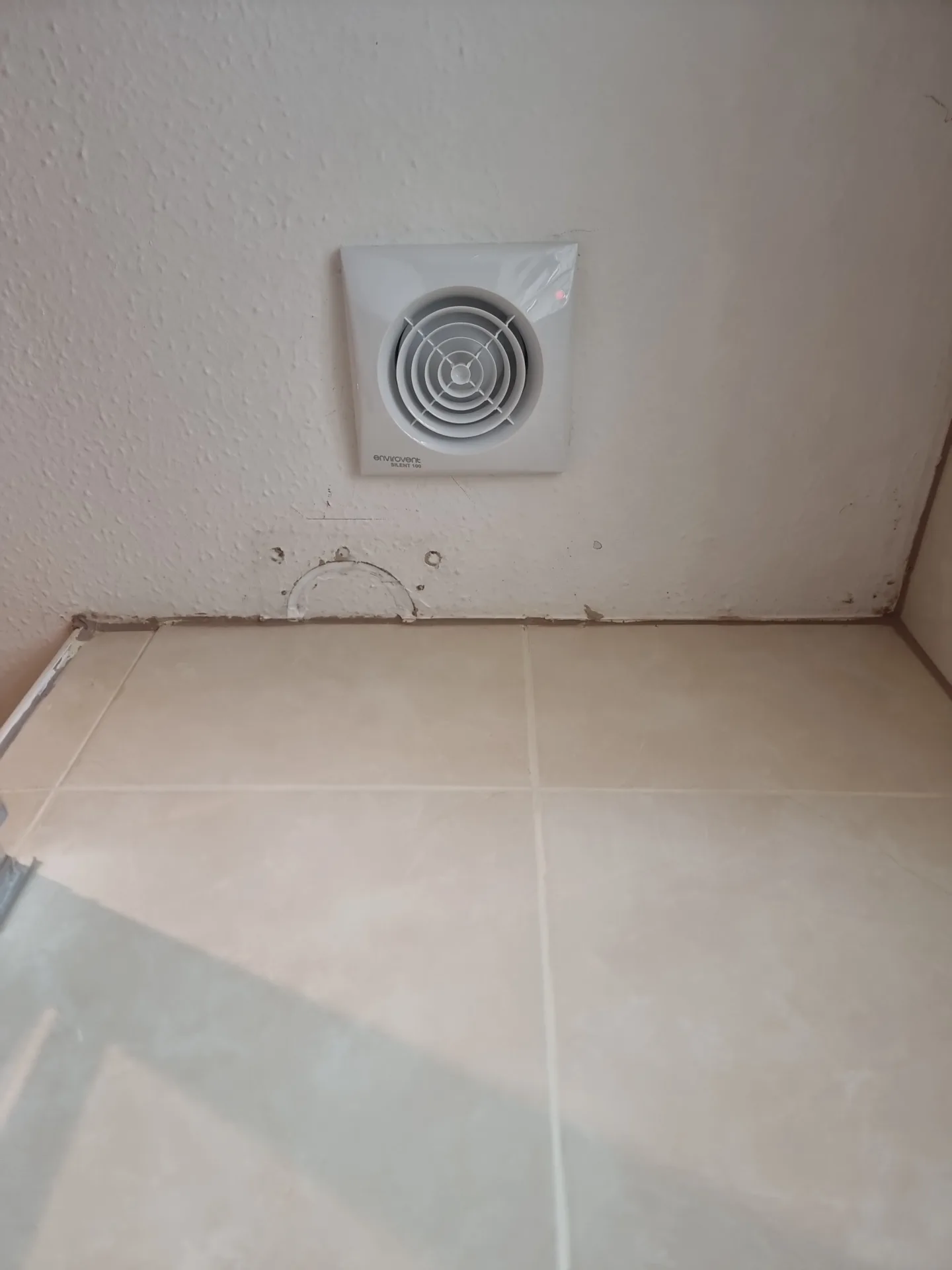
The bathroom extractor fan replacement was a separate but equally straightforward piece of work. The existing 4″ unit was removed and a new fan fitted in the same position, wired to operate in conjunction with the bathroom lighting circuit. This is a common and practical arrangement – the fan runs whenever the light is on and, with a timer overrun built in, continues to run for a set period after the light is switched off. That overrun function is important. Moisture doesn’t clear the moment you leave the bathroom; without a timed overrun, condensation can linger and gradually cause problems with decoration, ceilings, and in some cases the fabric of the structure.
Before the new fan was fitted, the existing extraction ducting was cleared of internal debris. Ducting in older properties – or where a fan has been running for a long time without replacement – can accumulate dust, lint, and other material that restricts airflow. A fan working against blocked or partially obstructed ducting doesn’t move air efficiently, which defeats the purpose of having extraction in the first place and puts unnecessary strain on the motor. Clearing it out before commissioning the new unit means the fan operates as intended from day one and should have a longer service life as a result.
Power to the fan was maintained by terminating into the existing local wiring, keeping the installation tidy and avoiding unnecessary chasing or cable runs. The new unit incorporates the timer function within the fan itself, so no additional wiring modifications were needed to achieve the overrun capability.
Taken together, both elements of this Bodmin job are good examples of electrical work that improves day-to-day practicality without requiring major upheaval. The loft now has proper, functional lighting across the full accessible area rather than a compromised single point that left large portions in the dark. The bathroom has a working extractor with a functioning overrun, which addresses the moisture issue properly rather than leaving it to a unit that was past its best.
These kinds of jobs – rectification work, fan replacements, lighting upgrades in secondary spaces – are often the ones that make the biggest difference to how a property functions. They’re not glamorous, but getting them right matters, and doing them properly rather than cutting corners is what determines whether they need revisiting in a year or last the way they should.