More and more homeowners are making the switch to electric vehicles, and with that comes the question of how to charge at home without just relying on a three-pin plug. A three-pin socket will charge your car eventually, but it’s slow, it puts strain on a circuit that wasn’t designed for sustained high loads, and it isn’t the right long-term solution. A dedicated home charge point, fed from its own purpose-built consumer unit, is the proper way to do it – and that’s exactly what this Newquay property needed.
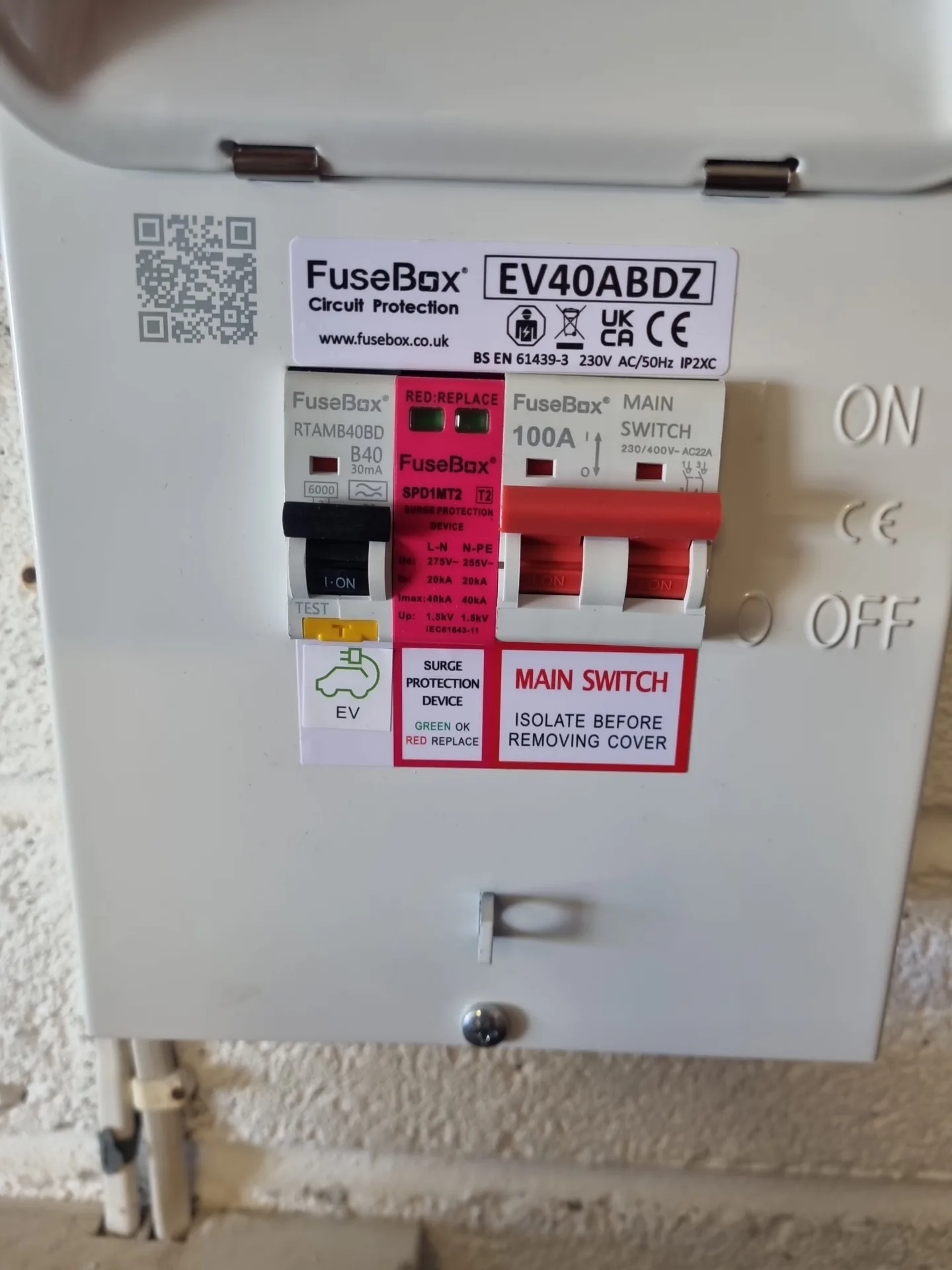
The job started with the electrical supply side of things. Rather than feed the new charge point from the existing consumer unit, we split the incoming meter tails using 100A Henley blocks to create a second supply, then installed a dedicated EV consumer unit to serve the charge point independently. This approach keeps the EV circuit separate from the rest of the property’s electrical distribution, which is the right way to manage the load. The consumer unit itself was fitted with a 40A bi-directional RCBO to protect the EV circuit, along with an integrated Type 2 surge protection device.
That SPD is worth explaining. The grid isn’t perfectly stable – voltage spikes and surges can occur, particularly during switching events on the network. A surge protection device sits between the incoming supply and the connected equipment, absorbing those transient overvoltages before they can damage anything. For an EV charger, which contains sensitive electronics and communicates over Wi-Fi, that protection matters. The consumer unit was installed in compliance with the 18th Edition of the Wiring Regulations (BS 7671), which has required surge protection on new domestic installations since the 2022 amendment came into force.
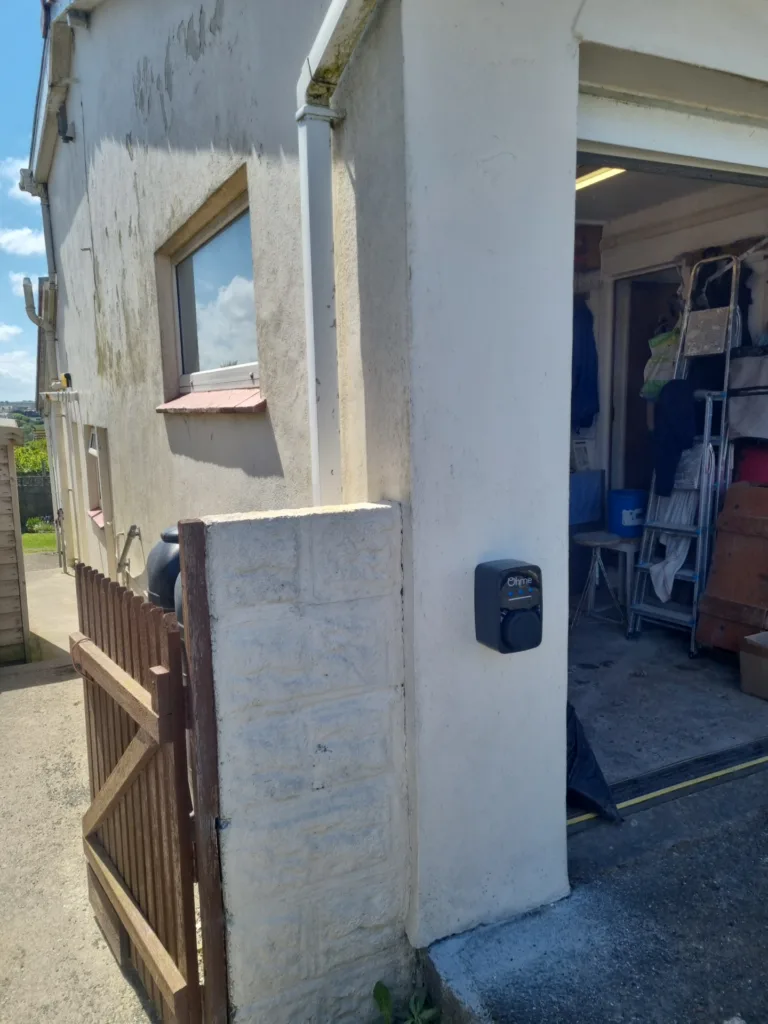
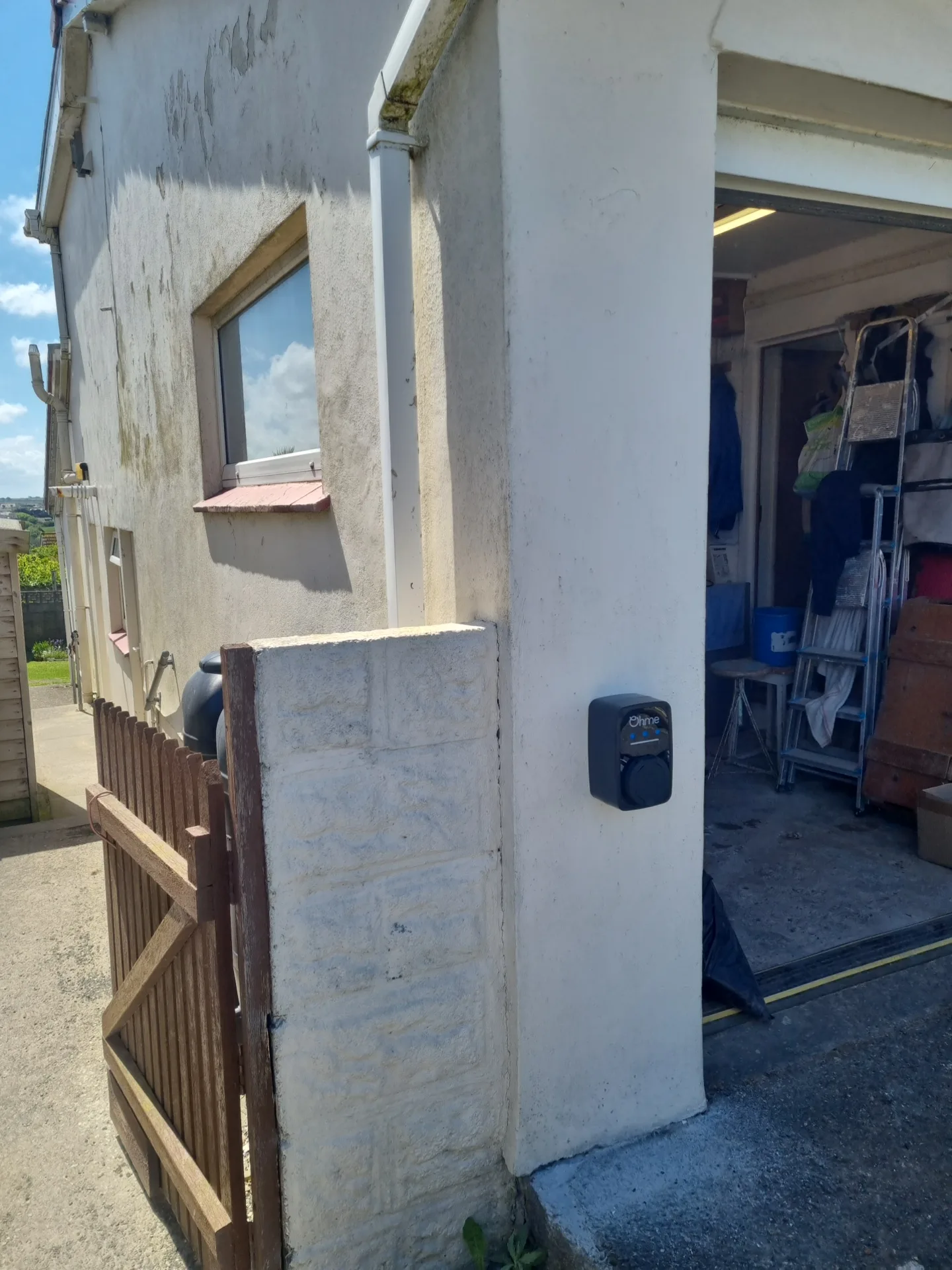
With the supply sorted, we ran 15 metres of 6mm NYY cable from the consumer unit out to the charge point location. NYY cable is a flexible PVC-insulated cable suited to this kind of fixed wiring installation. The cable was terminated and connected to the Ohme ePod charge point, which was mounted on the exterior garage pillar at the front of the property.
The Ohme ePod is a 7.4kW single-phase charge point, and this installation was the untethered version – meaning it has a socket outlet rather than a fixed cable. The owner supplies their own Type 2 cable, which plugs into both the charge point and the vehicle. There are pros and cons to both tethered and untethered setups. Untethered keeps things tidier when the car isn’t plugged in and works across different vehicle types without needing adapters, though you do need to have your cable with you. Tethered units are convenient for households where the same car always uses the charger – you just grab the cable that’s always there.
One of the features that makes the Ohme ePod a sensible choice for home use is its load management capability. The device monitors the property’s overall electrical consumption and adjusts the charging rate accordingly. If demand elsewhere in the house increases – say someone turns on an electric shower or the oven is on at full power – the charger will reduce its output to prevent the total load from tripping the main fuse. Once demand drops, charging resumes at the higher rate. This happens automatically and without any input from the user.
The charge point was fully commissioned on the day, paired with the Ohme app and confirmed as operating correctly. As part of the installation, an Electrical Installation Certificate was produced for the new circuit, and the work was notified to Building Control as required under Part P of the Building Regulations. Any electrical work carried out on a new circuit in a domestic property in England must either be carried out by a competent person registered with an approved scheme, or notified directly to the local authority – this installation was handled through the competent person route.
Alongside the main EV installation, the visit included a couple of additional jobs that needed doing around the property. A time clock for the immersion heater had previously been fitted but wasn’t yet connected to the immersion heater element itself. We made those connections and replaced the existing isolator switches as part of that work, bringing everything up to scratch. An immersion heater time clock is a simple but effective way to control when the hot water cylinder heats up – typically set to run during cheaper overnight electricity tariffs, which pairs well with having an EV on a smart tariff too.
The bathroom also got some attention. The existing light fitting was replaced with a new round white IP-rated bulkhead fitting, and the pull cord switch was swapped out at the same time. Bathroom lighting has to meet specific requirements around zones and ingress protection ratings – a standard light fitting isn’t suitable in certain positions within a bathroom, so the bulkhead fitting used here is rated for the environment.
All work across the job was tested and certificated as appropriate, leaving everything in good order.