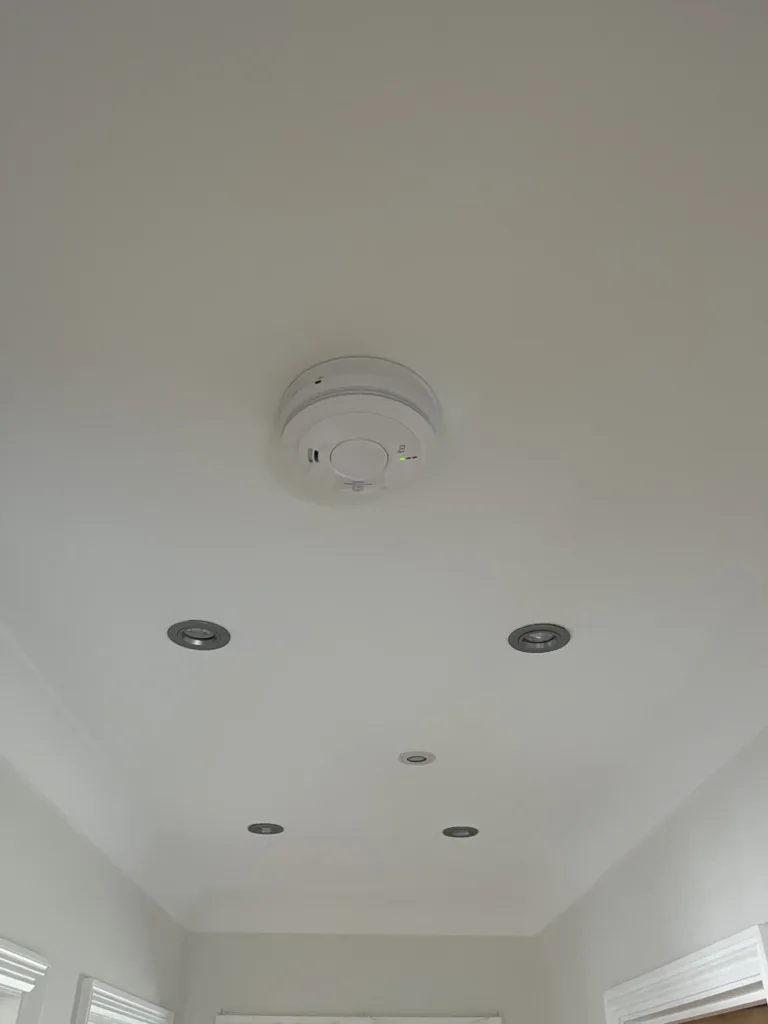
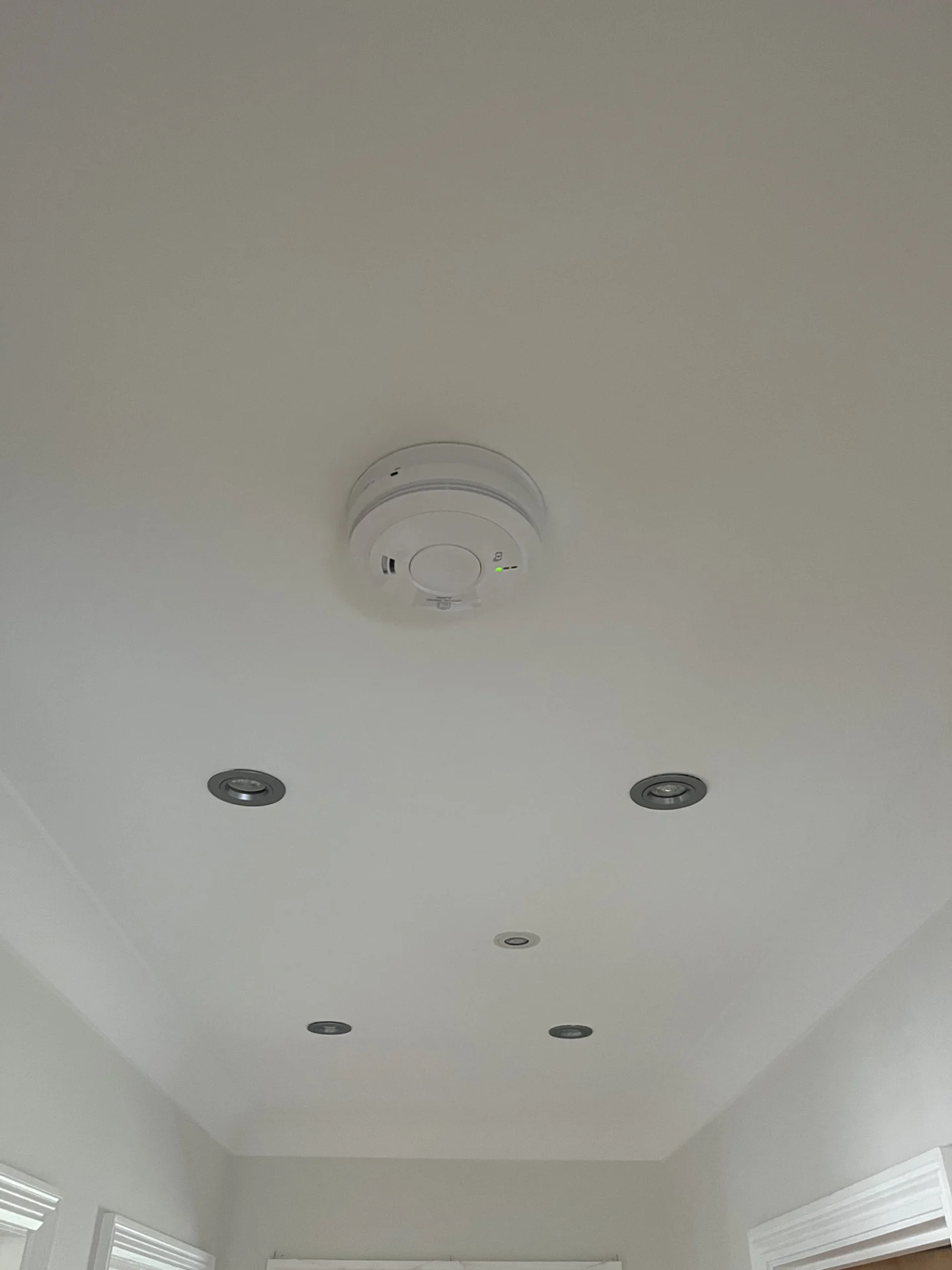
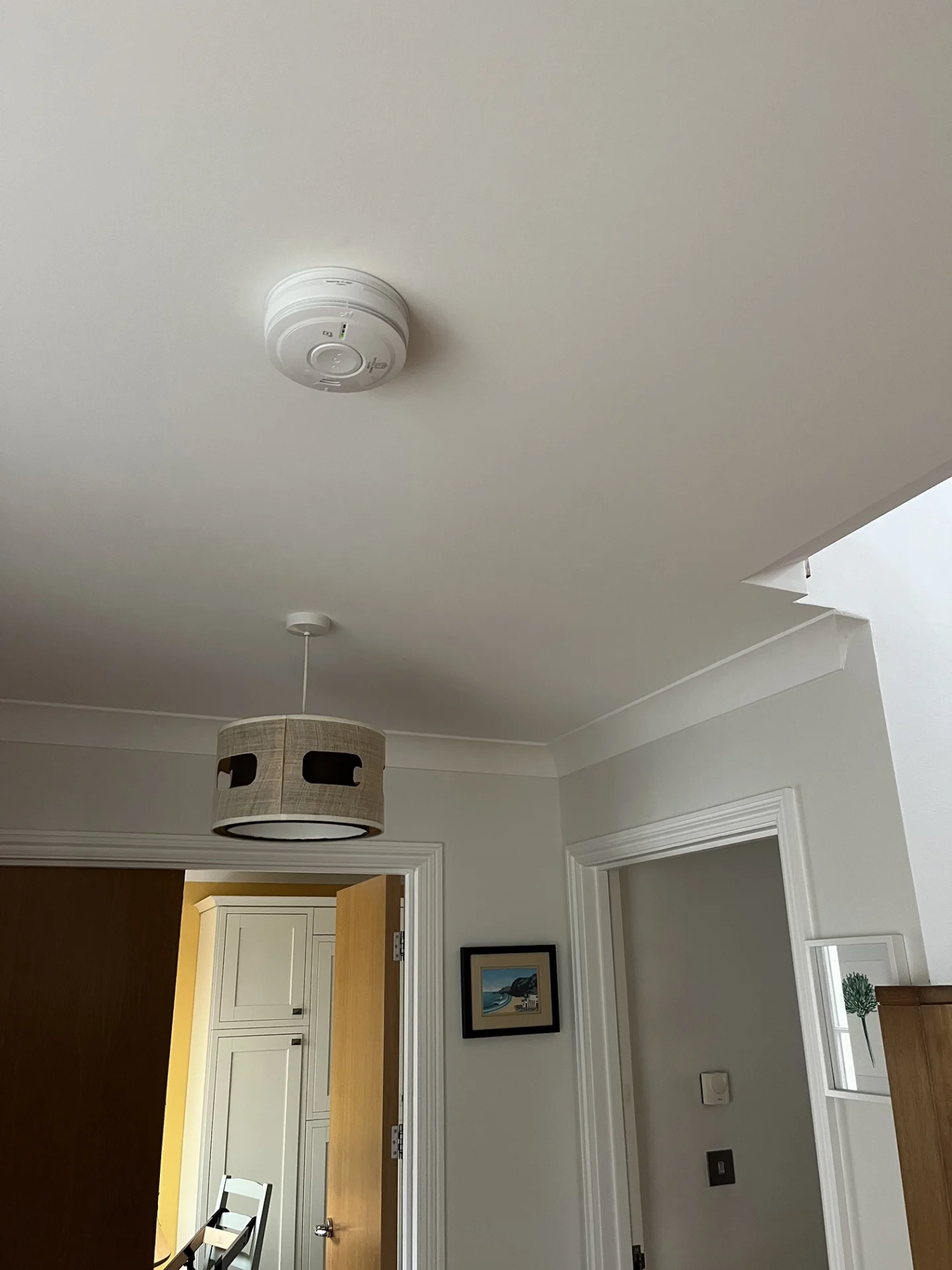
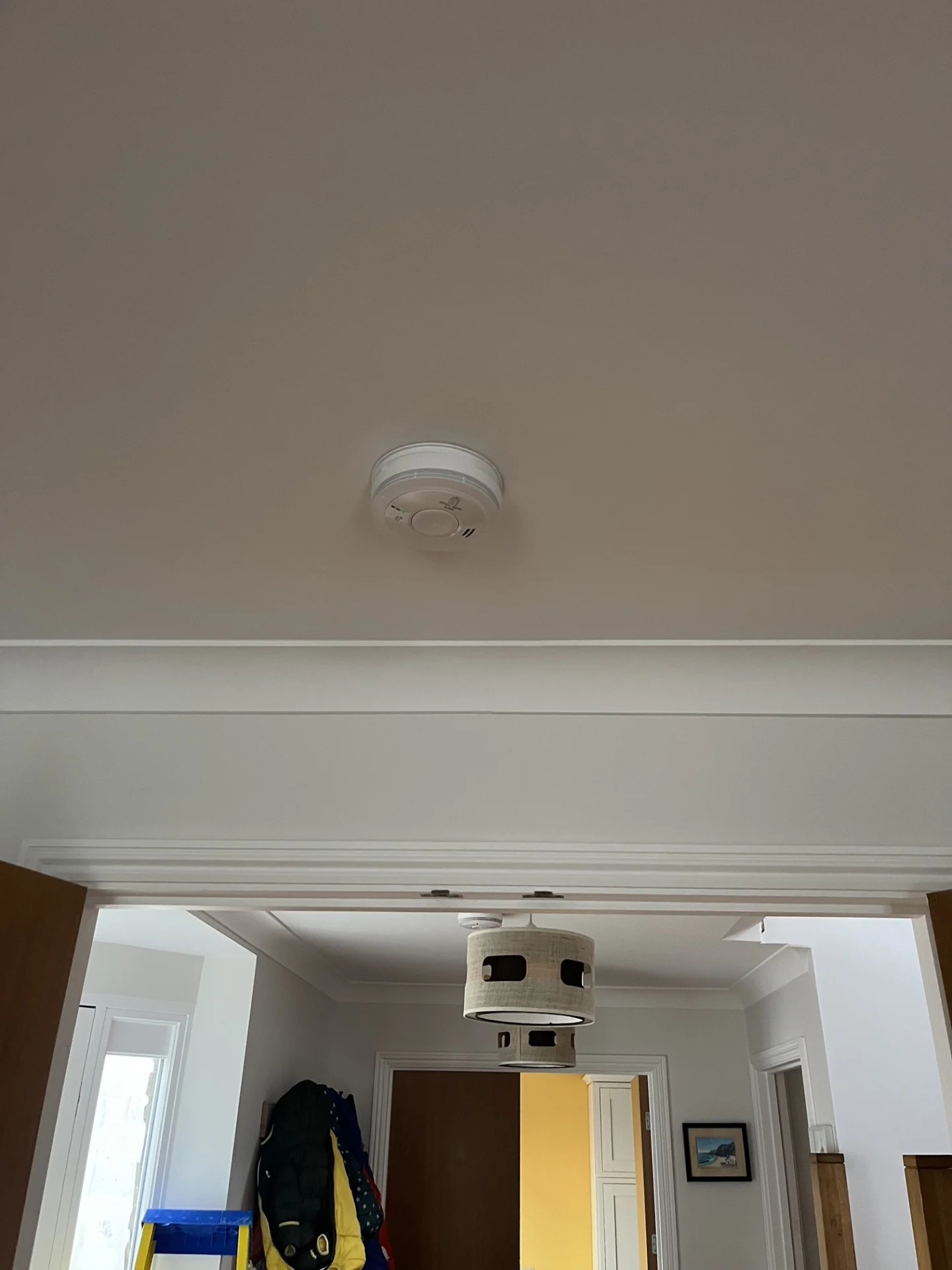
Alarm systems don’t last forever. The components inside deteriorate over time, and older units can become unreliable – either failing to respond when they should, or causing nuisance trips that lead homeowners to disconnect them altogether. Neither outcome is acceptable, which is why replacing ageing alarms rather than waiting for them to fail is the right call.
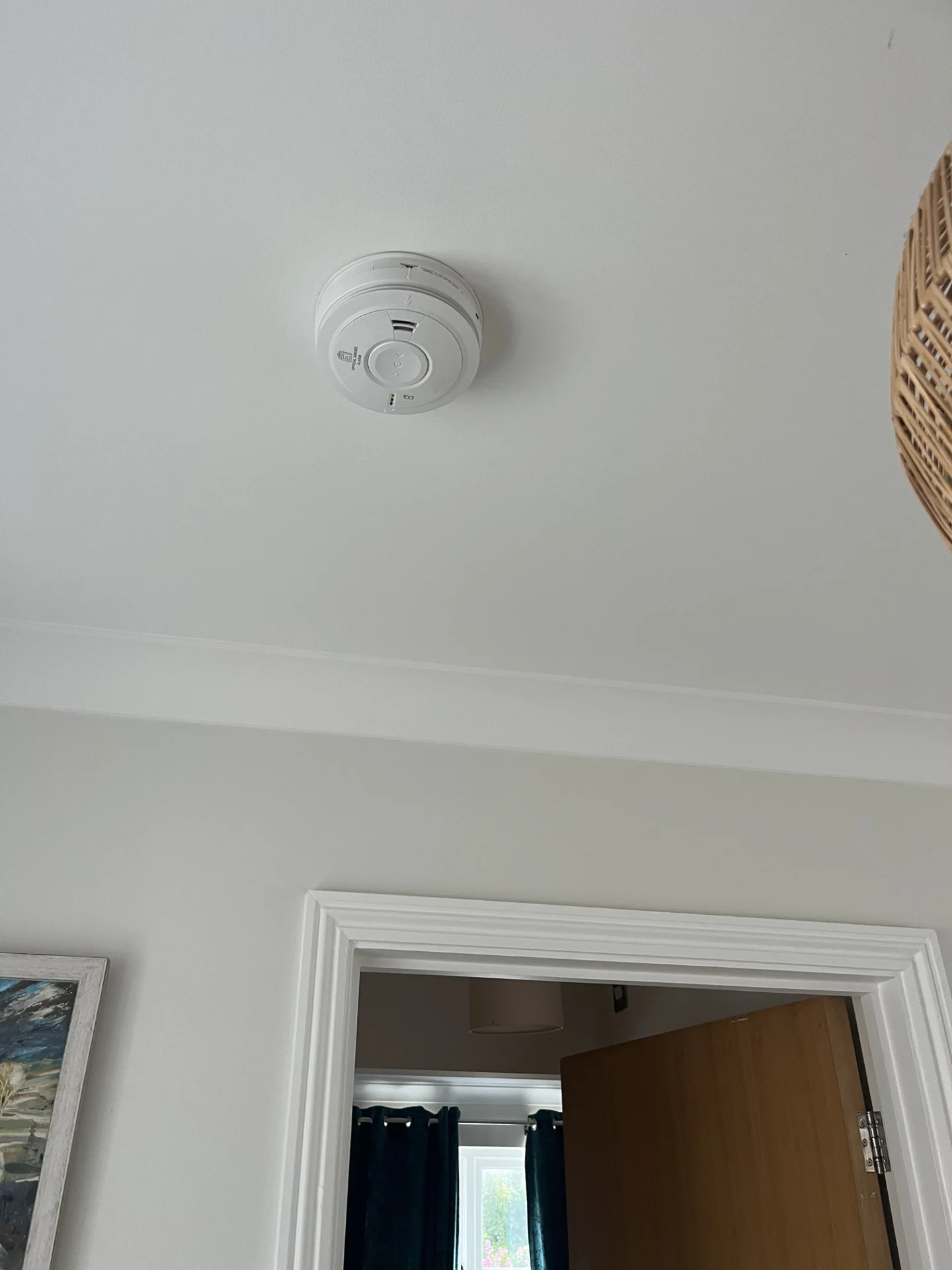
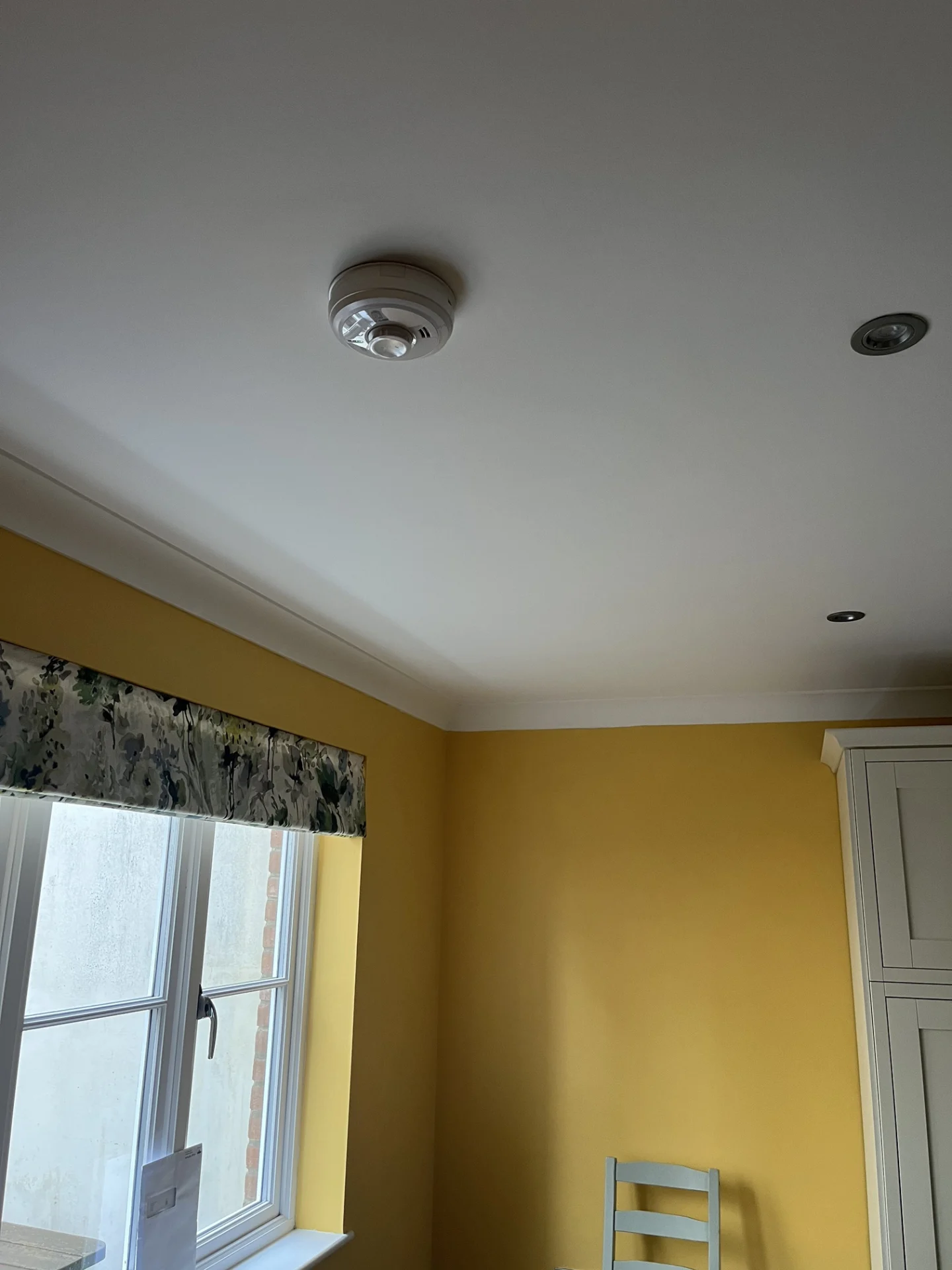
This job involved replacing five alarms across a domestic property in St Agnes: four smoke alarms covering the ground and first floors, and one existing smoke alarm in the kitchen that was swapped out for a heat alarm instead. All units were replaced like-for-like in terms of their mains-powered, hardwired setup, with the existing interlink cabling reused throughout.
The interlink element is worth explaining. When alarms are interlinked – either via hardwired cable or a radio frequency signal – any unit that triggers will activate all of the others simultaneously. In a two-storey property, that means someone sleeping upstairs will hear an alarm even if the source of the fire is at the other end of the ground floor. It’s the kind of setup that buys people the time they need to get out safely, and current guidance for new and replacement domestic alarm installations points firmly in this direction.
Placement decisions matter too. Smoke alarms work on the principle of detecting airborne particles produced by burning materials, which makes them well suited to hallways, landings, and living areas. The kitchen is a different environment. Cooking produces steam, toast smoke, and a general amount of atmospheric change that a standard smoke alarm will often interpret as a threat. The result tends to be a unit that gets covered with a tea towel or simply removed. A heat alarm solves that problem directly – rather than sampling the air for particles, it monitors temperature and triggers when the ambient heat rises sharply or reaches a set threshold. That makes it far better suited to a kitchen environment, where brief bursts of steam or light smoke are normal but a sustained rise in temperature is a genuine warning sign.
At this property in St Agnes, the kitchen had previously had a smoke alarm fitted. Switching it out for a heat alarm was a straightforward decision based on the room’s function, and the replacement unit was wired into the same interlink circuit as the rest of the alarms in the property. If the kitchen heat alarm triggers, every other alarm in the house responds at the same time.
From a wiring perspective, the existing infrastructure was assessed and found to be in good order. The alarm bases were replaced along with the head units, which is standard practice on this type of job – keeping an old base while fitting a new alarm can introduce compatibility issues and defeats a good part of the purpose of the replacement. With both base and head renewed, the installation is consistent throughout.
The work was carried out across the ground and first floors, with alarms positioned in the hallway and key circulation routes where early detection gives the most useful warning time. The layout follows the logic of how fire and smoke typically move through a building – starting at the source and spreading through the routes people use to get out. Placing alarms along those same routes means the alert reaches occupants at the point they’re most likely to need it.
From a regulatory standpoint, domestic smoke and heat alarm requirements in England are governed by Building Regulations Part B and the guidance set out in BS 5839-6, which covers fire detection and alarm systems in dwellings. Replacing existing hardwired, mains-powered units with equivalent or better alternatives and maintaining the interlink circuit keeps the installation in line with that guidance. The heat alarm in the kitchen satisfies the requirement for that room in a way that a smoke alarm technically cannot, given the environment.
It’s also worth noting that insurance considerations increasingly factor in the type and condition of fire detection fitted in a property. An outdated or incomplete alarm system can be a relevant detail in the event of a claim. Keeping alarms current and correctly specified removes that uncertainty.
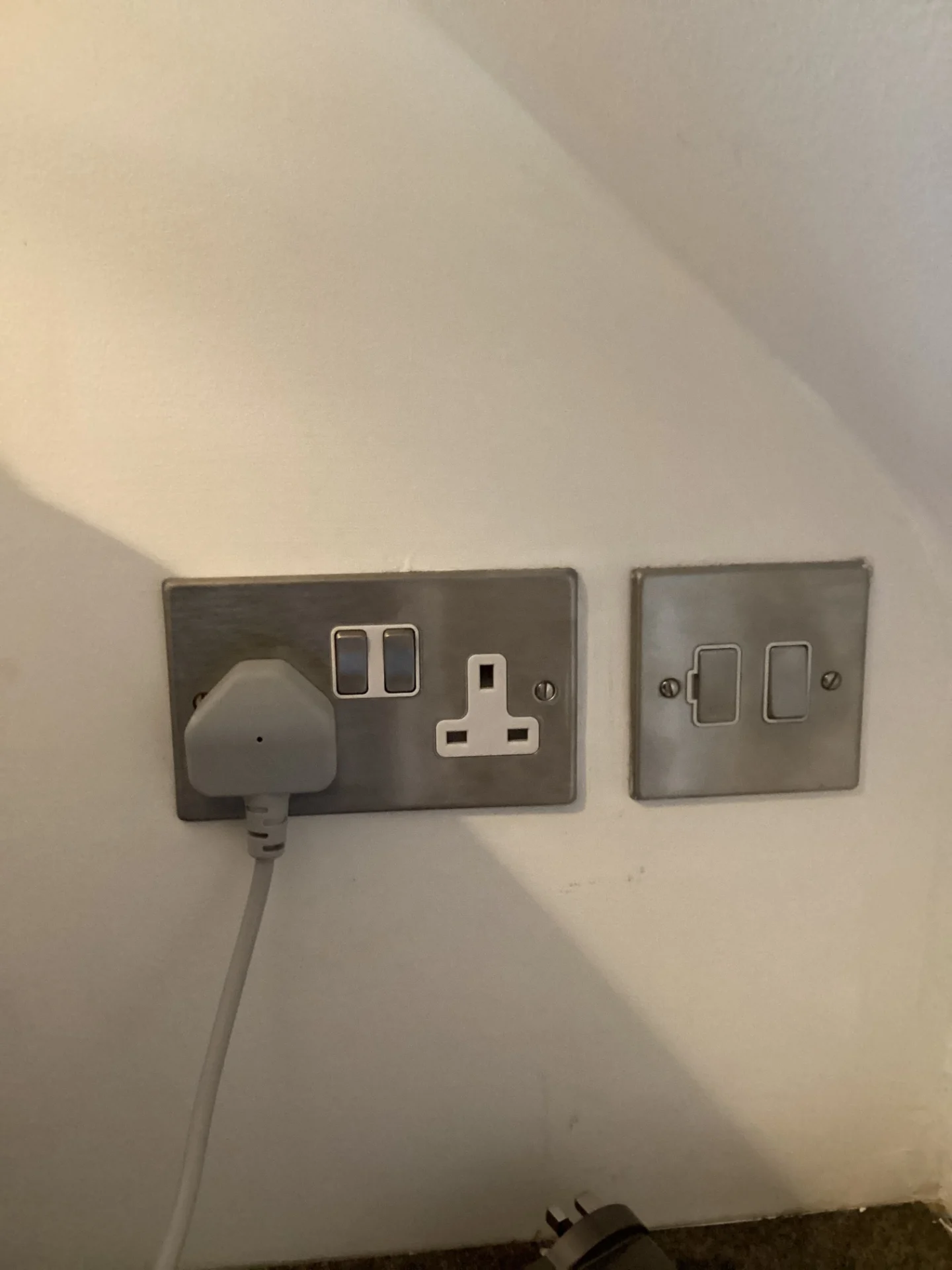
The socket replacement noted alongside this job – a stainless steel decorative outlet – is scheduled for a separate visit once the part arrives. The existing wiring will be retained, and the unit swapped out on a like-for-like basis.