Electrical work rarely lands as a single isolated task. This visit to a property in Bodmin brought together several different jobs – two socket issues in the living room, a compliance inspection across three wet rooms, and a central heating thermostat replacement. Each one was distinct, but combining them into a single visit made sense for the client and meant everything got properly dealt with at once.
Living Room – 5A Socket Replacement
One of the living room sockets was a 5A type – an older format designed to supply low-load circuits such as table lamps and floor-standing lights rather than standard household appliances. The client wanted this replaced with a conventional single-gang socket, which was fitted, but the new outlet was clearly labelled to indicate a strict 5A maximum load restriction. The circuit feeding it wasn’t wired to carry heavier loads, so the label acts as an important safety reference for anyone using that socket and for any tradesperson who might work on the property further down the line. It’s a clean way of keeping things safe without having to alter the circuit itself.
Fault Diagnosis and 2-Gang Socket Replacement
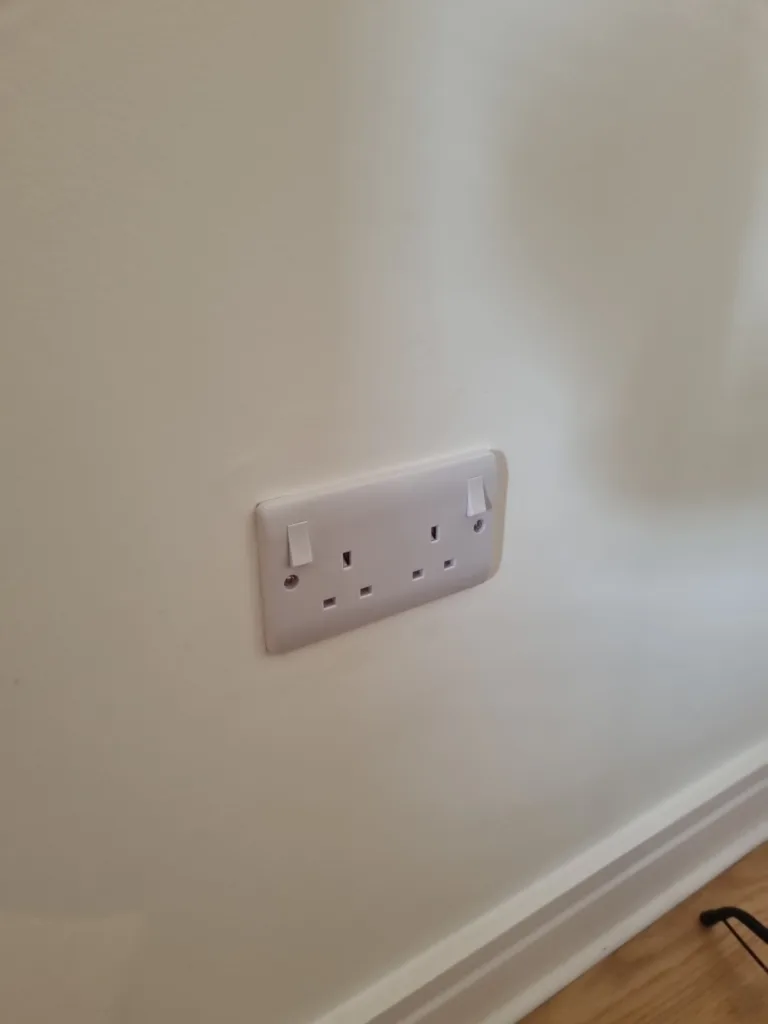
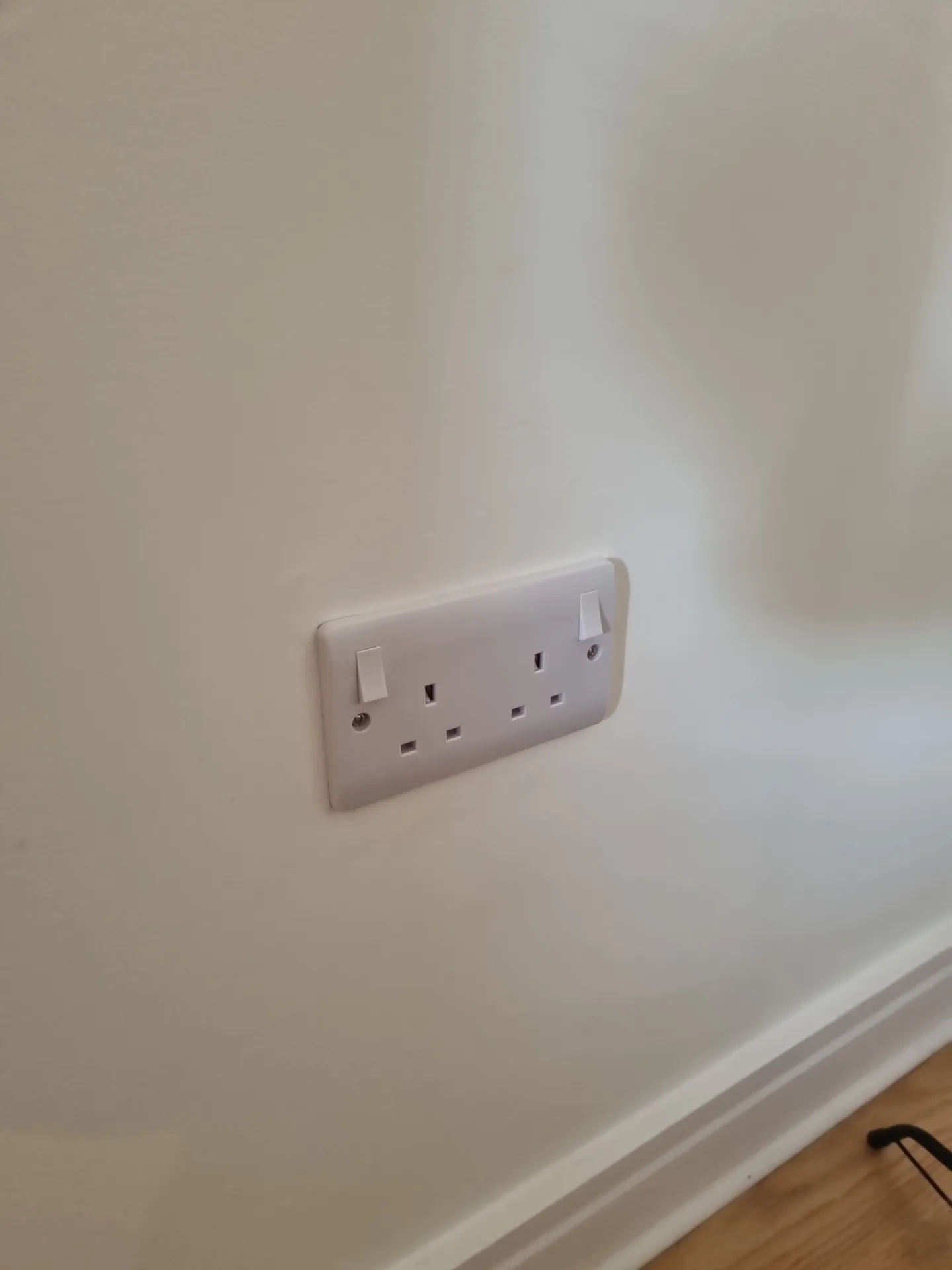
The second living room socket was a 2-gang outlet that had failed and needed replacing. Before fitting a replacement, the associated circuit was put through diagnostic testing to establish why the failure had occurred. A socket can fail for a number of reasons – loose terminations, overloading, damage to the conductors, or a fault elsewhere on the circuit – and fitting a new one without identifying the underlying cause is, at best, a temporary fix. With the diagnosis completed and any contributing issues addressed, the replacement 2-gang socket was installed and the circuit tested through to confirm everything was in good working order.
IP Rating Compliance Check – Bathroom, En-Suite and WC
Electrical accessories installed in bathrooms and wet areas are subject to specific requirements under BS 7671, the UK standard governing fixed electrical installations. The regulations divide these spaces into zones based on proximity to water sources. Zone 0 sits inside the bath or shower basin itself; Zone 1 covers the space directly above it up to a defined height; Zone 2 extends into the broader surrounding area. Each zone carries a minimum Ingress Protection (IP) rating that all accessories within it must meet to be compliant.
All electrical fittings across the bathroom, en-suite, and WC at this Bodmin property were inspected against those zone requirements. The IP rating system uses a two-digit code – the first digit describes resistance to solid particle ingress, the second to water. An accessory rated IP44, for example, is protected against solid objects larger than 1mm and water splashing from any direction, which covers Zone 2 in most domestic installations. Positions closer to the water source, or where direct spray is a possibility, demand higher-rated fittings still.
Properties that have seen various trades over the years – often without formal sign-off – can accumulate accessories that don’t meet the zone requirements for where they’ve been fitted. A thorough check across all three rooms identified which fittings were compliant and flagged anything that required attention, giving the client a clear and accurate picture of where things stood.
Central Heating Thermostat – Like-for-Like Replacement
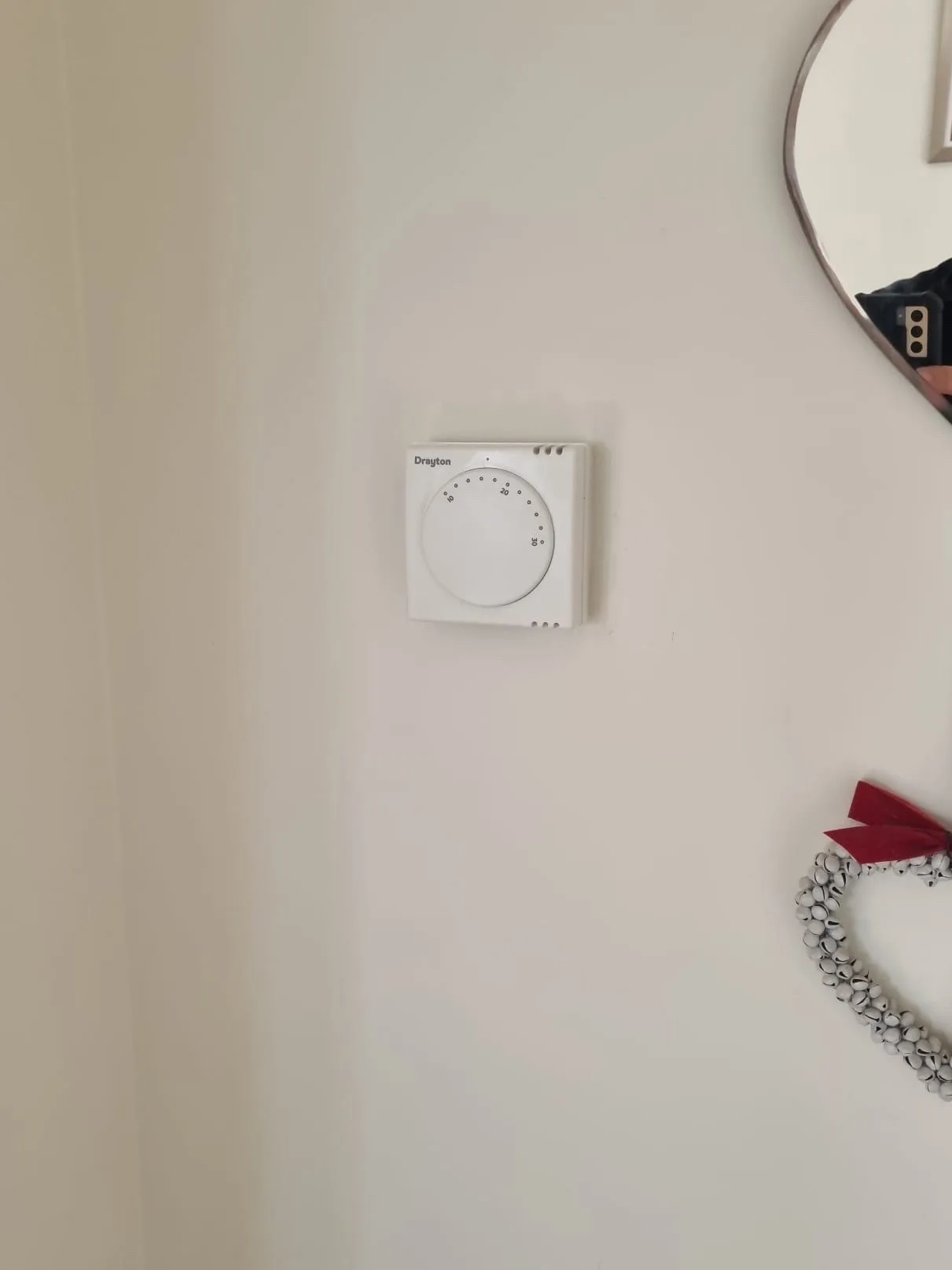
The existing manual dial room thermostat had become unreliable and was replaced with a Drayton RTS1 wired room thermostat – a direct equivalent to the original unit. Because it was a like-for-like replacement, the existing wiring connected to the new thermostat without any modifications to the heating controls or system configuration. Once fitted, the unit was tested to confirm it was calling for heat at the selected temperature and cutting out correctly once that temperature was reached.
Room thermostats in older properties are easy to overlook until something goes noticeably wrong. When they drift out of calibration or develop a fault, the boiler loses its main reference point for when to fire and when to stop – which can result in rooms running too warm, failing to reach the set temperature, or the heating cycling in an unpredictable way. Replacing to a direct equivalent resolves the issue without disrupting the wider heating setup, and means the homeowner doesn’t have to adapt to a different control system.