Relocated an existing TV socket to sit discreetly behind a wall-mounted television and installed additional power outlets on a nearby shelf for a property in Nansledan, extending the circuit cabling and concealing all connections within the plasterboard wall cavity.
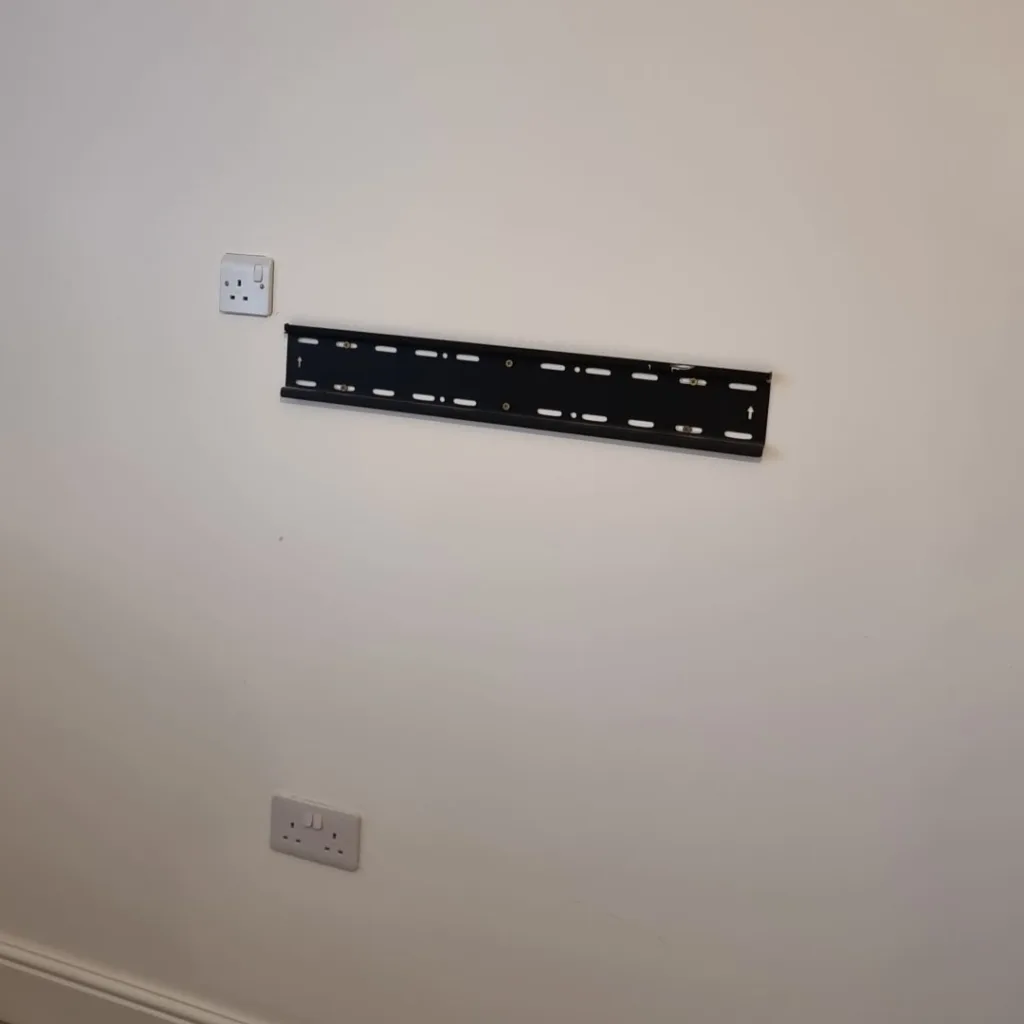
Modern homes increasingly rely on wall-mounted televisions to save floor space and create clean, minimalist living areas. However, the aesthetic appeal of a mounted TV can be quickly undermined when visible cables snake down the wall to reach power and aerial sockets positioned at skirting level. This common issue affects many homeowners who’ve upgraded their entertainment setup without addressing the electrical infrastructure behind it.
When approached about this project in Nansledan, the brief was straightforward but required careful execution. The existing TV socket sat at the standard height for floor-standing furniture, but with the television now mounted higher on the wall, the cables created an unsightly trail that disrupted the room’s appearance. The solution involved relocating the socket upwards to position it directly behind the mounted screen, where it would remain completely hidden from view.
Working with plasterboard construction offers certain advantages when relocating electrical outlets. Unlike solid masonry walls that require extensive chasing and making good, plasterboard allows for cleaner intervention with minimal disruption to the surrounding surfaces. The cavity behind the board provides space to run new cabling and house junction boxes without compromising the wall’s integrity or appearance.
The first consideration was extending the existing circuit cabling to reach the new, higher position. Rather than simply running surface-mounted trunking or attempting to conceal cables behind furniture, proper extension of the circuit through the wall cavity provided a permanent solution. This approach meant the relocated socket would function exactly as the original had, drawing from the same circuit without any compromise to safety or performance.
All connections for the extended circuit were made within a maintenance-free junction box. These enclosures serve a specific purpose in electrical installations, providing secure housing for cable joints whilst remaining accessible should future work be required. The key lies in their design, which allows them to be concealed within wall cavities without contravening regulations that typically require junction boxes to remain accessible. By using maintenance-free variants, the connections could be safely enclosed within the plasterboard cavity, invisible yet compliant.
Socket positioning demanded precision to align properly with the television’s mounting bracket and cable outlets. Too high and it might be visible above the screen, too low and cables would still show beneath it. This placement required coordination with the TV’s existing position, measuring carefully to hit that sweet spot where the socket would sit in the dead space directly behind the unit. Getting this right first time mattered, as repositioning after installation would mean additional holes in the plasterboard and unnecessary making good.
The cable route through the wall cavity needed planning to avoid potential obstacles and future interference. Cables must run clear of any areas where residents might later drill to hang pictures or install shelving. They also need appropriate separation from other services that might share the cavity space, such as water pipes or data cabling. Running cables vertically from the original socket position to the new height followed standard practice and minimised the chances of accidental damage during any future work.
Plasterboard walls, whilst offering easier installation routes than solid masonry, still demand proper technique for professional results. Cutting openings for mounting boxes requires accuracy, as gaps around faceplates become immediately obvious and difficult to disguise. The wall’s relatively soft composition means careful handling during installation to avoid crushing the board’s paper facing or damaging the gypsum core. Any such damage shows through paintwork and undermines the finished appearance.
The mounting box for the relocated socket needed secure fixing despite the hollow wall construction. Dry-line boxes solve this challenge through adjustable lugs that grip the back of the plasterboard as they’re tightened, creating reliable support without requiring solid wall backing. Proper installation of these boxes prevents future issues with loose sockets that rock when plugs are inserted or removed, a common problem when fixings aren’t suited to the wall type.
Cable terminations at the new socket position followed current wiring regulations, with appropriate stripping of insulation, secure connection to terminals, and correct arrangement of earth, neutral and live conductors. The socket faceplate was then fitted flush to the wall surface, with fixing screws tightened evenly to prevent the plate sitting askew. These details might seem minor, but they separate amateur work from professional installation.
Testing formed an integral part of the job, verifying that the relocated socket functioned correctly and safely. This included checking for proper earthing, confirming polarity was correct, and testing the circuit’s residual current device operated as designed. Only after these checks could the installation be considered complete and safe for use.
The visual transformation was immediate and striking. Where cables had previously dominated the wall space around the television, the area now appeared clean and uncluttered. The screen seemed to float against the wall with no evidence of the electrical infrastructure supporting it. This clean aesthetic matched the modern design principles evident throughout the Nansledan property.
Beyond appearance, the relocation addressed practical concerns about cable management and safety. Loose cables trailing down walls present trip hazards, particularly in homes with young children or elderly residents. They can also be damaged by furniture movement or cleaning activities, potentially creating electrical faults. Housing all wiring within the wall cavity eliminated these risks whilst providing a more robust solution than any surface-mounted alternative could offer.
The approach taken for this project demonstrates how existing electrical systems can adapt to changing household needs. As televisions have evolved from bulky CRT units sitting on stands to slim screens mounted on walls, socket positions that once made perfect sense now fall short. Rather than accepting visible cable runs or resorting to unsightly cable management solutions, proper socket relocation brings the electrical infrastructure in line with current requirements.
Nansledan represents modern residential development, with properties built to contemporary standards and designed around how people actually live today. Residents expect their homes to accommodate wall-mounted televisions without compromising on aesthetics. Meeting these expectations requires understanding both the technical demands of safe electrical work and the practical needs of modern household layouts.
The skills applied to this relocation reflect broader expertise in domestic electrical installation. Cable routing must account for building structure and avoid areas vulnerable to future drilling. Junction box placement needs to balance accessibility requirements against the need to remain hidden. Socket positioning must serve functional needs whilst maintaining visual appeal, particularly when working around specific fixtures like wall-mounted screens.
Each decision made during this project, from the cable route through the cavity to the precise positioning of the socket, contributed to delivering a solution that worked technically and aesthetically. The result was an installation that looked factory-fitted rather than retrofitted, integrating seamlessly with the room’s existing decoration and requiring only minimal touch-up around the new faceplate.
Working within plasterboard construction allowed these changes to be implemented efficiently and cleanly. The wall’s composition meant routing cables and installing mounting boxes could proceed without the dust, noise, and extensive making good associated with cutting into masonry. The finished installation required no patching of chased channels or lengthy drying times for filled areas, just a quick touch of paint where needed.
This Nansledan project exemplifies how thoughtful electrical work can solve common household frustrations. The relocated socket now serves its purpose invisibly, supporting the television installation without drawing attention to itself. The clean wall around the mounted screen creates the streamlined appearance the homeowner wanted, achieved through proper electrical installation rather than cosmetic compromise.