Charging an electric vehicle (EV) at home is convenient—if you have a driveway. But what if you don’t? Many UK residents who park on the street wonder whether they can simply run a charging cable across the pavement from their home to their car.
The short answer? It’s complicated. While there’s no outright national ban, local councils enforce different rules, and there are serious safety concerns to consider. If someone trips over your cable, you could face legal consequences.
So, what are your options? Can you charge safely and legally without a driveway? Let’s explore the rules, risks, and alternatives to help you charge your EV without putting pedestrians in danger or breaking the law.
The Legal Situation in the UK
Is It Legal to Run a Charging Cable Across the Pavement?
In the UK, pavements are considered public property, meaning that anything obstructing them—like an EV charging cable—could be subject to regulations. While there’s no national law explicitly banning the practice, local councils have the authority to remove any obstructions that pose a risk to pedestrians.
For example, the Highways Act 1980 states that it’s an offence to place anything on a highway (which includes pavements) that could cause danger or obstruction. This means that if a council deems your charging cable hazardous, they can ask you to remove it—or even fine you.
Liability Risks: What Happens If Someone Trips?
If someone trips over your charging cable and gets injured, you could be held liable for negligence. This could result in a personal injury claim, which might lead to significant financial consequences. Home insurance policies may not cover claims related to public obstructions, leaving you personally responsible.
How Councils Handle Pavement Charging
Different councils enforce different rules. Some allow residents to apply for a charging solution, such as a pavement gully (which we’ll cover later), while others outright prohibit cables running across pavements. If you’re considering charging your EV this way, your first step should be to check with your local council.
Read our guide on Electrical Fire Prevention Tips to ensure your EV charging setup meets the highest safety standards.
Safety Concerns of Running a Cable Across the Pavement
Trip Hazards and Public Safety
A loose charging cable can be dangerous, particularly for people with visual impairments, wheelchair users, or anyone pushing a pram. Even with protective covers, cables can still create a raised surface that increases the risk of trips and falls.
Damage to the Cable and Electrical Risks
Pavement cables are exposed to wear and tear from foot traffic, bikes, and even weather conditions. A damaged cable could lead to:
- Electrical shocks if the insulation wears away.
- Fire hazards from overheating or short-circuits.
- Reduced charging efficiency due to wire damage.
Legal Fire Safety Considerations
Any outdoor electrical setup must comply with the IET Wiring Regulations (BS 7671) to minimise fire risks. If your cable doesn’t meet these standards, you could be putting yourself and others in danger.
Alternative Solutions for EV Owners Without a Driveway
If you can’t run a cable across the pavement legally and safely, what other options do you have? Fortunately, UK councils and businesses are working on innovative solutions.
On-Street Residential Charging Schemes
Many councils are rolling out on-street EV charging schemes to help residents without driveways. These include:
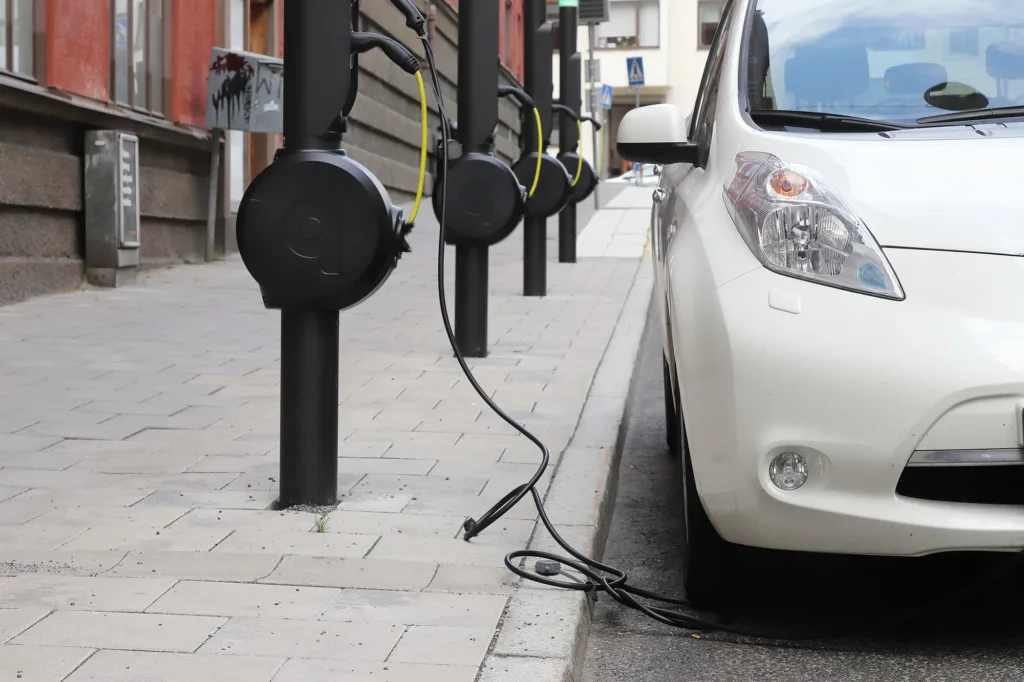
- Lamp post chargers – Some councils are installing charge points in street lamps, allowing you to plug in without running a cable across the pavement.
- Dedicated on-street chargers – More residential streets are getting charging bollards, operated by networks like Ubitricity and Connected Kerb.
How to apply: Contact your local council and ask if they offer an on-street charging scheme in your area.
Cross-Pavement Charging Channels (Cable Gullies)
A cable gully is a discreet channel embedded in the pavement that allows you to run a charging cable without creating a trip hazard.
- These must be professionally installed and approved by your local authority.
- They provide a neat, long-term solution for home EV charging.
- Costs can vary, but grants may be available to help fund installation【source: energysavingtrust.org.uk】.
Public and Workplace Charging Networks
- If home charging isn’t an option, public chargers are widely available. The UK now has over 30,000 public charging points【source: zap-map.com】.
- Many workplaces are also installing EV chargers, offering a practical solution for those who drive to work.
Need professional advice? Contact us to discuss EV charger installations and the best options for your home.
What Should You Do If You Have No Other Options?
If you still want to charge your EV from home using a cable, consider these precautions:
- Use a Heavy-Duty Cable Protector – A rubber cable ramp reduces trip hazards but may still be considered an obstruction.
- Seek Council Permission – Some councils may grant exceptions for safe pavement charging solutions.
- Choose a Weatherproof, High-Quality Cable – Ensure your cable meets IP67 waterproof ratings for outdoor use
However, these are temporary measures, and it’s always best to explore safer alternatives.
FAQs
Q1: Can I be fined for running a cable across the pavement?
Yes, if a council considers your cable to be an obstruction, they have the power to remove it and potentially issue a fine. Always check local regulations before proceeding.
Q2: What is the safest way to charge my EV without a driveway?
The safest solutions include using public chargers, workplace charging, or council-approved cable gullies. On-street residential schemes are also expanding across the UK.
Q3: Do all councils allow cross-pavement charging solutions?
No, each council has different policies. Some allow cable gullies, while others prohibit any pavement modifications. Always contact your council to check what’s permitted.
Conclusion
While running a cable across the pavement to charge your EV might seem like an easy fix, it’s legally risky and potentially hazardous. With councils improving on-street charging infrastructure, there are safer, more sustainable options available.
Whether you’re considering a home charging installation or need help finding the best alternative, Wave Electrical Solutions is here to help.