It might seem convenient to tuck a socket behind your cooker, especially if you’re short on wall space or want a clean look. But when it comes to electrics in the kitchen—particularly around high-powered appliances like cookers—convenience takes a backseat to safety and regulation.
First, let’s clarify what we mean by “behind a cooker.” This typically refers to installing a socket outlet either directly behind a freestanding oven or hob unit, or within the immediate rear cavity of a built-in appliance. While it may appear tidy, this placement can pose several hazards if not properly planned.
In most British homes, cookers are connected via a dedicated radial circuit. These high-current appliances aren’t just plugged into a typical socket; they often require their own isolator and fuse protection to handle the electrical load. Attempting to install a regular socket outlet behind or within such an appliance zone is generally discouraged and, in some cases, may even breach UK wiring regulations.
If you’re planning a new kitchen or rewiring your current one, this is the kind of detail that needs to be thought through early. Poorly placed sockets could not only make everyday use awkward, but also put your home and family at risk.
If you’re unsure about your kitchen’s electrical safety, you might want to get professional advice from a qualified electrician in Cornwall.
UK Wiring Regulations & Safety Standards
The primary framework governing electrical installations in UK homes is BS 7671, commonly known as the IET Wiring Regulations. These standards detail how and where electrical components—including sockets—should be installed for safe use.
Under Part P of the Building Regulations, any electrical work in a kitchen is considered ‘notifiable’. That means it must either be carried out by a Part P certified electrician or reported to building control. This isn’t just red tape—it’s about ensuring all work is safe and traceable.
When it comes to socket outlets in kitchens, regulation 553.1.6 of the BS 7671 states that socket-outlets shall not be installed in a position where they are subject to excessive heat. Naturally, placing a socket directly behind a cooker or hob breaches this rule due to the concentrated heat output in that area.
Further guidance can be found through official resources such as the Electrical Safety First Kitchen Safety Advice, which highlights how heat, moisture, and accessibility all play into safe socket placement.
Risks of Installing Sockets Behind Cookers
At first glance, hiding a socket behind your cooker may seem harmless. But let’s break down the key dangers—it quickly becomes clear why it’s best avoided.
Heat Damage
Cookers, especially electric ovens and hobs, emit a lot of heat during operation. When a socket is placed directly behind or above one, it’s constantly exposed to high temperatures. Over time, this can degrade the materials of the socket and wiring, potentially leading to short circuits, melted insulation, or worse—electrical fires. BS 7671 explicitly warns against installing outlets in places exposed to excessive heat, and this is exactly why.
Inaccessibility in Emergencies
If an appliance fault occurs, being able to quickly isolate it is critical. A socket wedged behind a heavy cooker isn’t exactly easy to reach. In an emergency, no one wants to be fumbling behind a scorching oven to yank a plug or access a switch. That’s why regulations call for readily accessible isolation points for fixed appliances.
Breaching UK Electrical Codes
Positioning a socket in a place that’s difficult to reach, exposed to heat, or hidden from view risks breaching multiple sections of the IET Wiring Regulations. Non-compliant installs could not only fail inspection but also void your home insurance in the event of a claim relating to fire or electrical fault.
Overloading and Misuse
Sockets behind cookers often get misused for extra appliances, like microwaves or kettles. These add-on loads weren’t factored into the original circuit design. Overloading is one of the most common causes of tripped breakers and overheating cables, both of which are easily avoided with better socket placement.
The smarter and safer approach? Keep sockets away from direct heat sources, and plan your kitchen wiring layout with long-term safety in mind.
Best Practices for Cooker Circuit Installation
To comply with UK standards and keep your kitchen safe, electric cookers are generally connected to a dedicated circuit. This means it runs from its own fuse way at the consumer unit, typically using a 6mm² or 10mm² cable depending on the cooker’s power rating and the installation method.
Cooker Control Units
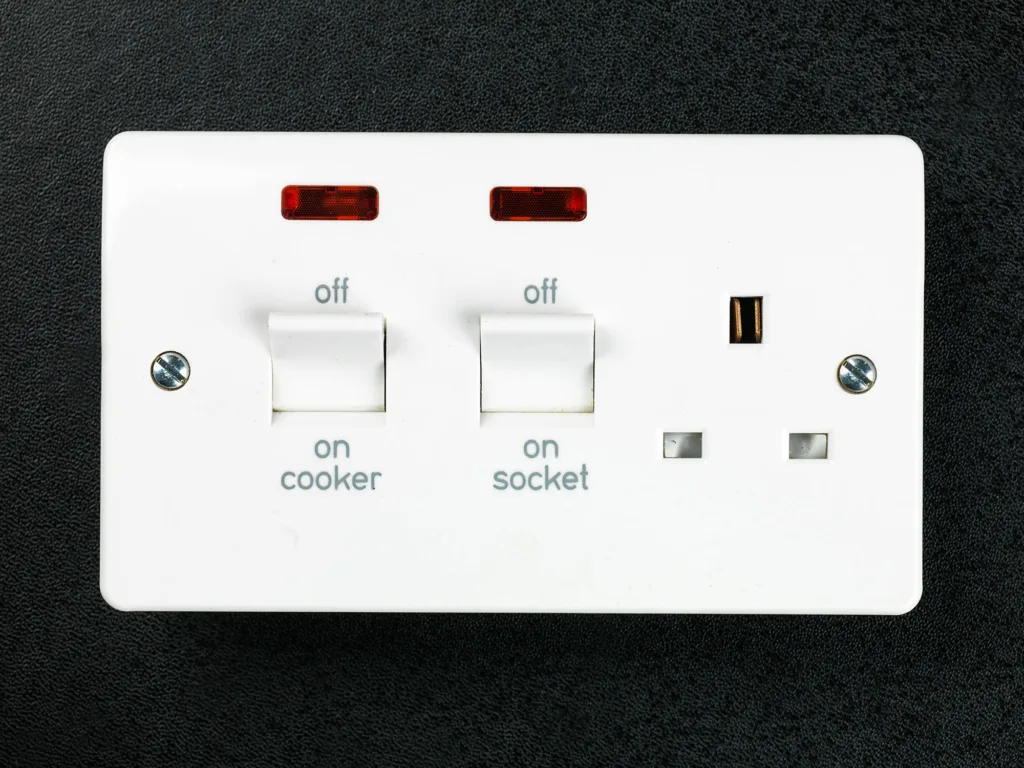
Rather than a simple socket, most cookers are connected through a cooker control unit. This device includes a double pole switch to isolate the appliance, along with a fused connection unit. The control unit must be accessible and ideally located at least 300mm to the side of the cooker, not directly above or behind it.
Socket Placement Zones
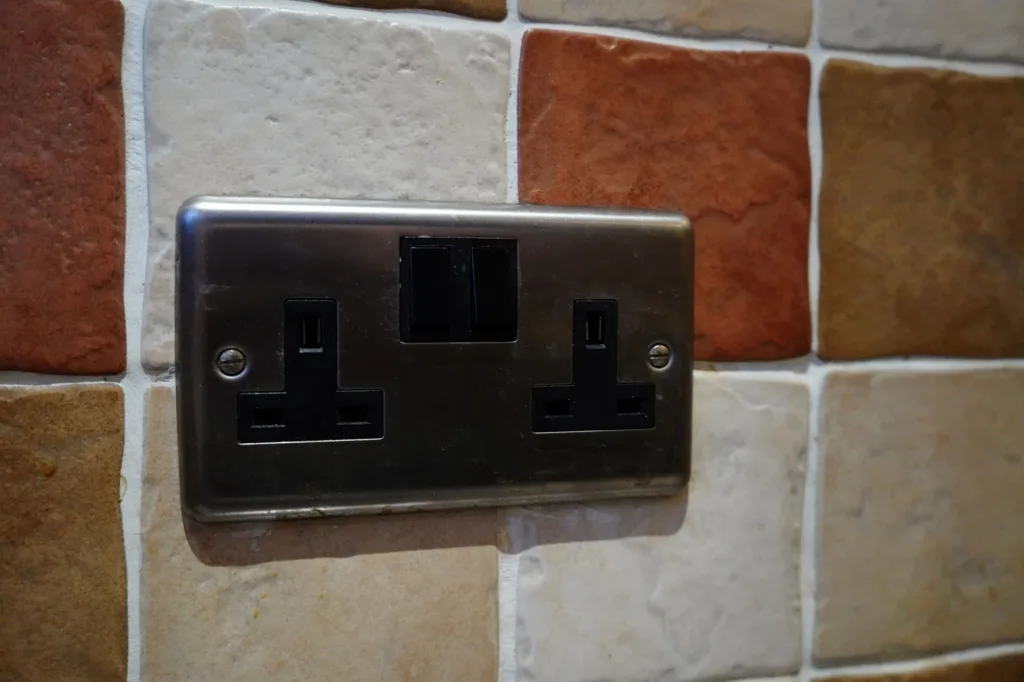
General advice suggests that sockets should be a minimum of 300mm horizontally from the edge of a hob and at least 150mm above the worktop. Placing them behind built-in cookers or hobs doesn’t meet this standard and puts them in harm’s way. It’s safer and more practical to place them to the side or above worktop height.
Cable Routing Considerations
Cables should avoid passing directly behind or above cookers. Heat can affect the insulation and degrade cables prematurely. If they must pass behind, they should be in suitable containment and rated for the temperature exposure. Wherever possible, reroute to cooler areas.
Alternative Options and Safe Placement Zones
Instead of risking a socket behind a cooker, look at safer alternatives that are fully compliant and far more practical.
Adjacent Wall Space
A good rule is to keep sockets at least 300mm away from any heat-producing appliance like a hob or oven. Positioning outlets along adjacent walls allows easy access while keeping them safely out of the heat zone.
Above Worktop Level
Sockets should typically be mounted 150mm or more above the work surface, keeping them clear of splashes and within reach for small appliances. This is especially useful near prep areas or where microwaves, kettles, or toasters are used.
Appliance Isolation in Cupboards
For integrated appliances like built-in ovens, it’s common to install a fused spur switch or isolation unit in an accessible cupboard nearby, rather than behind the unit. This meets the requirement for isolation and prevents the need to move appliances in an emergency.
These placements not only keep your kitchen safe but also make it easier to add or upgrade appliances in the future.
Compliance & Planning Advice
You don’t need to guess your way through kitchen electrics. There’s a clear path for doing it safely—and it starts with proper planning and qualified help.
Always Use a Registered Electrician
Kitchen wiring falls under notifiable work in the UK. That means DIY installations or uncertified work could land you in trouble. A Part P registered electrician ensures your setup is legal, safe, and up to date with the latest regulations.
Coordinate with Your Kitchen Designer
If you’re working with a kitchen installer, make sure your electrician is looped into the early planning stages. This avoids awkward last-minute decisions—like trying to squeeze a socket behind a cooker because there’s nowhere else to put it.
Get the Right Protective Devices
RCD protection is a legal requirement in modern homes. Make sure every circuit in the kitchen is RCD protected, especially high-power ones like cookers. Your electrician should also verify that cable sizes, breaker ratings, and connections are all correct for your appliances.
For an example of proper cooker installations, see how we do it across Cornwall: Installing Cooker Circuits the Right Way.
Real-World Scenarios: What Can Go Wrong
Even in new builds or renovations, electrical mistakes happen all the time. Here are a few we’ve seen—and fixed:
Cooker Wired to the Ring Main
Instead of a dedicated circuit, the cooker is piggybacked onto a kitchen socket circuit. It might work, but it’s likely overloading the ring, risking tripped breakers or worse.
Socket Behind Hob Used for Multiple Appliances
In one kitchen, we found a socket jammed between the wall and hob. It was feeding a kettle and toaster while the hob ran—massive overload. The heat from the hob had already discoloured the socket.
Isolation Switch Hidden or Blocked
One common fault is placing the cooker control unit in a cupboard or behind the unit, making emergency shutoff nearly impossible. Regulations clearly call for accessibility.
Avoid these pitfalls by planning ahead and getting a qualified installer. These aren’t just technicalities—they’re real safety risks.
FAQs
Can you put a socket behind a built-in oven?
No, it’s not recommended. The area behind an oven is subject to heat and often inaccessible. Regulations require outlets to be in accessible, safe locations—not behind hot appliances.
What’s the minimum distance for sockets from a cooker or hob?
Sockets should be at least 300mm (30cm) away from a cooker or hob horizontally, and 150mm above the worktop. This keeps them away from heat and splashes.
Does an electric cooker need its own circuit?
Yes, electric cookers usually require a dedicated circuit with the correct cable size and protection. This ensures the circuit can handle the high current draw safely.
Conclusion
So, can you put a socket behind a cooker? In short—no, you shouldn’t. While it might seem like a minor shortcut, it introduces real risks and likely breaches current regulations. The good news is, with a bit of forward planning and the right guidance, there are far better ways to wire your kitchen.
Place sockets where they’re accessible and out of danger zones. Use cooker control units properly and always ensure your installation meets BS 7671 and Part P standards. It’s not just about ticking boxes—it’s about creating a safer, more functional kitchen.
Need support with your home electrics in Cornwall? Explore our domestic electrical services for safe, compliant, and expert help.