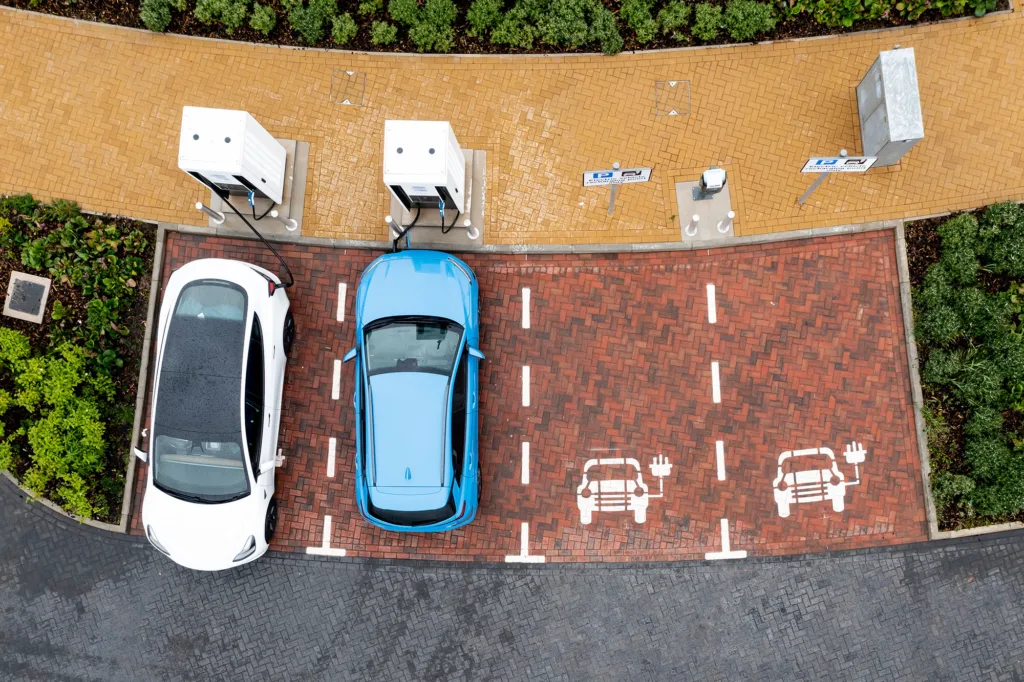
Electric vehicles aren’t on the way—they’re already here. With the UK government committed to ending the sale of new petrol and diesel cars, infrastructure is quickly catching up. Businesses that act early can benefit from cost savings, customer engagement, and alignment with green transport incentives. But with EV charging technology evolving rapidly, choosing the right commercial charge point setup isn’t as simple as picking a plug.
Installing chargers at business premises isn’t only about keeping up appearances. It’s about creating operational flexibility—charging company vehicles on-site, enabling staff and visitors to plug in, or even generating passive income from public access. Whether you’re running a retail car park, office building, or a multi-unit industrial site, scalable EV infrastructure is becoming an expected amenity.
According to recent data, over half of UK councils have earmarked millions in funding for new EV charging schemes. The commercial sector isn’t just catching on—it’s being positioned as the backbone of the UK’s long-term charging network. Ignoring this shift might cost businesses far more than the installation itself.
Types of Commercial Charging Solutions
Finding the right charger for your business isn’t just about wattage or cable type. It comes down to how you intend to use the system and how flexible it needs to be as your needs grow.
AC Charging (‘Slow’ or ‘Fast’)
AC charging is the most common option for commercial properties—especially offices, retail car parks and small hospitality venues. These units usually offer power outputs between 7 kW and 22 kW and use Type 2 connectors via IEC 61851 Mode 3. The slower end of the spectrum is best suited for overnight fleet charging or long-dwell areas where vehicles are left for hours at a time.
AC chargers are also typically less expensive to install, especially in properties with limited grid capacity. They don’t require the same level of transformer upgrades or cooling systems that faster chargers demand. For smaller businesses or those trialling EV support, these systems strike a good balance between cost and performance.
However, they may not be ideal for rapid turnover environments. If your premises relies on quick access and frequent vehicle movement—think taxi depots or logistics hubs—AC charging may slow operations down.
DC Rapid Charging
DC chargers—sometimes referred to as “fast” or “ultra-rapid” units—convert electricity internally and deliver it directly to the battery, bypassing the vehicle’s onboard converter. This allows them to deliver much higher charging speeds, typically starting at 50 kW and going up to 350 kW.
For businesses with fleets on tight schedules or those located near major roads, DC charging ensures vehicles can be charged in under an hour. These are also ideal for service stations, delivery hubs and large retail locations looking to provide premium charging options to customers or staff.
That said, these systems require serious infrastructure, including high-voltage cabling and dedicated transformer access. Installation and ongoing energy management must be factored in from the outset.
Smart Charging Features
Modern charge points don’t simply feed electricity into a battery—they communicate, balance load, and adjust based on real-time data. Smart charging systems come with features such as:
- Dynamic load balancing to prevent overloading your supply
- Usage scheduling for off-peak energy savings
- Remote access for monitoring and control
- Cybersecurity protocols to protect against hacking
These features are not just “nice to have”—they’re increasingly mandated under UK Smart Charge Point Regulations. From 30 June 2022, new chargers must be able to delay or randomise start times, adjust outputs and support demand-side response schemes. If you’re not choosing smart tech, you’re already behind.
Power Requirements and Infrastructure
Before picking out your charger model or comparing suppliers, the most important step is to evaluate your site’s electrical capacity. Many commercial properties weren’t originally built with EV charging in mind, which means the existing infrastructure might need upgrades to support multiple charge points.
Assessing Electrical Capacity
Commercial EV chargers—especially high-powered DC units—demand a lot of energy. A single 50 kW charger can draw more power than all your lighting and HVAC systems combined. If your building’s mains supply is limited, adding a bank of chargers without assessment risks overloading the system.
This is where a site survey comes in. A qualified electrical contractor will assess your mains supply, consumer unit, and any need to upgrade your connection via the local Distribution Network Operator. Load balancing software is often used to optimise limited capacity and prevent disruptions. This setup can future-proof your site without needing immediate grid reinforcement.
Scalability
When planning your commercial EV infrastructure, scalability should be built in from the beginning. As EV uptake accelerates across the UK, businesses that fail to accommodate growth may face costly retrofits.
A future-ready system typically includes spare cabling routes, modular chargers, and smart technology that can be updated remotely. These elements are critical for aligning with evolving technical standards such as those set out in BS 7671:2018+A3:2024, the UK’s official wiring regulations for electrical installations. Full details are available via the IET’s Electrical Regulations portal.
Compliance and Regulation
Installing EV charge points isn’t just a convenience—it’s a regulated requirement in many commercial settings. The UK government has laid out strict policies to ensure charger safety, accessibility, and smart capabilities.
Building Regulations Part S (New Builds & Retrofits)
As of June 2022, commercial buildings undergoing major renovations or new construction must comply with Part S of the Building Regulations. Any development with more than 10 parking spaces must include at least one installed EV charger, plus cable routes for additional units.
These rules were introduced to make charging infrastructure standard rather than optional. Detailed guidance can be found on the Planning Portal’s Building Control page, which outlines minimum requirements for new and existing commercial properties.
Technical & Safety Standards
Every commercial EV charger installation must comply with national safety protocols. Aside from the IET wiring regulations, systems must meet the BS EN 61851-1 standard, which governs general EV charging equipment.
Installers should always be certified by relevant UK bodies, including NICEIC, NAPIT, or the Electrical Contractors’ Association (ECA). This isn’t only about technical competence—it’s about ensuring your installation is legally compliant, insurable, and eligible for grant funding.
OZEV Grant and Smart Requirements
The Office for Zero Emission Vehicles (OZEV) provides grants through schemes like the Workplace Charging Scheme. To qualify, all equipment must meet a detailed set of smart specifications, including demand-side response capability, cybersecurity features, and connectivity to cloud-based platforms.
These requirements are clearly outlined in the government’s commercial charge point specification, and must be met before funding is approved.
Public Charge Point Regulations 2023
If you plan to make your commercial chargers available to the public—whether to customers or the general public—then newer legislation applies. From November 2024, chargers with 8 kW output or more must support contactless card payments, display transparent pricing, and maintain high uptime standards.
These obligations are part of the Public Charge Point Regulations 2023, which were introduced to standardise user experience and accessibility across the UK. Businesses can find the full details within the official government guidance.
Future‑Readiness
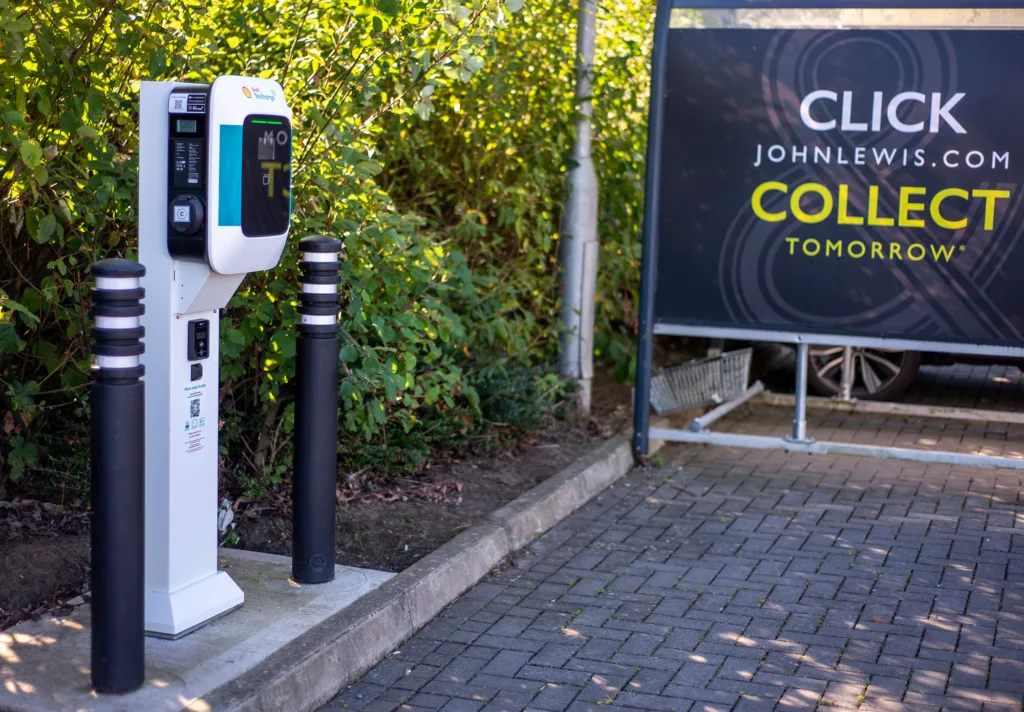
Choosing EV charging hardware and layout isn’t just a decision for today—it’s about anticipating tomorrow’s demands. With the UK EV market expanding faster than the infrastructure that supports it, businesses that install scalable systems now are far more likely to stay competitive.
Payment and Communication Standards
Interoperability and user convenience are becoming non-negotiable. Standards like ISO 15118, which supports “Plug & Charge” features, allow vehicles to automatically identify themselves and start charging without apps or cards. It also enables secure communication between the charger and the EV, making billing seamless and more secure.
Many new commercial chargers also comply with the Open Charge Point Protocol (OCPP)—a global standard that lets businesses mix and match hardware and software providers. This flexibility reduces the risk of getting locked into one ecosystem and allows remote management of charging sessions, diagnostics, and usage analytics.
Adopting these protocols now helps businesses future-proof their investment against changes in technology and user behaviour.
Business‑Friendly Infrastructure Scalability
Planning for future demand means more than technical foresight—it also includes anticipating how your operations, customer base, and energy needs might evolve. With local authorities across the UK investing heavily in regional EV infrastructure, businesses in urban and suburban zones will increasingly see pressure to accommodate electric vehicle traffic.
Public infrastructure is growing, but not quickly enough to meet rising EV adoption. According to recent figures, some councils have committed over £100 million to expand charging capacity—yet grid delays and permitting backlogs still hamper rollouts. Businesses that install their own systems early can avoid dependence on overstretched public infrastructure and secure their own energy efficiency strategies.
If you want to understand how EV charging demand is also rising among homeowners, this blog on why more UK households are adopting EV charging offers some useful parallels to consider.
Wave Electricals Solutions & Services
At Wave Electricals, we help businesses install reliable, regulation-compliant commercial EV charge points tailored to their needs. Our services include full system design, site evaluation, installation, and smart charging integration.
As professional EV charger installers, our team is fully accredited under NICEIC and follows BS 7671 and BS EN 61851 standards to the letter. Whether you’re a small business installing your first charger or a commercial property manager planning a multi-bay setup, we’ve got the tools and expertise to deliver scalable, smart-ready solutions.
FAQs
How many chargers should my business install initially?
It depends on your daily vehicle volume and how long they’re parked. Start with a needs assessment—most businesses begin with 1–2 chargers per 10 parking spaces, but it’s crucial to design for easy expansion later.
Is planning permission required for installing commercial EV chargers?
From May 2025, new legislation allows most commercial and domestic EV chargers to be installed without planning permission in England. However, this depends on local authority policy and property status.
Can I offer charging to the public and still use government grants?
Yes, if the installation meets the OZEV criteria and uses approved equipment. But if the unit is publicly accessible, it must also comply with the Public Charge Point Regulations, including contactless payments and pricing transparency.
Conclusion
Investing in commercial EV charge points isn’t just a tick-box exercise—it’s a strategic move. With government policies tightening, technology evolving, and public demand climbing, businesses that act now will be best positioned to benefit. That means planning beyond basic compliance and building systems that scale, integrate, and support future functionality.
Your charging setup should be more than an accessory—it should be part of your wider energy strategy. With the right infrastructure and advice, your property can become a reliable energy hub that serves staff, customers, and operational goals for years to come.
If you’re ready to explore compliant, future-ready installation for your site, the team at Wave Electricals is here to help you get started.