
Outdoor electrics can transform how we use our homes and gardens — adding lighting, entertainment, security and flexibility. But while the possibilities are appealing, outdoor electrical installations come with risks that demand proper planning and attention. At Wave Electrical, we often support clients who want to upgrade or extend their outside power, and a key part of our role is making sure those systems are safe, weatherproof, and compliant with UK regulations.
The principles are straightforward: protect your connections from water and dirt, install the correct safety devices, and carry out occasional maintenance. Whether you’re powering garden lighting, a hot tub, or something more specialised, outdoor electrics need more than an extension lead through the kitchen window. In this guide, we explain what to consider, which components are suitable, and how to keep everything operating safely year-round.
For a closer look at the types of systems we install, our outdoor electrics service page gives an overview of the options.
Why Outdoor Electrical Safety Matters
Outdoor electrical setups are exposed to more hazards than anything inside your home. Even with the right fittings, wind-driven rain, frost, insects and UV exposure all affect performance and safety over time. These risks make the safety case clear.
Increased exposure to rain, dust and temperature
Unlike internal circuits, outdoor wiring has no shelter from moisture or airborne dirt. Water and electricity don’t mix, and even a small breach in a fitting can lead to a tripped circuit, damaged cable, or worse — an electric shock.
Temperature swings are another concern. Plastic housings expand and contract in the heat and cold, potentially compromising seals and connection integrity.
Risk of electric shock and system failure
Loose connections, corroded terminals and damaged cable jackets can all pose a shock risk. Faulty wiring also increases the chance of a fire, particularly in sheds and garages where equipment may be unattended. The consequences of getting it wrong outdoors can be more serious than many realise.
Legal and insurance implications
Poorly installed outdoor wiring may void insurance in the event of a claim. If the work doesn’t meet the standards set out in the Building Regulations or BS 7671, insurers can argue that the installation was unsafe. In serious cases, non-compliance can result in enforcement notices or fines.
Choosing Weatherproof Outdoor Equipment
Getting the hardware right is the foundation of safe outdoor electrics. That means choosing components that are designed for the conditions and tested to the relevant standards.
Understanding IP ratings for outdoor use
Every outdoor component — whether it’s a socket, enclosure or light fitting — should carry an IP rating. This is a two-digit code that indicates how well the item resists solids and liquids. For example:
- IP44: Splashproof — suitable for sheltered locations
- IP65: Fully dust-tight and protected against jets of water
- IP68: Waterproof to the point of submersion (used in pond lights)
As a general rule, IP65 is the minimum rating for exposed areas.
Sockets, switches and enclosures built for the job
Outdoor-rated sockets usually include spring-loaded lids and silicone seals to keep water out. Switches may use rubberised push buttons or fully sealed enclosures. Junction boxes and consumer units for outdoor use must also be robust, UV-resistant and properly earthed.
Using proper cable types and conduit
Cables need to withstand sunlight, moisture and mechanical wear. We typically use armoured cable (SWA) for permanent installations, especially when buried underground. Where surface wiring is used, UV-stable conduit helps protect against impact and degradation.
For those planning lighting as part of a garden upgrade, our team recently outlined ideas for safe installations in our article on creating the perfect outdoor oasis with lighting and sockets.
Safe Installation Practices
Even the best equipment will fail if it’s installed in the wrong location or not protected properly. Placement and protection are as important as product choice.
Location planning and spacing
Sockets should be installed well above ground level and positioned so that rainwater can’t run into them. Lighting units should avoid direct exposure to irrigation or drainage paths. For high-use setups — like outdoor kitchens or home offices — we recommend installing a small outdoor consumer unit with separate RCDs.
Safe distances from water features
UK wiring regulations set out clear rules for how close electrical components can be to water. For example, outdoor sockets should be at least 2 metres from the edge of a pond, hot tub or swimming pool unless specifically rated for use near water.
RCD protection and fuse considerations
Residual Current Devices (RCDs) are essential for all outdoor electrics. They detect leakage current — often caused by water ingress or cable damage — and cut the power in milliseconds. Without RCD protection, even a small fault could cause serious harm.
Every circuit also needs correct fuse or breaker ratings. Oversized fuses may not trip in time, while undersized fuses will interrupt use unnecessarily.
Ongoing Maintenance and Safety Checks
Outdoor electrical systems are more vulnerable than internal ones, so they need occasional attention. Regular checks can prevent minor issues becoming expensive problems.
Visual inspections after storms or winter
Extreme weather is a common source of faults. After storms or harsh winters, check that outdoor fittings are still sealed, cables haven’t shifted, and covers remain intact. Look for signs of condensation or corrosion inside clear-lidded boxes.
How to test your RCD properly
RCDs have a built-in test button. Pressing it should trip the power immediately. This test should be done every three months to confirm the unit is still working. If the test fails, the RCD needs to be replaced.
When to call an electrician
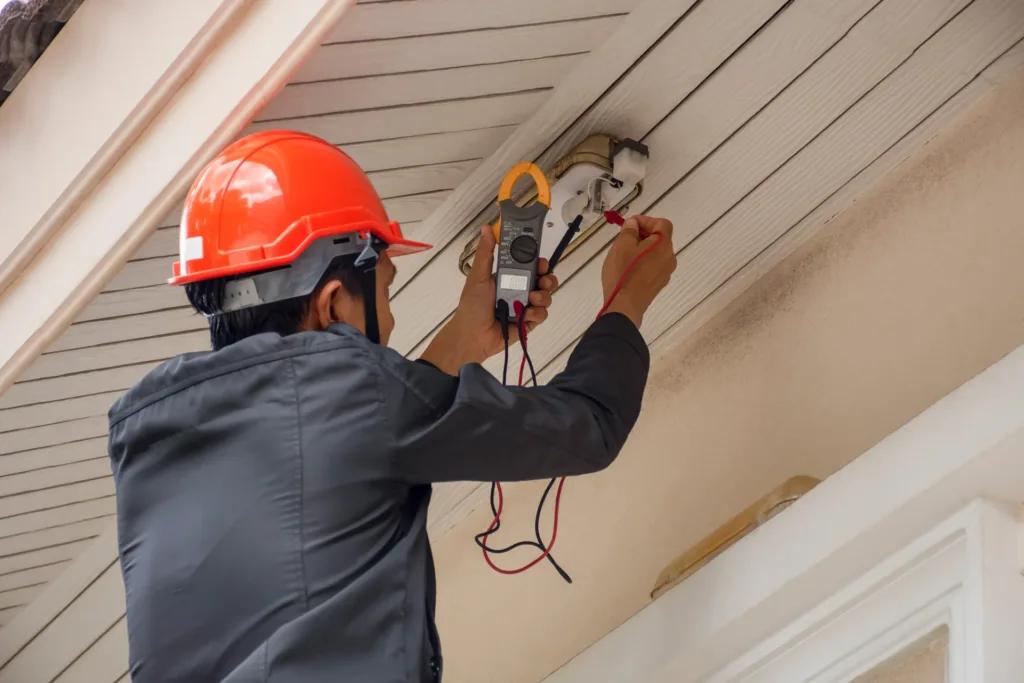
If an RCD keeps tripping, there’s likely a fault in the circuit. Likewise, any sign of melted plastic, visible corrosion or water ingress is a red flag. Don’t attempt a DIY repair — call a qualified professional.
External Standards and Compliance
UK outdoor electrical installations must meet the requirements of BS 7671 (Wiring Regulations) and be compliant with Part P of the Building Regulations. These rules cover everything from cable sizing to zoning and earthing.
Relevant UK regulations for outdoor installations
Part P defines how domestic electrical work should be designed and verified. Any outdoor work involving new circuits or consumer units must be notified to building control or carried out by a registered electrician.
BS 7671 and Part P of the Building Regulations
BS 7671 sets the technical standards, while Part P focuses on safety outcomes. Outdoor installations must comply with both, and failure to do so can affect insurance or lead to enforcement by local authorities.
Who can carry out the work legally
If you’re hiring someone, always check that they’re qualified and registered. You can verify credentials via the Electrical Safety First register — an approved UK source.
FAQs
Can I use indoor extension leads outside?
No. Indoor leads are not weatherproof and can become dangerous when exposed to moisture. Only use extension leads rated for outdoor use and fitted with RCD protection.
What does IP65 actually mean?
It means the fitting is dust-tight and protected against low-pressure water jets from any direction. It’s suitable for most garden and driveway applications.
Do all outdoor sockets need an RCD?
Yes. Every external socket must be RCD-protected either at the unit itself or via the consumer unit. This is a legal requirement under UK regulations.
Conclusion
Creating a safe outdoor electrical environment isn’t difficult, but it does require planning and attention to detail. From choosing the right IP-rated fittings to installing RCDs and checking compliance with Part P, every step matters. Outdoor power should be safe, reliable and built to last — not something you worry about when it rains.
Our team regularly helps homeowners design and maintain safe electrical systems outdoors. Whether you’re starting from scratch or upgrading old wiring, we can help guide the process. For a practical step-by-step on one common project, see our DIY guide to installing outdoor lighting safely.