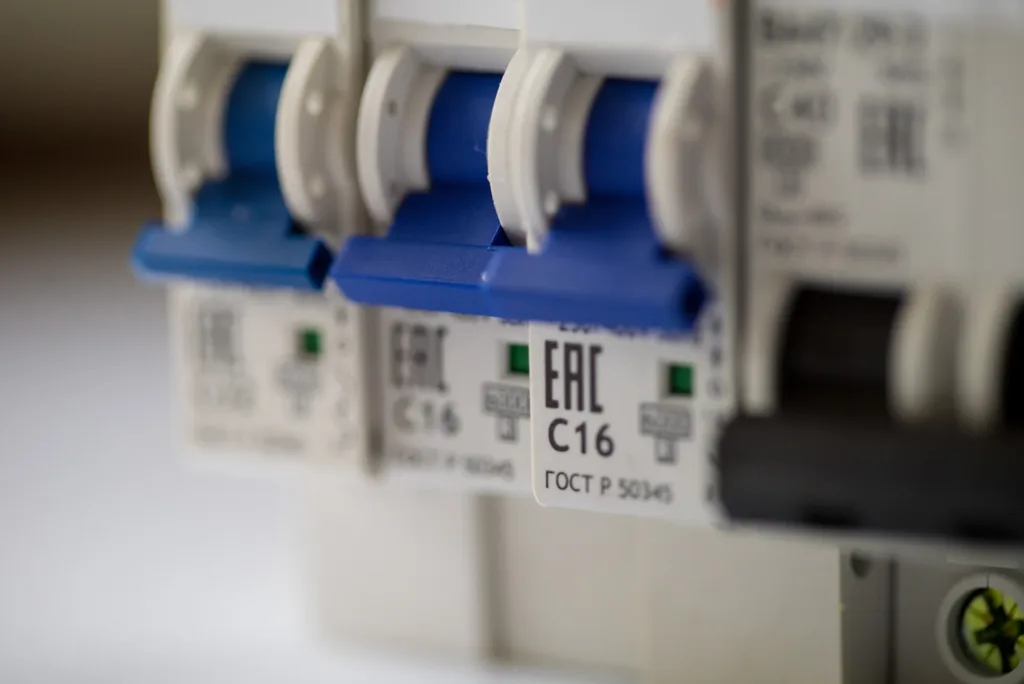
There’s been a major shift in the way domestic circuits are protected across the UK. Traditional fuse boards have given way to consumer units populated with RCBOs, MCBs and surge protection devices, all designed to increase safety and reduce the inconvenience of faults. Yet one of the most common questions we hear is whether an RCD is still necessary when RCBOs are already installed. It sounds like duplication, but the answer isn’t as straightforward as yes or no.
To understand where an RCD might still be required, or when an RCBO is fully sufficient, you need to consider the system as a whole—what’s protected, what’s shared, and what the regulations actually demand. It’s not just about which devices are present, but how they’re wired and labelled. And if you’re upgrading your consumer unit or working on a project with DIY elements, this knowledge matters a great deal.
Before we explore this further, it’s worth reviewing what RCDs and RCBOs do and how they differ in real-world use. If you’re considering an upgrade yourself, we also recommend reviewing our guide to installing RCD protection in domestic settings.
How RCDs and RCBOs Work
What an RCD Does
A Residual Current Device (RCD) is designed to prevent electric shock by detecting leakage currents—typically where electricity is escaping to earth through a person or fault. When it detects an imbalance between the live and neutral conductors, it disconnects power rapidly, usually within 30 milliseconds. It’s essential protection in environments with high shock risk, such as bathrooms and outdoor areas.
In older setups, a single RCD often protects multiple circuits. While this offers essential life-saving protection, it can lead to all circuits tripping at once, even if the fault is limited to just one area.
How an RCBO Combines Protection
An RCBO (Residual Current Breaker with Overcurrent protection) merges the functions of an RCD and an MCB into one unit. This means it not only protects against earth leakage but also trips when a circuit is overloaded or shorted. More importantly, it isolates only the affected circuit—so your kitchen sockets can trip without plunging the entire house into darkness.
Key Differences in Practical Use
- Coverage: RCDs usually protect groups of circuits; RCBOs protect circuits individually.
- Nuisance tripping: RCDs can cut power to healthy circuits due to a fault elsewhere; RCBOs avoid this.
- Space saving: RCBOs occupy individual ways in the consumer unit, eliminating the need for a shared RCD.
When You Still Need an RCD
Circuits Not Covered by RCBOs
In partially updated consumer units, some circuits may remain under group RCD protection. In these cases, the RCD is still required because not every circuit has its own RCBO. Bathrooms, garden supplies or older lighting runs might fall into this category. If you’re unsure, a proper circuit test and inspection will confirm the layout.
Extension and Adaptation of Older Installations
When existing installations are modified—especially where older boards are extended rather than replaced—retaining an RCD may be necessary. Adding an RCBO to a new circuit doesn’t remove the requirement to protect legacy circuits that still rely on the original RCD for fault detection.
Bathroom and Outdoor Sockets with Shared Supply
Some installations route multiple high-risk areas through a shared supply—such as external sockets, garden rooms or outbuildings. If these are not isolated via RCBOs and surge protection, an RCD will still be needed. In some cases, additional socket-mounted RCDs may be required as belt-and-braces protection. This is especially important in properties with TT earthing arrangements, where disconnection times are critical.
When an RCBO Alone Is Sufficient
Full Board RCBO Installations
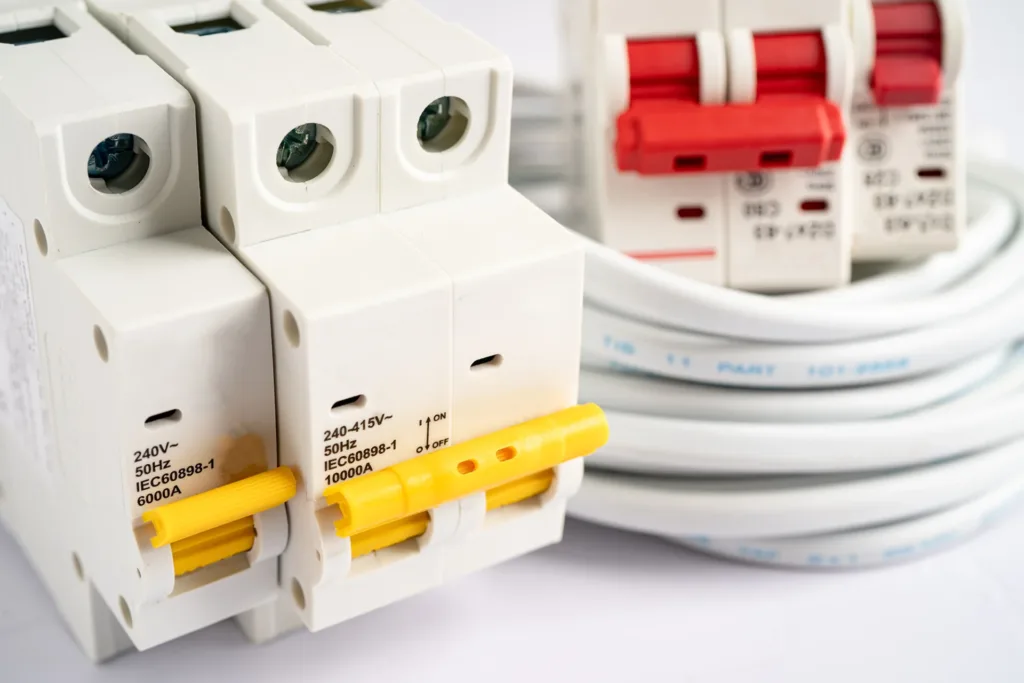
If your consumer unit has an individual RCBO on every circuit, and those circuits are labelled and tested correctly, then a main RCD is not required. This approach is increasingly common in new builds and full rewires, as it reduces downtime and improves fault isolation.
Minimising Nuisance Tripping
Unlike a split-load board where one faulty appliance can trip multiple circuits, RCBO setups isolate problems to the source. This is especially beneficial for homes with sensitive equipment or vulnerable occupants. It also makes fault-finding quicker and safer for electricians and DIYers alike.
Meeting Wiring Regulations (BS 7671)
According to the 18th Edition of the Wiring Regulations (BS 7671), RCD protection is mandatory in many scenarios—especially for socket outlets and circuits in specific locations. However, if an RCBO provides the required level of protection (typically 30mA trip sensitivity), then it satisfies the regulatory requirement. More details are available directly from the Institution of Engineering and Technology.
We installed this configuration during a consumer unit upgrade in Penryn, where every circuit was protected by an RCBO and a coordinated surge protection device was included for compliance.
Installation Considerations
Compatibility with Consumer Units
Some older consumer units can’t accommodate RCBOs without modification. Physical space, busbar types and enclosure design all affect what’s possible. Newer “all RCBO” boards simplify this but require careful planning at installation.
Layout and Labelling Requirements
Proper labelling is often overlooked. Each RCBO must clearly indicate which circuit it protects, including sockets, lighting, cooking appliances or dedicated outlets. This becomes especially important when upgrading part of a system but leaving older RCD-protected circuits in place.
Surge Protection and Coordination
Modern systems often incorporate surge protection devices (SPDs) alongside RCBOs. These protect against transient overvoltages from lightning or mains disturbances. RCBOs won’t respond to these surges, so SPDs work as complementary protection. If you’re upgrading your board, check whether surge protection is also required under the latest wiring regulations.
Misconceptions and Over-Specification
Doubling Up on RCDs
Some homeowners assume that having both an RCD and an RCBO adds extra protection. In practice, this can lead to coordination problems and unnecessary tripping. If the RCBO detects a fault, the upstream RCD may still trip too, defeating the benefit of isolation.
Assuming RCBOs Cover All Scenarios
While RCBOs are excellent for most domestic applications, they don’t eliminate the need for correct cable routing, bonding, and earthing. For example, circuits supplying electric vehicle chargers or swimming pools may require specialised arrangements beyond a standard RCBO.
Overlooking Supplementary Protection
Devices such as socket-outlet RCDs or FCUs with built-in protection still have a place. In some cases—especially outdoor circuits—additional devices may be necessary to comply with location-specific regulations.
FAQs
What’s safer, an RCD or an RCBO?
RCBOs offer more targeted safety because they combine fault protection and isolation for each individual circuit. RCDs are effective but can cause whole-house outages when tripped.
Can you mix RCBOs and RCDs in the same unit?
Yes, it’s common in partial upgrades. As long as each circuit is clearly labelled and protection levels are appropriate, the combination is compliant.
Do I need an electrician to check my setup?
If you’re unsure whether your circuits are fully protected or want to upgrade your board, it’s essential to use a qualified electrician. Improper installation can lead to non-compliance and increased risk.
Conclusion
RCBOs are the preferred choice for modern consumer units, offering individual protection without the inconvenience of widespread outages. However, the presence of RCBOs doesn’t always mean an RCD can be removed. The layout of your circuits, the age of your installation and the specific risks in areas like bathrooms or gardens all factor into the decision. At Wave Electrical, we help homeowners across Cornwall install protection that fits their property—not just the standard. Whether you’re working on a new build or retrofitting an older system, ensuring your consumer unit is fully compliant is always worth the time. If you’re unsure whether your current setup meets the latest safety standards, our team can help with expert consumer unit and fuse board services across Cornwall.