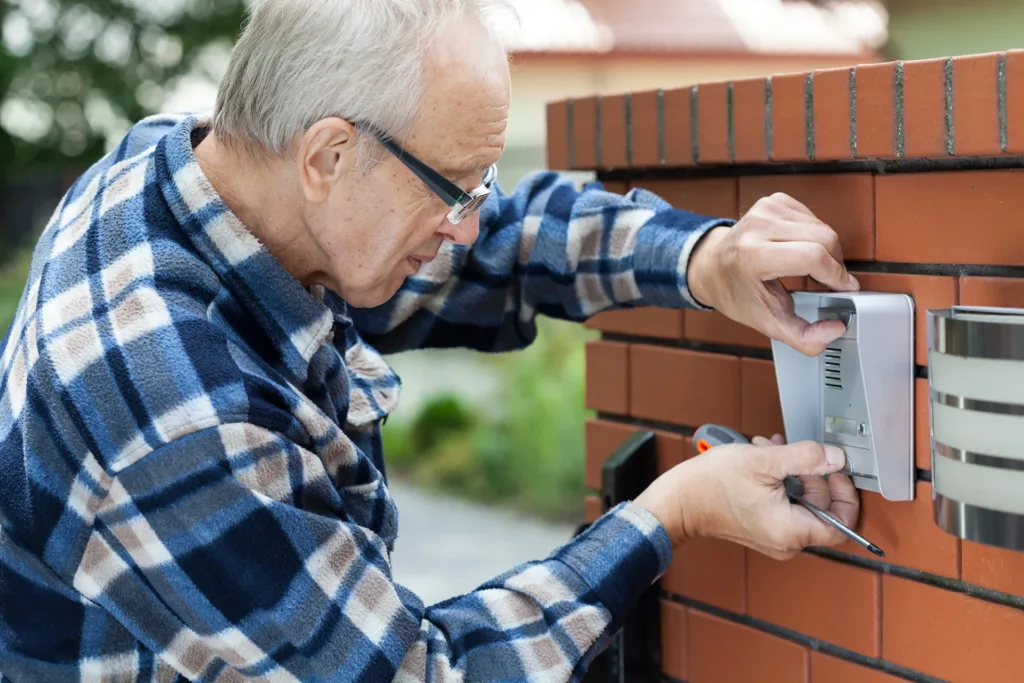
Doorbell installation is one of those household tasks that looks deceptively simple—especially with the rise of wireless and smart systems. But if you’re dealing with anything that involves hardwiring, even at low voltage, there are serious safety considerations. It’s not uncommon for homeowners to assume that the small size of a doorbell means it poses no risk. That assumption can lead to nasty shocks, damaged components, or incorrect setups that fail days later.
In this post, our team breaks down when you must shut off power during installation, how to do it properly, and why smart systems require extra care with wiring and voltage. Whether you’re replacing a basic chime button or fitting a Ring or Nest Hello, we explain what’s safe to handle and what’s best left to a qualified electrician.
Understanding Doorbell Power Requirements
Wired vs Wireless Models
Traditional doorbells run on a wired circuit that includes a chime, transformer, and doorbell button. Wireless doorbells, on the other hand, use batteries or plug-in receivers and typically require no electrical work at all. However, smart models often blur the line—many need a wired power supply for constant operation, even if the rest of the setup is wireless.
Low-voltage Doorbell Systems in the UK
Most wired doorbells in the UK operate on 8V to 12V AC, powered via a transformer connected to the mains. This transformer steps down the voltage from 230V to a safer level suitable for domestic signalling circuits. Despite being low-voltage on the front end, the circuit is still part of your home’s main electrical system.
Smart Doorbells and Transformers
Products like Ring, Nest Hello, and similar devices typically need 16V to 24V AC and often draw more current than traditional chimes. UK homes may not have a compatible transformer pre-installed, which means retrofitting one becomes part of the job. That makes understanding the existing wiring essential—and reinforces the need to isolate power before touching anything.
Our team provides safe installation services for smart doorbells and CCTV systems across Cornwall, including wired and wireless models.
When You Must Shut Off Power
Live Circuits and Electric Shock Risk
Even at lower voltages, contact with live wiring can cause electrical shock or short a device. More importantly, many doorbell transformers are wired directly into your home’s consumer unit. That puts you in contact with mains voltage at some points in the circuit, especially when replacing a transformer or making chime adjustments.
How to Locate and Turn Off the Right Circuit
The safest way to isolate a doorbell circuit is to switch off the power at your consumer unit. Most setups are wired into either the downstairs lighting circuit or a dedicated fuse. If in doubt, switch off the entire board while you work. Labelled consumer units help, but you should always verify before proceeding.
Using a Voltage Tester Before You Begin
Before you remove any faceplates or unscrew terminals, use a non-contact voltage tester to confirm the circuit is dead. This should be done at the doorbell button, the chime, and the transformer—where applicable. Never rely on assumptions or old labels.
Step-by-Step Installation: Wired Doorbell
Tools You’ll Need
- Screwdrivers (flathead and cross)
- Voltage tester
- Wire strippers
- Drill and fixings (for mounting)
- Terminal connectors or blocks
- Insulated gloves (recommended)
Disconnecting the Existing System
Turn off the power. Confirm it’s off at all relevant points with your tester. Unscrew the old doorbell button and carefully disconnect the wires. If you’re removing the chime or transformer, note down the connections or take a photo beforehand.
Connecting the New Unit Safely
Attach the new doorbell to the same low-voltage wires. If polarity matters (as with smart models), ensure correct matching. Avoid twisting bare wires together; use proper terminal blocks or Wago connectors. Keep wires tidy and insulated.
Testing and Powering Back On
Once installed and secured, turn the power back on at the consumer unit. Test the doorbell at the button and chime. For smart units, use the app setup as prompted. If there’s no power to the unit, switch the supply back off and recheck all wiring.
For up-to-date UK wiring regulations and safety advice, see Electrical Safety First.
Wireless and Battery-Powered Doorbells
Do You Need to Touch the Mains?
Battery-powered models eliminate the need for hardwiring. Most modern units can be installed with basic tools and don’t require turning off any power. However, if you’re upgrading from a wired system, you still need to isolate the circuit before removing old components.
Mounting and Setup Basics
Follow the manufacturer’s instructions for height, orientation, and WiFi signal. Most units use adhesive strips or screws. Although they’re easy to install, they still benefit from being aligned properly to avoid poor motion detection or camera angles.
When to Hire a Professional
Complex Wiring or Chime Integration
Installing a smart doorbell with a mechanical chime or multi-zone transformer can get complicated. If your chime uses an outdated transformer or you’re not sure where the connections go, it’s time to bring in a qualified electrician.
Replacing a Transformer
Replacing a transformer safely involves working with 230V mains power. Even with the power off, there’s residual risk if you don’t understand the circuit layout. An electrician can assess whether your system meets the required load for smart devices.
Ensuring Compliance with UK Electrical Standards
All fixed wiring must comply with BS 7671, and electrical work in homes must follow Part P of the Building Regulations. This includes notification for certain types of work and using appropriate fixtures. A professional will ensure your installation meets these rules.
For more detail on legal classifications, see our post on Ring doorbells and CCTV rules.
FAQs
Can I install a smart doorbell without shutting off power?
No. Even smart doorbells require safe isolation before connecting to low-voltage wiring or a transformer. Working live is unsafe and may damage the unit.
What if I can’t find the right circuit breaker?
Switch off the main isolator at your consumer unit. Then test at all connection points before touching anything.
Do battery-powered doorbells need any electrical work?
No. These models operate independently of your home’s wiring. If removing an old wired model, power must still be isolated first.
Conclusion
Installing a doorbell can be straightforward if you know what type of system you’re working with—but it’s never safe to assume that low-voltage means low-risk. Wired and smart systems often involve contact with the mains supply via transformers or chime boxes, and shutting off power is a basic step to protect yourself and your devices. Even wireless upgrades require care when disconnecting older components.
For anything involving transformers, rewiring, or compliance with UK regulations, we strongly recommend using a qualified electrician. It’s not about complexity—it’s about getting it right and staying safe.
To book an assessment or ask for installation support, get in touch via our contact page.