Installing CCTV in your home or business is no longer a niche upgrade. With rising awareness around security, remote access technology, and insurance expectations, many property owners are asking the same practical question: do you actually need an electrician to install CCTV?
The answer depends on the type of system, how it’s powered, and where it’s being installed. Some plug-in systems can be set up without altering your fixed wiring. Others involve permanent electrical connections, drilling through external walls, and integration with your consumer unit. That is where professional qualifications and compliance come into play. In our earlier guide on enhancing your home with CCTV and doorbells, we covered system types and placement. Here, we focus on legal requirements, safety standards, and when a qualified electrician is required.
The Short Answer
If your CCTV system plugs into a standard socket and does not require any changes to your fixed electrical installation, you may not legally need a qualified electrician. However, the moment wiring becomes permanent, new circuits are installed, or work is carried out in notifiable areas such as certain outdoor or bathroom zones, the situation changes.
In the UK, electrical work is governed by Part P of the Building Regulations and must comply with BS 7671, the IET Wiring Regulations. If CCTV installation involves new fixed wiring, it should be carried out by a competent, qualified electrician who can certify the work. That protects your safety, your insurance position, and the long-term reliability of the system.
Types of CCTV Installation and What They Involve
Plug-and-Play Systems
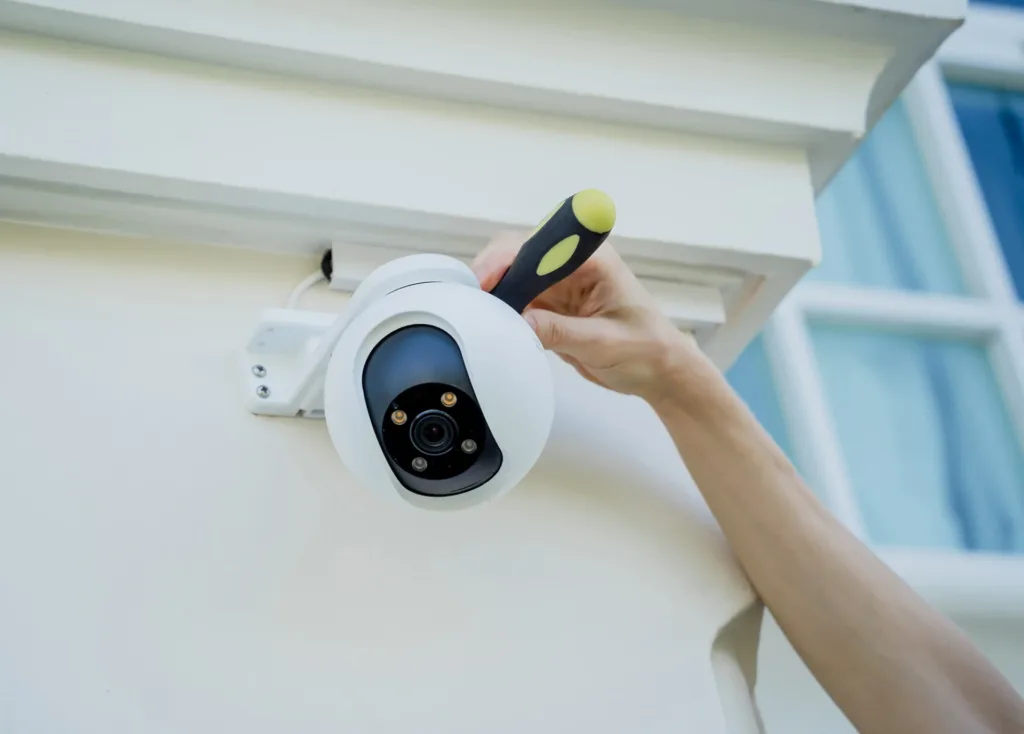
Modern wireless or Wi-Fi CCTV systems are often marketed as DIY-friendly. These typically involve cameras powered by plug-top adapters connected to a nearby socket. In these cases, installation may be limited to mounting the camera and routing low-voltage cabling neatly and safely.
Even so, there are considerations. External sockets must be suitable for outdoor use and protected by RCDs. Drilling through walls must avoid existing cables and pipework. Poor installation can lead to water ingress or damaged wiring. While this work may not legally require an electrician, it still benefits from professional oversight.
Hardwired CCTV Systems
Hardwired systems are a different matter. These may involve:
- Installing a new fused spur
• Extending an existing circuit
• Running cables through loft spaces or wall cavities
• Connecting into the consumer unit
At this point, you are working with fixed electrical infrastructure. Under Part P, certain types of work must be notified to building control unless carried out by a registered competent person. Certification confirms that the installation meets BS 7671 requirements, including correct earthing, RCD protection, and circuit loading.
Our team frequently installs integrated systems as part of our security, CCTV and doorbells service, ensuring the electrical side is compliant as well as the camera positioning.
Power over Ethernet (PoE) Systems
PoE systems transmit power and data through a single Ethernet cable. While the cabling itself is low voltage, the PoE switch or injector still connects to the mains supply. If this requires a new socket or dedicated supply, electrical competence is required.
PoE systems also demand careful routing to avoid interference and ensure long-term performance. Structured cabling may run through ceilings and external walls, which introduces both electrical and building integrity considerations.
Qualifications and Competence
The term “electrician” is often used loosely. For fixed wiring work in domestic properties, competence is defined by knowledge of BS 7671 and compliance with Part P. Registered electricians are typically members of a government-approved scheme and can self-certify their work.
Guidance from Electrical Safety First explains the legal framework clearly and outlines which electrical jobs are notifiable under Part P.
If CCTV installation involves altering circuits, installing new protective devices, or adding permanent supplies, that work falls within regulated electrical activity. Using a qualified electrician provides:
- Certification for building control compliance
• Evidence for insurers
• Assurance that RCD protection and earthing are correct
• Reduced risk of overheating or circuit overload
Without certification, you may face complications when selling your property or making an insurance claim.
Safety Standards and Regulatory Compliance
Part P of the Building Regulations
Part P applies to electrical installations in dwellings. It exists to reduce the risk of fire and electric shock. Certain work must either be notified to building control or carried out by a registered competent person who can self-certify.
CCTV installations that involve new circuits or consumer unit work fall squarely within this framework. Even external installations may require consideration of cable protection, mechanical damage, and correct IP ratings.
BS 7671 – The Wiring Regulations
BS 7671 sets out detailed technical requirements for electrical installations. This includes:
- Circuit design and loading
• Protective devices
• Earthing arrangements
• RCD protection
• Cable selection and routing
CCTV may not draw a high current, but it must still be supplied safely. Overlooking cable support, incorrect protective devices, or poor termination can create long-term hazards.
Data Protection and Privacy
While this article focuses on electrical aspects, CCTV systems must also comply with data protection law. The Information Commissioner’s Office provides guidance for domestic users where cameras capture areas beyond the boundary of the property. Installation positioning should therefore consider both wiring safety and privacy obligations.

Insurance and Liability Considerations
Insurance providers increasingly expect security systems to be installed to recognised standards. If a CCTV system is incorrectly wired and causes damage, insurers may question whether the work was carried out by a competent person.
In commercial settings, requirements can be stricter. Risk assessments, maintenance records, and certification may all be requested. A professionally installed system offers documented assurance that the electrical supply is safe and compliant.
From our experience, rectifying poorly installed systems often costs more than doing the job correctly from the outset. Loose terminations, overloaded spurs, and incorrectly protected circuits are common issues in DIY installations.
When You Can Install CCTV Yourself
There are situations where DIY installation is reasonable:
- Battery-powered cameras with no fixed wiring
• Plug-in systems using existing compliant sockets
• Internal installations without structural alteration
Even then, safe mounting, correct cable routing, and secure connections remain essential. The key distinction is whether you are altering fixed electrical wiring. Once you move beyond plug-and-play, professional input becomes advisable.
When You Should Use a Qualified Electrician
You should engage a qualified electrician if:
- A new fused spur or socket is required
• The consumer unit needs modification
• Cabling is being run through walls or ceilings permanently
• Outdoor wiring requires RCD protection or weatherproofing
• You need certification for compliance or insurance
In practice, many homeowners prefer professional installation even for simpler systems. Correct camera angles, secure fixings, and clean cable management all contribute to long-term performance.
Common Misconceptions
One misconception is that CCTV is low voltage, so it does not matter who installs it. While camera heads may operate at low voltage, their power supply originates from the mains. That connection must comply with UK electrical standards.
Another misunderstanding is that small power consumption means minimal risk. Poor terminations and inadequate protection can still cause overheating or fire, regardless of load size.
There is also confusion around the term “notifiable work.” Not every CCTV installation is notifiable, but once you alter fixed wiring or install new circuits, regulatory requirements apply.
FAQs
Is CCTV installation notifiable under Part P?
It depends on the work involved. Plug-in systems using existing sockets are generally not notifiable. Installing new fixed wiring or circuits may require notification or certification by a registered electrician.
Can I run CCTV cables myself and get an electrician to connect it?
Yes, many homeowners route data or camera cables and then ask an electrician to install the power supply safely. The mains connection should still be carried out and certified by a competent person.
Does CCTV installation affect house sales?
It can if electrical work was carried out without certification. Solicitors may request evidence that alterations to fixed wiring comply with Part P and BS 7671.
Conclusion
So, do you need an electrician to install CCTV? The answer rests on how the system is powered and whether fixed wiring is altered. Simple plug-in systems may not legally require one, but any permanent electrical connection should be handled by a qualified professional.
Electrical compliance is not an optional extra. It underpins safety, insurance validity, and the long-term performance of your system. A well-installed CCTV setup protects your property. A poorly installed one can introduce avoidable risks.
If you are considering CCTV installation and want assurance that everything meets current regulations, our team is ready to help. You can contact us directly through our contact page to discuss your project and ensure it is installed safely and correctly from the outset.