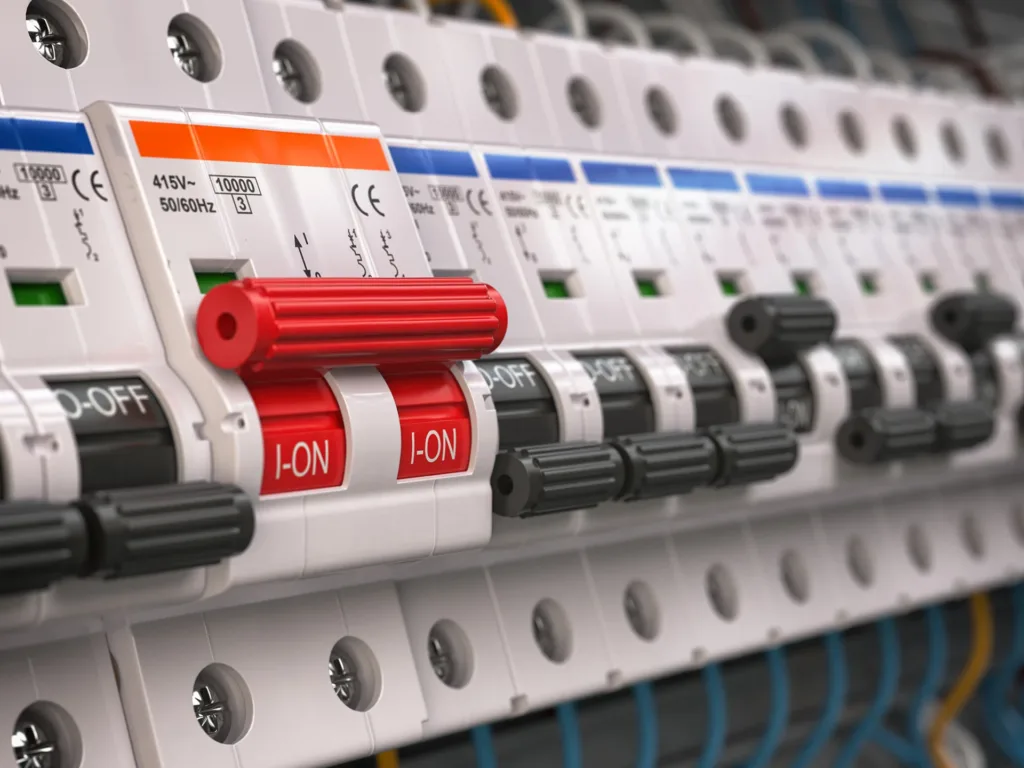
Many homeowners aren’t sure what’s inside their fuse box — until something trips, sparks, or fails a safety check. If your consumer unit is more than 20 years old, still uses rewireable fuses, or lacks RCD protection, it may no longer meet the current safety standards. Upgrading isn’t only about ticking a box; it’s about protecting your home and family from real electrical risks.
Our team frequently helps customers assess their fuse boards and explain the differences between old-style installations and what’s expected today. If you’re unsure what you have or when it was last checked, we offer expert support, starting with our consumer unit and fuse board services.
What a consumer unit does — and why it matters
The consumer unit is the central hub of your home’s electrical system. It controls and distributes power across circuits and, more importantly, cuts the supply when there’s a fault.
Components of a modern unit
Modern consumer units typically include:
- Miniature Circuit Breakers (MCBs) for overcurrent protection
- Residual Current Devices (RCDs) for shock protection
- RCBOs that combine both functions
- Surge Protection Devices (SPDs) to guard against voltage spikes
Each of these plays a specific role in ensuring your installation operates safely and remains compliant with evolving standards.
What older fuse boards typically lack
Outdated boards — especially those using rewireable fuses or cartridge fuses — offer limited protection. They might still work in terms of powering your home, but they don’t react fast enough in the event of a fault. Many also lack RCDs, meaning they won’t trip if someone receives an electric shock or if there’s an earth leakage.
When an upgrade is strongly recommended
Not every home needs a full electrical rewire, but the consumer unit is a key upgrade point that can bring an entire system up to modern expectations.
Signs your unit is outdated
Some clear indicators include:
- Fuse wire mechanisms instead of breakers
- No visible RCDs or test buttons
- A wooden backboard (a sign of very old installations)
- Tripping issues that aren’t easy to isolate
When adding new circuits or major appliances
If you’re planning a kitchen renovation, loft conversion, EV charger, or outdoor supply, a modern board is usually required. New circuits must meet current regulations, and that means your fuse board must be up to standard too.
After a failed EICR (Electrical Installation Condition Report)
If your EICR flags up C1 or C2 codes — immediate danger or potentially dangerous — an upgrade may be recommended. Even a C3 (improvement recommended) can prompt the need, especially if multiple non-compliances are noted.
Safety and compliance — not optional anymore
Modern units do more than stop your lights from flickering. They offer real-time protection against fire, shock, and costly damage.
The 18th Edition Wiring Regulations
Since the introduction of the 18th Edition of BS 7671, all new boards must include RCD protection and surge protection (in most cases), and must be metal-clad to reduce fire risk. If your board doesn’t meet these criteria, it’s no longer considered compliant for new work.
RCD, SPD, and RCBO requirements explained
- RCDs disconnect power in milliseconds during earth faults
- SPDs protect devices from voltage spikes caused by surges
- RCBOs handle both overload and residual current faults per circuit, offering finer control and less disruption
These features are now standard in consumer unit upgrades and are often non-negotiable in professional installations.
Part P of Building Regulations and legal implications
All consumer unit replacements are notifiable under Part P of the Building Regulations. That means the work must be carried out by a registered electrician, and you must receive the proper certification. This is not only a legal requirement but also something insurers and future buyers will look for. You can verify the requirements through Electrical Safety First, the UK’s official electrical safety charity.
If you’re unsure how this process works, our team has created a step-by-step guide to consumer unit upgrades to walk you through it.

Benefits of a modern consumer unit
It’s easy to think of fuse board upgrades as an expense — until you realise the long-term advantages.
Enhanced protection against fire and shock
New units reduce the likelihood of electrical fires and eliminate the risk of electrocution. This is especially important in households with children, pets, or older residents.
Easier fault detection and isolation
With RCBOs, each circuit is independently protected and labelled. When a fault occurs, you know exactly where the issue is — and you can isolate it without affecting the rest of your home.
Room to expand your home’s electrical system
Whether you’re adding solar panels, a new kitchen, or charging points for an electric vehicle, modern boards have the space and infrastructure to handle the load safely.
Common misconceptions about consumer unit upgrades
We hear a lot of myths during home surveys — here are a few that keep coming up.
“My electrics work fine — I don’t need one”
Your lights might still turn on, but that doesn’t mean your system is safe. Older units don’t meet today’s standards for fault protection and could be hiding undetected risks.
“Upgrades are only needed if I sell the house”
While it’s true that a modern board can help a sale go through more smoothly, waiting until then puts you — and potentially your family — at risk in the meantime.
“It’s too expensive to bother with”
Prices vary depending on the size and complexity of your installation, but upgrades typically start from a few hundred pounds. When compared to the risk of fire, injury, or failed compliance, it’s a worthwhile investment.
FAQs
Is it illegal to have an old fuse board?
No — but it is illegal to carry out new electrical work that doesn’t comply with current regulations. If your old board can’t support modern requirements, it must be upgraded before additional work is carried out.
Can I upgrade the consumer unit myself?
No. This is notifiable work under Part P and must be carried out by a qualified electrician. DIY installation is both unsafe and illegal without certification.
How long does a replacement take?
Most replacements take one day. The process includes full testing of all circuits and issuing a certificate of compliance.
Conclusion
It’s not about keeping up with the latest gear — it’s about meeting today’s safety expectations. An outdated fuse board can compromise insurance, fail inspections, and most importantly, put people at risk. Whether you’re extending your home, dealing with tripping circuits, or updating to comply with regulations, a modern consumer unit is an investment in safe, long-term living.
If you’re ready to find out where your system stands, contact our team to book a no-obligation assessment.