Electrical safety in commercial settings isn’t just about keeping the lights on. It’s about protecting lives, assets, and operations. In workplaces where dozens, sometimes hundreds, of people interact with the premises daily, even a minor fault can escalate quickly into something much more serious—think fire, injury, or costly outages. Businesses rely on consistent power not only for lighting and heating, but also for running critical infrastructure like servers, machinery, and security systems. A single overlooked electrical hazard can shut everything down.
Legal consequences are equally serious. Business owners are under strict duty to comply with regulations set out in the Electricity at Work Regulations 1989. Failing to meet these can lead to prosecution, substantial fines, or even imprisonment if negligence is proven. But compliance isn’t just a legal checkbox—it’s a practical measure to keep people safe and ensure uninterrupted business continuity.
Downtime due to electrical failures doesn’t only affect operations. It can impact your reputation, cause delays in service delivery, and, in industries such as retail or hospitality, directly result in lost income. Staying on top of electrical safety is one of the smartest investments a business can make.
Key UK Regulations You Must Follow
Electrical safety in commercial premises is governed by multiple overlapping standards. Understanding them is key to compliance and risk reduction.
Electricity at Work Regulations 1989
These regulations are the backbone of workplace electrical safety in the UK. They place a legal duty on employers and those in control of electrical systems to ensure they are maintained in a condition that prevents danger. That includes routine checks, proper documentation, and prompt repair of faults.
BS 7671 – IET Wiring Regulations
BS 7671 (also known as the 18th Edition) sets the technical standard for electrical installations in the UK. While it’s not a legal document in itself, it’s widely recognised by courts and insurers as the definitive guide. All electrical work should conform to these standards to ensure safety and efficiency.
Approved Document P – Building Regulations
Although more commonly associated with domestic dwellings, Part P also applies to commercial spaces where there’s a change of use or mixed residential components (like flats above shops). It requires that certain types of electrical work must be notified to building control, or carried out by a registered competent person.
PAT Testing and Emergency Lighting
Portable Appliance Testing (PAT) isn’t strictly a legal requirement but is considered best practice. It involves checking appliances like kettles, printers, and monitors for electrical faults. Emergency lighting systems, on the other hand, are a legal necessity and must be regularly tested to ensure proper function during outages or emergencies.
Need help with inspections or testing? Visit Wave Electrical Solutions to see how our commercial services can support your business.
Understanding EICRs (Electrical Installation Condition Reports)
An EICR is a formal document produced following the inspection and testing of the fixed wiring of a property. For commercial properties, having an up-to-date EICR is a non-negotiable part of electrical safety compliance.
What is an EICR and who needs one?
An Electrical Installation Condition Report checks for damage, wear, overloading, or defects in your building’s wiring. It is required for all commercial properties and must be carried out by a qualified electrician. The report will classify any issues found and recommend corrective actions.
How often should it be done?
The frequency depends on the type of premises and level of risk. Offices and retail spaces typically require an EICR every five years, while more hazardous environments like factories may need inspections every three years or even annually.
What if you fail?
If your report reveals ‘Code 1’ or ‘Code 2’ issues—meaning immediate or potential danger—you must take remedial action without delay. Neglecting to do so may result in liability if an incident occurs.
Who is responsible?
For leased commercial properties, responsibility usually lies with the landlord for fixed wiring, and the tenant for appliances and daily use. However, the terms should always be clearly defined in your lease.
Essential Maintenance Schedules and Best Practices
When it comes to electrical systems, a ‘fix it when it breaks’ approach doesn’t cut it. Regular maintenance ensures that small issues are caught before they develop into expensive or dangerous faults. Every commercial property should have a tailored electrical maintenance schedule based on the building type, equipment used, and occupancy level.
Daily and Monthly Checks
Daily checks should include simple visual inspections—checking for damaged sockets, overheating signs, or flickering lights. Monthly tasks might include testing emergency lighting, ensuring consumer units are accessible, and reviewing energy consumption for anomalies that could signal a fault.
Annual Testing and Inspections
Annual inspections should be booked with a qualified commercial electrician to test systems thoroughly. This includes checking distribution boards, earthing and bonding arrangements, and verifying RCD operation. Businesses often align this with their EICR schedule to maintain consistency.
PAT Testing Frequency
While there’s no fixed legal frequency, the Health and Safety Executive recommends annual PAT testing for high-use or mobile appliances. Office equipment like computers and printers might be tested every two years, whereas kitchen appliances in staff breakrooms should be tested more often due to higher risk of wear and tear.
Energy Load Monitoring
Commercial premises often operate with large equipment, which places extra load on the circuits. Regularly reviewing energy usage and load balance helps identify inefficiencies and prevent overloading. Investing in energy monitoring systems can help you track anomalies and proactively manage safety.
Common Electrical Hazards to Watch For
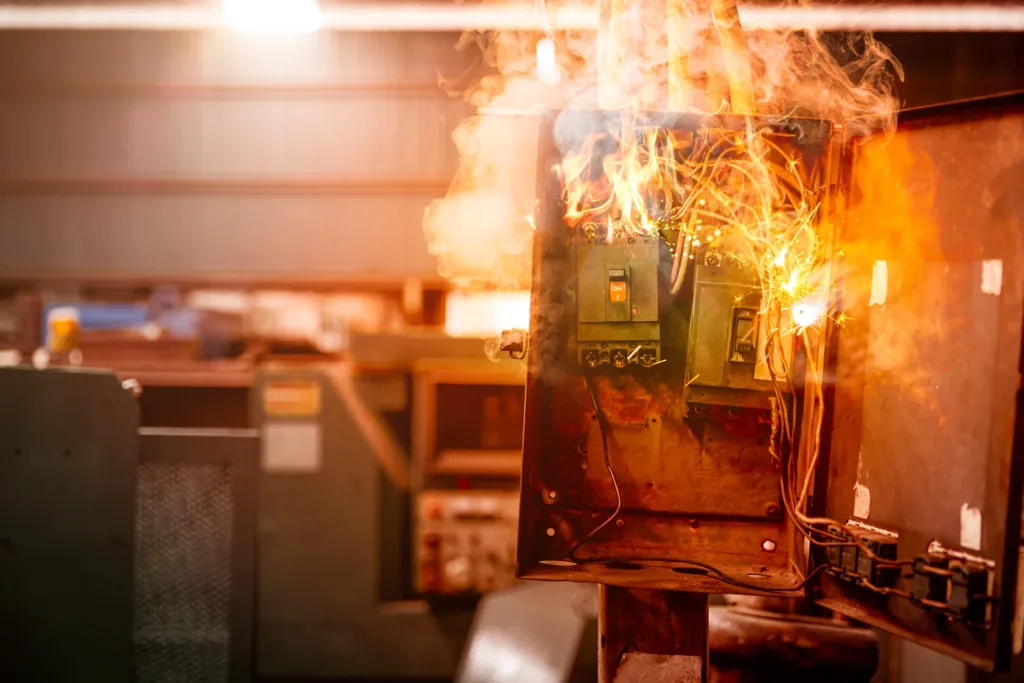
Even with regulations in place, many commercial buildings still experience avoidable electrical hazards—mainly due to complacency or neglect. Knowing what to look for can prevent issues before they escalate.
Overloaded Sockets and Extension Leads
It’s common to find workspaces with multiple devices plugged into a single socket via extension leads. This is not only inefficient—it’s dangerous. Overloading circuits can lead to overheating and fire. Make sure power is distributed properly and avoid daisy-chaining extension cables.
Aged or Damaged Wiring
In older buildings, wiring may not meet current BS 7671 standards. If cables are frayed or brittle, they pose a serious risk of electrical faults. Regular inspections will pick up on this, but staff should also be trained to report visible cable damage.
Inadequate Labelling and Signage
In an emergency, identifying the correct circuit or isolator can be the difference between safety and disaster. All electrical panels and switches should be clearly labelled. Warning signs for high-voltage areas or restricted access zones are essential for compliance and safety.
DIY Repairs or Unqualified Work
Using unlicensed or unqualified personnel to perform electrical tasks is not only illegal—it’s incredibly unsafe. Commercial environments require electricians trained in three-phase systems, load calculations, and fault-finding under the pressures of business continuity.
Hiring Qualified Commercial Electricians
Not all electricians are created equal. Commercial properties need experts familiar with complex systems, larger scale installations, and the specific demands of businesses. Hiring the right professional can make the difference between compliance and liability.
Look for Certification and Accreditation
Always choose electricians who are NICEIC or NAPIT registered. These bodies certify that electricians meet industry standards and are qualified to work in commercial settings.
Experience in Commercial Projects
The demands of a commercial project differ greatly from domestic work. Ask for case studies or references to gauge their experience with systems similar to yours.
Know What You’re Paying For
Transparency is vital. Make sure your electrician provides a clear scope of works, timeframes, and documentation for all inspections and repairs. For further guidance read our article on choosing the right contractor.
Benefits of Regular Electrical Safety Checks
Some businesses view electrical inspections as a compliance burden—but in reality, regular safety checks offer tangible benefits that go far beyond avoiding fines.
Reduced Insurance Risk
Insurance providers increasingly require evidence of electrical safety compliance. Having up-to-date EICRs and documented maintenance helps reduce your liability and may lower premiums. It also shows that you’ve taken reasonable steps to mitigate risk, which can be crucial in the event of a claim.
Longer Lifespan for Equipment
Faulty wiring and poor maintenance strain your systems. Over time, this causes wear that shortens the lifespan of expensive electrical equipment. Regular inspections help identify early signs of trouble so you can act before damage becomes permanent.
Lower Energy Costs
Inefficient systems waste energy. Whether it’s overloaded circuits or outdated lighting, safety inspections often reveal cost-saving opportunities. Fixing faults and optimising your setup can significantly reduce energy bills—an essential win for businesses facing rising operational costs.
Improved Workplace Safety and Morale
When employees know their workplace is safe, they feel valued. Regular electrical safety checks show that management prioritises staff welfare, which in turn can boost morale and productivity.
FAQs
How often should a commercial property have an EICR?
Typically, commercial properties should have an Electrical Installation Condition Report every five years. However, certain high-risk environments or older buildings might require more frequent checks based on professional recommendations.
Are landlords or tenants responsible for electrical safety?
This depends on the lease agreement. Usually, landlords are responsible for the fixed wiring and infrastructure, while tenants handle portable appliances and daily safety. It’s essential that roles are clearly defined to avoid legal confusion.
What’s the difference between PAT testing and an EICR?
PAT testing checks the safety of portable electrical appliances, like kettles and printers. An EICR, on the other hand, inspects the building’s fixed wiring and overall electrical system. Both are important but serve different purposes.
Conclusion
Maintaining electrical safety in commercial properties isn’t optional—it’s essential. It protects your staff, secures your assets, and keeps your business legally compliant. But more than that, it’s a proactive way to reduce costs, avoid downtime, and run a smarter operation. Regular checks, qualified professionals, and a culture of safety awareness are the real foundations of a well-managed commercial space.
If you’re unsure where your premises stand or want to book an inspection, explore our commercial services at Wave Electrical Solutions. Your building—and everyone in it—deserves to be safe, functional, and future-proof.