Domestic fire alarms are a quiet presence in most UK homes — fitted high on ceilings, forgotten until they chirp for new batteries or worse, when smoke triggers a loud and urgent alarm. But relying on them without regular testing is a mistake. A faulty or unresponsive fire alarm might leave your home vulnerable at the very moment you need it to act.
Testing isn’t about ticking a box. It’s about knowing that your alarm will detect danger and sound the alert in time. Most failures aren’t due to poor manufacturing or rare electrical faults. They’re down to flat batteries, blocked vents, or alarms that have simply reached the end of their life.
In many of our recent upgrades, including consumer unit replacements, we’ve included fire-rated systems with surge protection to give homeowners safer, more reliable electrical infrastructure from the outset. These projects not only modernise the installation but add an important layer of protection: see how we apply fire-rated consumer unit upgrades.
Weekly fire alarm testing: your first line of defence
The most important check is also the simplest. Press the test button on each alarm once a week. Hold it down until the unit emits a loud, continuous sound.
Weekly testing helps catch battery or circuitry issues early. If the sound is weak, intermittent, or missing altogether, it’s time for immediate action — either battery replacement or full unit replacement, depending on the model. Never assume one working alarm means all are fine. Each unit should be tested individually.
Keep these tips in mind:
- Test at a regular time each week so it becomes habit
- Use a broom handle or similar tool for hard-to-reach ceiling-mounted alarms
- Warn others in the house before testing to avoid panic
If your alarms are interconnected (wired or wireless), check that all alarms trigger together during the test. This confirms that the link between units is still active.
Battery checks and replacements
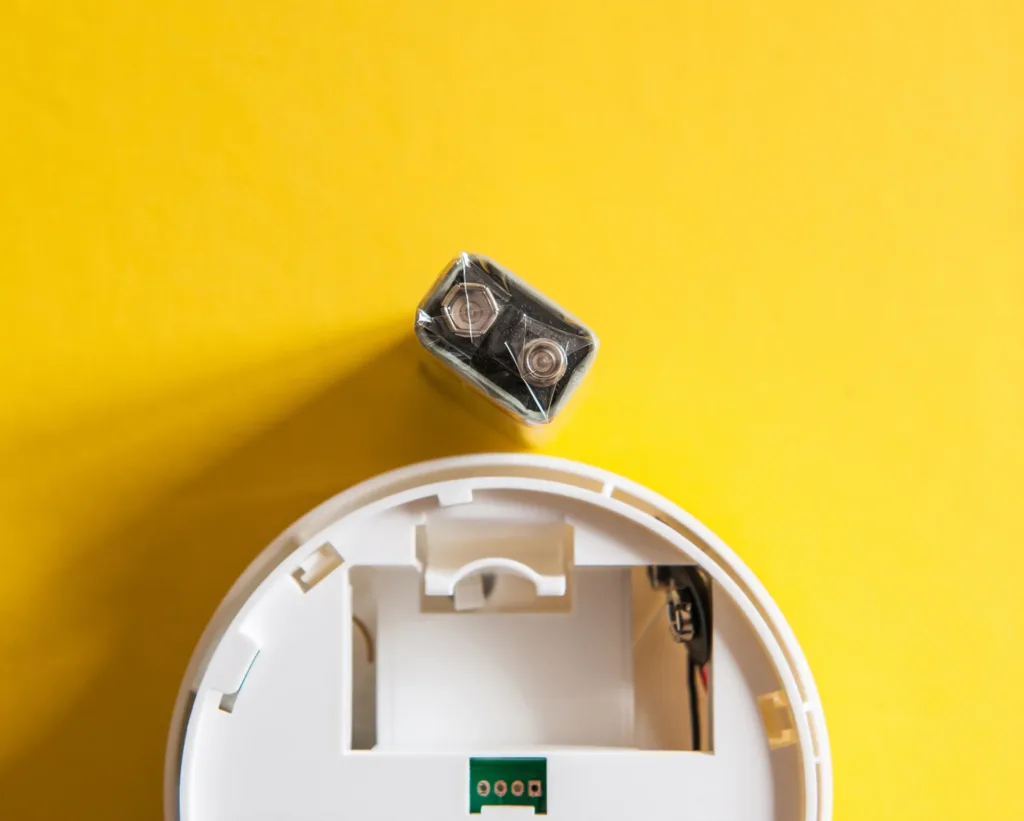
Battery performance is the most common cause of fire alarm failure in UK homes. Whether your alarm uses replaceable or sealed long-life batteries, it needs attention.
Standard 9V batteries (often found in older alarms) should be replaced at least once a year or whenever a low battery chirp sounds.
Sealed long-life models have integrated batteries designed to last up to 10 years — but they must still be replaced in full once expired.
Avoid these common pitfalls:
- Removing the battery to silence an unwanted chirp and forgetting to replace it
- Assuming mains-powered alarms don’t need battery backup (they do)
- Using incompatible batteries or mixing old and new cells
Never ignore battery warnings, even if the alarm sounds fine during tests. And always follow the manufacturer’s guide — even small details, like the battery brand or fitment direction, matter.
Cleaning and physical inspections
Fire alarms are exposed to everyday dust, grease, and household pollutants — especially in kitchens or near vents. Over time, build-up can block the sensor and stop the alarm from working.
Every six months, clean each alarm with a soft brush or vacuum attachment. Don’t use sprays or liquids, and never paint over the alarm body. Paint can clog vents and cause permanent failure.
Physical signs of damage, such as:
- Discoloured casing
- Cracked plastic
- Missing covers
- Loose ceiling mounts
should be treated as reasons for replacement.
When to involve a professional
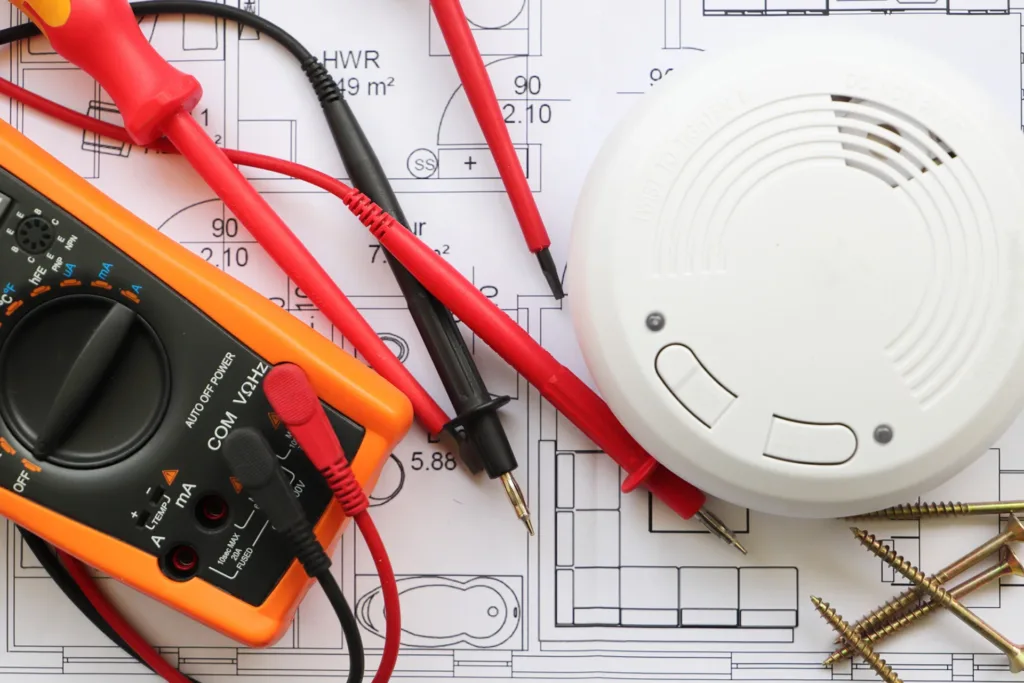
While weekly tests and cleaning can be done by anyone, an annual service by a qualified electrician adds extra assurance. Professionals can:
- Test smoke chamber sensitivity
- Confirm interlinked system performance
- Identify outdated models that no longer meet British Standards
- Advise on safer placement or upgraded models
This is especially useful if your system was installed over a decade ago or if you’re unsure how it was wired. Our team regularly supports homeowners and landlords with compliant fire alarm installations that meet the latest guidance. See our fire detection system work across Cornwall.
BS 5839-6: what the standard says about domestic alarms
BS 5839-6:2019 sets the recommendations for fire detection systems in dwellings. It defines different alarm grades and categories based on the property type and occupancy.
For example:
- Owner-occupied homes should typically meet Grade D1 or D2, using mains-powered alarms with tamper-proof or replaceable batteries
- Rented properties must comply with The Smoke and Carbon Monoxide Alarm (Amendment) Regulations 2022, which require alarms on each storey and in every living room
The British Standard recommends:
- Weekly user tests
- Monthly battery checks (for non-sealed models)
- Annual inspections by a competent person
More guidance is available from Fire Kills, a UK Home Office campaign, which provides clear and verified recommendations for homeowners.
Alarm lifespan and replacement timing
Even if a smoke alarm looks fine, it doesn’t last forever. Most are designed to function effectively for 10 years. After this, sensor degradation increases the risk of failure.
To check your alarm’s age:
- Look for a manufacture or expiry date on the rear
- If no date is visible, and the unit is yellowed or uses a removable battery, assume it’s outdated
Replacing an old alarm isn’t only safer — it also gives you access to newer technology, including wireless interconnection, improved sensor types (dual optical/heat), and longer battery life.
FAQs
How often should I test my smoke alarm at home?
You should test all smoke alarms once a week using the test button until the sounder activates. This confirms that power and signal pathways are functioning correctly.
Can I replace my fire alarm battery myself?
Yes. Most domestic alarms allow user battery replacement, but some modern models are sealed for tamper resistance. Always check the product label or instructions.
Do heat alarms need testing too?
They do. Heat alarms installed in kitchens or garages should be tested weekly just like smoke detectors, especially as they may be part of an interlinked system.
Conclusion
Keeping your domestic fire alarms in working order is one of the simplest and most effective ways to stay safe at home. Weekly testing, six-monthly cleaning, and annual servicing form a reliable rhythm — helping ensure your system responds when it matters most. If your alarms are past their best, chirping frequently, or don’t meet modern standards, it may be time for an upgrade.
Our team at Wave Electrical Solutions is ready to help with inspections, replacements, or full installations of compliant fire detection systems. For tailored support in your area, get in touch with us today.