Electrical systems on boats face conditions far harsher than anything found on land. Saltwater, constant vibration, humidity, and limited space all place pressure on every component, from battery terminals to lighting circuits. Unlike in a home or commercial unit, a fault at sea is more than an inconvenience—it can be dangerous. That’s why marine electrics call for materials, fittings and expertise designed specifically for the maritime environment. At Wave Electrical, we’ve supported everything from fishing vessels to offshore renewables, and our team knows the real-world consequences of poor planning in marine installations.
Following our recent exterior lighting project in Falmouth, where proximity to the coast demanded extra protection, we’ve seen how even land-based projects benefit from marine-grade solutions.
How Marine Electrics Differ from Domestic or Commercial Systems
Saltwater Corrosion and IP Ratings
Salt accelerates corrosion dramatically. This means standard enclosures, cables and terminals degrade quickly when exposed to sea air or spray. For marine use, every fitting must meet stringent ingress protection (IP) ratings—often IP67 or above—to withstand full immersion or high-pressure cleaning. Tinned copper cable is also common, helping prevent oxidation at the conductor level.
Movement, Vibration and Connection Security
Boats vibrate. Even in calm conditions, engine noise and movement create stress on every mechanical and electrical connection. That’s why marine terminals are usually crimped (not soldered), secured with locking fasteners, and routed with careful strain relief. Poor cable management can lead to fatigue, breakage, or shorts in the most inaccessible parts of the vessel.
Voltage, Load Management and Battery Systems
Most vessels rely on 12V or 24V DC systems, sometimes in conjunction with 230V AC shore power. Battery banks must be carefully balanced and fused, with clear labelling and isolation points. Unlike static systems on land, marine setups deal with irregular charge cycles and variable loads, often from navigation equipment, lighting, refrigeration or bilge systems.
Key Components in a Safe Marine Setup
Shore Power and Isolation Transformers
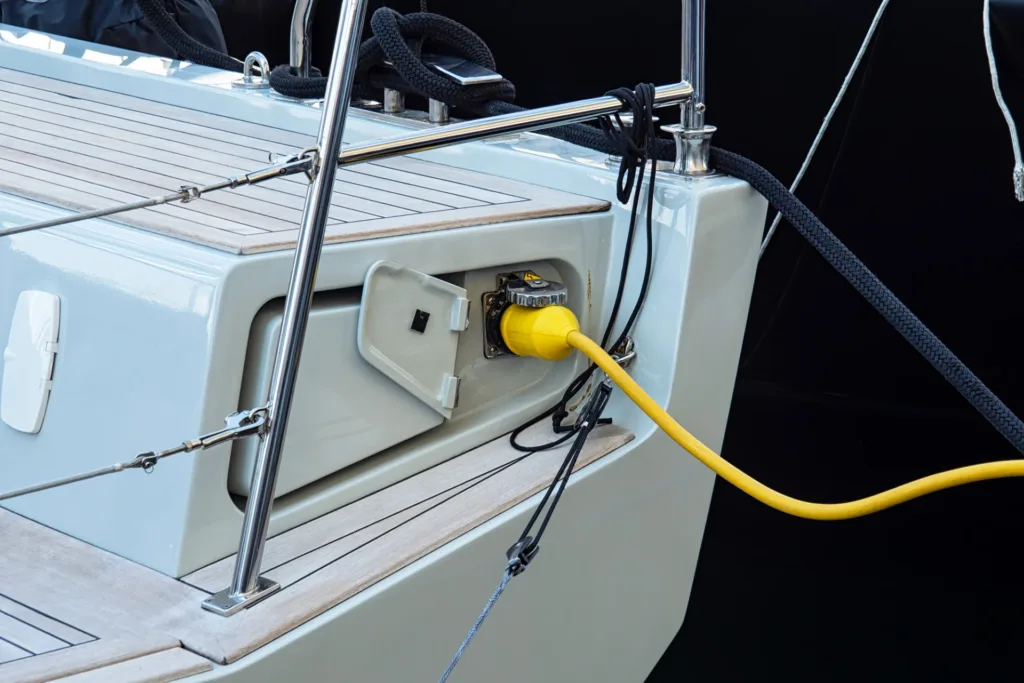
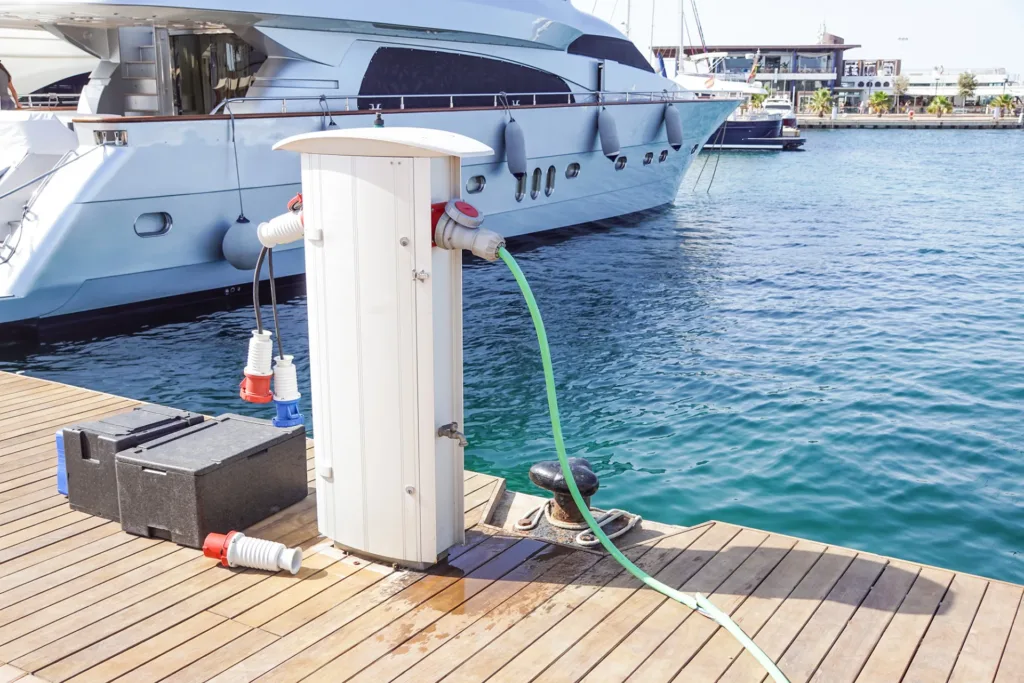
Connecting to land-based mains supply introduces safety risks, particularly galvanic corrosion. An isolation transformer eliminates this by preventing direct electrical connection between onboard and shore systems. Proper RCD protection is also essential, and cable connections must be watertight and secure.
Battery Banks and Charging Systems
Battery chemistry—AGM, gel, lithium—affects charging needs and maintenance schedules. Marine installations often feature multi-bank setups with separate starter and service batteries. These require split charging systems or DC-to-DC converters to operate safely. All equipment must be protected against reverse polarity, overload and thermal issues.
Navigation, Lighting and Safety Circuits
Marine navigation lights, deck illumination, engine alarms and bilge pumps all need reliable supply and redundancy. In some cases, critical circuits are duplicated or backed up with manual switches. Fuse boxes are clearly labelled, and lighting must be waterproof and vibration-resistant. These aren’t preferences—they’re survival requirements.
Safety Standards and Compliance at Sea
Marine-Specific Cable and Fittings
Standard twin-and-earth cabling isn’t suitable on a boat. Marine-grade cable is double-insulated, UV resistant and tinned to prevent oxidation. Junctions must be enclosed in watertight boxes, with all terminations securely crimped. Using the wrong materials compromises the entire system.
Circuit Protection and RCDs
Regulations demand that marine circuits are protected with appropriate overcurrent devices, and in the case of AC systems, residual current devices (RCDs). These should be marine-rated and tested regularly. Any failure in detection can lead to fire or electrocution—particularly hazardous in wet environments.
Compliance with ISO, MCA and RCD Directives
Recreational vessels sold in the UK must comply with the Recreational Craft Directive (RCD), which includes electrical systems as part of overall safety. For both commercial and private vessels, the Maritime and Coastguard Agency (MCA) outlines key requirements covering circuit protection, bonding, fire prevention and inspection schedules. Their guidance on fire safety and electrical storage is essential reading for boat owners using electric systems or charging equipment on board.
Maintenance and Inspection
Common Failure Points to Watch
Loose terminals, battery corrosion, degraded insulation and overloaded circuits are the most common faults we find on boats. These aren’t always visible during routine use, which is why scheduled inspection is so important. Look for signs of heat, corrosion, or discolouration around connections.
Scheduled Testing and Record-Keeping
We recommend annual electrical checks for all vessels, or more frequent testing for those in constant use. Logbooks should note inspections, faults, repairs and any changes to the wiring diagram. Keeping records supports safety checks and resale value.
Why DIY Fixes Are Risky at Sea
Improvised repairs at sea may be unavoidable, but planned system work should always be done by professionals. Using domestic cable, overfusing circuits or failing to isolate batteries properly are common errors. These might function temporarily but often lead to serious damage later.
Project Snapshot: Zappi Charger and Marine Setup Integration
While this Zappi charger installation in Bude wasn’t marine-based, it drew on the same principles we use at sea. Load balancing, isolation and environmental protection were all key considerations. The property relied on solar and battery storage, so power management mirrored the challenges faced in modern electric boat setups.
FAQs
Can you use regular domestic fittings on a boat?
No. Domestic fittings are not designed for vibration, salt exposure or temperature variation. Marine-rated materials must always be used to ensure longevity and safety.
What’s the risk of galvanic corrosion in marine electrics?
It’s significant. Galvanic corrosion occurs when dissimilar metals are electrically connected in seawater. Isolation transformers and proper bonding systems prevent this damage.
How often should a marine electrical system be inspected?
At least once a year for recreational vessels. Commercial vessels may require more frequent checks, especially for critical circuits and emergency systems.
Conclusion
Marine electrical systems must perform under pressure. Salt, movement and confined spaces push every component to its limits. That’s why we always use tinned cable, IP-rated fittings and marine-grade isolators—even for simple lighting upgrades. From bilge pumps to full rewires, each part of the system has to meet tougher standards than land-based installs. If you’re commissioning new work or planning a safety check, make sure the work is done by a team familiar with these requirements.
You can learn more about our marine electrical services here.