
If you’ve ever wondered whether your electrics are truly safe, or why an inspection report might suddenly be required before selling or renting your property, you’re not alone. Electrical testing often becomes a concern when something goes wrong — tripping circuits, flickering lights, or that unexplained burning smell near a socket. But by the time these symptoms appear, the problem may already be advanced. That’s why testing and inspection are so important: they help spot faults early, reduce risk, and provide peace of mind that everything’s working safely and legally.
At Wave Electrical, we regularly carry out testing across Cornwall — from new homeowner checks to full periodic inspections. Many of our clients ask what the different tests involve, when they’re needed, and how to prepare for one. This guide will cover all of that, starting with the types of tests you’re likely to come across.
We’ve also explained what to expect after an inspection, including what the common report codes mean. If you’re unsure how to get ready or what the results might show, we’ll walk you through the process clearly.
Common types of electrical tests
Different tests are used for different purposes — from quick checks to full condition reports. Below are the most common ones you’ll encounter in the UK.
Visual inspection
This is the starting point for most assessments. It involves checking for signs of wear, burning, damage or incorrect use. It may also include verification of bonding and labelling.
Continuity testing
This confirms that the conductors (wires) are properly connected across the circuit and that no breaks exist. It’s essential for confirming safety in protective conductors.
Insulation resistance
This test checks the quality of insulation between live parts and earth. If resistance is too low, current could leak, leading to fire or shock risk.
Polarity testing
Wiring must be correctly aligned: live, neutral, and earth terminals must not be swapped. This test ensures those connections are correct.
Earth fault loop impedance
If a fault occurs, the current must trip the circuit rapidly. This test confirms the impedance is low enough to allow that disconnection to happen in time.
RCD trip time
RCDs (Residual Current Devices) are safety switches that isolate power in dangerous conditions. This test confirms that they trip quickly enough to prevent harm.
Portable Appliance Testing (PAT)
PAT testing applies to plug-in equipment rather than fixed wiring. It checks that kettles, computers, and similar items are electrically safe.
Electrical Installation Condition Report (EICR)
This combines visual checks with live testing to assess the entire fixed installation. The report categorises findings into safety codes and recommends actions if required.
When you’ll need an inspection or test
Some situations legally require testing; others are simply good practice. Here’s when you should expect it.
For homeowners
It’s generally recommended that domestic electrical systems are inspected every 10 years. If you’re planning to sell or buy, a recent EICR can help reassure all parties.
For landlords
Under the Electrical Safety Standards in the Private Rented Sector (England) Regulations 2020, a full EICR is required at least every 5 years or at the start of a new tenancy.
For businesses and workplaces
Testing schedules vary by environment. Office spaces may be inspected every 5 years; high-risk premises (e.g. factories, kitchens, care homes) require more frequent checks.
After installation or alteration
Any major electrical installation — such as a new circuit, consumer unit or property extension — must be tested and signed off before use.
After flood, fire or accidental damage
Unexpected events can compromise wiring or components. Testing is essential before re-energising affected circuits.
In one recent project, we helped a homeowner identify and resolve EICR faults flagged during a house purchase. Catching the issue early saved them thousands in remedial costs.
Getting your property ready for inspection
Preparing for testing is straightforward, but a few things can help the process go more smoothly.
1. Share any existing paperwork
Previous EICRs, installation certificates or diagrams can help electricians understand what’s already in place.
2. Ensure access to key areas
Consumer units, socket outlets, light fittings and key junction points should be accessible — not hidden behind furniture or boarded-in.
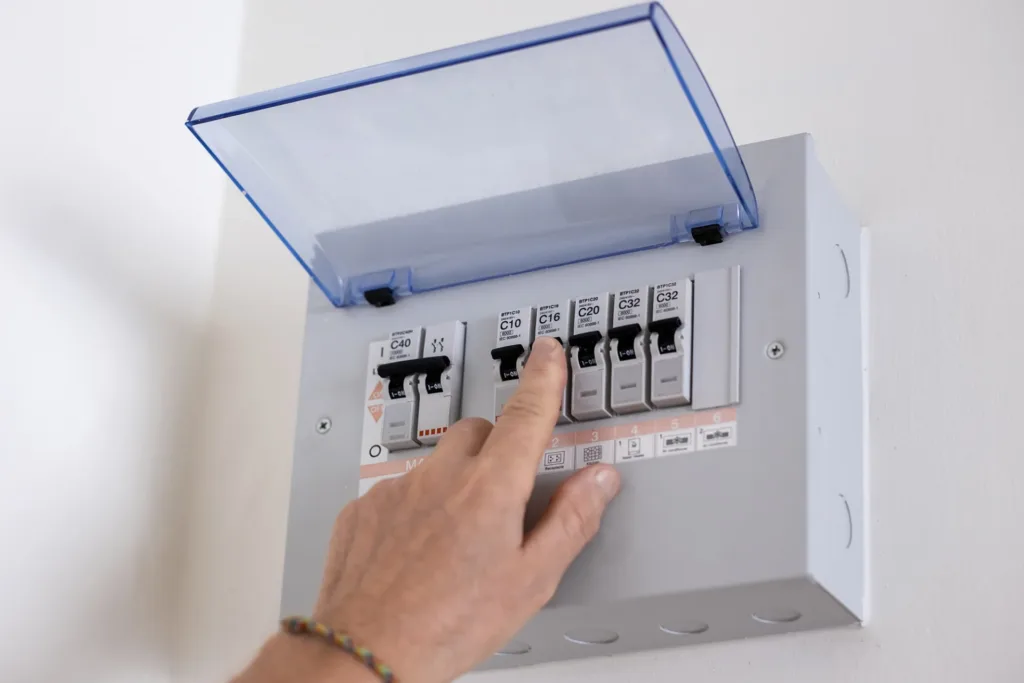
3. Expect temporary power loss
Testing usually requires circuits to be powered off, one at a time. Most visits take 2–4 hours depending on property size.
4. Mention any known issues
Tell the electrician if you’ve noticed frequent tripping, flickering, or heat build-up near sockets. These clues can guide further investigation.
What the report will tell you
After testing, you’ll receive a written report — usually an EICR — showing the condition of the fixed installation and any action needed.
Code system
The results use standard coding:
- C1 – Danger present. Immediate action required.
- C2 – Potentially dangerous. Urgent attention recommended.
- C3 – Improvement advised. No immediate danger but not ideal.
- FI – Further investigation needed. Can’t confirm safety without more checks.
These codes determine whether the installation is safe to remain in use. In many cases, C1 or C2 faults must be rectified before a tenancy can proceed or a completion certificate is granted.
If you’re unsure what might have triggered a specific result — such as a C2 fault for missing earth bonding — our article on electrical shocks and prevention covers some of the common issues behind unsafe reports.
Understanding your legal responsibilities
Homeowners
There’s no blanket law requiring you to have an EICR, but many mortgage lenders, insurers or local authorities may request one. If you’re having major works carried out, Building Regulations may also apply.
Landlords
The law is clear. An up-to-date EICR is mandatory. You must give tenants a copy and resolve any dangerous faults within 28 days.
Business owners
Employers are legally responsible for maintaining a safe working environment under the Electricity at Work Regulations 1989. This includes proper testing and inspection.
Certification standards
All testing must comply with BS 7671 (IET Wiring Regulations) and Part P of the Building Regulations. Always choose a qualified, competent professional — ideally one registered with NICEIC, NAPIT or a similar body.
Frequently asked questions
What’s included in an EICR?
A full EICR includes visual inspection, live testing and classification of faults. It covers wiring, distribution boards, sockets and lighting circuits.
Can I stay at home during testing?
Yes. The electrician will work through the property methodically. You may lose power to some rooms temporarily, but the home remains safe to occupy.
What if my report flags faults?
You’ll need to arrange for repairs. Your electrician can quote for remedial works, and you’ll receive a follow-up certificate once completed.
Final thoughts
Electrical testing is about safety, responsibility and trust. Whether you own your home, manage a rental, or run a business, knowing your electrics are up to standard gives peace of mind — and meets legal expectations. At Wave Electrical, our team works closely with clients to simplify the process. We explain results clearly, fix issues promptly, and make sure your installation stays compliant for years to come.
To learn more about how we can help, visit our page on electrical testing and inspection services.