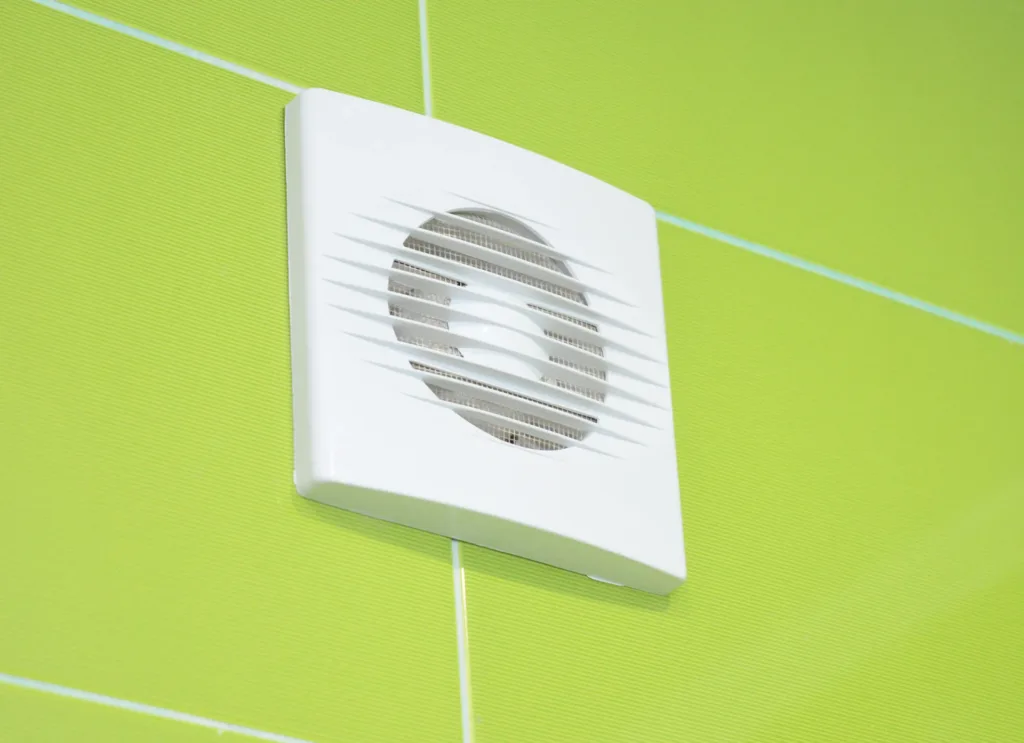
In many UK homes, the bathroom is the most moisture-prone space. Long, steamy showers and frequent use mean condensation can build up fast—especially if ventilation is poor. Over time, this excess moisture can lead to peeling paint, black mould, and even structural problems. That’s why bathroom ventilation is a regulated requirement, not a design preference. Understanding what the rules say about extractor fans helps ensure your bathroom remains safe, efficient, and legally compliant.
Once you’re familiar with the basics, it’s worth reviewing the installation rules around where fans can go, how powerful they must be, and who’s qualified to fit them. Our team frequently advises homeowners on safe extractor fan installation—and we’ve found that even seemingly small oversights can lead to big issues later.
Bathroom ventilation: why regulations exist
The driving force behind ventilation regulations is to reduce the risk of damp and mould. Water vapour from showers, baths, and even hot taps quickly raises the relative humidity in a bathroom. If that moisture doesn’t have a route to escape, it will settle on cold surfaces, encouraging mould spores and bacterial growth.
Regulations make sure that any new or refurbished bathroom includes adequate mechanical extraction to actively remove moisture. This applies especially in homes without an openable window. In addition to protecting the building fabric, compliant ventilation also improves air quality and reduces long-term maintenance costs.
Regulatory framework for extractor fans
Approved Document F (Ventilation)
The main legislation governing bathroom fans in England and Wales is Approved Document F of the Building Regulations. It sets minimum airflow performance requirements for ventilation systems, both natural and mechanical.
A bathroom with a bath or shower must have a fan capable of extracting at least 15 litres of air per second (l/s) if it’s used intermittently. Where fans are used continuously, the minimum is 8 l/s. For separate WC compartments, the required rate is 6 l/s.
Part P (Electrical Safety)
Bathroom extractor fans also fall under Part P of the Building Regulations, which governs electrical safety in homes. Any installation involving a bathroom circuit—including fans—must be carried out by someone competent and qualified. It’s also classed as notifiable work under Building Control, unless the installer is a member of an approved Competent Person Scheme.
Planning and Building Control
For most standard domestic bathrooms, planning permission isn’t needed to install or replace a fan. However, if you’re modifying drainage systems, altering the structure, or working in a listed building, notification may be required. Always check with your local authority.
Minimum extraction performance
Airflow rates
Regulations distinguish between intermittent and continuous extraction. Most domestic fans are still intermittent, kicking in with the light switch or a humidity sensor. For these models:
- Bathroom (with bath/shower): 15 l/s minimum
- WC (separate from bathroom): 6 l/s minimum
Continuous fans can run more quietly at lower rates, but the minimum airflow must still be met. Performance is often tested under standard conditions (known as “in situ”), and installers should account for duct length and bends which reduce efficiency.
Overrun timers and humidistats
If the fan is wired to operate with the light switch, an overrun timer is required so it continues extracting for at least 15 minutes after the light is switched off. Many modern fans also include a humidistat—a built-in sensor that activates extraction automatically when moisture levels rise. These are especially useful in bathrooms without windows, helping to maintain ventilation compliance without user input.
Zoning and installation regulations
Bathroom zones explained
Bathrooms are divided into zones to assess electrical risk, based on how close fittings are to water sources:
- Zone 0: Inside the bath or shower tray itself
- Zone 1: Above the bath or shower up to 2.25m
- Zone 2: 0.6m horizontally from the bath or shower edge
Extractor fans installed in Zones 1 or 2 must have an appropriate IP (Ingress Protection) rating—usually IPX4 or higher. If you’re considering positioning the fan above a shower, you may find our article on that topic useful: Can you put an extractor fan directly above a shower?
Safe positioning
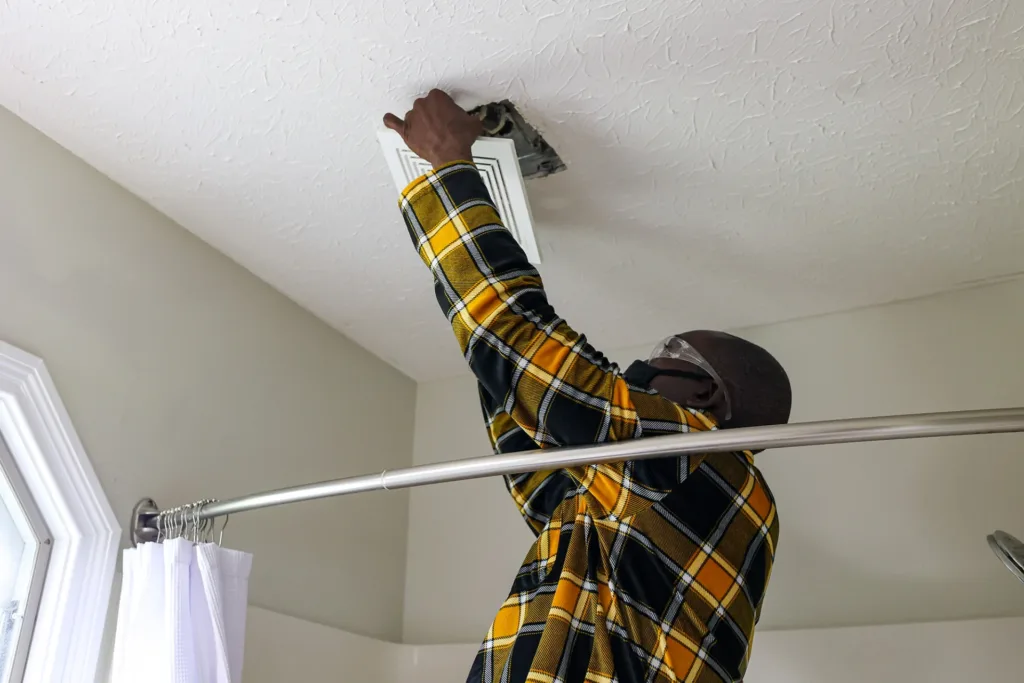
Extractor fans should be fitted high on the wall or ceiling where warm, moist air accumulates. Ductwork must be arranged to minimise resistance, with as few bends as possible and an external grille to vent outside. Where ducting runs through a loft, insulation may be required to prevent condensation forming inside the pipe.
Electrical and wiring considerations
RCD protection
All bathroom fans must be connected to a circuit protected by an RCD (Residual Current Device), which limits the risk of electrical shock. This applies to new installations and any retrofit work involving rewiring.
SELV fans for high-risk zones
For installations in Zone 1 (directly above the bath or shower), SELV (Safety Extra Low Voltage) fans are typically required. These operate at 12V or 24V, powered via a transformer that must be installed outside the bathroom zones—usually in the loft or an adjacent room. The transformer isolates the user from the mains supply, improving safety in wet areas.
Compliance and certification
Who can install a fan?
Installation must be carried out by someone qualified to work on domestic electrics—ideally a registered electrician with a Competent Person Scheme such as NICEIC or NAPIT. Not only does this ensure the job is safe, but it also allows the work to be self-certified under Part P.
Notification requirements
If you’re installing a new circuit, altering existing bathroom wiring, or replacing a fan in a different zone, your local authority’s Building Control department must be notified. Hiring a registered installer avoids the need to submit this notification yourself.
Common installation mistakes
In our experience, these are the most frequent causes of non-compliant or unsafe bathroom fan setups:
- Installing fans with an inadequate IP rating for their zone
- Forgetting to include an overrun timer when required
- Omitting RCD protection on new or upgraded circuits
- Using excessively long duct runs or poor routing that reduces airflow
- Placing fans too far from the moisture source, reducing extraction effectiveness
Each of these issues can be avoided by working with a qualified electrician who understands both Building Regulations and manufacturer guidelines.
When extractor fans are mandatory
New builds and major refurbishments
In new homes, Building Regulations require mechanical ventilation in any bathroom that lacks adequate natural ventilation. That means an extractor fan is always required unless there’s a large openable window that can meet the required airflow rates—something rarely achieved in modern, well-sealed homes.
Windowed bathrooms
If a bathroom has a window that opens, a fan may not be strictly mandatory. However, the regulations make clear that if the window doesn’t provide “adequate ventilation,” a mechanical fan must be added. Most homeowners opt to install one anyway to reduce condensation and improve comfort.
FAQs
Do all bathrooms need extractor fans?
Not necessarily. If a bathroom has an openable window and meets ventilation standards through natural means, a fan isn’t legally required. However, in most modern homes, a fan is the most reliable option.
What type of fan is allowed in a shower cubicle?
Only fans with the correct IP rating and voltage type can be used above a shower. Typically, this means a SELV fan rated IPX4 or above, with the transformer fitted outside the bathroom.
Can I install a bathroom fan myself?
Not unless you’re a qualified electrician. All bathroom electrical work falls under Part P and is classed as notifiable. Using a registered professional is the safest—and often the only legal—option.
Final Thoughts
Building regulations for bathroom extractor fans may seem complex at first glance, but they’re rooted in practical safety and moisture control. With clear standards on extraction rates, electrical safety, and zoning, compliance is about much more than paperwork—it’s about long-term performance and protection. Our team regularly works with homeowners across Cornwall to install fans that meet both legal and practical needs. If you’re upgrading a bathroom or facing condensation issues, contact us today to get expert advice tailored to your space.