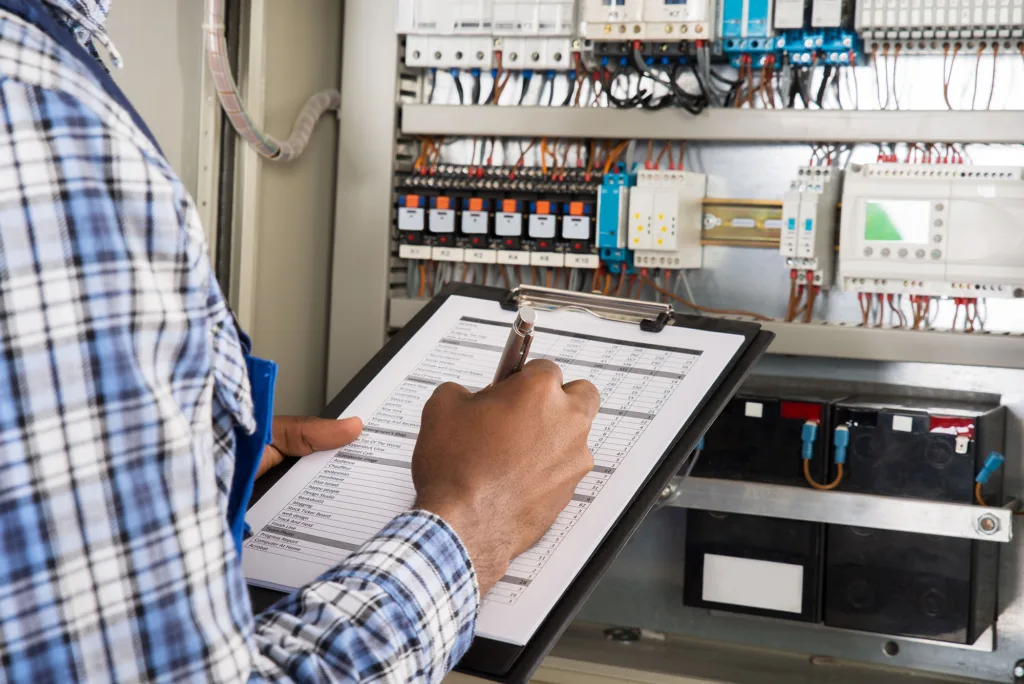
Before we go into the process, let’s set the scene. An Electrical Installation Condition Report, or EICR, is a structured safety check that examines the condition of a property’s electrical installation. The aim is simple but vital: to identify any defects, deterioration or non-compliances that could put people at risk.
Electrical systems age with use. Connections loosen, insulation breaks down, and regulations evolve. An EICR brings these hidden issues to light before they cause serious problems such as electric shock or fire. For landlords, this isn’t only a matter of safety—it’s a legal duty. For homeowners, it’s peace of mind that their property is safe to live in. For businesses, it helps ensure compliance with workplace safety standards while protecting staff and customers.
The scope of an EICR covers fixed electrical installations, which means everything from consumer units and circuits to sockets, switches and light fittings. Portable appliances are not included—that falls under PAT testing. Instead, the EICR is about the wiring and infrastructure that form the backbone of a building’s electrics.
The Inspection Process Step by Step
An EICR inspection isn’t a quick glance at the fuse box. It’s a systematic procedure carried out by a qualified electrician, typically lasting several hours depending on the size and complexity of the property. The process can be broken into two main stages: visual checks and testing.
Visual Checks
The first step is a thorough walk-through to spot obvious issues. This can include signs of overheating on sockets, damaged or loose fittings, exposed wiring, outdated consumer units, or missing labelling. The electrician will also check whether circuits are properly identified and if safety devices, such as Residual Current Devices (RCDs), are in place.
Testing Methods Explained
After the visual inspection comes the hands-on testing. This is where the electrician uses calibrated instruments to measure performance and detect faults not visible to the eye. Common tests include:
- Continuity testing – confirms that conductors are correctly connected throughout a circuit.
- Insulation resistance testing – checks whether the insulation around wires is intact and not breaking down.
- Polarity checks – ensures that live, neutral and earth conductors are in the correct positions.
- RCD testing – verifies that RCDs trip correctly under fault conditions.
- Earth fault loop impedance – measures how quickly a circuit disconnects in the event of a fault.
- Functional testing – switches, sockets and protective devices are operated to confirm they work as intended.
These tests not only flag up faults but also measure overall compliance with current standards such as BS 7671. The electrician records all results, comparing them against acceptable limits. For a broader overview of when inspections are needed and why they’re important, see our guide on the basics of electrical inspections
Documentation and Reporting
Once the inspection and testing are complete, the electrician compiles the findings into a formal Electrical Installation Condition Report. This isn’t just paperwork; it’s a vital document that records the health of the electrical system and provides clear evidence of compliance with safety standards.
The report includes the results of all tests carried out, details of any defects, and observations about the installation’s condition. Every issue is coded according to the level of risk it presents:
- C1 – Danger present: Immediate action required because there is a direct risk of electric shock or fire.
- C2 – Potentially dangerous: Urgent remedial action needed to remove a significant risk.
- C3 – Improvement recommended: Not unsafe, but action should be taken to bring the installation up to a better standard.
- FI – Further investigation required: Something doesn’t appear right and needs deeper inspection before the system can be declared safe.
A report that contains C1 or C2 observations will automatically be classed as unsatisfactory, meaning the installation needs work before it can be deemed safe. A report with only C3 or FI codes may still pass, but remedial work will often be recommended to maintain compliance and safety.
The EICR also serves as a record for insurers, letting them know that the property’s electrics meet required standards. For landlords, it’s essential evidence of legal compliance with safety regulations. For homeowners, it’s a useful reference for future works and upgrades.
Preparing for an EICR Inspection
While the inspection itself is highly technical, there are simple steps property owners can take to make the process smoother and quicker. Preparing ahead of time not only saves the electrician time but also reduces disruption for occupants.
One of the most important steps is ensuring clear access to key areas, especially the consumer unit, sockets and switches. Cupboards, storage units or heavy furniture blocking these points should be cleared before the electrician arrives. If there are outbuildings or garages with electrical supply, these too need to be accessible.
It’s also helpful to provide previous inspection reports or certificates, if available. These can give the electrician a useful baseline, highlighting any recurring issues or previous remedial works.
Tenants and employees should be informed in advance, as circuits will need to be switched off during testing. This can cause temporary disruption to lighting, heating or internet services, so planning ahead avoids unnecessary inconvenience.
The duration of the inspection depends on the property’s size and complexity. A small flat may take a couple of hours, while a large commercial building could take a full day or more. Having an idea of the timescale in advance helps with scheduling and ensures minimal disruption to daily routines.
Legal and Regulatory Requirements
An EICR is not simply best practice; in many situations, it is a legal requirement. The main reference point for all inspections is BS 7671, also known as the Wiring Regulations. These set out the standards for electrical installations in the UK and form the benchmark against which inspections are measured.
For domestic properties, Approved Document P of the Building Regulations provides guidance on electrical safety. This requires that all fixed electrical installations are designed and maintained to protect occupants from fire and electric shock. While homeowners are not legally bound to have routine EICRs, they are strongly advised to do so—especially when buying, selling or renovating a property.
For landlords, however, the rules are much stricter. Current legislation requires rental properties in England to have an EICR carried out at least once every five years, or more frequently if recommended by the inspector. A copy of the report must be given to new tenants before they move in and provided to existing tenants within 28 days of the inspection. Failure to comply can result in financial penalties and difficulty in legally letting the property.
Commercial properties also fall under workplace safety legislation, which makes employers responsible for ensuring that electrical systems are safe. Regular inspections demonstrate compliance and help businesses avoid liability in the event of an electrical accident.
After the Inspection – What Happens Next?
The outcome of an EICR falls into one of two categories: satisfactory or unsatisfactory. A satisfactory result means no dangerous or potentially dangerous issues have been found. However, even in this case, improvement recommendations (C3 codes) may still be noted, allowing property owners to plan future upgrades.
An unsatisfactory report means at least one C1 or C2 fault has been identified. In such cases, remedial work is essential. C1 issues should be dealt with immediately, often during the inspection itself, as they present an immediate risk. C2 issues must be addressed as soon as possible to ensure the property is safe. If an FI code is given, further investigation must be completed before the installation can be declared compliant.
Once remedial work has been completed, the electrician may issue a confirmation or a follow-up EICR to demonstrate that the installation now meets required safety standards. Keeping these documents safe is important, both for compliance and for providing evidence to insurers, tenants or future buyers.
For professional support and accredited inspections, trust Wave Electrical Solutions to deliver thorough and reliable EICRs.
Frequently Asked Questions
- How long does an EICR inspection take?
The length of time depends on the property’s size and complexity. A small flat can usually be inspected in two to three hours, while larger houses may take half a day. For commercial properties, inspections may take a full day or longer. - Is an EICR a legal requirement for homeowners?
For private homeowners, there is no strict legal requirement. However, an EICR is highly recommended for safety and is often requested by insurers or mortgage lenders. For landlords, an EICR every five years is mandatory. - How much does an EICR usually cost?
Costs vary depending on the size of the property and the number of circuits. For a small flat, prices typically start around £120–£150, while larger homes and commercial premises can be several hundred pounds. The investment is modest compared with the peace of mind and compliance it provides.
Conclusion
An EICR inspection is far more than a formality—it’s a structured, detailed process designed to safeguard people and property. By highlighting faults before they become dangerous, it helps to prevent fire, electric shock and costly repairs. For landlords, it ensures compliance with legal obligations, and for homeowners, it provides reassurance that their electrics are safe and up to modern standards.
The key to making the most of an EICR is preparation. Clear access, good records, and choosing a qualified electrician all contribute to a smooth process and accurate results. And once the inspection is complete, acting quickly on recommendations keeps the property safe for years to come.
If your electrics are due for a check, arranging an inspection is one of the smartest steps you can take. Book your Electrical Installation Condition Report (EICR) service today and stay confident that your property’s electrics are in safe hands.