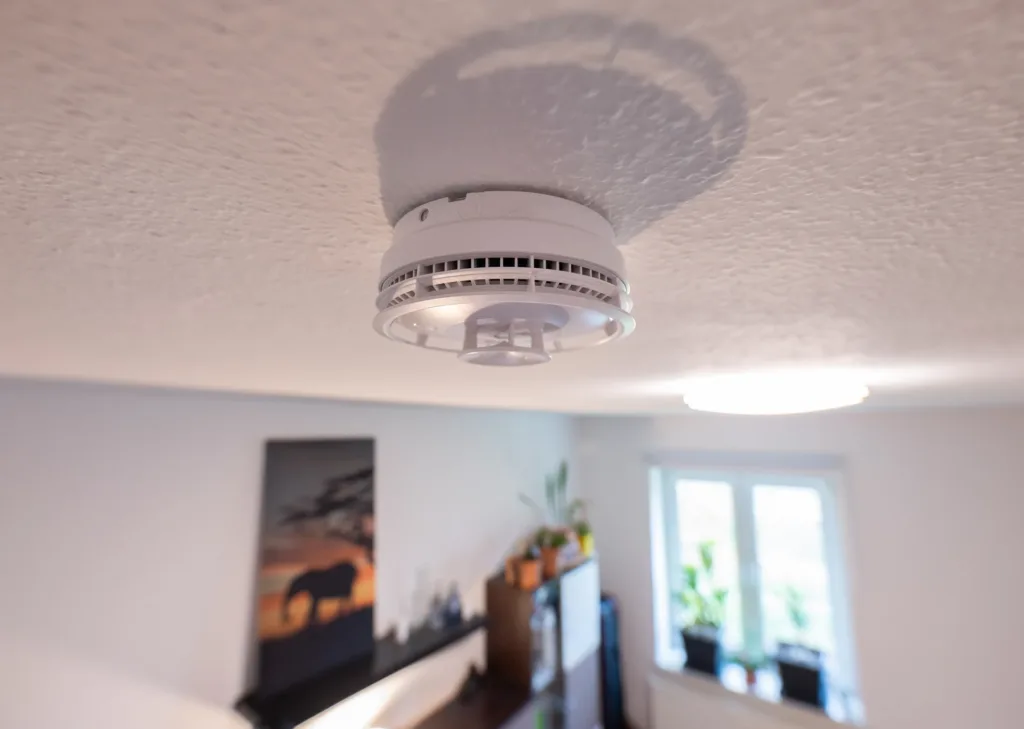
Most of us assume a basic smoke alarm is enough to protect the home — but in reality, fire and gas detection systems are not all the same. From slow smouldering fires to silent carbon monoxide leaks, each hazard requires its own type of sensor, installed in the right place and maintained correctly. Getting this wrong can put lives at risk.
Our team at Wave Electrical often works with homeowners who’ve inherited outdated or non-compliant systems. Whether you live in a one-bedroom flat or a multi-storey house, understanding the core detection types — and where each one belongs — is key to creating a safer living environment. In this guide, we break it down room by room.
Smoke Detectors — Your First Line of Defence
Optical vs Ionisation Sensors
There are two main types of smoke detector: optical (photoelectric) and ionisation. Optical alarms use infrared beams to detect visible smoke particles — particularly effective for slow-burning, smouldering fires typically caused by faulty wiring or upholstery ignition. Ionisation alarms react to smaller particles from fast-flaming fires such as paper or grease fires.
Modern guidance leans towards optical alarms in most domestic settings, as they’re less prone to false alarms and offer better early warning in typical household fire scenarios. Some properties benefit from a combination or multi-sensor alarm, which blends both detection types in a single unit.
Ideal Locations for Smoke Alarms
The Fire Industry Association recommends placing smoke detectors:
- On the ceiling of hallways, landings and living areas
- At least 30cm from walls and light fittings
- Away from sources of steam or cooking fumes
For most UK homes, this means one alarm on each storey, ideally interlinked so that if one triggers, they all sound.
BS 5839-6 Guidelines for Homes
British Standard BS 5839-6 sets the benchmark for domestic fire detection. It recommends a minimum Grade D1, Category LD2 system for most occupied houses — that’s mains-powered alarms with tamper-proof back-up and coverage in escape routes and high-risk rooms. Rented properties are legally required to meet these standards under the Smoke and Carbon Monoxide Alarm (Amendment) Regulations 2022.
Heat Detectors — Essential for Kitchens and Garages
How They Work and Why They’re Different
Heat detectors don’t respond to smoke; they activate based on temperature rise. This makes them ideal for spaces like kitchens or garages where cooking or dust might trigger a standard smoke alarm unnecessarily.
There are two types:
- Fixed temperature (usually 58°C or 78°C), which trigger when a specific threshold is reached
- Rate-of-rise, which activate when temperature increases rapidly over a short period
Where Heat Detectors Should Be Installed
In domestic settings, heat detectors are best placed:
- In kitchens, to avoid false alarms from steam and cooking smoke
- In garages or utility rooms, where vehicle exhaust or tools can produce particulates
- In loft spaces with water heaters or boiler flues
They should not be used as a substitute for smoke detectors in living areas.
Avoiding Nuisance Alarms
One of the most common mistakes we see is the installation of smoke alarms in kitchens. This often leads to residents removing batteries after repeated false alarms. A heat detector avoids this risk — offering coverage without the inconvenience.
For a deeper understanding of the main fire detection types, our team explains the three basic systems.
Carbon Monoxide Detectors — Silent but Deadly
What CO Detectors Monitor and Why
Carbon monoxide (CO) is a colourless, odourless gas that can be lethal even at low concentrations. It’s produced by faulty or poorly ventilated gas appliances such as boilers, cookers, and open fires.
CO detectors sense the gas and sound an alarm before levels reach dangerous thresholds — providing a critical early warning for households.
Rooms Where You Need One
UK law now requires carbon monoxide detectors to be installed in any room with a solid fuel-burning appliance. Our team also recommends fitting them in:
- Rooms with gas boilers or gas cookers
- Bedrooms located near combustion appliances
- Living rooms with log burners or open fireplaces
The best position is on a wall at head height, around 1–3 metres from the appliance.
Compliance with UK Carbon Monoxide Regulations
As of 2022, landlords in England must install working CO alarms in all rooms with combustion appliances and repair or replace faulty units during tenancy. Owner-occupiers are not legally bound, but omitting one is a serious safety oversight.
Matching Detector Types to Home Layouts
Flats and Small Homes
A one-storey flat typically requires:
- One optical smoke alarm in the hallway
- A heat alarm in the kitchen
- A CO detector if gas or solid fuel is used
Interlinked battery-powered alarms (Grade D2) are acceptable if installed correctly.
Multi-Storey Houses
Larger homes should have:
- Smoke alarms on each landing and in all living rooms
- A heat alarm in the kitchen and utility
- CO detectors in any room with a combustion source
Interlinking is essential, either via hard wiring or wireless connectivity.
Properties with Combustion Appliances
Any property with a boiler, gas hob, fireplace, or fuel stove must include carbon monoxide detection. This is especially important in older homes with enclosed or poorly ventilated systems.
To see examples of professionally installed detection systems, you can browse our recent fire detection projects.
Power Supply, Interlinking and Maintenance
Mains-Powered vs Battery
Mains-powered detectors with backup batteries (Grade D1) are the most reliable. They’re permanently wired into your home’s supply and still work during a power cut. Long-life sealed batteries are an acceptable alternative for smaller homes, but the devices must be replaced in full once expired.
Interlinked Alarms and Smart Systems
Modern systems often include wireless interlinking, meaning all alarms sound together when any unit detects a problem. Some smart detectors also send alerts to your phone — useful if you’re away from home. However, these systems still need to meet the same core performance standards.
Testing and Replacement Best Practice
- Test alarms weekly using the test button
- Vacuum units every few months to remove dust
- Replace standard alarms every 10 years unless specified otherwise
Your detector won’t last forever — even if the light’s still flashing.
FAQs
How many smoke detectors do I legally need in the UK?
At minimum, one smoke alarm per storey is required in rented properties, positioned in escape routes. Owner-occupied homes are advised to follow the same guidance.
Can I install detectors myself or should I use an electrician?
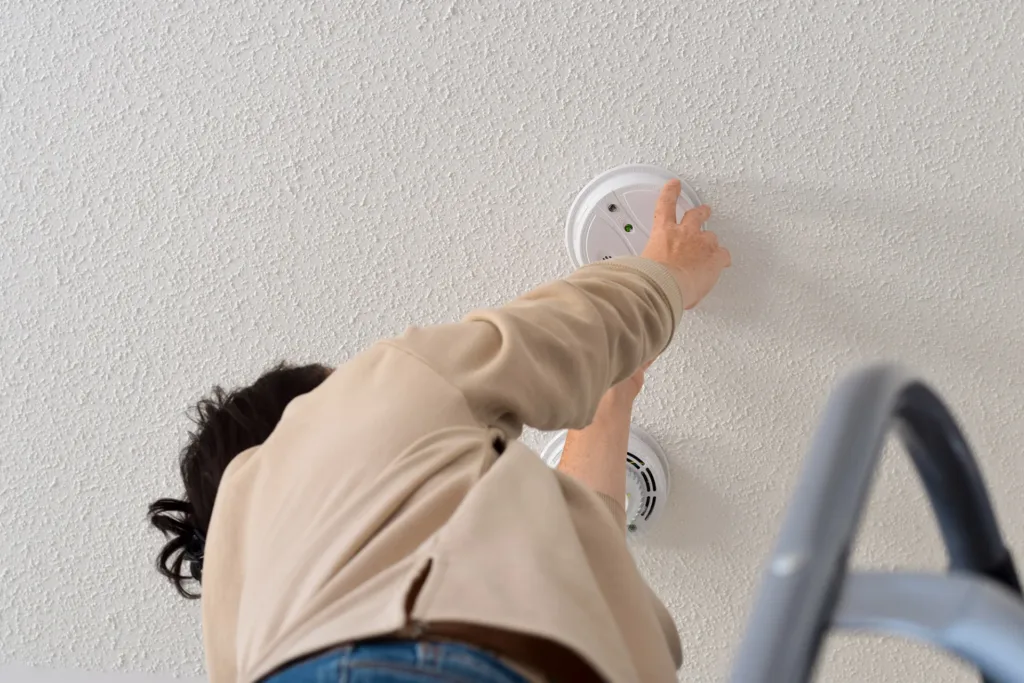
Battery-powered alarms can be fitted by a competent homeowner. Mains-powered and interlinked systems should always be installed by a qualified electrician.
Are combined smoke and CO alarms a good idea?
They can be, provided they meet both BS EN 14604 (for smoke) and BS EN 50291 (for CO). However, placement still matters — the ideal mounting location for smoke and CO can differ.
Final Thoughts
Selecting the right detectors for your home is about more than ticking boxes. It’s about protecting people, responding quickly to hazards, and ensuring peace of mind. A combination of smoke, heat, and CO alarms — correctly chosen and placed — offers robust protection in real-world conditions.
We always recommend interlinked alarms where possible, regular testing, and ensuring compliance with the latest safety standards. If you’re upgrading your system or moving into a new property, our team at Wave Electrical can provide expert installation advice and ensure every room is properly covered.
For help planning or fitting a compliant setup, get in touch via our contact page.