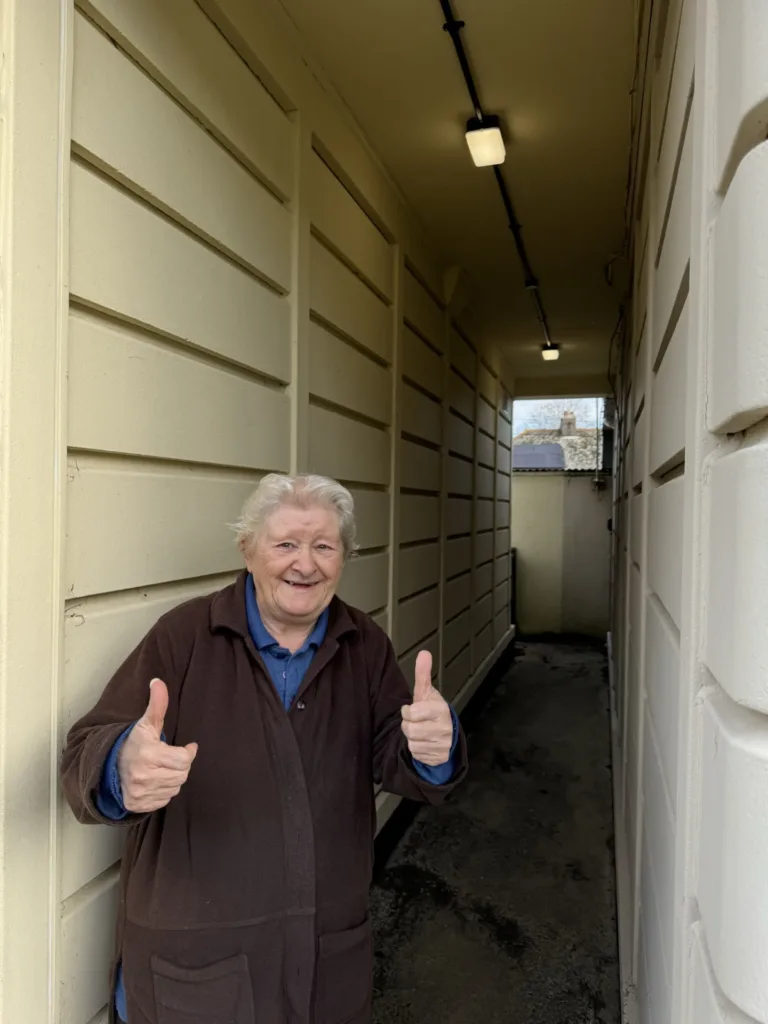
Mrs Lagor’s home in St Austell has a covered passage running down the side of the property, the sort of narrow archway you find all over Cornwall where houses sit close together and the gap between them has been roofed over. They’re useful things. They keep the rain off you, they give you a sheltered route from the front of the house through to the back, and they’re somewhere to tuck a bike or a few odds and ends out of the weather. What they aren’t is bright. Once the light goes, a passage like that turns into a tunnel, and from October onwards that’s happening from mid afternoon.
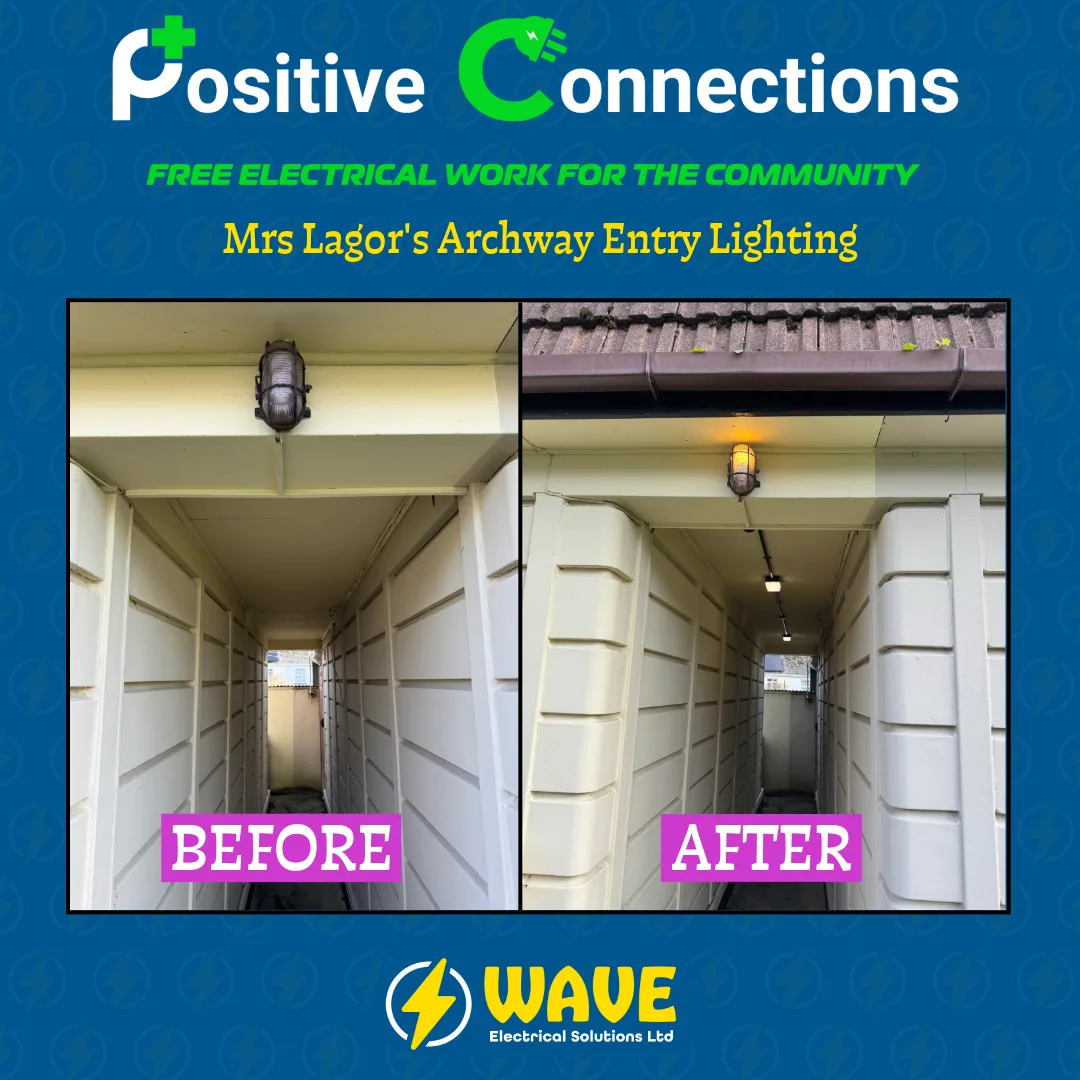
There was already an exterior light on the front wall above the entrance to the archway. Fine for the doorstep, but it was never going to throw light any real distance down the passage itself. The job was to get useful light along the whole length of it.
The approach was to work from what was already there rather than start from scratch. We took a supply from the existing front wall light and extended it down the side of the property to feed two rectangular bulkhead fittings. Doing it that way meant no new circuit, nothing to add at the consumer unit, and no need to be in and out of the house running cables through rooms. For an older customer, keeping the disruption to a minimum is worth a lot on its own.
The cabling was run in 20mm conduit. That matters in a spot like this. The archway is covered, but it’s still an exterior space open at both ends, so anything run along it needs proper mechanical protection rather than being clipped to the surface and left to take whatever knocks and damp come its way. Conduit also tidies the whole thing up. In a passage that narrow, the run is right in your eyeline every time you walk through, so getting it straight and neatly clipped to the line of the ceiling makes the difference between work that looks like part of the building and work that looks bolted on.
The two fittings were spread along the run rather than grouped together. Putting a single light in the middle of a passage sounds sensible until you use it, because it leaves both ends in shadow and the contrast makes it harder to judge where you’re putting your feet, not easier. Two fittings spaced along the length give you an even spread from one end to the other, which is what you actually want when you’re walking through on a dark evening.
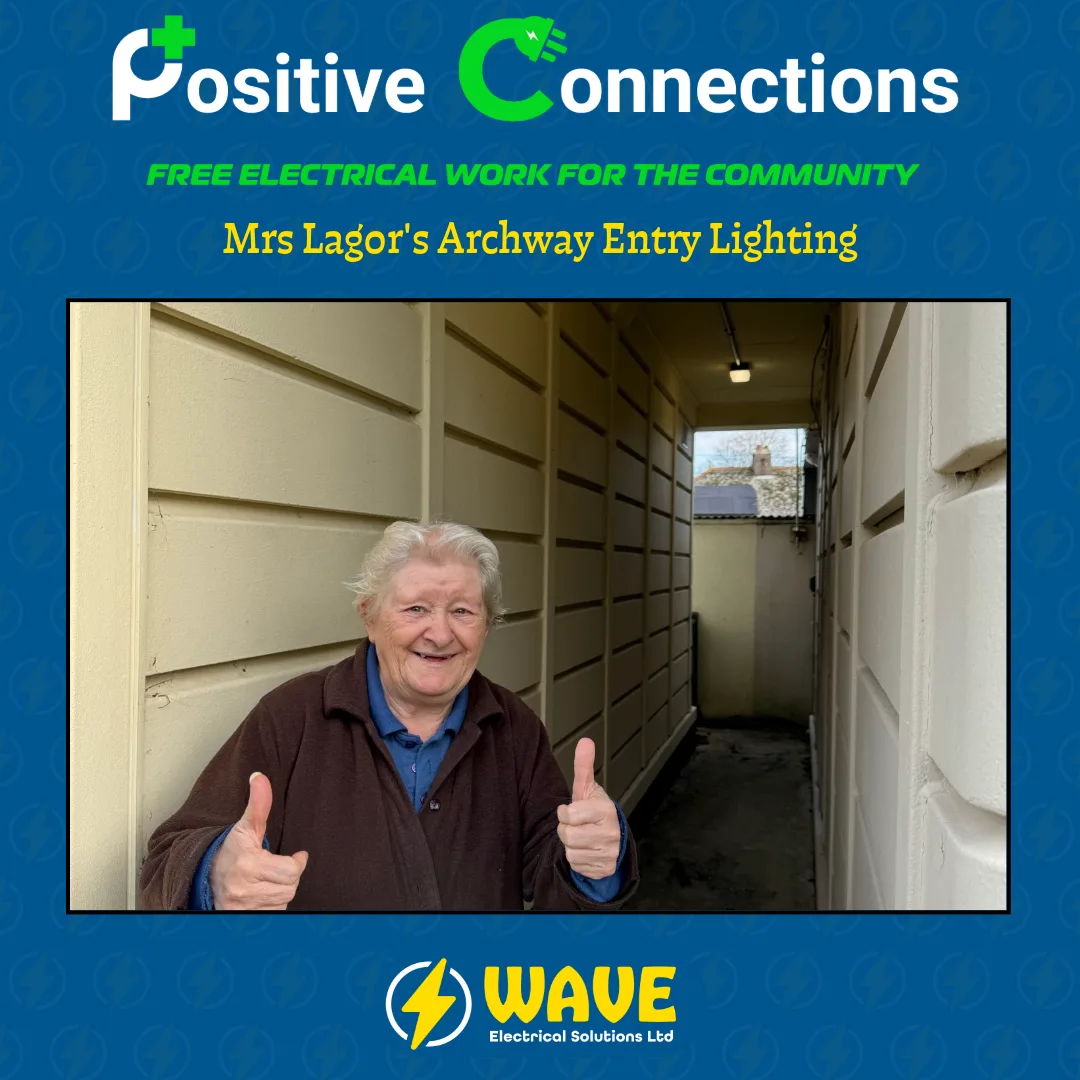
That’s the shape of most Positive Connections jobs. Nothing complicated about them, but they’re the sort of thing that sits on a list for years because getting an electrician out costs money that isn’t always there. Mrs Lagor now has a lit route to her back door instead of a dark one, and it didn’t cost her anything.